Expert Care & Cleaning Tips for Vintage Simmons Jewelry
Discover expert care, cleaning, and maintenance tips for vintage Simmons jewelry. Learn how to safely restore gold-filled and sterling silver pieces.

The Legacy of R.F. Simmons: Understanding Your Materials
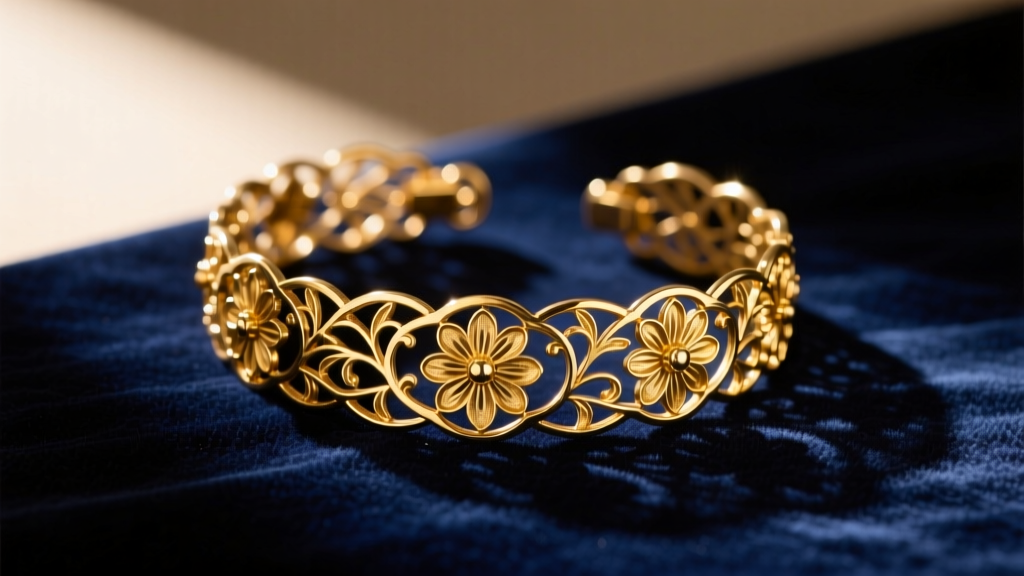
When you acquire vintage Simmons jewelry, you are holding a piece of American manufacturing history. Founded in the 1890s in Providence, Rhode Island—the epicenter of the American jewelry trade—R.F. Simmons & Co. became renowned for producing exceptionally high-quality gold-filled, rolled gold plate (RGP), and sterling silver pieces. From intricate Art Deco filigree bracelets to heavy Retro-era watch chains and beaded mesh evening bags, Simmons pieces are highly sought after by collectors today.
However, caring for these specific metallurgical constructions requires a nuanced approach. Unlike modern flash-plated costume jewelry, vintage Simmons pieces were built to last generations, provided they are maintained correctly. According to the Lang Antiques University, identifying the exact hallmark—whether it reads "R.F.S. & Co.", "Simmons", or features a fractional stamp like "1/20 12K GF"—is the first step in determining the appropriate cleaning protocol. Using harsh modern chemicals on these historical pieces can strip the gold layers or irreparably damage the patina that gives the jewelry its antique value.
The Metallurgy of Simmons: Gold-Filled vs. Rolled Gold Plate
Before applying any cleaning solution, it is vital to understand what your vintage Simmons jewelry is actually made of. Simmons was a pioneer in mechanical gold bonding, a process vastly superior to modern electroplating.
- Gold-Filled (GF): Stamped as "1/20 12K GF" or "1/20 14K GF", this means 1/20th of the total weight of the item is solid karat gold, mechanically bonded to a jeweler's brass core under extreme heat and pressure. The gold layer is thick and durable but can still be worn away by abrasive polishing.
- Rolled Gold Plate (RGP): Similar to gold-filled but with a slightly thinner layer of gold. Simmons RGP pieces are incredibly resilient but require gentler cleaning agents to prevent exposing the brass core beneath.
- Sterling Silver: Solid 925 silver, often used in their mesh bags, cigarette cases, and intricate belt buckles. These are prone to sulfur-induced tarnishing and require specific reduction methods.
The Golden Rule: Cleaning Gold-Filled and Rolled Gold Plate
The most common mistake collectors make with vintage Simmons gold-filled jewelry is treating it like solid gold. While the surface is indeed real gold, the underlying brass core is highly reactive if exposed. Therefore, abrasive polishes, baking soda pastes, and ultrasonic cleaners are strictly prohibited.
Step-by-Step Safe Wash Technique
- Prepare the Solution: Mix a few drops of pH-neutral dish soap (like original blue Dawn) into a bowl of lukewarm distilled water. Avoid tap water, as chlorine and heavy minerals can leave microscopic deposits on the gold layer.
- Soak Briefly: Submerge the jewelry for no more than 3 to 5 minutes. This loosens accumulated skin oils, lotions, and environmental dust without compromising the mechanical bond.
- Gentle Agitation: Using an extra-soft baby toothbrush, gently sweep the bristles across the surface. Pay special attention to the intricate filigree cut-outs and clasp mechanisms where grime accumulates.
- Rinse and Dry: Rinse thoroughly under a gentle stream of distilled water. Immediately pat dry with a lint-free microfiber cloth, then allow it to air dry completely on a paper towel before storage.
Expert Warning: Never use toothpaste or baking soda on vintage Simmons gold-filled pieces. These substances rank between 3 and 4 on the Mohs hardness scale, which is hard enough to create micro-scratches in the gold layer, accelerating future tarnishing and wear.
Restoring Tarnished Sterling Silver Simmons Pieces
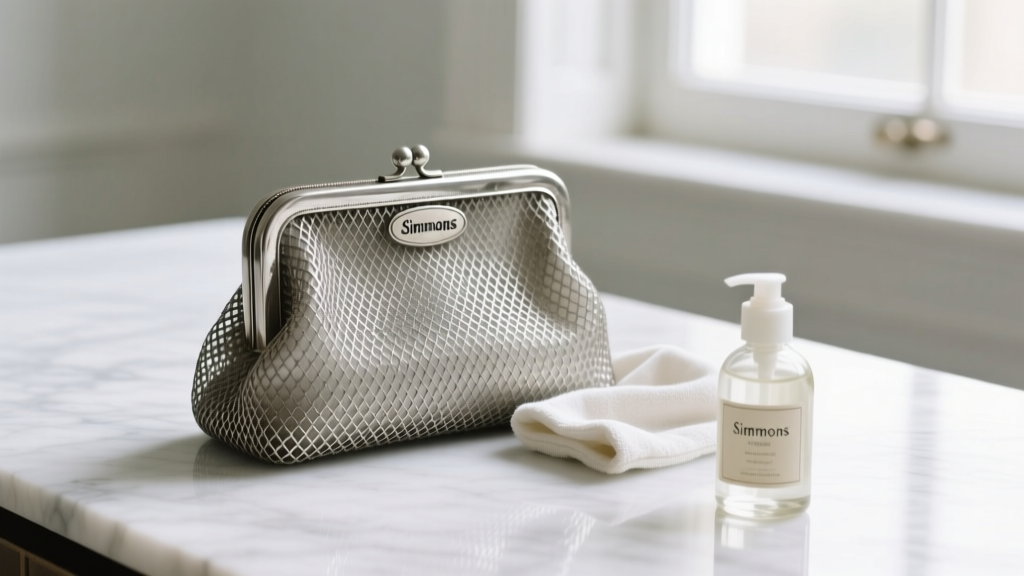
Sterling silver Simmons items, particularly their iconic 1920s mesh evening bags and ornate belt buckles, develop a dark silver sulfide tarnish over time. While some collectors appreciate a light patina in the crevices to highlight the Art Deco geometry, heavy black tarnish must be removed carefully.
Comparing Silver Cleaning Methods for Vintage Simmons
| Cleaning Method | Safety for Simmons Silver | Pros & Cons |
|---|---|---|
| Aluminum Foil & Baking Soda Bath | High (Use with caution on glued stones) | Pros: Reverses tarnish chemically without removing silver. Cons: Can loosen shellac-based glues used in 1920s rhinestone settings. |
| Commercial Silver Dip (Thiourea-based) | Low | Pros: Instant results. Cons: Highly acidic; strips antique patina and can cause rapid re-tarnishing. |
| Silver Polishing Cloth (Impregnated) | Very High | Pros: Gentle, precise, leaves anti-tarnish residue. Cons: Time-consuming for intricate mesh or chainmail pieces. |
For heavily tarnished solid silver pieces without gemstones, the GIA Care and Cleaning Guidelines recommend the aluminum foil electrochemical bath. However, if your Simmons piece features paste rhinestones or enamel work, stick to a high-quality impregnated silver cloth and use a wooden toothpick to gently lift tarnish from tight corners.
Addressing Base Metal Bleed-Through and Re-plating
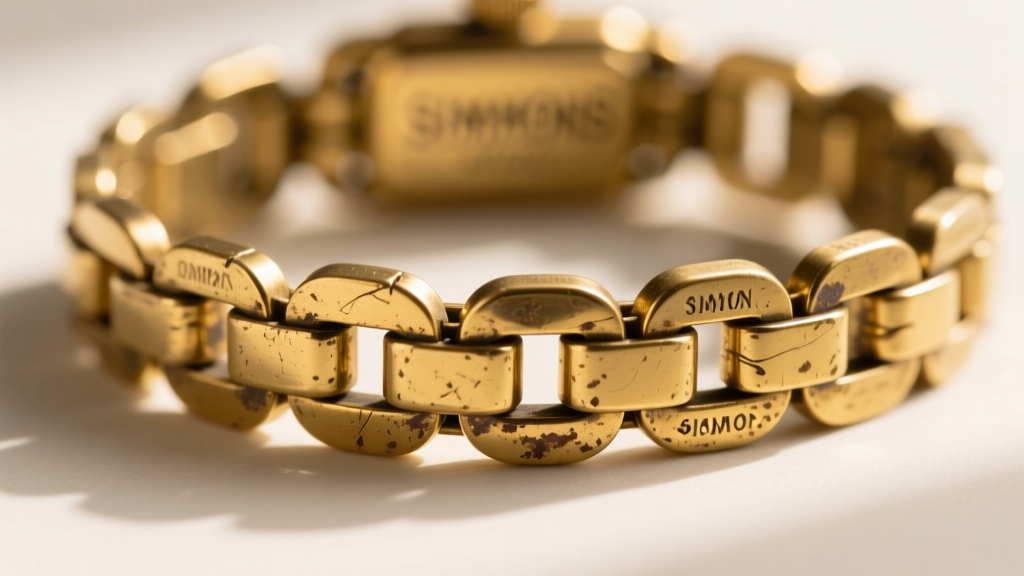
Because vintage Simmons jewelry is often 80 to 100 years old, it is common to find areas where the gold layer has worn away, revealing the yellowish-brown jeweler's brass core beneath. This is known as "brass bleed" or "base metal show."
If the wear is minor, simply clean the piece and apply a thin coat of museum wax (like Renaissance Wax) to seal the exposed brass and prevent it from oxidizing or turning the wearer's skin green. If the wear is extensive, you may consider re-plating. However, be aware that professional re-plating a gold-filled item requires completely stripping the original mechanical gold layer and applying modern electroplated gold. This process typically costs between $150 and $300, which often exceeds the market value of the piece unless it holds significant sentimental value. Always consult a specialist in antique jewelry restoration before attempting to re-plate a hallmarked Simmons piece, as stripping it destroys its historical integrity and collector value.
Specialized Care for Simmons Mesh Bags and Watch Chains
Two of the most recognizable categories of vintage Simmons jewelry are their flexible mesh evening bags and heavy rolled gold plate pocket watch chains (often Albert or double-Albert styles). These items present unique maintenance challenges due to their thousands of interlocking micro-links.
Unclogging Mesh and Chain Links
Over decades, the microscopic gaps between mesh links become clogged with face powder, skin cells, and lint, causing the mesh to become stiff or brittle. To restore the drape and flexibility:
- Lay the mesh bag or chain flat on a clean, white towel.
- Spray a light mist of distilled water mixed with a drop of ammonia-free glass cleaner onto the surface.
- Using a soft-bristled makeup brush (like a clean kabuki brush), work in circular motions to dislodge the particulate matter from the links.
- Wipe away the residue with a damp microfiber cloth and allow it to hang dry completely to prevent water spots from settling in the crevices.
Clasp Maintenance: The folding clasps on Simmons mesh bags and the dog-clip swivels on watch chains often become stiff. Apply a microscopic drop of synthetic watch oil (like Moebius 9010) to the hinge pin using a needle tip. Work the clasp open and closed a dozen times to distribute the lubricant, then wipe away any excess to prevent dust attraction.
Proper Storage to Prevent Micro-Abrasions
How you store your vintage Simmons jewelry is just as critical as how you clean it. The mechanical gold layers and high-polish silver surfaces are highly susceptible to micro-abrasions when tossed into a communal jewelry box.
- Individual Pouches: Store every piece in its own soft, unbleached cotton pouch or a polyethylene ziplock bag. Avoid PVC plastics, which off-gas chemicals that can permanently cloud rhinestones and degrade metal finishes.
- Anti-Tarnish Strips: Place a 3M anti-tarnish strip inside each storage bag. These strips absorb airborne sulfur compounds and can protect sterling silver Simmons pieces from tarnishing for up to 12 months.
- Climate Control: Keep your collection in a climate-controlled environment. High humidity accelerates both silver tarnishing and the oxidation of exposed brass cores on gold-filled items. Aim for a relative humidity level between 40% and 50%.
Conclusion
Owning vintage Simmons jewelry is a privilege that connects you to the golden age of American craftsmanship. By understanding the specific metallurgical properties of R.F. Simmons & Co. pieces and adhering to gentle, targeted cleaning protocols, you can preserve their intricate filigree, brilliant mesh, and warm gold tones for another century. When in doubt, always err on the side of caution: less chemical intervention and more gentle mechanical cleaning is the true secret to maintaining these historical treasures.
For further research on identifying specific Simmons hallmarks and dating your pieces, the Kovels Antiques Guide remains an invaluable resource for serious collectors and estate jewelry enthusiasts.


