How to Identify Unmarked Vintage Jewelry Worth Money
Discover how to identify unmarked vintage jewelry worth money. Learn expert testing methods, material clues, and era-specific details.

The History of the Missing Mark
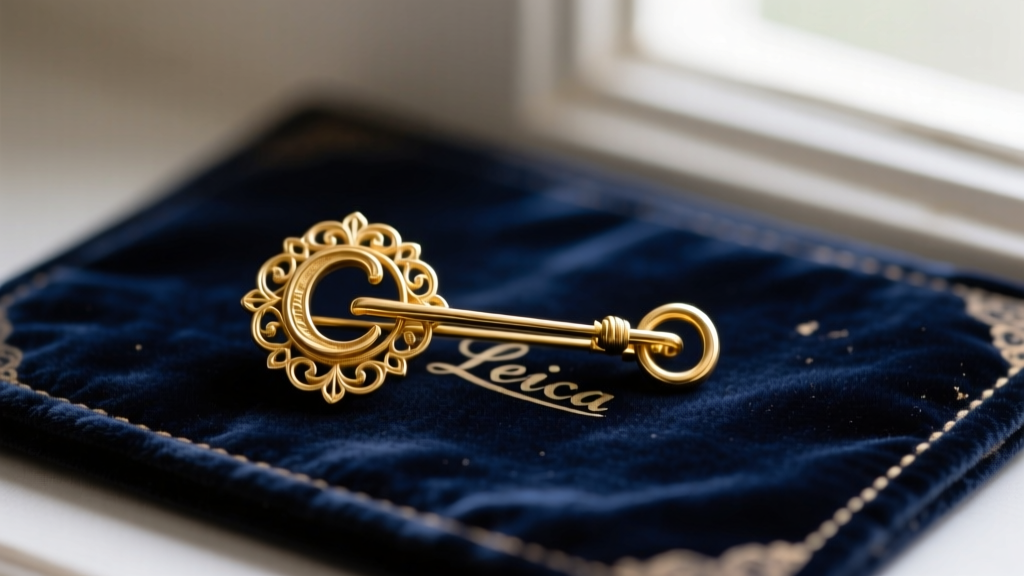
When evaluating estate pieces, collectors often dismiss items lacking hallmarks, assuming they are costume or low-value scrap. However, identifying unmarked vintage jewelry worth money requires looking past the surface. The absence of a stamp does not equate to an absence of value. In the United States, the National Gold and Silver Stamping Act was not passed until 1906. Before this legislation, American jewelers were not legally required to stamp purity marks on their creations. Consequently, a vast array of high-karat gold and sterling silver pieces from the Victorian and early Edwardian eras remain entirely unmarked.
Furthermore, European antique jewelry often lacks direct metal stamps. Historically, European assay marks were frequently applied to removable tags, original boxes, or even the exterior of the mounting rather than the precious metal itself to avoid damaging intricate engravings. Over decades of wear, resizing, and ultrasonic cleaning, these shallow marks easily erode. To accurately appraise these hidden treasures, you must transition from hallmark hunting to structural and gemological analysis.
Decoding Construction: Clues Beyond the Hallmark
The mechanical findings of a piece of jewelry serve as a chronological fingerprint. Mass-produced modern findings differ drastically from the hand-fabricated or early die-struck components used in antique jewelry.
Clasp and Catch Mechanisms
- C-Clasps: Predominantly used before 1900, the C-clasp is a simple curved wire hook with no moving parts. The pin was pushed into the 'C' and relied on the tension of the pin or a slight bend to stay secure. If you find a heavy gold brooch with a C-clasp and a tube hinge, you are likely looking at a valuable 19th-century piece.
- Trombone Clasps: Common in European jewelry from the mid-1800s through the 1950s, this mechanism features a push-pull tube that slides over the pin to lock it in place. It is a strong indicator of Continental origin, particularly French or Italian craftsmanship.
- Early Safety Catches: Invented in the late 1890s but not widely adopted until the 1920s, the safety catch features a rolling lever that locks the pin. A piece with a safety catch and a cast hinge is almost certainly post-1920 (Art Deco or Retro era).
Hinges and Solder Quality
Examine the hinge of any pin or brooch. Antique pieces typically feature a tube hinge, which consists of three separate cylindrical pieces of metal soldered together—two on the pin stem and one on the body. By the late 1920s, manufacturers shifted to cast hinges, which are molded as a single, uniform block. Additionally, inspect the solder joints. Vintage hand-soldering often shows slight irregularities, file marks, or a warm, buttery flow. Modern laser welding or induction soldering leaves perfectly uniform, sometimes pitted, or microscopically sharp joints.
Material Verification Without Destructive Testing
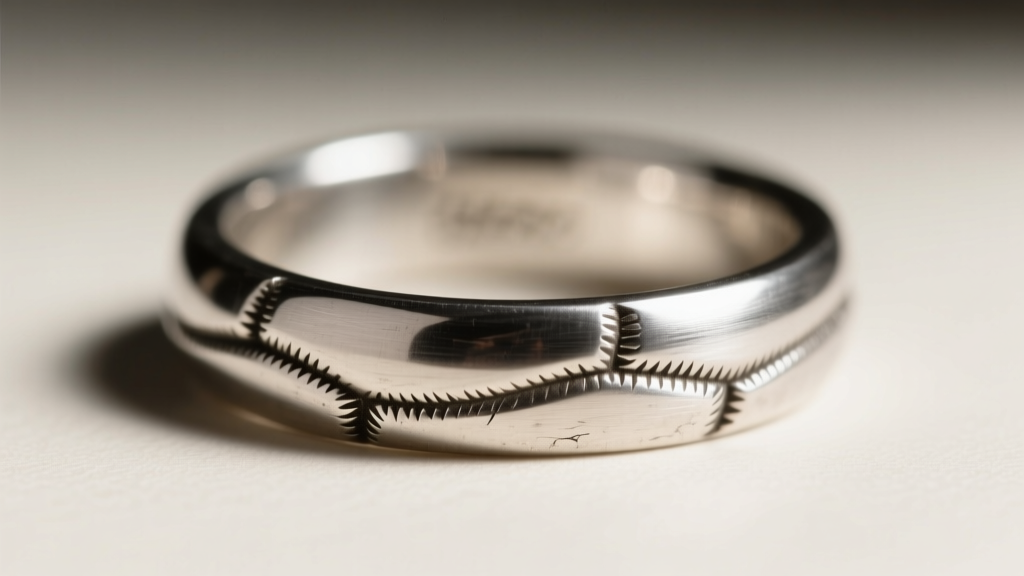
When a piece lacks a purity stamp, you must verify the metal composition without damaging the patina or structural integrity. While traditional acid testing (scratch testing) is common, it is destructive and unreliable for plated items with heavy gold wash.
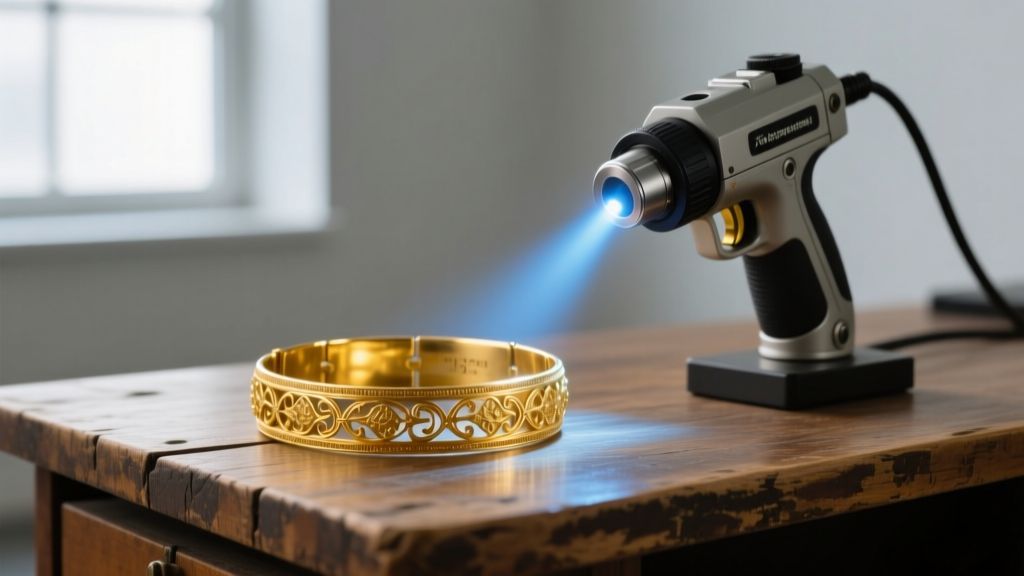
Professional appraisers rely on X-ray Fluorescence (XRF) spectrometry. An XRF gun fires X-rays into the metal and measures the fluorescent emission, providing an exact elemental breakdown (e.g., 75.2% Gold, 12% Silver, 12.8% Copper for 18k gold) in seconds, completely non-destructively. According to the Gemological Institute of America (GIA), XRF is the industry standard for verifying unmarked precious metals in estate jewelry.
For mounted gemstones, specific gravity (hydrostatic weighing) can help identify unmarked stones like natural sapphires or synthetic spinels without removing them from their antique settings, preserving the historical value of the mount.
Gemstone Cut and Setting as Era Markers
The lapidary techniques of the past are impossible to perfectly replicate with modern CNC machinery. Identifying the cut of the center stone can instantly date an unmarked ring or pendant.
"The presence of an open culet and a high crown in a diamond is a definitive marker of pre-1920s cutting techniques, instantly elevating the historical premium of an otherwise unmarked mounting." — Lang Antiques Antique Jewelry University
Old European Cut (OEC) vs. Old Mine Cut (OMC)
If the diamond in your unmarked ring has 58 facets but features a high crown, a small table, and a visible flat culet (the point at the bottom is cut off), it is an Old European Cut. This cut was prevalent from the 1890s to the 1930s. If the stone is slightly cushion-shaped with a larger culet and fewer, chunkier facets, it is likely an Old Mine Cut, dating back to the Georgian or early Victorian eras. Modern Round Brilliant cuts, characterized by sharp facet intersections and a pointed culet, did not become the standard until the mid-20th century. Finding an OMC diamond in a low-karat, unmarked setting often indicates the piece is highly valuable Georgian paste or early gold work.
Era-Specific Identification Matrix
Use this reference table to cross-reference the physical attributes of your unmarked jewelry to pinpoint its likely era of origin.
| Era | Clasp Type | Hinge Type | Primary Stone Cuts | Metal Characteristics |
|---|---|---|---|---|
| Victorian (1837-1901) | C-Clasp, Trombone | Tube Hinge | Old Mine, Rose Cut, Cabochon | Yellow gold, silver-topped gold, foiled backs |
| Edwardian (1901-1915) | C-Clasp, Early Safety | Tube Hinge | Old European, Millegrain settings | Platinum over gold, delicate filigree |
| Art Deco (1920-1935) | Safety Catch | Cast / Tube Hybrid | Old European, Baguette, Calibre | White gold, platinum, geometric enamel |
| Retro (1935-1950) | Safety Catch | Cast Hinge | Transitional Cut, Large Citrines | Rose gold, bold 3D sculptural forms |
When to Walk Away: Spotting Modern Reproductions
The market is flooded with 'antique-style' reproductions manufactured in the last two decades. These pieces are intentionally left unmarked or stamped with fake maker's marks to deceive buyers. To protect your investment, look for the following red flags:
- Casting Porosity: Modern cast reproductions often show tiny pits or pores on the inside of the shank or under the gallery. Antique jewelry was largely die-struck or hand-fabricated, resulting in a denser, smoother metal surface.
- Uniform Machine Milgrain: True Art Deco milgrain was applied by hand using a knurling tool, resulting in slight, organic irregularities. Modern reproductions use laser or machine-stamped milgrain, which looks perfectly uniform and overly sharp under a 10x loupe.
- Synthetic Stones in 'Antique' Settings: While synthetics existed in the early 20th century (like flame-fusion rubies), finding modern Czochralski lab-grown sapphires or cubic zirconia in a setting that mimics Victorian craftsmanship is an immediate indicator of a modern reproduction.
Valuation Framework for Unmarked Pieces
Once you have authenticated the age and material of an unmarked piece, you must determine its market value. Unmarked vintage jewelry worth money is appraised using a dual-framework: Intrinsic Value and Antique Premium.
The intrinsic value is the baseline melt value of the gold, platinum, or silver, plus the wholesale replacement cost of the gemstones. However, the antique premium is where the true profit lies. A verified 1890s Victorian brooch with an OMC diamond and a C-clasp will command a 40% to 150% premium over its intrinsic scrap value due to its historical desirability, craftsmanship, and rarity. Always document your findings, including macro-photography of the hinges, clasps, and stone culets, as this provenance replacement is critical when selling to high-end estate collectors or auction houses.


