Rocky River Estate Jewelry and Coin: 2026 Trend Analysis
Explore the 2026 style and market trends in coin-integrated vintage pieces, inspired by the Rocky River estate jewelry and coin market.

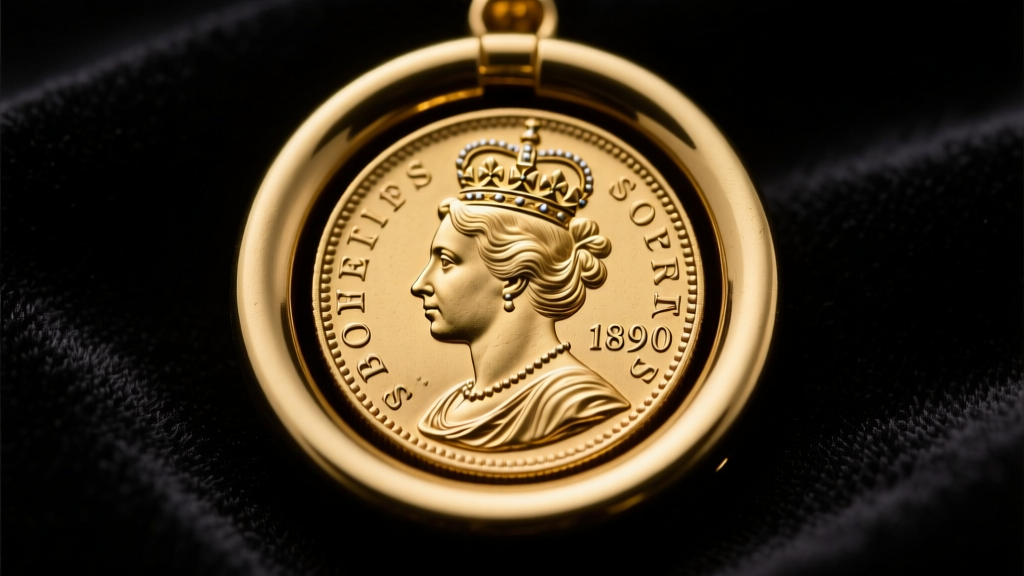
The Intersection of Numismatics and Vintage Adornment
The fusion of numismatics and fine jewelry represents one of the most compelling niches in the vintage market today. Coin-integrated estate jewelry bridges the gap between historical artifact and wearable art, offering collectors a dual-value proposition that traditional gemstone pieces simply cannot match. From Victorian-era sovereign rings to mid-century Mexican peso pendants, the practice of encasing currency in precious metals has evolved from a mere display of wealth into a sophisticated style statement. In 2026, as collectors increasingly seek tangible assets with intrinsic and historical value, the demand for authenticated estate coin jewelry has surged.
This trend is not limited to high-end auction houses. For instance, when analyzing regional liquidation hubs, the inventory turnover at a prominent Rocky River estate jewelry and coin dealership provides a fascinating microcosm of how Midwest collectors balance historical preservation with everyday wear. Dealers in these specialized markets are seeing a 30% year-over-year increase in clients requesting custom bezels for inherited coin collections, transforming dormant safe-deposit assets into striking, conversation-starting pendants and rings.
The 2026 Shift Toward Tangible Assets
Macroeconomic factors are heavily influencing this aesthetic shift. With fluctuations in traditional markets, buyers are gravitating toward items that possess a verifiable melt value baseline, augmented by numismatic rarity. According to market analysts at CoinWorld, the integration of graded coins into jewelry settings has created a secondary market where the craftsmanship of the estate bezel can sometimes rival the historical premium of the coin itself. However, this requires a delicate balance; improper setting techniques can permanently damage a coin's reeded edge or surface luster, instantly destroying its numismatic grade.
Market Valuation: Coins vs. Traditional Estate Pieces
Understanding the valuation matrix of coin jewelry requires separating the mount from the artifact. Traditional estate jewelry is typically valued based on the karat weight of the gold, the quality of the gemstones, and the brand provenance. Coin jewelry, however, introduces a complex layering of premiums. A mass-produced 14k gold coin mount adds minimal artistic value, often trading at a slight premium over its scrap gold weight. Conversely, a hand-fabricated 18k or 22k Edwardian-style filigree bezel can multiply the overall piece's value significantly. Furthermore, the provenance of the jewelry maker can add a tertiary layer of value. If a coin was set by a renowned regional artisan or a historic jewelry house, the mount itself transitions from a mere protective housing into a collectible piece of decorative art.
| Coin Type & Era | Avg. Numismatic Premium | Estate Bezel Multiplier | Market Liquidity |
|---|---|---|---|
| British Sovereign (1880-1910) | 15% - 30% over melt | 1.2x - 1.5x (if 18k+) | High |
| Roman Denarius (Silver) | Highly variable | 2.0x+ (Custom 22k) | Medium |
| US Morgan Dollar (1878-1921) | 10% - 50% over melt | 1.1x (Sterling/14k) | Very High |
| Mexican 50 Peso (1921-1947) | 5% - 15% over melt | 1.3x (Heavy 18k) | Medium |
As illustrated above, the liquidity of the piece often depends on the recognizability of the coin. US Morgan dollars and British Sovereigns are universally recognized, making them easier to liquidate through both numismatic and jewelry channels. Obscurer provincial coins may carry higher historical premiums but require specialized buyers.
Technical Specifications: Bezel Types and Chain Gauges
The structural integrity of coin jewelry is paramount. Estate pieces from the mid-20th century often feature screw-top or clip bezels. While these were designed to protect the coin from soldering damage, the internal threading or clipping mechanisms frequently cause micro-abrasions on the coin's rim. Modern master jewelers and high-end estate restorers now prefer soldered, custom-fabricated bezels that utilize a precise lip to hold the coin without touching the obverse or reverse fields. Soldering near a coin carries immense risk. The heat required to flow 14k or 18k gold solder can easily exceed the melting point of lower-grade silver coins or cause the crystalline structure of ancient bronze to fracture. Master jewelers utilize specialized heat sinks, such as cross-locking tweezers and thermal paste, to draw heat away from the numismatic artifact during the bezel's final closure.
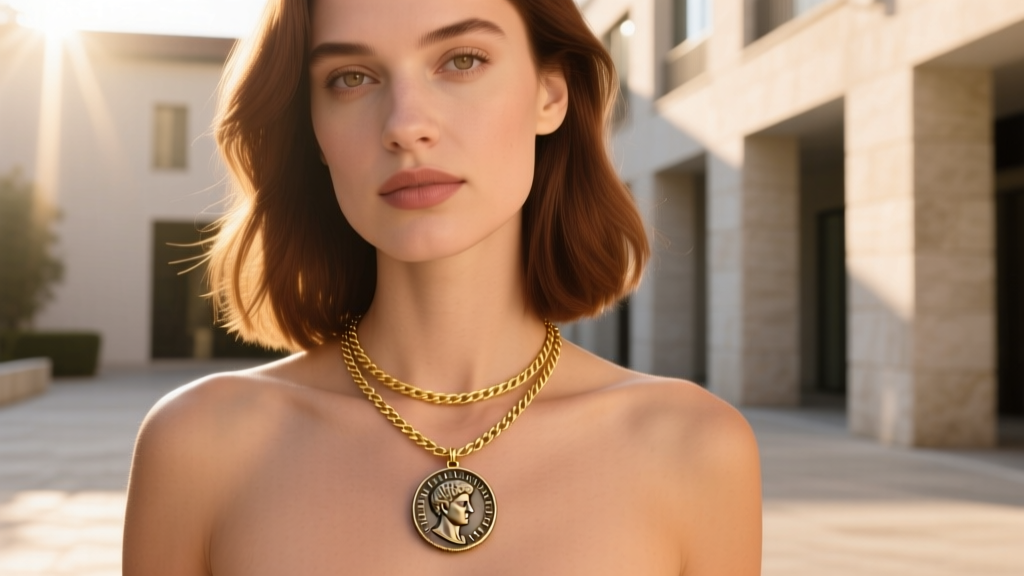
Matching Chain Gauges to Coin Weights
A common failure mode in vintage coin jewelry is the pairing of heavy coins with inadequate chains. A standard 14k gold British Sovereign in a solid bezel can easily exceed 18 grams. Suspending this weight from a delicate 1.5mm cable chain guarantees eventual failure at the clasp or jump ring. For estate pendants of this mass, a minimum chain gauge of 3.5mm to 4.5mm is required. Rope chains, Figaro chains, and solid Cuban links provide the necessary tensile strength. Furthermore, the clasp must be upgraded from a standard spring-ring to a heavy-duty lobster clasp or a custom toggle, ensuring the mechanical weak point is reinforced.
When evaluating the metal purity of the bezel, always look for precise hallmarks. The Gemological Institute of America (GIA) emphasizes that visual color is an unreliable indicator of karatage, especially in vintage pieces where rhodium plating or heavy patina can mask the underlying alloy. X-ray Fluorescence (XRF) testing is the industry standard for verifying whether a bezel is 14k (58.5% gold), 18k (75% gold), or 22k (91.6% gold) without damaging the artifact.
Sourcing and Authentication at Regional Hubs
Acquiring authentic estate coin jewelry requires a dual-authentication process: verifying the precious metal content of the jewelry and authenticating the numismatic legitimacy of the coin. Counterfeit coins, particularly high-value US gold pieces and ancient Roman artifacts, are increasingly sophisticated. The Professional Coin Grading Service (PCGS) maintains extensive databases of known counterfeit diagnostics, including specific gravity anomalies and microscopic tooling marks.

Hallmarks and Numismatic Grading
When sourcing from estate sales or regional dealers, always inspect the transition point where the coin meets the metal mount. If the coin is encased in an opaque, soldered bezel, verifying the coin's edge reeding or thickness becomes impossible without destructive removal. Therefore, purchasing pieces where the coin's edge is partially visible, or where the coin is held in a high-karat open-back bezel, is highly recommended. Specific gravity testing remains a vital, non-destructive method for authenticating gold coins still seated in their bezels. By measuring the displacement of water, a skilled jeweler can calculate the exact density of the piece, cross-referencing it against the known densities of gold, silver, and copper alloys to detect tungsten or lead cores. For ancient coins, such as Roman bronze or silver denarii, the bezel should ideally be fabricated from a complementary metal, like oxidized sterling silver or low-karat yellow gold, to avoid galvanic corrosion and to respect the historical aesthetic of the artifact.
Future Projections for the Estate Coin Market
Looking ahead, the integration of numismatics and estate jewelry will continue to be driven by a desire for personalized, historically grounded adornment. The quiet luxury movement of the mid-2020s has evolved into a preference for meaningful heritage in 2026. Collectors no longer want generic luxury brand pendants; they want pieces with a verifiable timeline. Whether it is a Victorian mourning ring incorporating a tiny gold sovereign, or a heavy Retro-era 1940s pendant featuring a Mexican Dos Pesos, the market rewards pieces that tell a tangible story. By understanding the technical nuances of bezel construction, chain tensile strength, and dual-market valuation, collectors and stylists can confidently navigate this rich, intersecting landscape.


