Troubleshooting Victorian Style Jewelry: Fakes, Foils & Repairs
Learn how to authenticate, clean, and repair Victorian style jewelry. Expert troubleshooting for foil stones, clasps, and mourning materials.

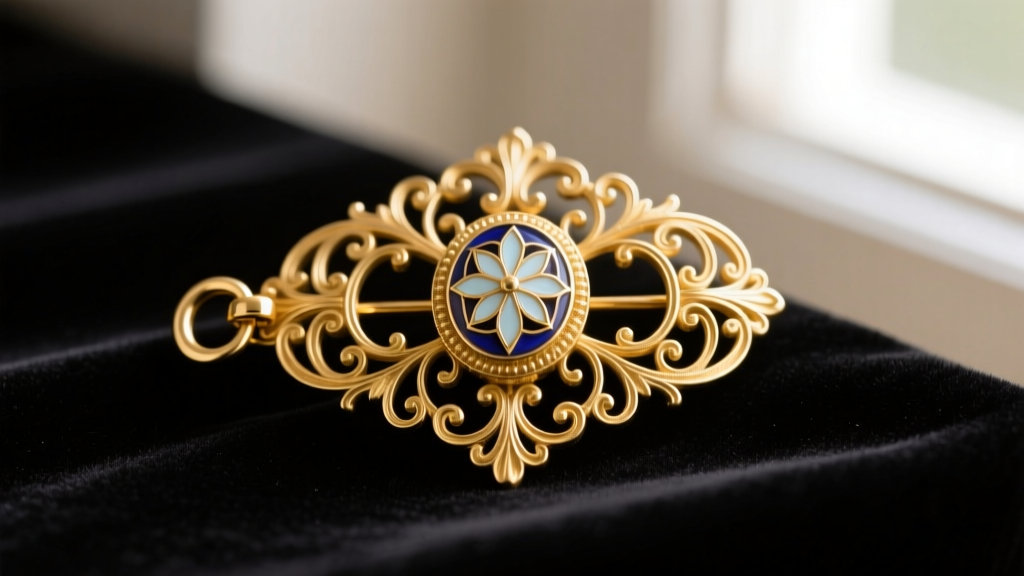
The "Victorian Style" Trap: Spotting Modern Reproductions
The secondary market is currently saturated with modern reproductions masquerading as genuine antiques. When shopping for Victorian style jewelry, the untrained eye can easily be deceived by heavily oxidized silver or gold-plated brass designed to mimic 19th-century patina. To troubleshoot authenticity, you must examine the manufacturing markers that modern casting techniques inevitably leave behind.
Cast vs. Hand-Fabricated Markers
Genuine Victorian pieces were predominantly hand-fabricated, die-stamped, or cast using early sand-casting methods that required extensive hand-finishing. Modern reproductions are typically investment-cast using 3D-printed wax models. Under a 10x jeweler's loupe, look for the following red flags:
- Porosity and Pitting: Modern castings often show microscopic spherical pits (gas porosity) in recessed areas. Antique hand-rolled gold will show slight unevenness, but not spherical pitting.
- Seam Lines: Run your fingernail along the shank of a ring or the edge of a brooch. A faint, raised vertical line indicates a modern two-part rubber mold was used.
- Laser Welding Marks: If a piece requires sizing, modern jewelers use laser welders. Genuine antique repairs will show traditional solder seams, which appear as a slightly different color alloy under magnification.
The 15k Gold Hallmark Litmus Test
In the UK, 15k gold was a standard alloy during the Victorian era (1837–1901). However, the UK Hallmarking Act of 1932 officially banned the 15k standard, replacing it with 14k and 18k. If a piece bears a genuine British 15k hallmark but shows modern casting seams, it is a counterfeit hallmark applied to a modern reproduction. Conversely, a genuine 15k stamp with a date letter prior to 1901 is a strong indicator of an authentic antique.
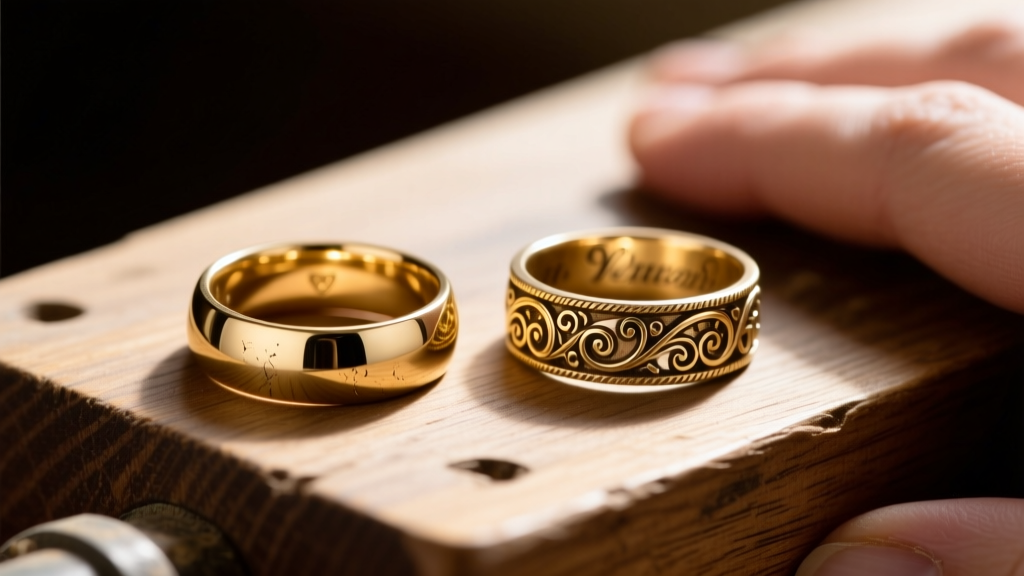
Troubleshooting Foil-Backed Gemstone Degradation
One of the most frequent disasters new collectors face is the accidental destruction of foil-backed gemstones. During the Victorian era, rose-cut diamonds, paste glass, and garnets were frequently set in closed-back bezels with a foil backing (often silver or colored copper) to amplify their brilliance in low candlelight.
Critical Warning: Never place foil-backed Victorian jewelry in an ultrasonic cleaner, steam cleaner, or chemical dip. The high-frequency vibrations will shatter fragile rose-cut diamonds, and moisture intrusion will instantly oxidize the foil, turning a brilliant stone dull black or muddy brown.
Diagnosing Moisture Intrusion
If a closed-back stone appears cloudy or dark, the foil has likely degraded. To troubleshoot this without opening the setting:
- Use a fiber-optic light to illuminate the stone from the side.
- Look for "flaking" or dark, web-like patterns beneath the table of the stone.
- If the foil is compromised, a master jeweler specializing in antique restoration must carefully pry back the bezel, replace the foil (costing between $150 and $300 per stone), and re-burnish the metal edge. Do not attempt this with standard prong-lifting tools, as the thin gold bezel will tear.
For authoritative guidance on historical gemstone settings and the use of foils, the Gemological Institute of America (GIA) provides excellent historical context on how light performance was engineered before modern brilliant cuts were standardized.
Structural Failures in Antique Findings and Clasps
Findings—the hinges, clasps, and catches of a piece—are the most reliable troubleshooters for dating jewelry and identifying structural weaknesses. Victorian jewelry predates the invention of the modern safety catch (patented in the early 1900s and widely adopted by the 1920s).
| Finding Type | Era of Use | Common Failure Modes & Troubleshooting |
|---|---|---|
| T-Hinge | 1830s – 1890s | The pin stem is soldered to a simple "T" shaped wire. Over time, the solder joint fatigues and snaps. Repair requires laser welding to avoid melting the surrounding enamel. |
| C-Clasp | 1830s – 1900s | The pin rests in a simple "C" shaped wire catch. The pin often falls out if the tension is lost. Troubleshooting: gently squeeze the C-catch with nylon-jaw pliers to restore friction grip. |
| Tube Hinge | 1850s – 1890s | Three small metal tubes interlock. The center tube (on the pin) is often shorter. If the pin wire bends, do not force it; the tube will split. Replace with period-correct brass wire. |
| Box Clasp | 1840s – Present | Used on heavy chains and bracelets. The internal "tongue" loses its spring tension over decades. A jeweler must remove the tongue, anneal it, and re-tension it rather than simply bending it cold, which causes metal fatigue and snapping. |
If you are evaluating a piece of Victorian style jewelry and it features a modern rollover safety catch, the piece is either post-1910 or the original clasp has been replaced, significantly impacting its antique valuation.
Mourning Materials: Handling Extreme Fragility
The Victorian mourning period spawned a massive market for jewelry crafted from unconventional, organic materials. Troubleshooting the care and authentication of these materials requires specific chemical knowledge.
Jet vs. Vulcanite vs. Gutta-Percha
Whitby Jet is fossilized wood and is highly prized, but it is frequently imitated by vulcanite (hardened rubber) and gutta-percha (natural tree sap).
- The Smell Test: Rub the material vigorously with your thumb. Vulcanite will emit a faint, distinct sulfur/rubber odor. Jet will not.
- The Heat Test (Proceed with Caution): A heated needle will melt gutta-percha and vulcanite, leaving a shiny mark and a rubbery smell. Jet will only leave a brown, coal-like dust. Note: Destructive testing should only be done on inconspicuous areas by professionals.
- UV Fluorescence: Under long-wave UV light, true Whitby Jet often exhibits a dull, chalky blue or brown fluorescence, while French Jet (black glass) will show no reaction.
Woven Hairwork and Enamel Flaking
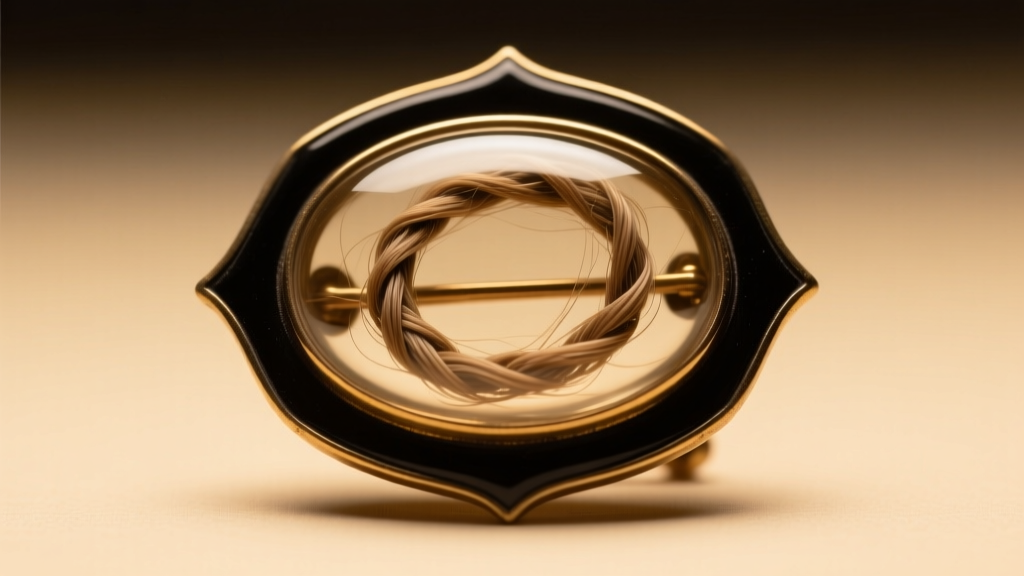
Mourning brooches often feature woven human hair sealed under convex glass. If the glass seal breaks, the hair absorbs ambient humidity, swells, and eventually turns to dust. Never use glass cleaner on these pieces; the ammonia can seep under the bezel and bleach the hair. Clean only with a dry, lint-free microfiber cloth.
Similarly, black enamel (taille d'épargne) used in mourning bands is prone to micro-flaking. If you notice hairline cracks in the enamel, stabilize the piece by storing it in a humidity-controlled environment (40-50% RH). Do not attempt to fill the cracks with modern epoxy, as the refractive index will mismatch and trap moisture against the gold substrate.
Sourcing Authentic Replacement Parts
When restoring high-end Victorian style jewelry, using modern stamped findings ruins the piece's integrity and value. For authentic C-clasps, T-hinges, and period-correct pin stems, avoid standard jewelry supply catalogs. Instead, source from specialized estate salvage dealers or historical reproduction specialists like Lang Antiques, which maintains extensive educational archives and networks for period-correct restoration.
For museum-grade conservation advice regarding organic Victorian materials, the Victoria and Albert Museum (V&A) offers unparalleled guidelines on preserving 19th-century jewelry archives without compromising their historical patina.
Summary Checklist for Buyers and Collectors
Before purchasing or attempting to clean any Victorian piece, run through this quick diagnostic checklist:
- Loupe the shank and backplate: Check for modern casting porosity or mold seams.
- Test the clasp: Ensure it matches the era (C-clasp/T-hinge for early-to-mid Victorian).
- Inspect closed-back stones: Look for foil degradation; avoid all liquid cleaners.
- Verify organic materials: Use non-destructive UV and smell tests to separate Jet from Vulcanite.
- Check hallmarks: Cross-reference UK 15k gold stamps with date letters pre-1901.
By applying these specific troubleshooting frameworks, you can confidently navigate the complexities of the antique market, preserving both the financial value and the rich historical narrative of genuine 19th-century jewelry.


