2026 Vintage Jewelry Chest Trends: Styling & Sourcing
Discover 2026 trends for styling and sourcing a vintage jewelry chest. Expert insights on Art Deco vanities, Victorian boxes, and restoration.

The Renaissance of Heritage Storage
In the evolving landscape of interior design and horology-adjacent collecting, the vintage jewelry chest has transitioned from a concealed storage solution to a focal point of domestic curation. As we navigate the 2026 design cycle, collectors and interior stylists are moving away from sterile, modern acrylic organizers, favoring the tactile warmth, historical provenance, and architectural gravity of antique caskets and vanity chests. This shift is driven by a broader cultural desire for permanence and craftsmanship in an increasingly digital world.
Sourcing an authentic vintage jewelry chest requires more than an appreciation for aesthetics; it demands a rigorous understanding of period-specific woodworking, metallurgical hardware, and the archival science of textile linings. Whether you are hunting for a Georgian coromandel campaign box or a Mid-Century Brazilian rosewood travel case, understanding the structural and historical nuances of these pieces is critical for both valuation and the long-term preservation of your collection.
Era-by-Era Analysis: Defining the Vintage Jewelry Chest
Georgian & Victorian (1714–1901): The Golden Age of the Casket
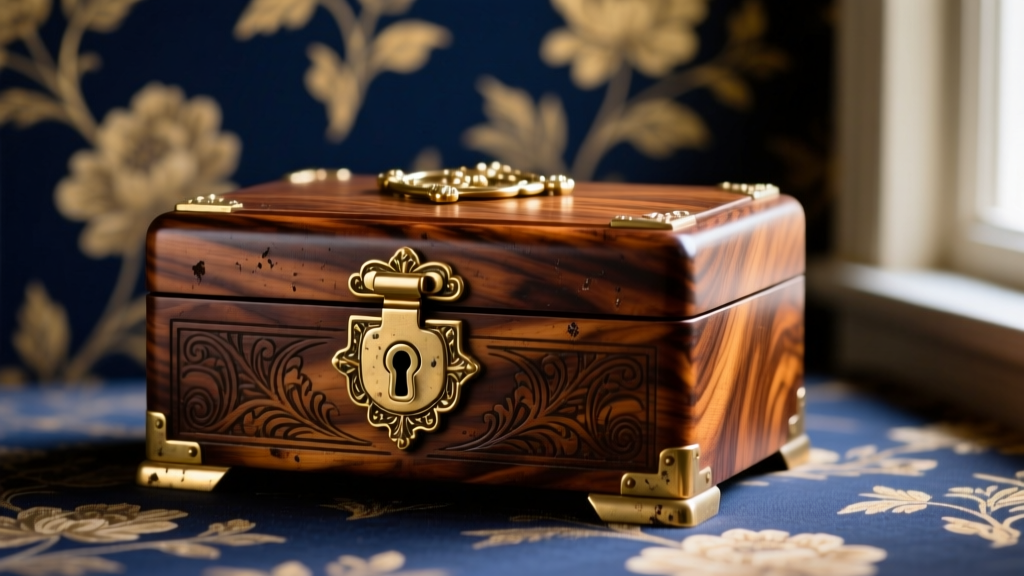
The 18th and 19th centuries represent the zenith of the British jewelry casket. High-society travel and the expansion of the British Empire necessitated secure, portable storage for precious gems and silver. The most prized examples from this era utilize dense, exotic hardwoods such as Coromandel, Calamander, and Burl Walnut. According to the Victoria and Albert Museum, the finest Victorian chests were often fitted with complex Bramah or Chubb detector locks, featuring multi-lever mechanisms that remain remarkably secure today.
When evaluating a Victorian vintage jewelry chest, inspect the joinery. Authentic pieces will feature hand-cut dovetails, which are slightly asymmetrical, unlike the uniform, machine-cut dovetails introduced in the late 1890s. Furthermore, look for 'Tunbridge Ware' parquetry—intricate geometric mosaics made from micro-veneers of native British woods, a hallmark of premium mid-19th-century English boxes.
Art Deco (1920s–1930s): Glamour, Geometry, and Exotic Veneers
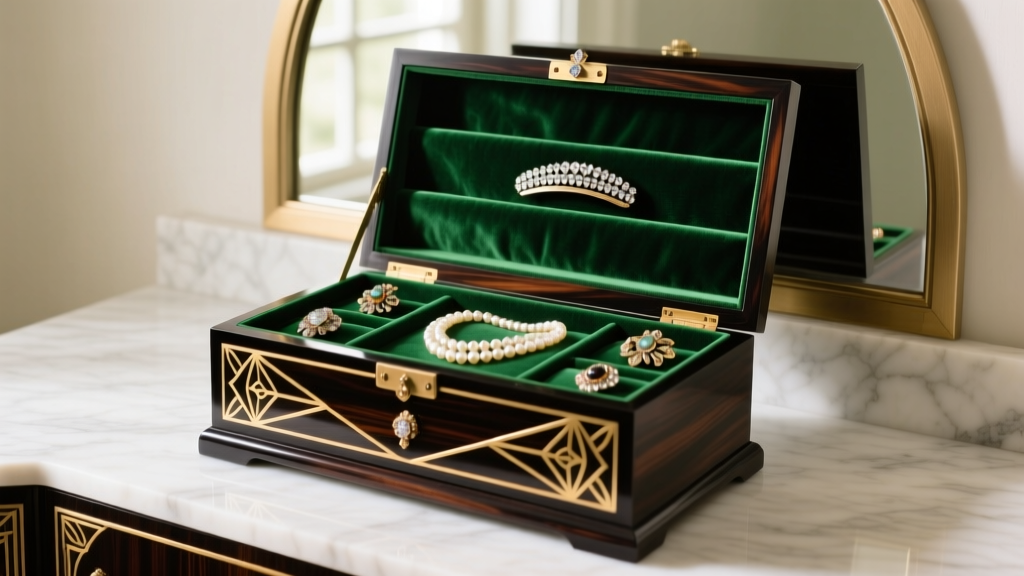
The Art Deco era shattered the ornate, heavy traditions of the Victorians, introducing sleek geometry and high-contrast materials. A vintage jewelry chest from this period is characterized by Macassar ebony, amboyna burl, and the controversial but highly sought-after use of shagreen (stingray leather) and ivory. The interiors of these chests were designed for display as much as storage, frequently featuring mirrored lids, tiered silk-lined trays, and dedicated compartments for the era's popular long pearl sautoirs and diamond-encrusted vanity sets.
Provenance is paramount here. Pieces commissioned by maisons like Cartier, Van Cleef & Arpels, or Boucheron command massive premiums. However, even unsigned, high-quality French or American Art Deco vanity chests with original mirrored interiors and functioning brass piano hinges are highly liquid assets in the 2026 auction market.
Mid-Century Modern (1950s–1970s): Functional Mobility
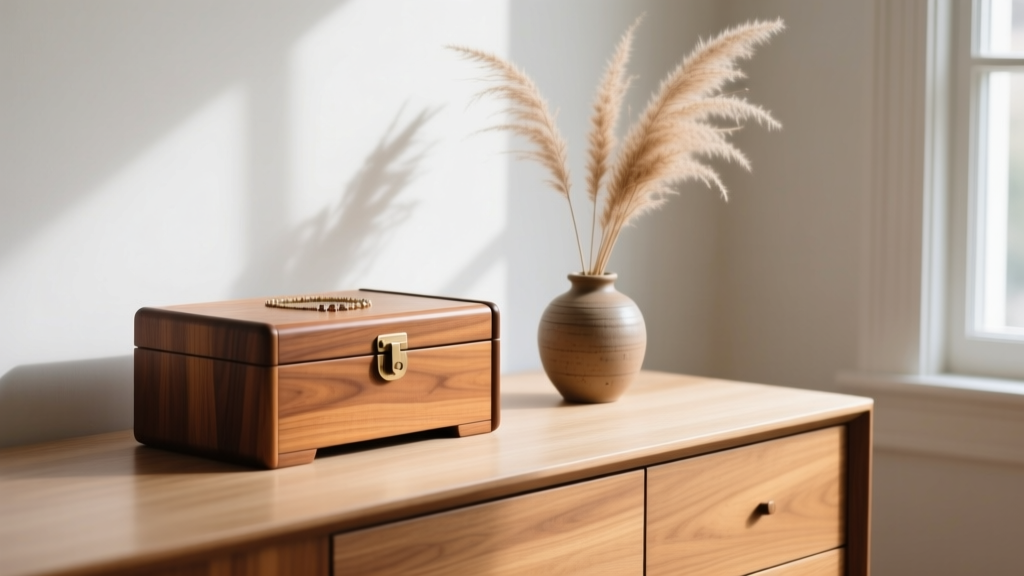
Post-war design prioritized function, mobility, and the beauty of natural wood grain. The Mid-Century vintage jewelry chest often took the form of the 'jewelry armoire' or the luxury travel case. Danish and Italian makers favored teak, palisander (Brazilian rosewood), and walnut. These pieces are defined by clean lines, integrated brass or leather pulls, and minimalist interiors. Unlike their heavier predecessors, MCM chests were designed to be moved, often featuring recessed handles and lightweight but durable construction.
2026 Valuation Matrix: What to Pay
Pricing for antique and vintage jewelry storage has stabilized after the pandemic-era antique boom, but pieces with pristine original hardware and untouched patinas continue to appreciate. Below is a benchmark guide for the 2026 market.
| Era / Style | Primary Materials | Key Identifiers & Hardware | 2026 Market Value (USD) |
|---|---|---|---|
| Georgian Campaign | Coromandel, Mahogany | Brass strapping, Bramah locks, secret drawers | $3,500 – $12,000+ |
| Victorian Parquetry | Tunbridge Ware, Burl Walnut | Mosaic inlay, velvet interiors, escutcheons | $800 – $3,200 |
| Art Deco Vanity | Macassar Ebony, Shagreen | Mirrored lids, geometric inlay, tiered silk trays | $4,500 – $18,000 |
| Mid-Century Travel | Brazilian Rosewood, Teak | Leather handles, minimalist brass latches | $600 – $2,500 |
The Science of Archival Restoration
Acquiring a vintage jewelry chest is only the first step; preserving the contents requires an understanding of material science. The most common mistake collectors make is leaving antique jewelry in original 19th-century velvet or silk linings. According to guidelines from the American Institute for Conservation, historical textile dyes and the animal-based glues used to adhere them often contain sulfur compounds. Over decades, these materials off-gas hydrogen sulfide, which reacts with silver and copper alloys to accelerate severe tarnishing and pitting.
Best Practices for Interior Upgrades
- Remove Sulfur Sources: Carefully extract decaying velvet and acidic cardboard backing. Do not use chemical strippers inside the chest, as solvent fumes will become trapped in the wood pores and damage porous gemstones like pearls and opals.
- Archival Lining: Replace old textiles with pH-neutral (7.0 to 8.5), unbleached cotton flannel or specialized Pacific Silvercloth. These materials are chemically inert and will not off-gas harmful volatile organic compounds (VOCs).
- Wood Conservation: Avoid modern silicone-based polishes like Pledge, which create a synthetic barrier that traps moisture and ruins the historical shellac or French polish finish. Instead, use a micro-crystalline wax, such as Renaissance Wax, applied sparingly with a lint-free cloth to stabilize the wood and provide a soft, authentic sheen.
- Hardware Lubrication: If a Bramah or lever lock is stiff, never use WD-40. Apply a microscopic amount of dry graphite powder or a specialized horological clock oil to the keyway to preserve the internal brass tumblers.
Interior Styling Frameworks
In 2026, the vintage jewelry chest is treated as a sculptural element within the bedroom or dressing area. The prevailing design philosophy is 'tension styling'—pairing heavy, ornate antiques with stark, contemporary architecture to highlight the craftsmanship of both.
For a heavy Victorian burl walnut chest, avoid placing it on a matching dark wood vanity, which can make the space feel dated and oppressive. Instead, mount it on a floating shelf of pale, limed oak or place it atop a sleek, white Calacatta marble console. This juxtaposition allows the intricate brass inlay and rich grain of the walnut to pop.
Art Deco Macassar ebony chests, with their striking striped grain and geometric silhouettes, serve beautifully as bedside tables in moody, maximalist interiors. Pair them with brushed brass lighting and deep emerald or sapphire wallcoverings to echo the glamour of the 1920s. Conversely, Mid-Century teak travel cases are best styled in minimalist, Japandi-inspired spaces, where their clean lines and warm wood tones add organic texture without visual clutter.
Conclusion
The vintage jewelry chest is far more than a vessel for adornments; it is a masterclass in historical woodworking, metallurgy, and design evolution. By understanding the specific identifiers of Georgian, Victorian, Art Deco, and Mid-Century pieces, collectors can make informed acquisitions that hold their value. More importantly, by applying modern archival science to historical restoration, you ensure that both the chest and the heirlooms it guards will survive for another century of curation.


