Body Jewelry Plus SM Gauge Care and Cleaning Guide
Master your routine with our body jewelry plus sm gauge care guide. Learn expert cleaning tips for standard piercings and metal maintenance.

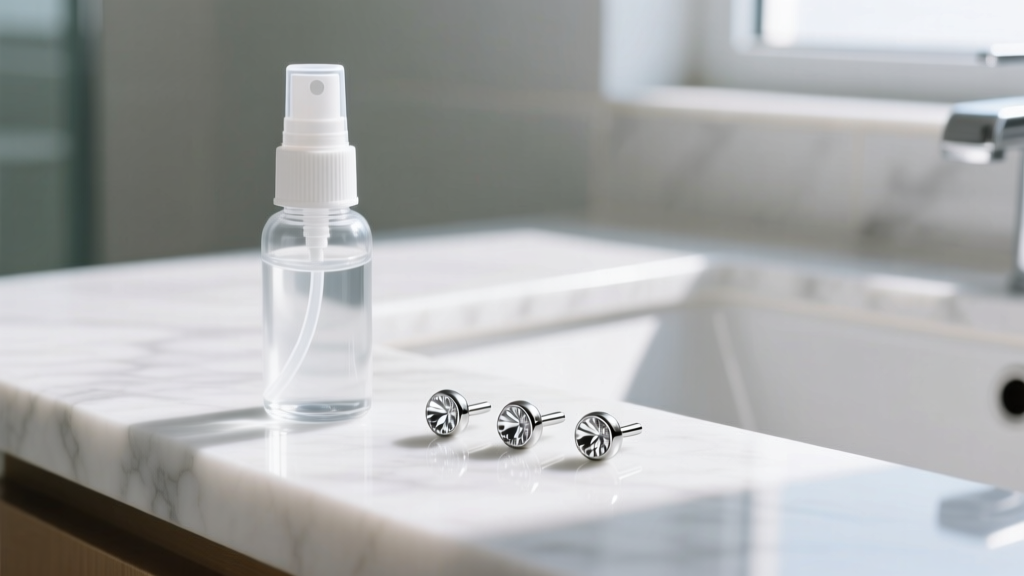
Understanding Body Jewelry Plus SM (Standard Millimeter) Gauges
When professionals and dedicated collectors discuss body jewelry plus sm, they are referring to the critical Standard Millimeter (SM) gauge range. This encompasses the foundational thicknesses of the piercing world: 18-gauge (1.0mm), 16-gauge (1.2mm), and 14-gauge (1.6mm). These sizes represent the vast majority of nostril, earlobe, lip, septum, and cartilage piercings. Because SM gauges are relatively thin compared to large-gauge body modification, they present unique challenges regarding fistula (the piercing canal) stability, jewelry migration, and the accumulation of microscopic debris.
Caring for SM jewelry requires a nuanced understanding of both human biology and metallurgy. A 16-gauge titanium hoop in a nostril, for instance, has a surface area that easily traps sebum, dead skin cells, and environmental pollutants. If left unmanaged, this biofilm can degrade the metal finish and trigger localized immune responses. This comprehensive guide breaks down the exact protocols required to maintain the structural integrity of your jewelry and the biological health of your piercing.
The Biology of the Fistula and SM Jewelry
The fistula is the tube of healed tissue that forms around your jewelry. In SM gauges, the fistula is relatively narrow, making it highly susceptible to pressure necrosis (tissue death caused by prolonged pressure) if the jewelry is too tight or poorly angled. During the cleaning process, it is crucial to understand that you are not just cleaning the metal; you are maintaining a delicate mucosal or dermal lining.
The inner diameter of a 14-gauge labret or the curvature of a 16-gauge segment ring must allow for natural lymphatic drainage. When cleaning, never force movement through the fistula. Moving the jewelry creates micro-tears in the newly formed epithelial cells, resetting the healing clock and introducing surface bacteria into the deeper tissue layers.
The Chemistry of Cleaning Agents: What Actually Works
The Association of Professional Piercers (APP) strictly recommends sterile, 0.9% sodium chloride (isotonic saline) for piercing aftercare. Why 0.9%? Because this specific concentration matches the osmolarity of human blood and tears. Using a hypertonic solution (like sea salt mixed at home) draws moisture out of the cells, causing tissue shrinkage, dryness, and delayed healing. Using a hypotonic solution causes cells to swell and burst.
Furthermore, you must completely avoid harsh chemical agents. Hydrogen peroxide and rubbing alcohol do not discriminate between harmful bacteria and healthy regenerative cells; they destroy both. Tea tree oil, while popular in holistic circles, is a known contact allergen that frequently causes severe contact dermatitis when applied to the confined space of an SM gauge fistula.
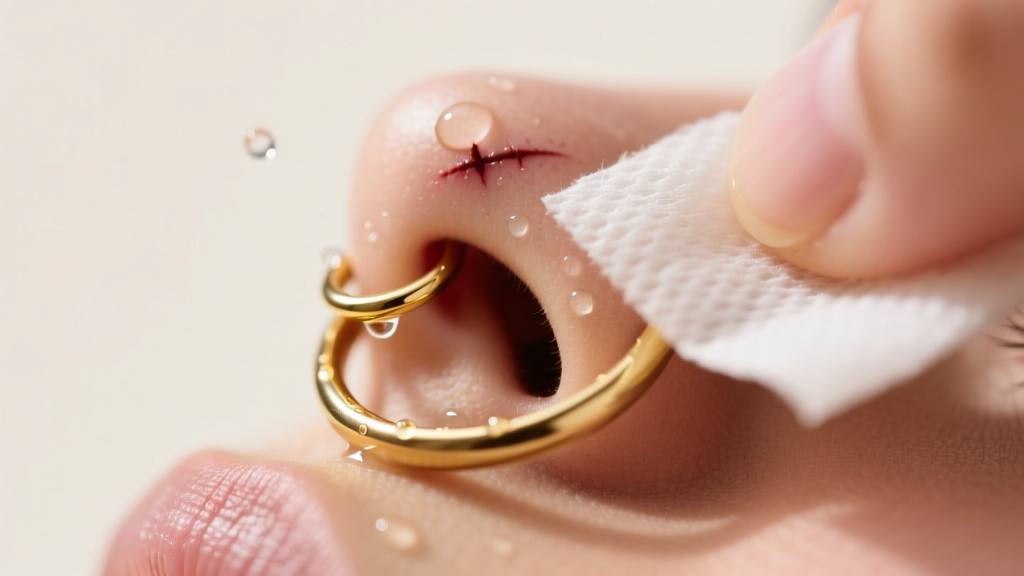
Saline Sprays vs. Soaks: A 2026 Perspective
For daily maintenance of healed SM piercings, a sterile saline spray (using a Bag-on-Valve aerosol system to ensure zero preservatives) is sufficient. However, for fresh piercings or irritated SM gauges, a sterile saline soak is superior. Soaking softens the crusted lymph and sebum, allowing it to be wiped away without mechanical friction. Apply the soak using a non-woven 4x4 gauze pad—never cotton balls or swabs, as the cellulose fibers can wrap around the 1.2mm or 1.6mm post and harbor bacteria.
Step-by-Step Daily Maintenance Protocol
Establishing a rigid, gentle routine is the cornerstone of long-term piercing health. Below is the gold-standard daily protocol for SM gauges:
- Preparation: Wash your hands thoroughly with an antimicrobial, fragrance-free liquid soap for a full 20 seconds.
- Application: Spray sterile 0.9% saline directly onto the entry and exit points of the piercing, or apply via soaked non-woven gauze.
- Softening: Allow the saline to sit for 30 to 60 seconds to soften any dried lymph or sebum.
- Removal: Gently wipe away the softened debris with a fresh piece of gauze. Do not pick or scrape.
- Drying: Pat the area completely dry with a clean paper towel or use a hairdryer on the 'cool' setting. Moisture trapped against an SM gauge can lead to fungal overgrowth or moisture-associated skin damage (MASD).
Cleaning Schedule & Product Matrix
To maintain optimal hygiene without over-cleaning, follow this structured maintenance matrix based on the healing stage of your SM piercing.
| Frequency | Target Area | Recommended Product | Action / Technique |
|---|---|---|---|
| Twice Daily | Healing SM Piercings | 0.9% Sterile Saline (Bag-on-Valve) | Spray or soak for 60 seconds; pat dry with non-woven gauze. |
| Once Daily | Healed SM Piercings | Fragrance-Free Glycerin Soap | Lather in hands, gently massage around the jewelry post, rinse thoroughly. |
| Weekly | Jewelry Hardware (Healed) | Warm Distilled Water & Mild Soap | Remove jewelry (if fully healed), scrub with a soft-bristle silicone brush. |
| Monthly | High-End SM Jewelry | Ultrasonic Cleaner (40kHz) | Submerge disassembled titanium/steel pieces for 3 minutes; air dry. |
Material-Specific Failure Modes in Standard Jewelry
The longevity and cleanliness of your piercing are inextricably linked to the metal grade of your SM jewelry. Not all metals react to bodily fluids and cleaning agents in the same way.
ASTM F136 Titanium vs. 316L Surgical Steel
Implant-grade titanium (ASTM F136) is the undisputed champion of SM jewelry. It relies on a passive chromium-oxide layer that instantly reforms if scratched, making it virtually impervious to the corrosive nature of human sweat and sebum. Conversely, 316L Surgical Steel contains trace amounts of nickel. While the nickel is bound within the alloy, microscopic scratches on the steel's surface—often caused by aggressive scrubbing with abrasive brushes—can expose the nickel, leading to localized allergic contact dermatitis. If you wear steel, you must be exceptionally gentle during cleaning to preserve the metal's mirror polish.
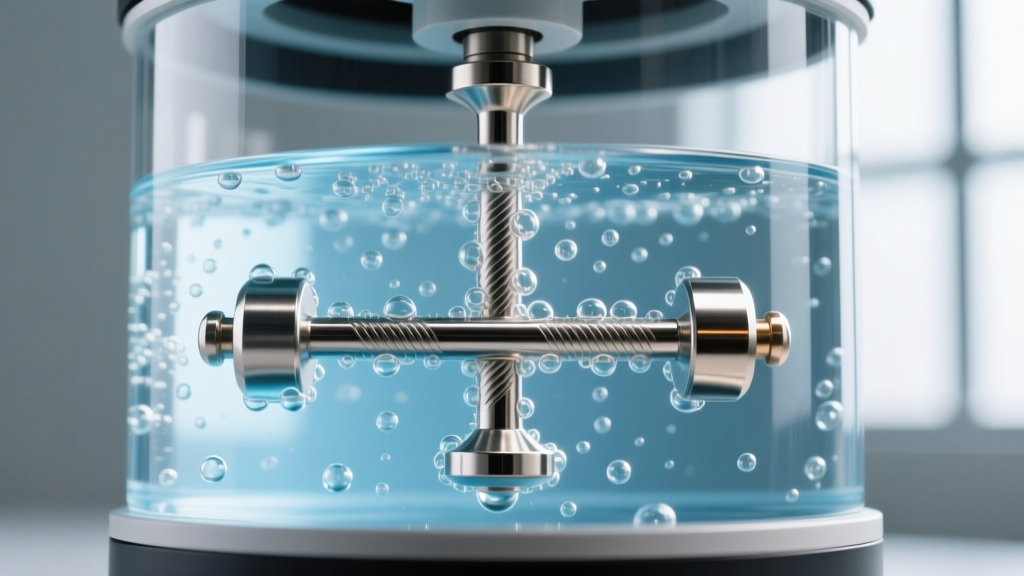
Ultrasonic Cleaning Parameters for Healed SM Jewelry
For deeply cleaning the threads and internal components of 14-gauge and 16-gauge barbells, an ultrasonic cleaner is highly effective. The cavitation bubbles generated at 40kHz can reach into the microscopic crevices of internal threading that a brush cannot. However, this method is strictly for healed piercings and removed jewelry. Never use ultrasonic waves on jewelry currently in the body, and avoid using this method on porous gemstones (like opals or turquoise) or PVD-coated jewelry that has pre-existing micro-fractures in the coating.
Troubleshooting Irritation Bumps on 16G and 14G Gauges
Irritation bumps (hypertrophic scarring) are incredibly common on SM gauges, particularly in cartilage piercings like the helix or tragus. These are not keloids; they are localized inflammatory responses to mechanical stress, moisture, or poor jewelry angles. According to Mayo Clinic wound care guidelines, keeping the area clean, dry, and free from physical trauma is the primary method of resolving minor localized swelling.
If a bump appears near the exit hole of a 16-gauge flat-back labret, the first troubleshooting step is to check the post length. If the initial swelling has subsided and the post is now too long, the jewelry will move excessively, acting like a cheese wire against the fistula. Downsizing to a shorter post (e.g., moving from a 5/16' to a 3/16' post) is often the only way to permanently resolve the mechanical irritation causing the bump. Combine this downsizing with warm sterile saline compresses to draw out localized edema.
Environmental Factors: Hard Water and Chlorine
Your local water supply plays a hidden role in SM jewelry maintenance. Hard water, which is high in calcium and magnesium, can leave microscopic mineral deposits on your jewelry every time you shower. Over time, this mineral buildup creates a rough surface texture on a 1.2mm nostril hoop, which then harbors bacteria and irritates the fistula. If you live in a hard water area, it is vital to perform a weekly wipe-down of your healed jewelry using a cotton pad lightly dampened with distilled white vinegar, followed by a thorough rinse with distilled water.
Similarly, heavily chlorinated pools and hot tubs are highly detrimental to both the fistula and certain metal finishes. Chlorine can degrade the anodized colors on niobium and titanium SM jewelry, causing them to fade prematurely. Always rinse your piercings with sterile saline immediately after swimming in treated water.
Final Thoughts on Long-Term Piercing Health
Maintaining body jewelry plus sm gauges is an exercise in consistency and precision. By respecting the delicate biology of the fistula, utilizing chemically balanced 0.9% isotonic saline, and understanding the metallurgical properties of your chosen implants, you ensure that your piercings remain healthy and vibrant for a lifetime. Avoid the temptation of harsh chemical shortcuts, invest in high-quality non-woven gauze, and treat your SM jewelry with the meticulous care it demands.

