Corset Piercing Jewelry: Technical Guide to Surface Bars & Anchors
Master the mechanics of corset piercing jewelry. Explore implant-grade surface bars, microdermal anchors, gauge specs, and rejection prevention.

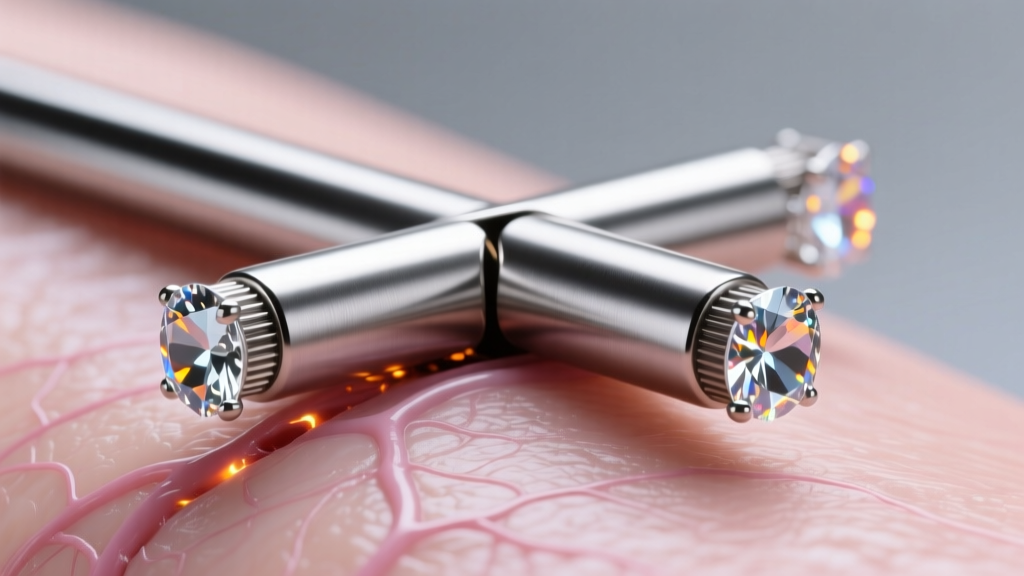
The Biomechanics of Corset Piercings: Surface Tension vs. Dermal Anchors
Corset piercings represent one of the most visually striking yet technically demanding modifications in body art. Traditionally arranged in symmetrical, bilateral columns along the back, arms, or thighs, these piercings mimic the lacing of a Victorian corset. However, the aesthetic appeal is entirely dependent on the precise selection of corset piercing jewelry. Unlike standard lobe or cartilage piercings that pass entirely through a distinct flap of tissue, corset setups are predominantly surface piercings or microdermal installations. This means the jewelry rests in the same plane of tissue, entering and exiting the same anatomical layer, or anchoring directly beneath the dermis.
The primary enemy of any corset configuration is surface tension. When the skin moves, stretches, or compresses, the jewelry acts as a fulcrum. If the jewelry geometry does not perfectly match the tissue depth and movement vectors of the specific anatomical site, the body's immune system will initiate a rejection cascade. According to the Association of Professional Piercers (APP), surface piercings require meticulous attention to jewelry rise, footplate width, and bend angles to mitigate the infamous 'cheese-cutter effect,' where the body slowly pushes foreign objects out through the epidermis.
Why Standard Rings Fail Long-Term
In temporary corset setups—often performed for photoshoots, fetish play, or single-day events—piercers may use Captive Bead Rings (CBRs) or D-rings. While these allow for easy ribbon threading and dramatic visual tension, they are catastrophically unsuited for permanent wear. The inherent curvature of a ring creates continuous outward rotational force against the entry and exit holes. Over weeks or months, this torque will inevitably cause migration, scarring, and eventual rejection. Permanent corset piercing jewelry must rely on staple-shaped surface bars or individual dermal anchors to distribute pressure evenly beneath the skin.
Technical Specifications for Corset Piercing Jewelry
Selecting the correct hardware requires a deep understanding of subdermal topography. Surface bars are not one-size-fits-all; they are precision-engineered medical devices. The three critical dimensions are gauge (thickness), width (distance between the two piercings), and rise (the vertical distance from the footplate to the threading).
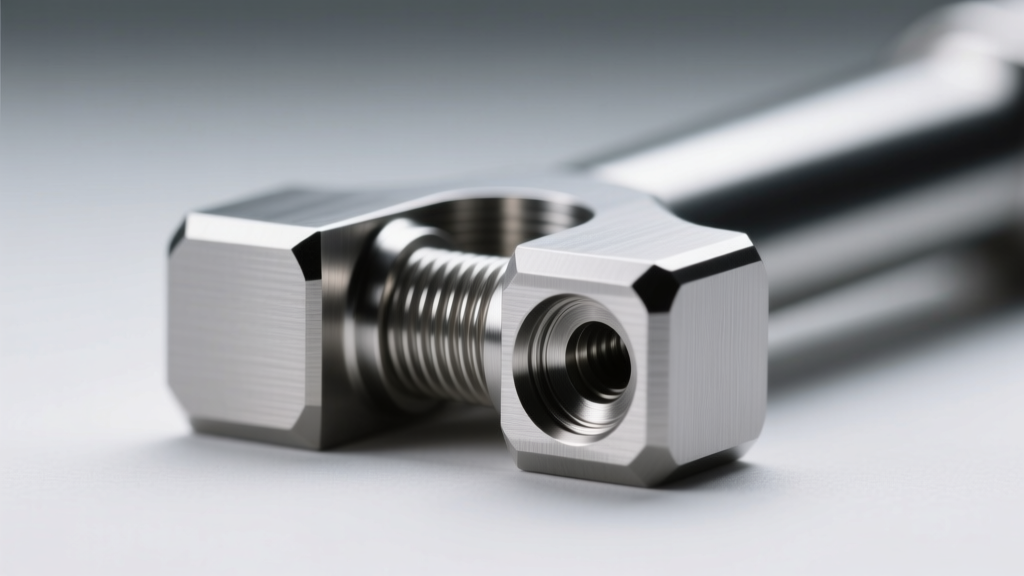
Anatomy of a Surface Bar
A high-quality surface bar features a staple-like bend, typically ranging from 90 to 110 degrees depending on the anatomical curvature. The 'rise' is arguably the most crucial metric. If the rise is too short (e.g., 1.0mm), the decorative ends will compress the healing epidermis, leading to necrosis and embedding. If the rise is too tall (e.g., 4.0mm), the jewelry will catch on clothing, introducing shear forces that tear the delicate fistula. Most expert piercers stock surface bars with rises between 1.5mm and 2.5mm for initial corset installations.
| Jewelry Type | Standard Gauge | Rise / Depth | Footplate Style | Rejection Risk Profile |
|---|---|---|---|---|
| Staple Surface Bar | 14g (1.6mm) / 12g (2.0mm) | 1.5mm - 2.5mm | Wide Rectangular / Grooved | Moderate (Highly dependent on placement) |
| Curved Surface Bar | 14g (1.6mm) | 2.0mm - 3.0mm | Rounded / Tapered | High (Only for highly concave anatomical sites) |
| Microdermal Anchor | N/A (Single-point) | 1.5mm - 2.5mm (Post) | Flat Base with Holes | Low-Moderate (Independent movement per point) |
| Captive Bead Ring | 16g / 14g | N/A (Diameter based) | N/A | Extreme (Guaranteed rejection if left long-term) |
Material Science: ASTM F136 Titanium and PTFE Lacing
When dealing with surface tension, the biocompatibility of the material is non-negotiable. The APP Material Guidelines strictly recommend Implant-Grade Titanium (ASTM F136 or F1295) for all fresh and healing surface piercings. Unlike 316L surgical steel, which contains nickel and can cause contact dermatitis that accelerates rejection, F136 titanium is entirely nickel-free and highly resistant to corrosion from interstitial fluid.
The polish of the jewelry is equally critical. Mirror-finished titanium minimizes microscopic surface irregularities where bacteria and dead skin cells can accumulate. For corset piercings, where hygiene is complicated by lacing and clothing friction, a flawless surface finish reduces the risk of localized infection that could trigger an immune response.
The Mechanics of Lacing Materials
The jewelry is only half the equation; the lacing material threaded through the corset piercing jewelry dictates the long-term viability of the setup. Traditional silk or satin ribbons look beautiful but are highly porous, trapping sweat, dead skin, and bacteria against the fistula. Furthermore, rigid ribbons do not stretch with the body's natural movements, transferring kinetic energy directly to the entry and exit holes.
Expert piercers recommend using PTFE (Teflon) tubing or specialized biocompatible elastomer cords for permanent corset lacing. PTFE is inert, non-porous, and possesses a slight degree of flexibility that absorbs shock when the skin stretches, significantly reducing mechanical stress on the surface bars.
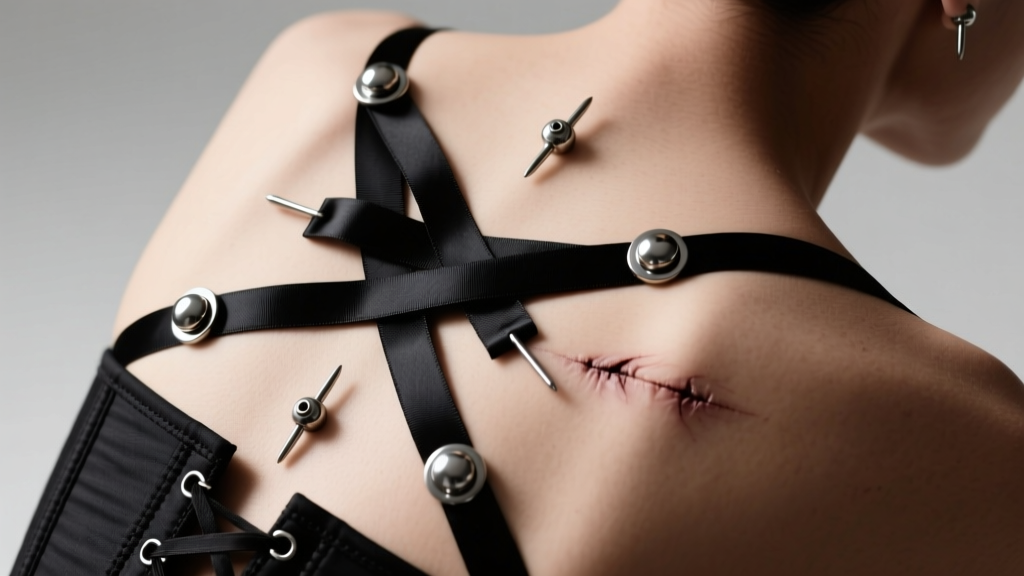
Troubleshooting Rejection and Migration
Even with perfect technique and premium corset piercing jewelry, surface piercings carry an inherent risk of migration. Recognizing the early warning signs is essential for preserving the surrounding tissue and minimizing scarring. Migration is not an infection; it is a mechanical rejection process.
- Skin Thinning: If the skin between the entry and exit holes becomes translucent or noticeably thinner, the bar is migrating toward the surface.
- Asymmetry and Redness: Persistent redness localized to one side of the surface bar, accompanied by a shift in the angle of the decorative ends, indicates uneven tissue tension.
- Visible Footplates: In advanced stages of microdermal rejection, the outline of the anchor base or the bar itself becomes visible beneath the epidermis.
- Excessive Weeping: Clear or slightly yellow interstitial fluid that refuses to stop after the initial healing phase is a sign of chronic mechanical irritation.
If migration is detected, the only viable intervention is immediate removal by a professional piercer. Attempting to 'save' a migrating surface piercing with topical treatments or downsizing the jewelry will only result in severe split scarring.
Expert Sourcing and Brand Recommendations
Sourcing reliable corset piercing jewelry requires bypassing commercial retail outlets and dealing directly with manufacturers that adhere to strict CNC machining tolerances and APP standards. Brands such as Anatometal, Industrial Strength Body Jewelry, and NeoMetal are the gold standards in the industry. Anatometal's staple surface bars, for instance, are renowned for their precise 90-degree bends and wide, grooved footplates that encourage tissue integration. NeoMetal's threadless (snap-together) surface ends are highly recommended for corset setups, as they eliminate the internal threading that can harbor bacteria and allow for seamless, tool-free gemstone swaps once the piercing is fully healed.
Ultimately, a successful corset piercing is a triumph of biomechanics over anatomy. By prioritizing implant-grade materials, precise dimensional matching, and flexible lacing systems, collectors and piercing enthusiasts can safely enjoy the dramatic aesthetic of the corset modification for years to come.


