Prince Albert Piercing Jewelry Size & 2026 Value Guide
Discover the ideal prince albert piercing jewelry size for your anatomy. Compare 2026 material costs, gauge upgrades, and long-term value.

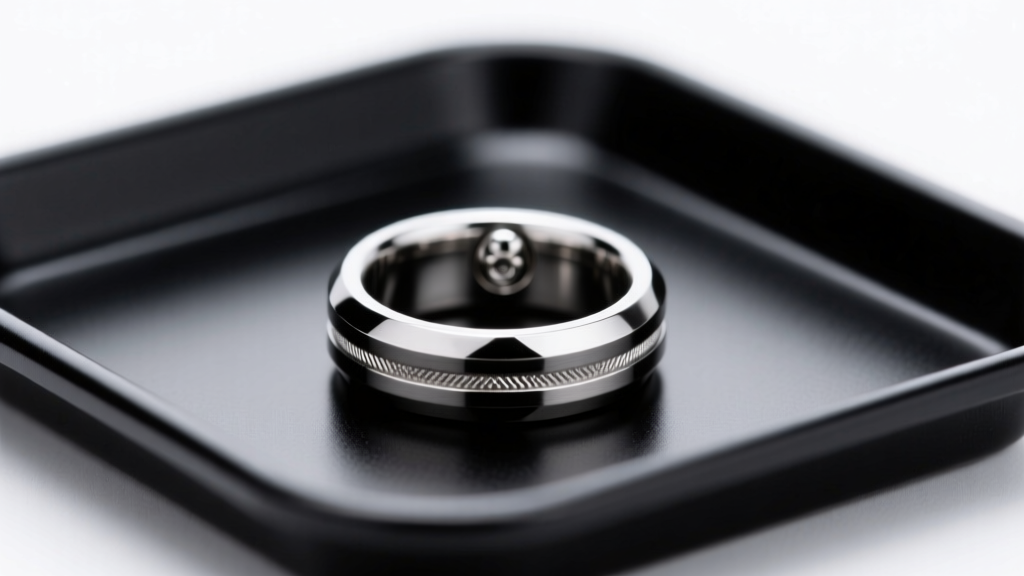
The Biomechanics of Sizing: Why 'Standard' is a Myth
Genital piercings demand a significantly higher standard of metallurgy and precision sizing than almost any other body modification. When researching the ideal prince albert piercing jewelry size, enthusiasts often fixate on aesthetics while ignoring the biomechanical realities of the urethral and frenulum tissue. The Prince Albert (PA) piercing passes through the urethra and exits behind the glans, meaning the jewelry is subjected to constant friction, moisture, and the acidic environment of urine.
In 2026, the online market is flooded with budget-friendly options, but a true value assessment requires looking past the initial price tag. Buying cheap, poorly sized jewelry doesn't just compromise your aesthetic; it introduces severe medical risks. The most notorious of these is the 'cheese cutter effect.' If a client attempts to save money by wearing a 12-gauge (2.0mm) ring, the thin wire acts like a cheese wire against the delicate frenulum tissue during friction or sleep. Over time, this causes the jewelry to slowly slice through the tissue, leading to migration, tearing, and the need for costly reconstructive procedures.
'The most common mistake I see in budget-conscious clients is starting at 12g to save a few dollars on initial jewelry. Within six months, the migration and tissue tearing force them to pay for a corrective piercing and medical treatment, entirely negating any upfront savings.' — Senior APP-Certified Piercer
Initial Piercing vs. Stretched Gauges: A Sizing Breakdown
Understanding the exact millimeter conversions of the American Wire Gauge (AWG) system is critical for budgeting your PA journey. Jewelry costs scale exponentially as the diameter of the metal increases.
The 10g (2.38mm) to 8g (3.17mm) Starting Zone
Reputable piercers will almost universally recommend starting a PA at 10g or 8g. An 8-gauge ring provides enough surface area to distribute pressure evenly across the urethral exit, preventing migration. Initial jewelry costs in this range are highly accessible, typically ranging from $40 to $75 for high-quality implant-grade titanium. According to the Association of Professional Piercers (APP), starting at 8g also sets a stable foundation for future stretching, should you choose to go larger.
The 6g (4.11mm) to 4g (5.08mm) Sweet Spot
For long-term comfort and stability, the 6g to 4g range is widely considered the 'sweet spot' for PA piercings. At this thickness, the jewelry has enough weight and girth to hang comfortably without swinging aggressively, which reduces impact trauma during physical activity. Upgrading to 4g titanium segment rings will generally cost between $65 and $110. This is where budget-conscious buyers must be vigilant: many cheap manufacturers mislabel their gauges, selling 5mm jewelry as 4g, which can cause micro-tears during insertion.
Heavy Formats: 2g (6.54mm) and Beyond
Stretching past 2g enters the realm of heavy-gauge body modification. At 0g (8.25mm) and larger, standard captive bead rings become impractical due to the immense tension required to snap the bead into place. Wearers must transition to specialized locking segment rings or custom-machined hinges. The budget requirement here jumps significantly, with heavy-gauge solid titanium or niobium pieces frequently costing $150 to $300+ per piece.
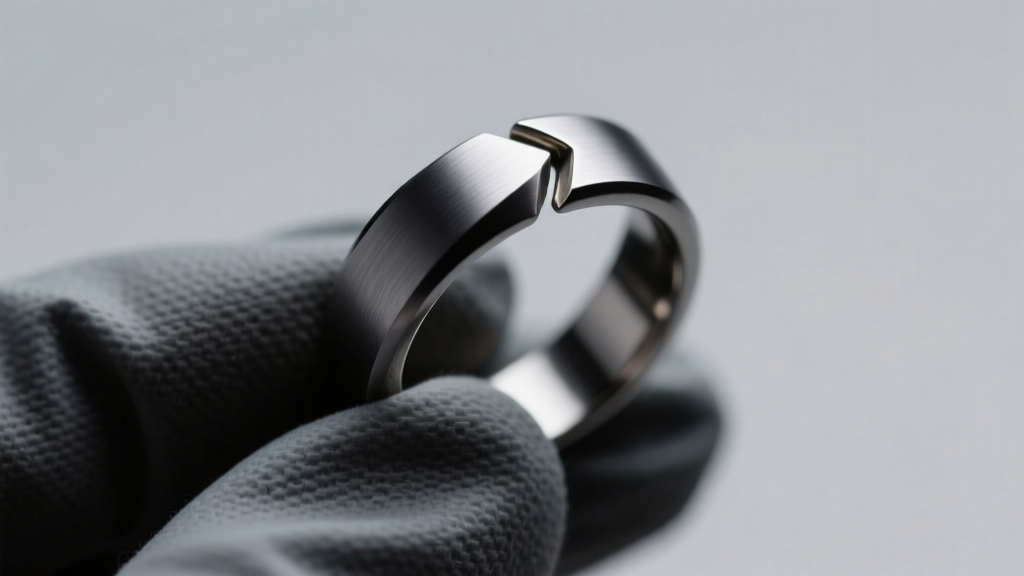
Material Value Assessment: The Chemistry of Urine Exposure
The environment of a PA piercing is uniquely hostile to cheap metals. Urine is slightly acidic (average pH of 6.0) and contains urea, chloride, and sodium. When low-grade metals are exposed to this environment daily, they degrade. Assessing value means calculating the cost-per-wear and the medical risks associated with material failure.
| Material Grade | Avg. Cost (8g-4g) | Corrosion Resistance | Long-Term Value |
|---|---|---|---|
| 316L Surgical Steel | $12 - $25 | Poor (Pitting over time) | Low |
| ASTM F-136 Titanium | $45 - $85 | Excellent (Impervious) | High |
| Niobium | $50 - $90 | Excellent | High |
| Solid 14k/18k Gold | $180 - $450+ | Good (Alloy dependent) | Medium |
As detailed in the APP Jewelry Materials Guide, 316L 'surgical steel' contains nickel and is prone to micro-pitting when exposed to urine over several months. These microscopic pits harbor bacteria, leading to chronic, low-grade infections that are incredibly difficult to clear without removing the jewelry. Implant-grade titanium (ASTM F-136), conversely, forms a passive oxide layer that is completely impervious to urine. Spending $65 on a titanium ring is a massive financial win compared to the cost of treating a urethral infection.
Jewelry Styles and Their Hidden Financial Risks
The style of jewelry you choose dictates not only your comfort but also your hidden maintenance costs.
Captive Bead Rings (CBRs) vs. Segment Rings
Captive Bead Rings are the cheapest option on the market, often available for $15 to $25. However, they rely on the tension of the ring to hold a small metal bead in place. If that tension fails—or if the ring is snagged on clothing—the bead can pop out. In a PA piercing, a loose bead can easily become lodged inside the urethra, turning a minor annoyance into a $500+ emergency room visit for extraction. Segment rings, which feature a removable curved segment that slides perfectly into the ring's gap, eliminate this risk entirely. While they cost roughly 30% more upfront ($40-$70), the elimination of the 'lost bead' hazard makes them the undisputed champion of long-term value.
Circular Barbells (Horseshoes)
Circular barbells are generally discouraged for healed PAs. The threaded balls on the ends frequently unscrew due to the natural friction of the area. Furthermore, the straight center of the barbell can press uncomfortably against the urethral floor, causing localized pressure necrosis. The value here is poor, as the jewelry is functionally obsolete for this specific piercing placement.
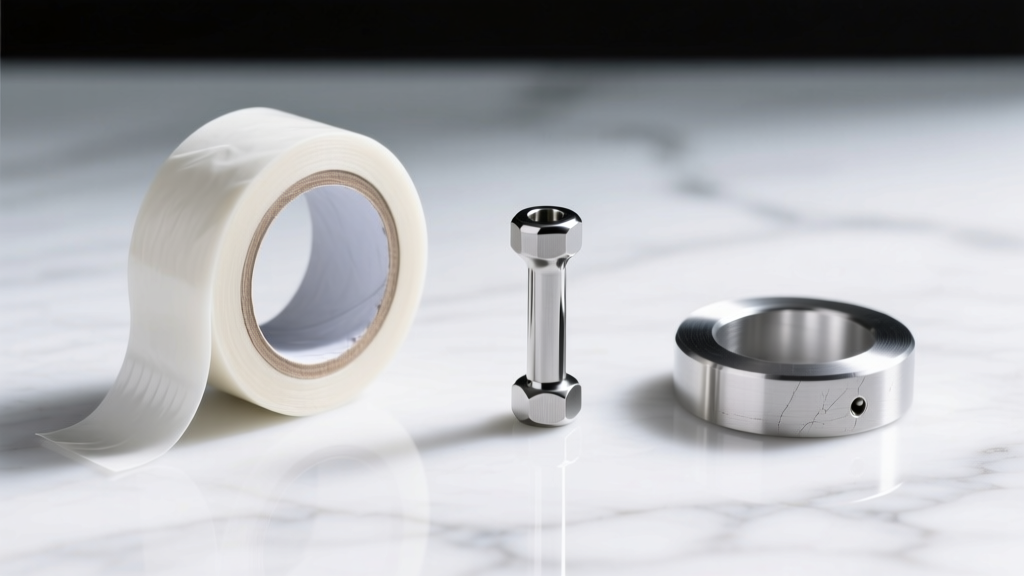
Budgeting for the Stretch: Tapers, Tape, and Professional Fees
If your goal is to stretch your PA to larger sizes, your budget must account for the tools of the trade. You cannot simply force a larger ring into a healed fistula without risking blowouts and scar tissue.
- PTFE Tape (Teflon Tape): The safest, most budget-friendly method for stretching a PA is the tape-wrapping method. A roll of sterile PTFE tape costs about $5 and lasts for months. You wrap 2-3 layers around your current jewelry, wear it for a week, and gradually add layers to slowly expand the tissue.
- Single-Use Insertion Tapers: For jumping half-sizes (e.g., 6g to 4g), a steel or acrylic insertion taper ($10-$20) is necessary. Never reuse tapers that have been in contact with mucosal tissue without proper sterilization.
- Professional Stretching Services: If you are jumping a full size or moving into heavy gauges (2g and up), paying a professional piercer $30-$50 for a stretching session is a wise investment. They use sterile, graduated tapers and can assess tissue elasticity to prevent tearing.
Final Verdict: Maximizing Your PA Investment
When evaluating the true cost of prince albert piercing jewelry size and materials, the cheapest option is almost always the most expensive in the long run. By prioritizing ASTM F-136 implant-grade titanium, starting at a minimum of 8-gauge to prevent the cheese-cutter effect, and investing in beadless segment rings, you protect both your anatomy and your wallet. Budgeting for a PA piercing isn't just about the initial transaction; it is an ongoing commitment to tissue health, biomechanical stability, and premium metallurgy that will serve you safely for a lifetime.

