How to Apply Body Jewelry Stickers Safely Near Piercings
Learn how to safely apply body jewelry stickers and adhesive gems near healed piercings without causing infections or contact dermatitis.

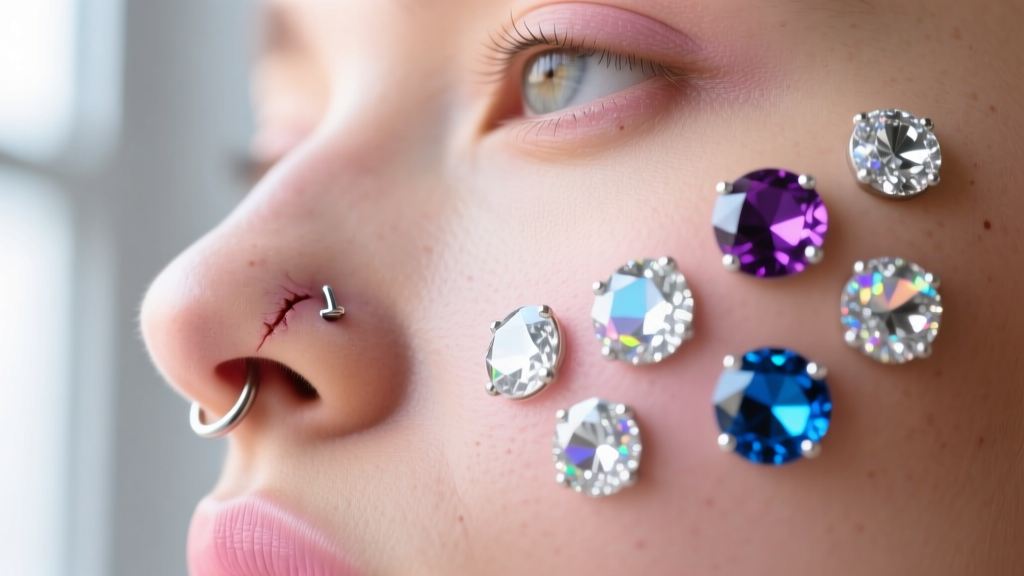
The Evolution of Constellation Styling
In 2026, the trend of constellation piercing layouts frequently incorporates body jewelry stickers—medical-grade adhesive gems, faux dermal patches, and skin-safe rhinestones—to bridge gaps between healed fistulas without committing to additional needle trauma. While traditional titanium and gold jewelry remains the gold standard for the piercing itself, decorative adhesives offer a temporary, high-impact aesthetic for festivals, photoshoots, or daily styling. However, the skin surrounding a piercing is uniquely micro-textured and sensitive. Applying body jewelry stickers incorrectly can lead to severe contact dermatitis, trapped anaerobic bacteria, and compromised healing tissue. This guide provides a professional, step-by-step framework for integrating adhesive styling into your piercing routine safely.
Crucial Safety Rules: The 5mm Clearance Protocol
The most critical rule when using body jewelry stickers is maintaining absolute clearance from the fistula (the piercing hole). The fistula is a mucosal-lined tube that requires continuous airflow and drainage. If adhesive seeps into the channel, or if a sticker covers the entry point, it creates an anaerobic environment perfect for Pseudomonas and Staphylococcus bacterial growth.
- The 5mm Rule: Never place an adhesive sticker within 5 millimeters of the piercing entry or exit point. This prevents capillary action from drawing glue into the fistula.
- Avoid the Jewelry Post: Do not allow adhesives to touch the actual metal of your 16g or 18g body jewelry. Solvents used for removal can degrade certain O-rings or dull the polish on anodized titanium.
- Skin Integrity Check: Never apply stickers over micro-tears, flaking skin, or active hypertrophic scarring (irritation bumps).
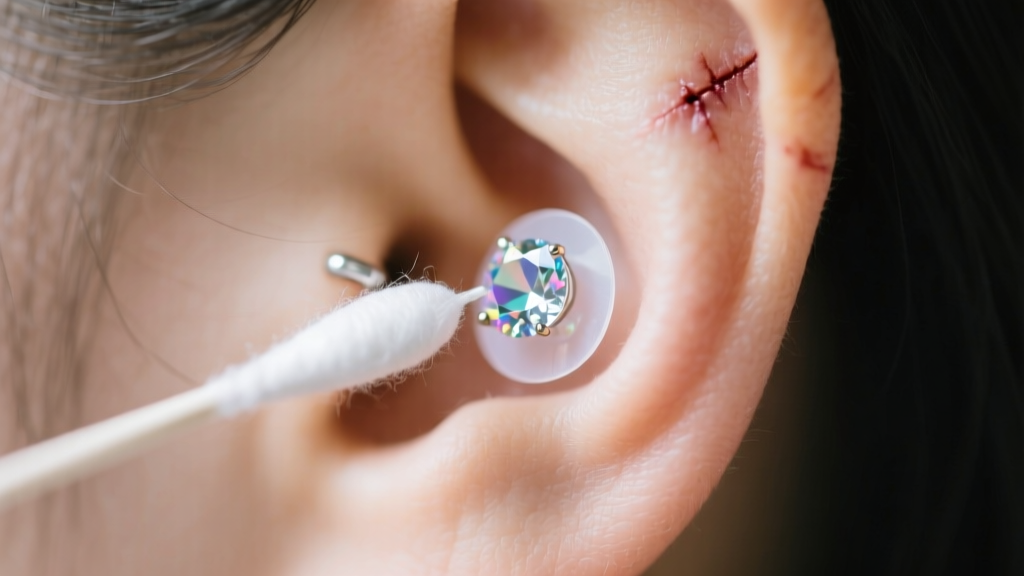
Step-by-Step Application Guide for Healed Piercings
Proper preparation is the difference between a styling choice that lasts three days and one that peels off in three hours while dragging dead skin cells with it. Follow this exact protocol for applying body jewelry stickers around fully healed piercings (minimum 12 months for cartilage, 6 months for lobes).
Step 1: Targeted Skin Preparation
Cleanse the piercing with a sterile 0.9% sodium chloride saline spray to remove any crusties or sebum. Once the piercing site is clean, switch focus to the surrounding skin where the sticker will be placed. Wipe the target area with a lint-free swab dipped in 70% isopropyl alcohol. This strips natural sebum and dead skin cells, creating a porous canvas for the adhesive. Warning: Do not let the alcohol pool into the piercing hole, as it will severely dry out and irritate the delicate fistula tissue.
Step 2: Adhesive Selection and Application
For high-quality glass or crystal flatbacks, use a water-based acrylic adhesive like Pros-Aide. Apply a microscopic drop of adhesive to the back of the gem using a fine-tipped applicator or toothpick. Wait 30 to 45 seconds for the adhesive to become tacky. Applying it wet will cause the glue to spread upon contact, increasing the risk of it migrating toward your piercing.
Step 3: Precision Placement
Using sterile cosmetic tweezers, place the body jewelry sticker firmly onto the prepped skin, maintaining your 5mm clearance from the fistula. Press down with a clean cotton swab for 10 seconds to ensure a bond with the epidermis. Avoid stretching the skin during application, as releasing the tension will cause the adhesive edges to lift and trap dirt.
Adhesive Comparison: What to Use and What to Avoid
Not all glues are created equal. The American Academy of Dermatology frequently treats chemical burns and allergic contact dermatitis caused by improper cosmetic adhesives. Below is a breakdown of common adhesives used with body jewelry stickers.
| Adhesive Type | Skin Safety Rating | Water Resistance | Best Use Case |
|---|---|---|---|
| Pros-Aide (Water-based Acrylic) | Excellent (Hypoallergenic) | High | Gemstones, long-term wear (3-5 days) |
| Medical-Grade Silicone | Excellent | Moderate | Faux dermal tops, sensitive skin |
| Spirit Gum | Poor (High irritation risk) | Low | Avoid entirely near piercings |
| Cyanoacrylate (Super Glue) | Dangerous (Toxic/Burns) | High | NEVER use on human skin |
Safe Removal Techniques to Protect Your Piercing
Peeling body jewelry stickers off dry is a guaranteed way to strip the stratum corneum (the outermost layer of skin), resulting in micro-abrasions that can become infected and subsequently irritate your nearby piercing. The Association of Professional Piercers emphasizes that preserving the skin barrier is paramount to preventing piercing migration and rejection.
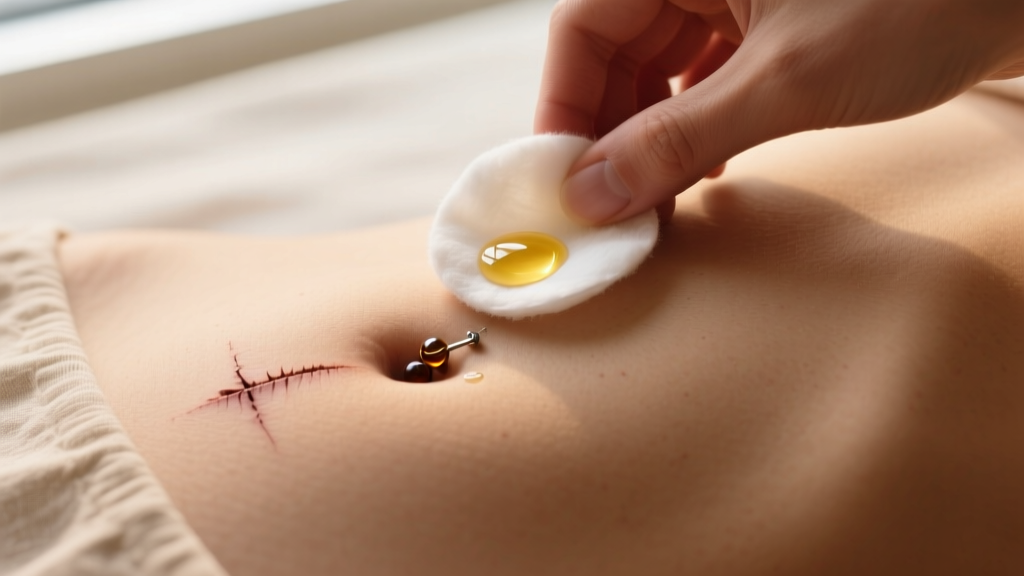
To remove adhesive gems safely:
- Saturate: Soak a cotton pad in pure, cold-pressed jojoba oil or a dedicated medical adhesive remover (like Tegaderm adhesive release).
- Dwell Time: Press the saturated pad over the body jewelry sticker and hold it for 60 seconds. The oil must penetrate the adhesive bond.
- Slide, Don't Pull: Gently slide the gem off the skin laterally. If there is resistance, apply more oil and wait another 30 seconds.
- Residue Cleanup: Wipe away residual glue with an oil-dampened swab, then wash the area with a mild, fragrance-free glycerin soap to prevent clogged pores around your piercing.
When to Avoid Adhesive Styling Entirely
While body jewelry stickers are a fantastic styling tool, they are strictly contraindicated in specific scenarios. Never use adhesives if your piercing is less than a year old, as the fistula is still maturing and highly susceptible to bacterial trapping. Additionally, avoid stickers if you are experiencing an active flare-up of a nickel allergy, as the stress of adhesive removal can exacerbate systemic skin inflammation. Finally, if you are scheduled for an MRI or surgical procedure, all body jewelry stickers and metallic-backed faux gems must be removed, as they can cause localized radiofrequency burns. By respecting the biology of your piercings and the chemistry of your adhesives, you can achieve stunning, complex jewelry layouts safely and effectively.


