2026 Riot Piercing and Permanent Jewelry Metal Guide
Explore the metallurgy behind Riot piercing and permanent jewelry. Compare 14k gold, platinum, and titanium grades for welded chains and dermal anchors.

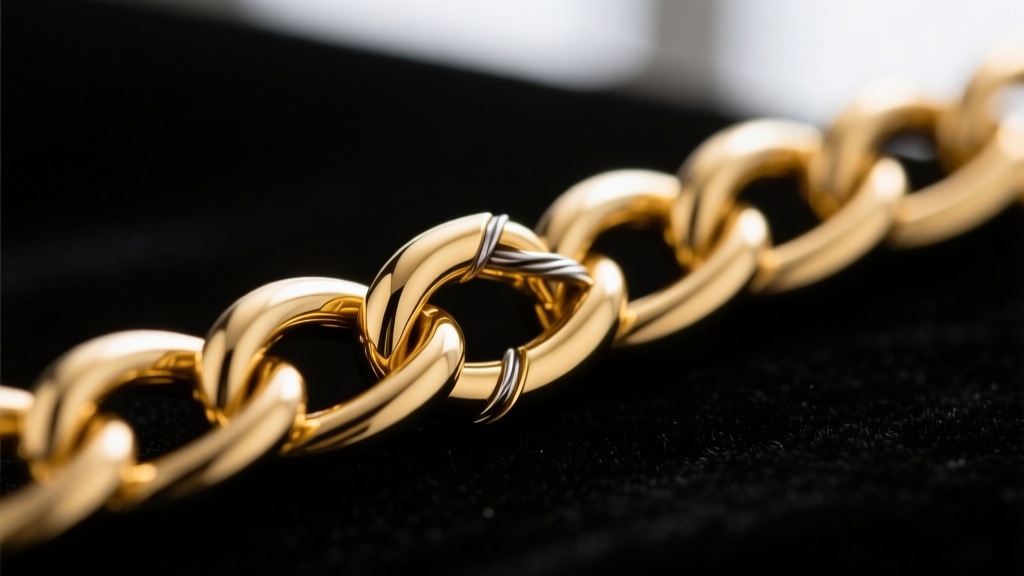
The Metallurgy of Permanent Jewelry
The landscape of body modification has evolved dramatically, moving far beyond standard clasped accessories into the realm of continuous wear. When evaluating the intersection of high-end body modification, such as the edgy, precision-focused ethos of riot piercing and permanent jewelry, understanding metallurgy is non-negotiable. Permanent jewelry—defined by chains and bracelets welded seamlessly onto the body without clasps—demands rigorous material standards. Because the jewelry cannot be easily removed for cleaning or emergency medical procedures, the metals used must exhibit supreme biocompatibility, corrosion resistance, and structural integrity at the microscopic weld joint.
In 2026, the industry has largely moved away from soldered links, which rely on lower-melting-point filler metals that can cause galvanic corrosion or allergic contact dermatitis. Instead, top-tier studios utilize micro-TIG (Tungsten Inert Gas) and laser welding to fuse the base metal directly. This requires a deep understanding of how different alloys behave under extreme, localized thermal shock.
Material Breakdown: Gold, Platinum, and Titanium
Not all precious metals are created equal, especially when subjected to the continuous friction of daily life and the intense heat of a welding electrode. The choice of material dictates the longevity of the weld, the drape of the chain, and the biological response of the surrounding tissue.
14k vs. 18k Solid Gold
Gold in its pure state (24k) is far too soft for permanent wear; a 24k chain would stretch and snap under minimal tensile stress. Therefore, alloying is required. According to the Gemological Institute of America (GIA), the karat system dictates the ratio of pure gold to alloy metals like copper, silver, zinc, or palladium.
- 14k Solid Gold (58.5% Gold): This is the gold standard for permanent chains. The higher proportion of alloy metals increases the Vickers hardness, making the chain highly resistant to stretching. Crucially, 14k gold has a slightly higher melting point and a more predictable weld pool under a micro-TIG arc, resulting in a stronger, less porous fusion joint.
- 18k Solid Gold (75% Gold): While prized for its richer, deeper yellow hue and higher intrinsic value, 18k gold is softer. The heat-affected zone (HAZ) around the weld can become a structural weak point over time, particularly on delicate cable or rope chains that experience high torsional stress.
Platinum 950
Platinum 950 (95% platinum, typically alloyed with 5% ruthenium or iridium) is the pinnacle of durability. Unlike gold, which loses microscopic particles of metal when scratched, platinum merely displaces. However, its melting point of approximately 1,768°C (3,217°F) requires specialized high-amperage micro-welding equipment. If a studio attempts to weld platinum with standard settings meant for gold, the result is a cold, brittle weld that will inevitably snap.
ASTM F136 Titanium
While rarely used for the delicate chains of permanent bracelets due to its stiffness and inability to be micro-welded as cleanly as gold without heavy argon shielding, Titanium 6Al-4V ELI (ASTM F136) remains vital. As noted by the Association of Professional Piercers (APP), implant-grade titanium is the undisputed king of initial piercings and dermal anchors. In hybrid permanent setups—where a gold chain is attached to a subdermal titanium anchor—the titanium component ensures absolute biological safety at the tissue interface.
Welding Techniques and Metal Compatibility
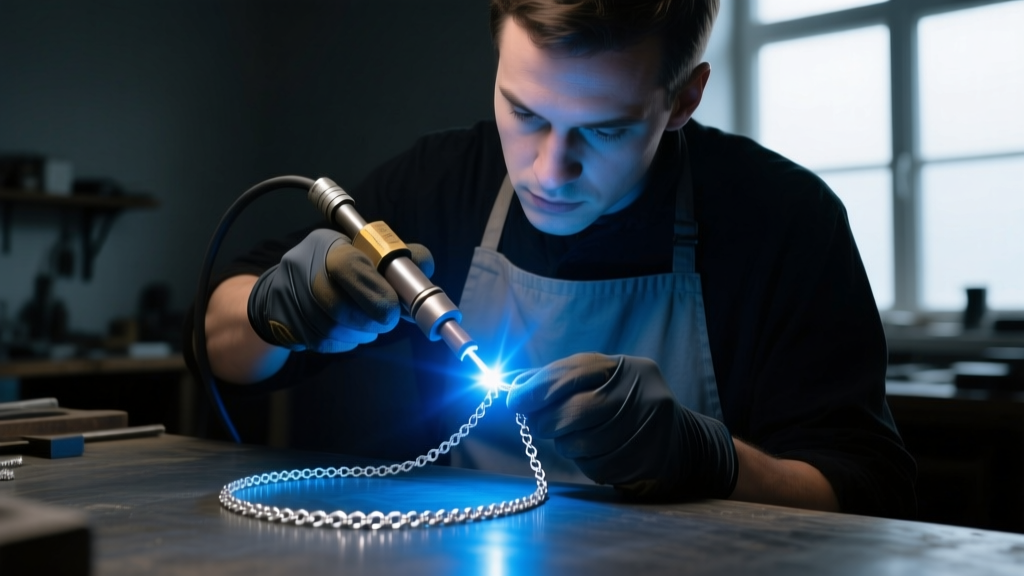
The method of joining the final link is where material science meets artisan skill. The two dominant technologies in 2026 are Laser Welding and Micro-TIG (Argon Arc) Welding.
The Micro-TIG Advantage
Micro-TIG welding uses a non-consumable tungsten electrode to create a highly focused electrical arc. The welder must simultaneously feed a microscopic snippet of the exact same chain alloy into the arc to form the weld pool. Argon gas is flowed over the weld to displace oxygen; without this shielding gas, the molten metal would instantly oxidize, creating a porous, blackened, and structurally compromised joint. This process is exceptionally effective for 14k gold and platinum, creating a fusion joint that is often stronger than the surrounding links.
The Danger of Galvanic Corrosion
A critical failure mode in permanent jewelry occurs when mixed metals are used in the weld or jump rings. If a permanent 14k gold chain is closed using a titanium or stainless steel jump ring, the introduction of sweat (a natural electrolyte) creates a galvanic cell. The less noble metal will rapidly corrode, leading to skin discoloration, metallic dermatitis, and eventual structural failure. Always ensure the closing jump ring is stamped with the exact same hallmark and alloy composition as the chain itself.
Comparative Data: Tensile Strength and Weld Integrity
To make an informed decision on which metal to invest in for continuous wear, one must look at the empirical data regarding hardness and weld behavior. The table below outlines the physical properties of the most common permanent jewelry materials.
| Material Grade | Vickers Hardness (HV) | Melting Point (°C) | Optimal Weld Method | Primary Failure Mode |
|---|---|---|---|---|
| 14k Yellow Gold | 130 - 160 | ~850°C | Micro-TIG / Laser | Link stretching at the HAZ |
| 18k Yellow Gold | 110 - 130 | ~810°C | Laser (preferred) | Torsional fatigue / Snapping |
| Platinum 950 (Ru) | 130 - 150 | ~1768°C | High-Amp Micro-TIG | Cold weld porosity |
| ASTM F136 Titanium | 320 - 360 | ~1668°C | Not recommended for chain | Oxidation without heavy Argon |
Aftercare and Long-Term Wear Properties
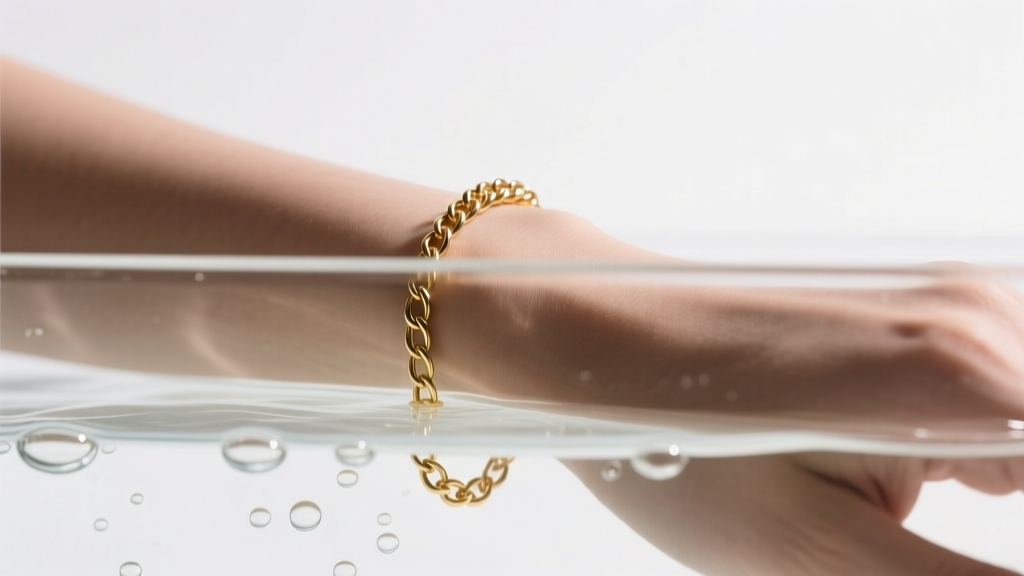
Permanent jewelry is designed to be lived in, which means it is continuously exposed to environmental stressors: ultraviolet radiation, chlorinated pool water, saline sweat, and cosmetic lotions. The material properties dictate the aftercare regimen.
Managing Soap Scum and Sebum Buildup
Because permanent chains cannot be taken off, dead skin cells (desquamation), sebum, and soap residue accumulate in the microscopic crevices of the chain links. Over time, this creates a dull, grayish film. For 14k gold and platinum, a monthly ultrasonic cleaning is highly recommended. The high-frequency sound waves create cavitation bubbles that safely implode against the metal, dislodging debris without stressing the weld joint. However, if the permanent jewelry incorporates soft gemstones like opals or emeralds, ultrasonic cleaners must be strictly avoided, as the vibrations will shatter the stones.
Tarnish Resistance
Pure gold and platinum do not tarnish. However, the copper and silver alloys in 14k gold can react with sulfur compounds in the air or certain dietary excretions, leading to a mild surface tarnish. This is easily remedied by gently brushing the chain with a soft-bristled toothbrush and a few drops of mild, phosphate-free dish soap. Avoid harsh chemical dip cleaners, as they can degrade the microscopic surface tension of the weld pool over time.
Sourcing and Quality Assurance
As the demand for permanent jewelry has skyrocketed, so has the influx of counterfeit materials. A common deception involves gold-filled or heavily gold-plated brass chains being marketed as solid gold permanent jewelry. When a micro-TIG welder applies an arc to a gold-plated chain, the intense heat instantly vaporizes the plating, exposing the base brass underneath and resulting in a toxic, structurally void weld that will cause severe contact dermatitis.
To protect your investment and your health, always demand to see the manufacturer's assay hallmark. Reputable studios will proudly display the stamps (e.g., '14K', '950Pt') and provide a certificate of authenticity detailing the exact alloy composition. When approaching the intersection of avant-garde body modification and continuous wear, never compromise on the elemental truth of the metal.