Troubleshooting Glass Piercing Jewelry: Breakage and Care Fixes
Solve common issues with glass piercing jewelry. Learn how to prevent breakage, fix O-ring slippage, and properly clean borosilicate and fused glass.

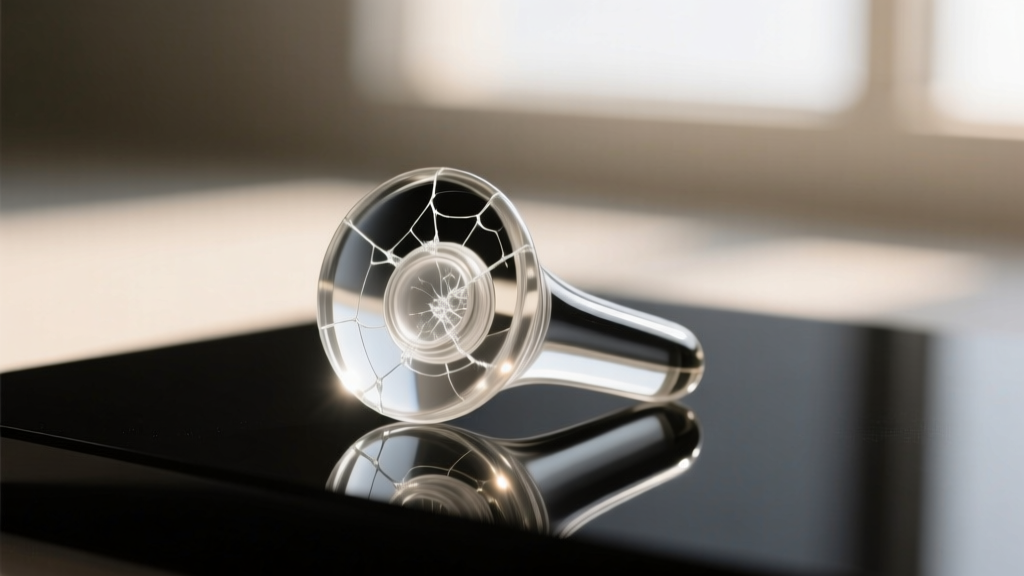
The Material Reality: Why Glass Fails and How to Prevent It
Glass piercing jewelry is a cornerstone of body modification, prized for its inert nature, MRI safety, and suitability for stretching or healing fistulas. However, glass is fundamentally a brittle amorphous solid. When clients or piercers encounter issues like spontaneous shattering, O-ring ejection, or surface cloudiness, the root cause almost always traces back to material science and improper maintenance. According to the Association of Professional Piercers (APP), only specific grades of glass are appropriate for prolonged internal wear. Understanding the difference between these grades is your first troubleshooting step.
Borosilicate vs. Soda-Lime vs. Fused Art Glass
Not all glass is created equal. Borosilicate glass (commonly known by the brand name Pyrex) contains boron trioxide, which drastically lowers its coefficient of thermal expansion (CTE) to roughly 3.3 × 10⁻⁶ /K. This makes it highly resistant to thermal shock. Soda-lime glass, used in standard windows and mason jars, has a CTE nearly three times higher, making it prone to shattering under rapid temperature changes. Fused art glass, while beautiful, is a troubleshooting minefield. If the artisan does not properly anneal the glass in a kiln to relieve internal stresses, the plug can spontaneously fracture weeks after manufacturing.
Expert Troubleshooting Tip: If a client reports a glass plug 'exploding' in their ear without impact trauma, it is almost certainly a fused art glass piece that suffered from improper kiln annealing. Always source art glass from reputable studios that guarantee their annealing cycles.
Troubleshooting Issue 1: O-Ring Slippage and Plug Ejection
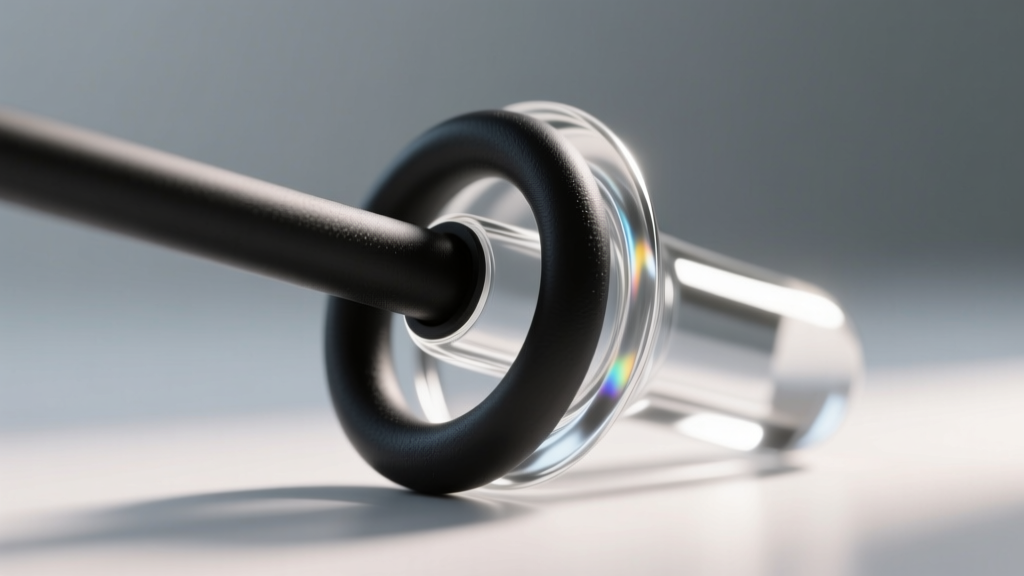
The most frequent complaint with glass ear plugs and tunnels is the loss of the jewelry due to O-ring failure. Glass has zero porosity and a very low coefficient of friction, meaning silicone O-rings slide off much easier than they do on textured wood or porous stone.
The Sizing Down Fix
The primary failure mode here is incorrect O-ring sizing. Many consumers purchase O-rings that match the exact millimeter measurement of the plug's wearable area. For a slick glass surface, an O-ring with an Inner Diameter (ID) equal to the wearable area will not grip the glass; it will grip the ear tissue and roll off the plug during sleep or movement.
- The Rule of Thumb: The O-ring ID must be 0.5mm to 1.0mm smaller than the wearable area of the glass plug.
- Example: For a 0g (8mm) glass plug with an 8.5mm wearable area, do not use an 8.5mm O-ring. Use a 7.5mm or 8.0mm ID O-ring.
- Thickness Matters: Upgrade from standard 1.5mm thick O-rings to 2.0mm or 2.5mm thick O-rings. The increased surface area creates more friction against the glass flare.
Troubleshooting Issue 2: Thermal Shock and Micro-Fractures
While borosilicate glass is highly resistant to thermal shock, it is not immune. A common troubleshooting scenario occurs when a client takes a hot shower immediately after being in freezing outdoor temperatures, or when a piercer improperly autoclaves glass jewelry alongside heavy steel cassettes that retain and transfer heat unevenly.
Diagnosing Stress Fractures
Micro-fractures are invisible to the naked eye but compromise the structural integrity of the plug. To troubleshoot suspected thermal damage, use a jeweler's loupe (10x magnification) and a strong directional LED light. Look for internal 'feathering' or faint, spider-webbing lines that do not reach the surface. If internal stress lines are present, the jewelry must be retired immediately, as the alkaline environment of sebum and sweat will eventually penetrate the micro-fissure and cause a catastrophic split.
| Glass Type | CTE (× 10⁻⁶ /K) | Thermal Shock Resistance | Autoclave Safe? |
|---|---|---|---|
| Borosilicate (Lab Grade) | ~3.3 | Excellent (Up to 165°C shift) | Yes |
| Soda-Lime (Commercial) | ~9.0 | Poor (Shatters easily) | No |
| Fused Art Glass (Annealed) | Varies (8.0 - 10.0) | Moderate (Depends on kiln cycle) | Yes, with slow ramp-up |
Troubleshooting Issue 3: Sizing Discrepancies and Gauge Confusion
Glass plugs are frequently handmade, blown, or lampworked. Unlike CNC-machined titanium, handmade glass jewelry often features slight variances in the wearable area. A plug sold as '0g' might actually measure 8.4mm, while another from the same batch measures 7.8mm. This leads to fitting issues, blowouts, or the jewelry falling out.
The Metric Verification Protocol
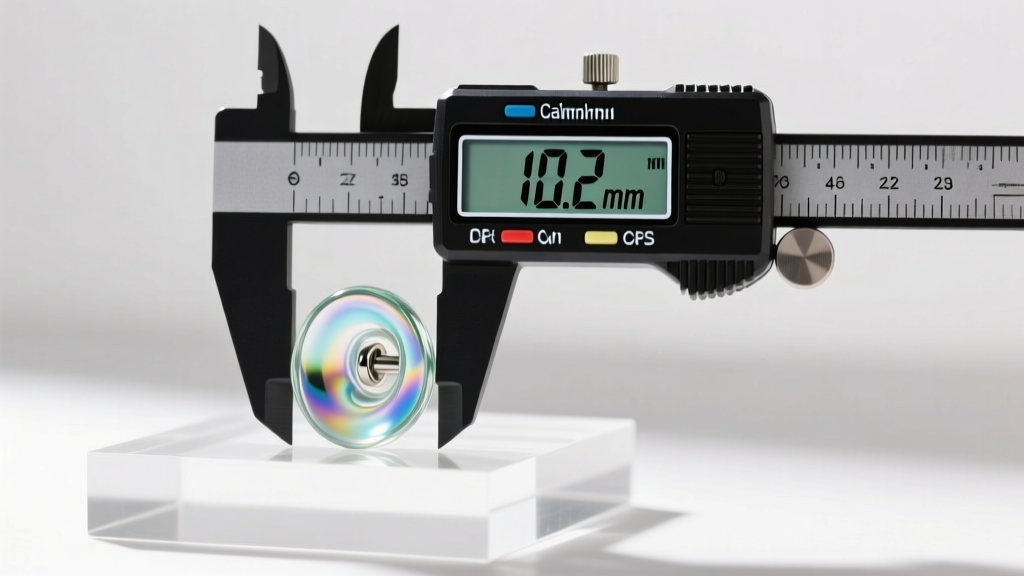
Never trust the labeled gauge size on a package of handmade glass piercing jewelry. As detailed in Onetribe's comprehensive glass education guide, the organic nature of glassworking means millimeter measurements are the only reliable metric. Always use digital calipers to measure the exact wearable area (the distance between the two flares) before insertion.
Conversion and Tolerance Chart
| Nominal Gauge | Target Metric (mm) | Acceptable Glass Tolerance | Common Failure if Out of Tolerance |
|---|---|---|---|
| 6g | 4.0mm | 3.8mm - 4.2mm | Slipping out during sleep |
| 2g | 6.0mm | 5.8mm - 6.3mm | Fistula irritation / cheese-cutter effect |
| 0g | 8.0mm | 7.8mm - 8.4mm | O-ring ejection / plug loss |
| 00g | 10.0mm | 9.8mm - 10.5mm | Flare tearing on insertion |
Troubleshooting Issue 4: Cloudy or Etched Glass Surfaces
Over time, clients may report that their once-crystal-clear glass plugs have become cloudy, dull, or chalky. This is rarely a defect in the glass itself, but rather a chemical reaction known as glass etching or alkaline degradation.
Restoring the Silica Network
Hard water deposits, alkaline body washes (pH above 8), and prolonged exposure to the natural acids in sebum can slowly degrade the silica network on the surface of the glass. To troubleshoot and restore the finish:
- Vinegar Soak: Submerge the glass jewelry in a 50/50 mix of distilled white vinegar and distilled water for 15 minutes. The mild acetic acid dissolves hard water calcium deposits and neutralizes alkaline residue.
- Polishing: For minor surface etching, gently buff the glass with a microfiber cloth and a tiny amount of cerium oxide paste (a standard glass polishing compound). Rinse thoroughly with distilled water.
- Prevention: Advise clients to remove glass jewelry before swimming in heavily chlorinated pools or using high-pH exfoliating body scrubs in the shower.
When to Retire Your Glass Pieces
Glass piercing jewelry can last a lifetime if properly cared for, but it is not indestructible. Troubleshooting is only effective up to a certain point. You must immediately discard glass jewelry if you observe deep surface scratches (which harbor bacteria), chipped flares (which can slice the fistula during removal), or any internal stress fractures. By understanding the material science, mastering O-ring geometry, and enforcing strict sizing protocols, you can eliminate 95% of the common failures associated with glass body jewelry.


