How to Wear and Secure a Jewelry Brooch on Any Fabric
Learn how to wear, style, and securely pin a jewelry brooch on delicate fabrics without causing damage. Expert tips on clasps, backing, and placement.

The Anatomy of a Jewelry Brooch: What Beginners Must Know
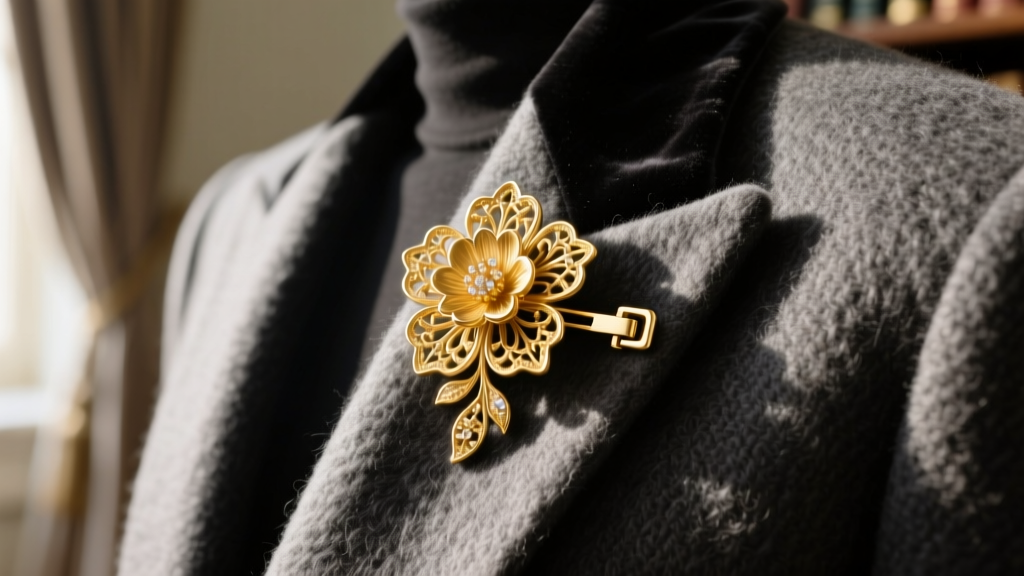
Before you pin a vintage or contemporary piece to your favorite garment, you must understand the mechanics of the hardware. A jewelry brooch is essentially an anchor system, and its security relies on three components: the pin stem gauge, the hinge, and the clasp mechanism. Beginners often assume all pins are created equal, leading to torn fabrics and lost heirlooms.
The pin stem gauge (thickness) dictates what fabrics the brooch can penetrate safely. Standard modern brooches typically feature a 0.8mm to 1.0mm pin, which is ideal for medium-weight fabrics like cotton or light wool. Heavy vintage pieces, particularly those from the Victorian or Art Deco eras, often feature thicker 1.2mm to 1.5mm pins designed for heavy tweeds and upholstery-weight garments. Forcing a thick 1.5mm pin through delicate silk will permanently sever the warp threads.
According to the Gemological Institute of America (GIA), identifying the clasp type is also crucial for dating and securing vintage jewelry. The open C-clasp (common pre-1900) offers zero security and requires a secondary stopper. The trombone clasp (a push-pull tube mechanism popular in mid-century European designs) is more secure but can loosen over time. For everyday wear on delicate garments, you should only trust a modern locking safety clasp or utilize a secondary stabilization method.
Fabric Weight vs. Brooch Weight: The Golden Ratio
The most common beginner mistake is ignoring the physics of fabric drape. A heavy 60-gram crystal brooch will cause a lightweight chiffon or silk lapel to sag, pulling at the seams and distorting the garment's silhouette. To maintain structural integrity, follow the 1:4 ratio rule: the brooch should never weigh more than one-quarter of the fabric's tensile support capacity in a standard 3-inch radius.
| Fabric Type | Weight Category | Max Brooch Weight | Ideal Pin Gauge | Recommended Clasp |
|---|---|---|---|---|
| Silk, Chiffon, Satin | Ultra-Light | Under 12 grams | 0.6mm - 0.8mm | Locking Safety / Clutch |
| Cotton, Linen, Rayon | Medium-Light | 12 - 25 grams | 0.8mm - 1.0mm | Locking Safety |
| Wool, Tweed, Flannel | Heavy | 25 - 50 grams | 1.0mm - 1.2mm | C-Clasp with Stopper / Trombone |
| Leather, Denim, Velvet | Ultra-Heavy | 50+ grams | 1.2mm+ / Screw-back | Double Pin / Magnetic Clutch |
How to Secure a Jewelry Brooch Without Ruining Your Clothes
When you must wear a heavier or sharper jewelry brooch on a delicate or high-value garment, you need to distribute the mechanical stress. The pin itself creates a fulcrum point; as the brooch tilts, the pin acts as a lever, stretching the fabric hole.
The Stabilizer Patch Technique
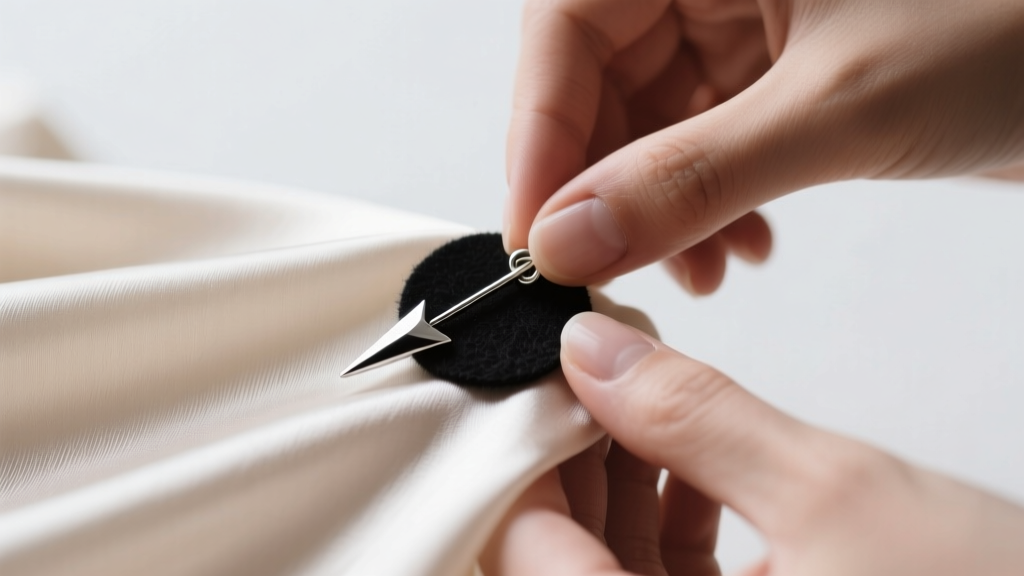
This is the industry standard for costume designers and textile conservators. Before pinning, place a small, 1-inch circular patch of stiff felt, moleskin, or specialized fabric stabilizer on the inside of the garment, directly behind where the pin will penetrate. The pin goes through the outer fabric, the felt patch, and back through the outer fabric. The felt absorbs the lever-stress and prevents the metal pin from slicing through delicate weaves. The Victoria and Albert Museum (V&A) frequently recommends similar backing supports for historical textiles to prevent gravity-induced tearing.
Upgrading to a Magnetic or Clutch Back
If you have a heavy brooch with an outdated C-clasp, consider having a jeweler remove the pin stem and solder a post for a clutch back (like an earring) or a high-strength neodymium magnetic backing. Magnetic brooch converters consist of two parts: a front piece with a post and a back piece with a recessed magnet. This completely eliminates the need to pierce the fabric, making it the ultimate solution for waterproof membranes, fine leather, and antique silks.
Placement Rules for Lapels, Scarves, and Knits
Where you place your jewelry brooch is just as important as how you secure it. Proper placement ensures the piece is visible while utilizing the garment's natural structural seams for support.
- The Tailored Lapel: The golden rule for suit lapels is to place the brooch on the left side, exactly 3 inches down from the shoulder seam and centered on the lapel's width. This aligns the brooch with the chest pocket and utilizes the canvas interlining of the jacket for maximum support.
- The Knit Sweater: Never pin a heavy brooch directly into the middle of a loose-knit sweater; the weight will pull the yarn down, creating a permanent sag. Instead, pin it at the collarbone seam or the shoulder seam where the knitting is tightest and structurally reinforced.
- The Silk Scarf: Use the brooch as a functional knot substitute. Gather the scarf at the desired drape point, push the pin through the gathered layers horizontally (rather than vertically), and secure the clasp. Horizontal pinning distributes weight across multiple folds of fabric.

Maintenance and Storage for Longevity
A jewelry brooch requires specific maintenance to ensure the pin mechanism doesn't fail. Over time, skin oils, perfume, and fabric lint accumulate around the hinge, causing the pin stem to stick or the clasp to jam.
Expert Troubleshooting: If your locking safety clasp feels stiff, do not force it. Apply a single drop of 99% isopropyl alcohol to the hinge using a cotton swab. Let it evaporate for 60 seconds to dissolve the oils, then apply a microscopic amount of synthetic watch oil to the hinge pin. Never use WD-40, as it will degrade enamel and porous gemstones like pearls or turquoise.
When storing your brooches, never toss them loosely into a jewelry box where the pin stems can be bent or snagged on other chains. Store them flat in individual soft pouches, and always ensure the pin stem is unfastened and resting in the open position to relieve tension on the metal hinge spring. By respecting the mechanics of the hardware and the physics of your fabrics, you can wear any brooch with absolute confidence.