How to Identify and Price Valuable Costume Jewelry Brooches
Learn how to identify, authenticate, and price valuable costume jewelry brooches from top mid-century makers like Trifari, Coro, and Miriam Haskell.

The Allure of Mid-Century Costume Brooches
When collectors, archivists, and stylists search for valuable costume jewelry brooches, they are rarely looking for mere decoration; they are hunting for wearable mid-century art. The term "costume" in this context does not imply cheapness or disposability. Instead, it refers to pieces crafted from base metals, glass, and synthetic stones rather than precious gems and solid gold. During the 1930s through the 1960s, master jewelers who previously worked for houses like Cartier and Van Cleef & Arpels brought their high-end techniques to the costume market, creating intricate, highly collectible pieces. Today, understanding the nuanced markers of quality, maker hallmarks, and material composition is essential for accurately assessing the budget and true market value of these lapel accessories.
Key Makers That Command Premium Prices
The foundation of any valuation assessment begins with identifying the manufacturer. While thousands of companies produced lapel pins and brooches in the 20th century, a select few dominate the upper echelons of the secondary market.
Trifari and the Crown Mark
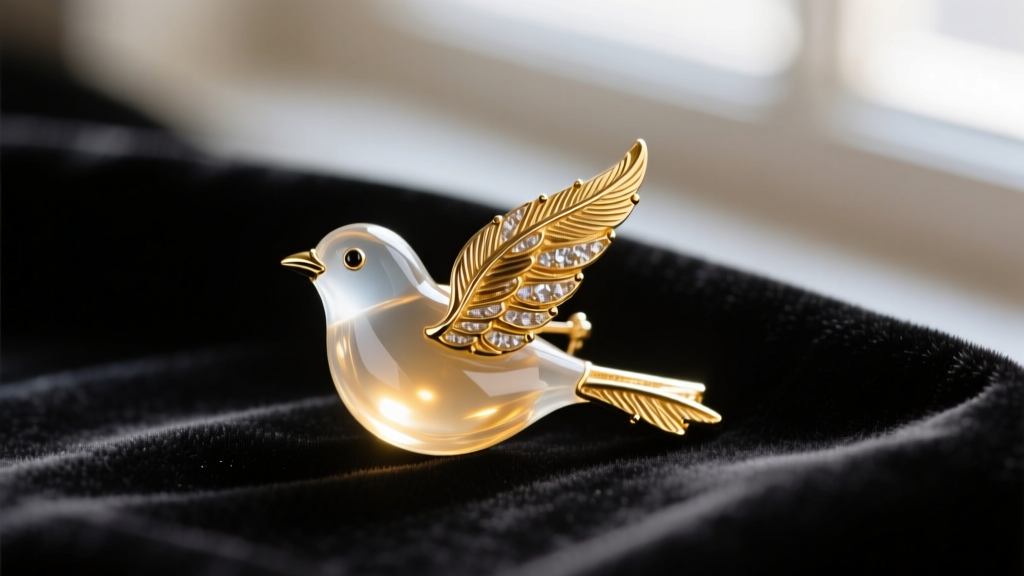
Founded by Gustavo Trifari, this brand became a powerhouse under the design direction of Alfred Philippe, a master jeweler who previously worked at Cartier. Philippe introduced the use of carved Lucite in the 1930s and 1940s, leading to the highly coveted "Jelly Belly" brooches. These pieces feature a polished, domed Lucite center (the "belly") set in sterling silver vermeil or gold-tone metal, often shaped like animals, birds, or sea creatures. Authentic Jelly Bellies from the World War II era—when base metals were rationed and sterling silver was used instead—can command prices between $1,500 and $5,000, depending on the rarity of the animal motif and the condition of the Lucite.
Miriam Haskell and Russian Gilt
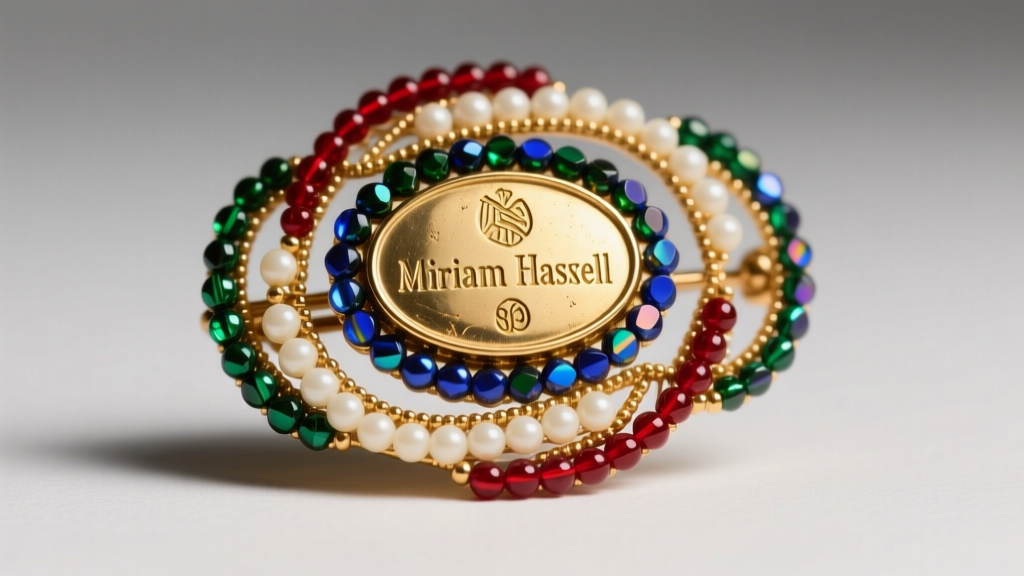
Miriam Haskell brooches are instantly recognizable to trained eyes, not just by their hallmark, but by their distinct materials. Haskell famously utilized "Russian gilt," a lush, matte 24-karat gold plating applied over brass or copper. Her designs heavily featured baroque glass pearls (often sourced from Japan or Czechoslovakia) and intricate, hand-wired seed beadwork. Because Haskell pieces were assembled by hand rather than cast in molds, examining the reverse side for complex wirework and rivets is a primary authentication step. Complex, multi-layered Haskell floral brooches from the 1940s and 1950s routinely sell in the $800 to $2,500 range.
Coro and the Duette Mechanism
Coro was the largest costume jewelry manufacturer in the United States, but their most valuable contributions to the brooch market involve mechanical innovation. In 1931, Coro licensed a patent from French inventor Gaston Candas for the "Duette" mechanism. This clever design allowed two separate dress clips to be mounted onto a specialized fur-clip frame, converting them into a single, symmetrical brooch. Finding a complete, original Duette set with the patented mechanism intact and functioning is a major value driver, often pushing the price of standard Coro floral or geometric pieces from $50 up to the $400–$600 range.
Material Markers of High-Value Pieces
Beyond the maker's mark, the specific materials used in the construction of the brooch provide critical clues about its age, authenticity, and ultimate value.
- Aurora Borealis (AB) Rhinestones: If a brooch features stones with a distinct iridescent, rainbow-like oil-slick finish, it cannot predate 1955. The AB finish was developed by Swarovski in collaboration with Christian Dior. Finding an AB stone on a piece claiming to be from the 1930s is an immediate red flag for a reproduction or a later replacement stone.
- Chatons vs. Cabochons: High-end makers like Eisenberg Originals used premium Swarovski chatons (faceted, pointed-back stones) set in heavy, lead-rich glass. The brilliance and light refraction of these stones far exceed the flat, dull appearance of mass-produced acrylic or molded glass cabochons.
- Vermeil and Sterling Marks: During World War II (roughly 1942–1945), the U.S. government restricted the use of base metals like pewter and brass for civilian goods. Consequently, makers like Trifari and Coro cast their brooches in sterling silver, often marking them "Sterling" or "Vermeil" (gold-plated sterling). These wartime pieces are heavier, more durable, and highly prized by collectors.
Valuation Framework: Pricing Tiers
To accurately assess the budget required for acquiring or the potential return on selling these pieces, it is helpful to consult current market data. According to historical sales data tracked by platforms like Ruby Lane and auction results from Heritage Auctions, the following pricing tiers represent the 2026 market landscape for premium vintage brooches.
| Maker / Line | Key Identifier | Era | Condition Factor | Estimated Value Range |
|---|---|---|---|---|
| Trifari (Jelly Belly) | Carved Lucite, Sterling Vermeil | 1938–1945 | Lucite must be unscratched; vermeil intact | $1,500 – $5,000+ |
| Miriam Haskell | Russian Gilt, Baroque Pearls | 1930s–1950s | Wirework intact; minimal gilt rub-off | $800 – $2,500 |
| Eisenberg Originals | Heavy Sterling, Swarovski Chatons | 1930s–1940s | No dead/blackened stones; strong prongs | $600 – $1,800 |
| Coro (Duette) | Patented Double-Clip Frame | 1935–1950 | Spring mechanism must function perfectly | $300 – $750 |
| Vendome (by Coro) | Premium line, floral motifs | 1950s–1960s | Excellent enamel and stone clarity | $150 – $400 |
Authentication and Flaw Spotting
Assessing the value of vintage lapel accessories requires a meticulous physical inspection. The difference between a $1,000 museum-quality piece and a $50 damaged relic often lies in microscopic details.
The Evolution of Clasps
The hardware on the reverse side of a brooch is one of the most reliable dating tools available to collectors, a fact well-documented in antique identification guides like those published by Kovels.
- C-Clasps (Pre-1930s): A simple C-shaped piece of metal with no locking mechanism. The pin stem was usually long enough to extend past the edge of the brooch to secure it in heavy fabrics.
- Trombone Clasps (1930s–1950s): Commonly found on European pieces and high-end American makers, this clasp features a push-pull barrel mechanism that locks the pin into a tube.
- Rollover Safety Clasps (1950s–Present): The modern standard, featuring a rolling lock that snaps over the pin stem. If a piece purported to be from the 1920s features a modern rollover clasp, it has either been repaired or is a later reproduction.
Stone Degradation and Prong Failure
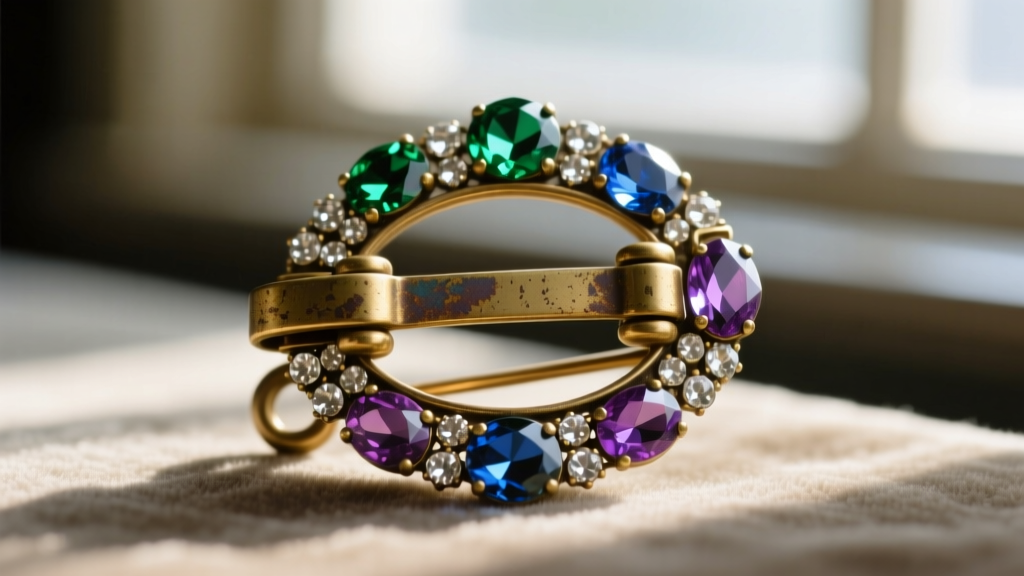
Rhinestones in vintage costume jewelry are typically foil-backed to enhance their sparkle. Over decades, moisture can seep beneath the stone, causing the foil to oxidize, turn black, or flake away entirely. This results in a "dead" stone that looks dull and gray. While a single dead stone on a massive Eisenberg Original might only deduct 10% from its value, missing stones or lifted prongs on a delicate Trifari piece can slash its market price by half, as sourcing period-correct replacement stones is incredibly difficult.
Where to Buy and Sell with Confidence
Sourcing valuable costume jewelry brooches requires moving beyond standard thrift stores. Serious collectors frequent specialized estate sales, antique shows, and curated online marketplaces. When purchasing, always request high-resolution macro photographs of the hallmarks, the clasp mechanism, and the foil backing of the stones. When selling, proper attribution is key; listing a piece simply as "vintage gold bird pin" will yield a fraction of the return compared to a fully researched listing detailing the Alfred Philippe design, the WWII sterling composition, and the specific patent dates. By mastering the material markers and historical context of these mid-century treasures, you can confidently navigate the market and build a lapel collection of immense historical and financial value.