Vintage Florenza Jewelry Brooch Buying Guide & Authentication
Discover how to authenticate and buy a vintage Florenza jewelry brooch. Learn about hallmark stamps, rhinestone types, and current market pricing.

The Legacy of Florenza: Renaissance Revival Masterpieces
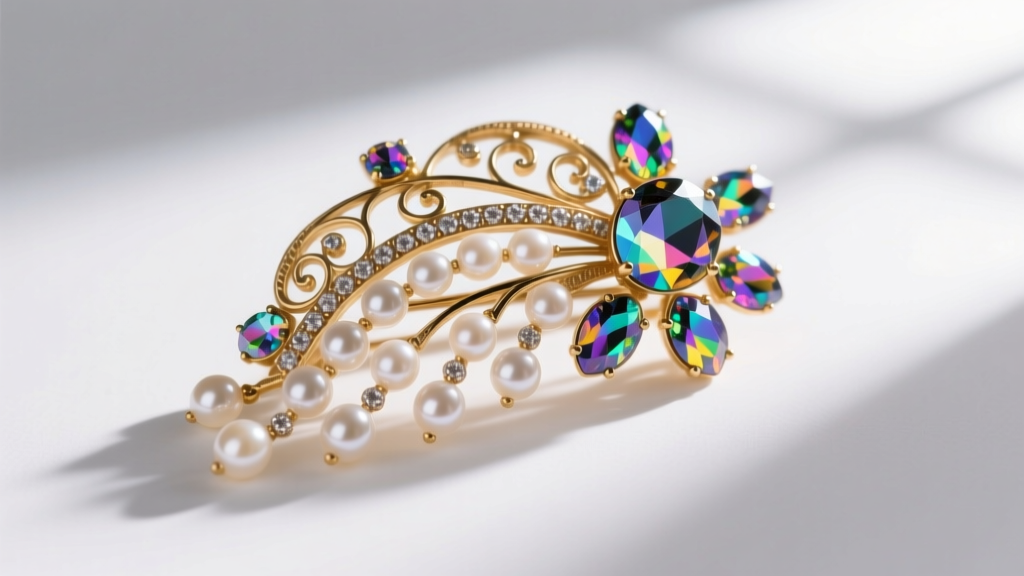
When navigating the secondary market for mid-century costume jewelry, few names command the immediate respect and recognition of Florenza. Founded in 1937 by Charles F. Peruzzi, the Florenza company specialized in what is now known as Renaissance Revival or Baroque Revival design. Unlike the streamlined Art Deco pieces of the 1920s or the minimalist Mod styles of the late 1960s, a genuine Florenza jewelry brooch is characterized by its heavy, ornate metalwork, intricate filigree, and lavish use of faux pearls and aurora borealis (AB) rhinestones. For the modern collector or lapel accessory enthusiast, acquiring a Florenza piece is not just about owning a beautiful garment fastener; it is about securing a wearable artifact of American jewelry manufacturing history. This comprehensive buying guide will equip you with the technical knowledge required to authenticate, evaluate, and ultimately purchase a vintage Florenza brooch with absolute confidence.
Decoding the Hallmarks: An Authentication Framework
The most critical step in acquiring any vintage piece is verifying its provenance through manufacturer hallmarks. Florenza was relatively consistent in its stamping practices, but the nuances of these marks can help you date the piece and confirm its authenticity. According to archival data documented by Collectors Weekly, Florenza utilized several distinct hallmark variations throughout its operational history, which concluded in 1999.
- Paper Foil Tags (1937–1940s): The earliest Florenza pieces were rarely stamped directly into the metal. Instead, they featured small, oval paper foil tags glued to the reverse. Finding a brooch with an intact, legible original paper tag is exceptionally rare and significantly increases the piece's premium.
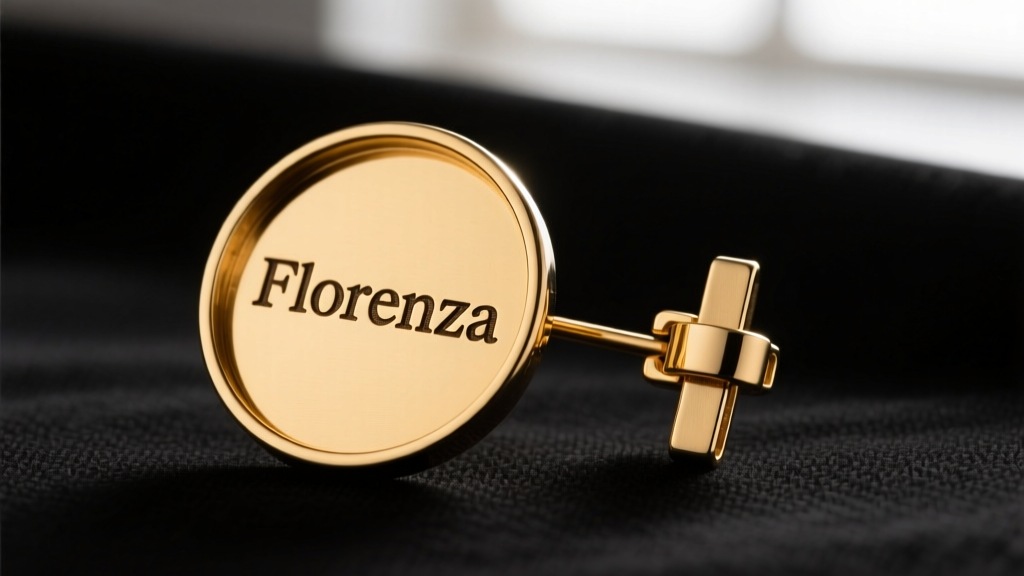
- Script 'Florenza' Stamp (1950s): As the company transitioned to direct metal stamping, they utilized a flowing, cursive script. This mark is typically found in a small cartouche or stamped directly onto a flat section of the base metal.
- Block Letter 'FLORENZA' Stamp (1960s–1990s): The most common hallmark encountered today is the uppercase, block-letter stamp. This mark is often accompanied by a copyright symbol (©), which became standard practice for jewelry manufacturers after the Copyright Act of 1955 allowed for the protection of jewelry designs.
Authentication Tip: Counterfeiters often use laser engraving to replicate these marks. A genuine Florenza stamp will show slight softness at the edges of the letters due to the die-striking process, whereas fake laser marks will appear perfectly sharp and uniformly shallow under a 10x jeweler's loupe.
Material Anatomy: What Defines a True Florenza Piece
Base Metals and Plating Grades
Florenza did not use precious metals; their genius lay in the manipulation of base metals and high-quality electroplating. The foundational alloy was typically a high-grade white metal or pot metal, chosen for its ability to hold intricate cast details without warping. This base was then heavily electroplated in either a rich, antiqued gold-tone or a bright silver-tone finish. The antiquing process involved applying a dark patina to the recesses of the filigree and then polishing the high points, creating a striking three-dimensional contrast that mimicked centuries-old European metalwork. When evaluating a piece, check the high-contact areas for 'brassing'—a condition where the gold plating wears away to reveal the yellowish base metal beneath. While minor brassing is acceptable in a 70-year-old antique, heavy flaking indicates poor storage and significantly diminishes the value.
Rhinestones and Faux Pearls
What truly separates a Florenza jewelry brooch from lesser contemporaries is the quality of its stones. Florenza sourced premium glass rhinestones from Austria and Czechoslovakia. They were early and prolific adopters of the Aurora Borealis (AB) finish, a vapor-coating technique developed in collaboration with Swarovski in the mid-1950s that gives glass stones an iridescent, rainbow-like flash. Furthermore, Florenza almost exclusively used prong-set or metal-cup settings for their stones. If you encounter a Florenza brooch where the rhinestones appear to be glued directly onto a flat metal surface without prongs or foil-backed cup settings, it is highly likely that the piece has suffered unprofessional restoration or is an outright counterfeit. Their faux pearls were equally impressive, featuring thick, lustrous nacre coatings over glass beads, which resist the yellowing and peeling commonly seen in plastic pearl alternatives.
Market Valuation: 2026 Pricing Matrix for Collectors
The market for vintage costume jewelry has matured significantly. Based on recent auction results and estate sale data aggregated by platforms like Invaluable auction archives, Florenza pieces hold their value exceptionally well, provided they are in pristine or professionally restored condition. Below is a generalized pricing matrix to help you negotiate and evaluate current market offerings.
| Era / Design Style | Condition Grade | Estimated Market Price (USD) |
|---|---|---|
| 1940s Figural / Early Script | Excellent (Intact foil tag, no plate loss) | $250 - $450+ |
| 1950s AB Rhinestone & Pearl Wreaths | Very Good (Minor wear, all stones present) | $120 - $180 |
| 1960s-80s Large Baroque / Renaissance Revival | Good (Light brassing, functional clasp) | $65 - $110 |
| Standard Small Floral / Geometric Clips | Fair (Missing stones, heavy verdigris) | $25 - $45 (Parts/Repair value) |
Common Failure Modes and Restoration Red Flags
When inspecting a Florenza brooch in person or requesting high-resolution photos from an online seller, you must look beyond the aesthetic appeal and scrutinize the structural integrity. Vintage costume jewelry is susceptible to specific failure modes that can turn a beautiful investment into a costly burden.
Verdigris Accumulation: Because Florenza used copper and brass in their base alloys and plating processes, exposure to humidity and skin oils can cause copper oxidation, known as verdigris. This manifests as a crusty, pale green substance around the stone settings and clasp mechanisms. While light verdigris can be carefully removed with a wooden toothpick and a mild soap solution, deep oxidation can permanently pit the metal and loosen stone settings. Avoid sellers who have aggressively scrubbed the piece with harsh chemicals like Tarn-X, as this will strip the delicate gold electroplating entirely.
Pin Stem and Clasp Fatigue: Florenza transitioned from early 'trombone' push-catches in the 1940s to standard roll-over safety clasps by the late 1950s. A common failure point is the solder joint connecting the pin stem hinge to the base metal. If the pin stem feels loose or wobbles laterally, the solder has fractured. Resoldering a vintage piece requires a skilled jeweler who can use low-temperature laser welding; traditional torch soldering will melt the pot metal base and destroy the surrounding rhinestones.
Where to Source Authentic Florenza Brooches Today
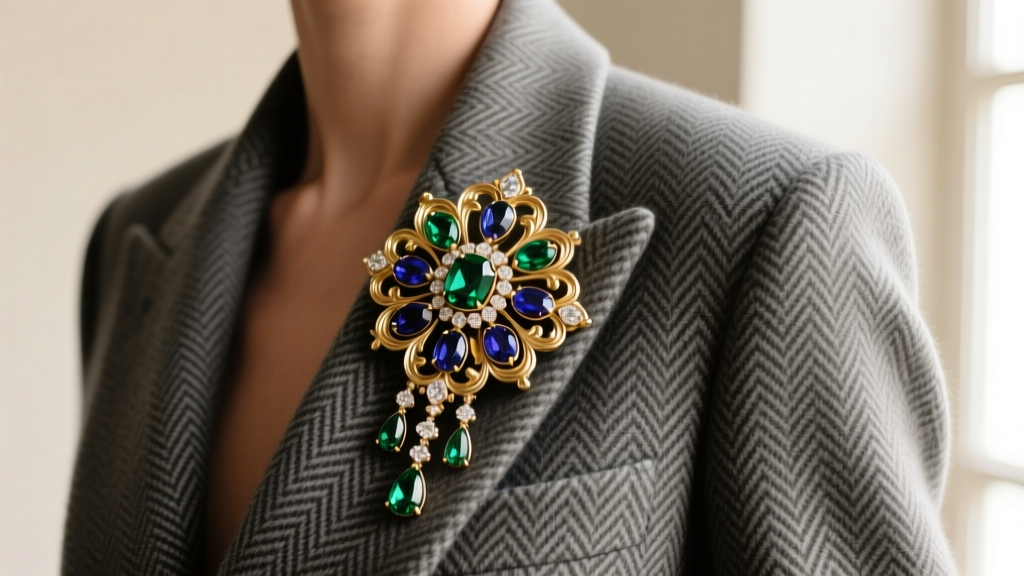
Finding a pristine Florenza jewelry brooch requires patience and a strategic approach to sourcing. While general thrift stores occasionally yield hidden gems, the most reliable sources are specialized estate jewelry dealers and vetted online marketplaces. When browsing platforms like Etsy or eBay, always demand macro-photography of the reverse side to verify the hallmark and the clasp mechanism. According to market analysis by Antique Trader, building relationships with members of the Costume Jewelry Collectors International (CJCI) can also provide access to private sales and verified inventory before it hits the open market. Whether you are pinning a heavy, pearl-encrusted Florenza shield brooch to a winter overcoat or securing a delicate AB floral clip to a silk lapel, understanding the anatomy and history of these pieces ensures that your investment will continue to shine for decades to come.