How to Choose and Wear a Curved Helix Earring Safely
Learn how to choose the perfect curved helix earring. Discover ideal gauge sizes, implant-grade materials, and healing tips for cartilage hoops.

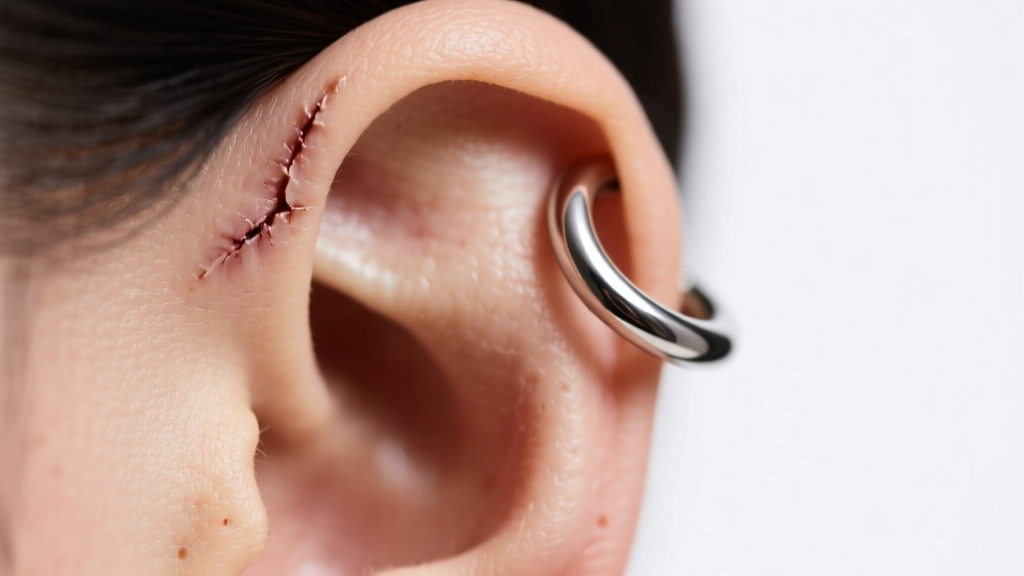
Getting your first cartilage piercing is a major milestone in your body modification journey, but selecting the right jewelry afterward can feel overwhelming. If you have recently gotten a helix piercing—or are planning to—you have likely found yourself searching for the perfect curved helix earring. While the aesthetic of a hoop hugging the outer rim of the ear is undeniably iconic, navigating the nuances of gauge sizes, inner diameters, and metallurgy is critical for the long-term health of your cartilage.
In this comprehensive beginner's guide, we will break down everything you need to know about curved helix jewelry. From understanding why timing is everything to decoding implant-grade materials, this guide will ensure your cartilage stays healthy, bump-free, and beautifully styled.
What Exactly is a Curved Helix Earring?
Before diving into sizing and materials, we need to clear up a common point of confusion in the body jewelry world. When beginners search for a 'curved helix earring,' they are almost always looking for a hoop or ring that follows the natural curvature of the outer ear (the helix rim).
However, in professional piercing terminology, a 'curved barbell' is a completely different piece of jewelry featuring a bent post with two threaded ends. Curved barbells are anatomically designed for rook, daith, or eyebrow piercings. They should never be used in a standard helix piercing. The angle of a helix fistula (the piercing channel) is typically straight through the tissue. Therefore, your 'curved' earring will actually be a circular ring—such as a captive bead ring (CBR), a hinged clicker, or a seamless hoop—that creates the curved visual effect against the ear's anatomy.
The Golden Rule: Healing vs. Healed Piercings
The most frequent mistake beginners make is inserting a curved helix hoop into a fresh, unhealed piercing. If your piercer initially inserted a flat-back labret stud, they did so for a very specific medical reason.
The Professional Consensus: Cartilage piercings take anywhere from 6 to 12 months to fully heal. During this fragile window, flat-back studs are mandatory. Hoops introduce excessive movement, which drags dried lymph, bacteria, and external debris back into the healing fistula.
According to the Association of Professional Piercers (APP), the constant rotation of a ring in a fresh piercing disrupts the delicate new tissue forming inside the channel. This micro-trauma is the primary culprit behind hypertrophic scarring (commonly known as irritation bumps) that often form along the edge of the jewelry.
Actionable Advice: Do not downsize or change your jewelry to a curved hoop until your piercer confirms the fistula is fully mature. For most people, this means waiting a minimum of 8 to 10 months. When you are finally ready to make the switch, have a professional piercer install your first hoop to ensure the fit and angle are correct.
Sizing Your Curved Helix Earring: Gauge and Diameter
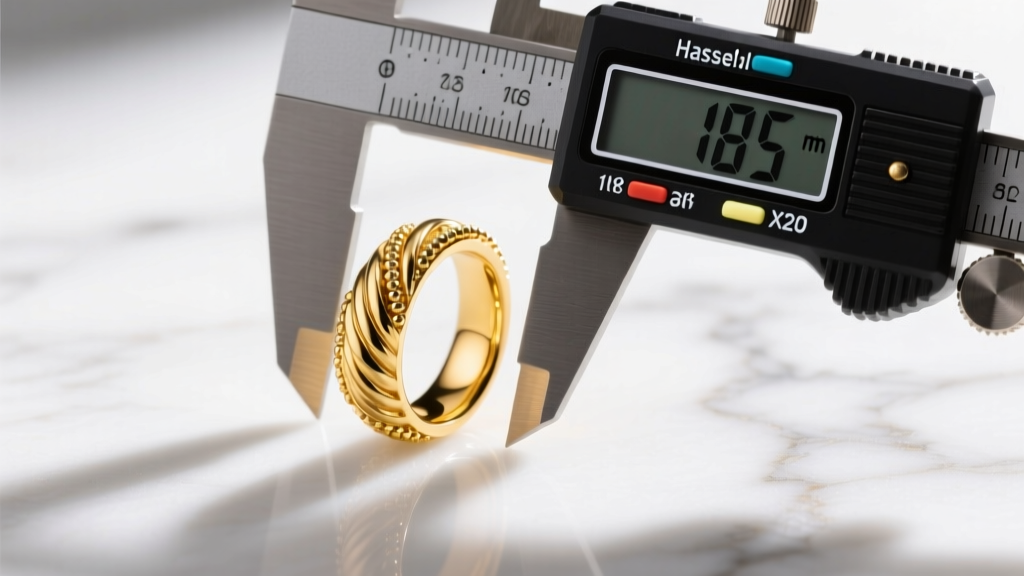
Unlike standard earlobe hoops, cartilage jewelry requires precise measurements. A hoop that is too tight will restrict blood flow and cause swelling, while a hoop that is too large will snag on hair and clothing. You must understand two distinct measurements: gauge (thickness) and inner diameter (size of the circle).
Standard Gauge Sizes
The gauge refers to the thickness of the metal wire. For helix piercings, the industry standards are:
- 16 Gauge (1.2mm): The most common standard for helix hoops. It offers a perfect balance of durability and aesthetic delicacy.
- 14 Gauge (1.6mm): Slightly thicker, offering maximum stability. Often preferred for industrial piercings or forward helixes, but perfectly safe for standard helixes if pierced at this size.
- 18 Gauge (1.0mm) or thinner: Avoid these for cartilage. Thin wires in rigid cartilage can cause the 'cheese-cutter effect,' where the jewelry slowly migrates and slices through the tissue over time due to pressure and snagging.
Finding the Perfect Inner Diameter (ID)
The inner diameter is the measurement of the empty space inside the hoop. Choosing the right ID depends entirely on your specific anatomy and how far from the edge of your ear the piercing was placed. The APP provides detailed guidelines on jewelry sizing and anatomy, emphasizing that a one-size-fits-all approach does not work for cartilage.
| Piercing Placement | Recommended Inner Diameter | Visual Effect |
|---|---|---|
| Standard Mid-Helix | 5/16' (8mm) | Snug hug against the ear rim |
| Outer / High Helix | 3/8' (10mm) | Slight drop, accommodates thicker tissue |
| Snug / Anti-Helix | 1/4' (6mm) to 5/16' (8mm) | Tight contour to the inner ridge |
| Conch (Hoop wrapping to helix) | 1/2' (12mm) to 5/8' (16mm) | Large wrap-around statement piece |
Note: If you experience seasonal swelling or have slightly prominent ear anatomy, sizing up by 1mm (e.g., from 8mm to 9mm or 10mm) can prevent the ring from digging into your skin.
Material Matters: Avoiding the 'Green Ear' and Irritation
Cartilage is highly vascular and prone to rejecting cheap metals. When shopping for a curved helix earring, the metallurgy of the jewelry is just as important as the design. The APP's official jewelry materials guide strictly recommends specific biocompatible metals for long-term cartilage wear.
- ASTM F-136 Implant-Grade Titanium: The absolute gold standard for beginners and those with sensitive skin. It is completely nickel-free, highly polished, and lightweight. Expect to pay between $30 and $60 for a basic, ungemmed titanium clicker from reputable brands like NeoMetal or Anatometal.
- Solid 14k or 18k Gold (Nickel-Free): Ideal for those wanting a luxury aesthetic. Ensure it is solid gold, not gold-plated or gold-filled, as the plating will eventually wear off and expose base metals to your piercing. High-end brands like BVLA offer exquisite gold clickers ranging from $150 to over $400.
- Niobium: A highly reactive metal that is anodized to create vibrant, safe colors without using toxic paints or plating. An excellent, budget-friendly alternative to titanium.
What to Avoid: Steer clear of 'surgical steel' or 'stainless steel' from mall kiosks or fast-fashion retailers. These alloys contain nickel, which can trigger contact dermatitis, leading to weeping, itching, and severe irritation bumps in the cartilage.
Top Styles of Curved Helix Jewelry for Beginners
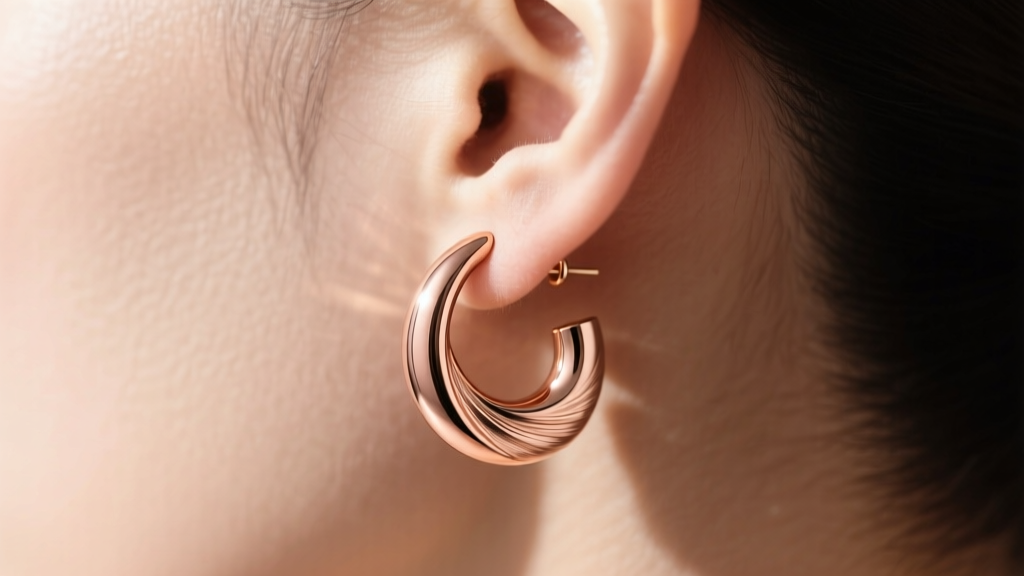
Once you have your measurements and material sorted, you can choose the mechanical style of the hoop. Each has its own pros and cons for daily wear.
1. Hinged Segment Clickers
Clickers feature a hinged segment that snaps shut with a satisfying 'click.' They are incredibly user-friendly, making them the best choice for beginners who want to change their jewelry at home without tools. The seamless look is elegant, and the closure is secure enough to withstand daily activities.
2. Captive Bead Rings (CBRs)
The classic CBR uses the tension of the ring to hold a small bead in place. While they offer a perfectly continuous circle, they require specialized ring-opening pliers to install and remove. Beginners often struggle with CBRs, accidentally launching the tiny bead across the bathroom floor or warping the ring's shape by using bare hands.
3. Seamless / Endless Rings
These feature a thin, straight pin that slides into the hollow tubing of the ring. They offer the most minimalist, continuous aesthetic. However, the pin can sometimes loosen over time if the ring is subjected to heavy pulling or snagging, making them slightly less secure than clickers for active individuals.
Troubleshooting: Snagging, Flipping, and Sleeping
Transitioning from a flat-back stud to a curved helix earring changes how you interact with your environment. Hoops act as tiny handles that hair, towels, and sweaters love to catch on.
The Snagging Solution: If you have long hair, tie it back in a loose braid or low bun while getting dressed. When pulling shirts over your head, cross your arms and pull the fabric from the back of your neck forward to minimize friction against the ear rim.
The Sleeping Solution: Sleeping on a fresh or newly downsized helix hoop can cause the jewelry to shift, pressing the metal into the side of your head and altering the angle of the fistula. Invest in a travel neck pillow or a specialized piercing pillow with a hole in the center. Rest your ear in the hollow space to eliminate all pressure while you sleep.
Flipping and Movement: If your hoop constantly flips upside down, your inner diameter is likely too large, or the gauge is too thin. A properly fitted 16g hoop with the correct inner diameter should sit relatively still, moving only slightly when touched.
Final Takeaways for Cartilage Newbies
Upgrading to a curved helix earring is a rewarding milestone that completely transforms the look of your ear curation. By respecting the healing timeline, insisting on ASTM F-136 implant-grade titanium or solid gold, and carefully measuring your inner diameter, you set yourself up for a lifetime of healthy, beautiful cartilage. When in doubt, always consult an APP-certified professional piercer to verify your sizing and anatomy before making a purchase. Your cartilage will thank you for the patience and precision.