Best Materials for Your Helix to Lobe Earring Chain
Compare titanium, gold, and niobium for your helix to lobe earring. Learn how material weight and tensile strength impact cartilage healing.

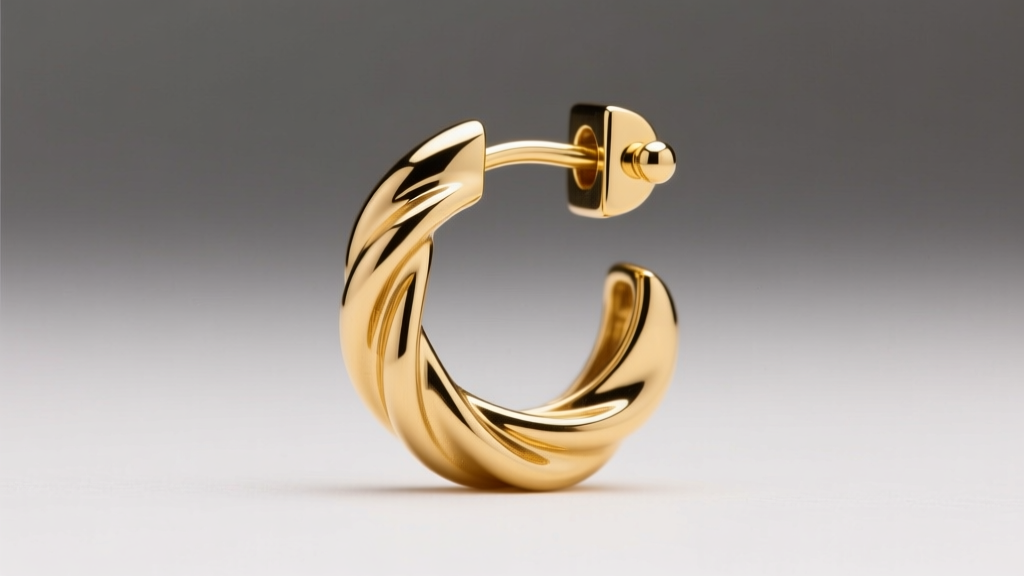
The Biomechanics of Ear Chains: Why Material Dictates Success
The helix to lobe earring trend has transformed how we approach ear curation, bridging the gap between rigid upper cartilage and the pliable lower lobe. However, from a structural and anatomical perspective, this jewelry style is a complex engineering challenge. Unlike a standard stud that sits flush against the tissue, a connected chain spans a moving joint. Every time you chew, speak, or sleep, the distance and angle between your helix and lobe shift microscopically. This creates continuous shear force and tensile stress on both piercing channels.
Choosing the correct material for a helix to lobe earring is not merely an aesthetic decision; it is a biomechanical necessity. The wrong metal can lead to the dreaded "cheese-cutter effect" (tissue migration), contact dermatitis, or catastrophic chain failure. In this comprehensive guide, we analyze the metallurgical properties, tensile strengths, and biocompatibility of the top materials used in cartilage-to-lobe bridging jewelry.
Material Breakdown: Tensile Strength and Biocompatibility
When evaluating metals for a tension-bearing chain, we must look at three core metrics: specific gravity (weight), Vickers Hardness (HV), and nickel release rates. According to the Association of Professional Piercers (APP), initial jewelry and long-term tension jewelry must meet strict biocompatibility standards to prevent chronic inflammation.
Implant-Grade Titanium (ASTM F136)
Titanium is the undisputed champion of functional body jewelry. Specifically, Ti-6Al-4V ELI (ASTM F136) offers an unparalleled strength-to-weight ratio. Because a helix to lobe earring chain drapes across the ear, excessive weight pulls downward on the delicate helix fistula. Titanium is nearly 45% lighter than surgical steel, drastically reducing the gravitational load on the upper cartilage. Furthermore, its high tensile strength means that even an 18-gauge (1.0mm) titanium cable chain can withstand significant snag forces without the links deforming or snapping.
14k vs. 18k Solid Gold: The Hardness Paradox
Gold is highly coveted for its luster and prestige, but pure 24k gold is far too soft for chain links. Jewelers alloy gold with metals like copper, silver, and zinc to increase durability. This creates a critical divergence between 14k and 18k gold for ear chains:
- 14k Gold (58.5% pure): With a Vickers Hardness of roughly 120-140 HV, 14k gold is significantly harder and more resistant to stretching. For a helix to lobe earring chain subjected to daily tension, 14k gold maintains its structural integrity far better than higher karats.
- 18k Gold (75% pure): Softer (around 90-110 HV) and heavier due to the higher gold content. While 18k gold offers a richer color and excellent biocompatibility (provided it is nickel-free or palladium-alloyed), thin 18k chain links are prone to ovaling and stretching over time if snagged on hair or clothing.
High-end manufacturers like BVLA often utilize specialized 14k and 18k palladium white gold or rose gold alloys specifically formulated to pass the EU Nickel Directive, ensuring safety for sensitive cartilage piercings.
Niobium and Surgical Steel: The Caveats
Niobium is highly biocompatible and can be anodized into vibrant colors, making it a favorite for decorative hoops. However, niobium is exceptionally dense and heavy. A niobium helix to lobe chain will exert noticeable downward drag on the helix piercing, making it unsuitable for newly healed or shallow cartilage fistulas.
Surgical Steel (316L), while cheap and ubiquitous, contains 8-10% nickel. The American Academy of Dermatology notes that prolonged contact with nickel-releasing alloys is the leading cause of allergic contact dermatitis. Because a chain rests against the skin and traps moisture, 316L steel poses a high risk for weeping, itching, and hypertrophic scarring along the chain's path.
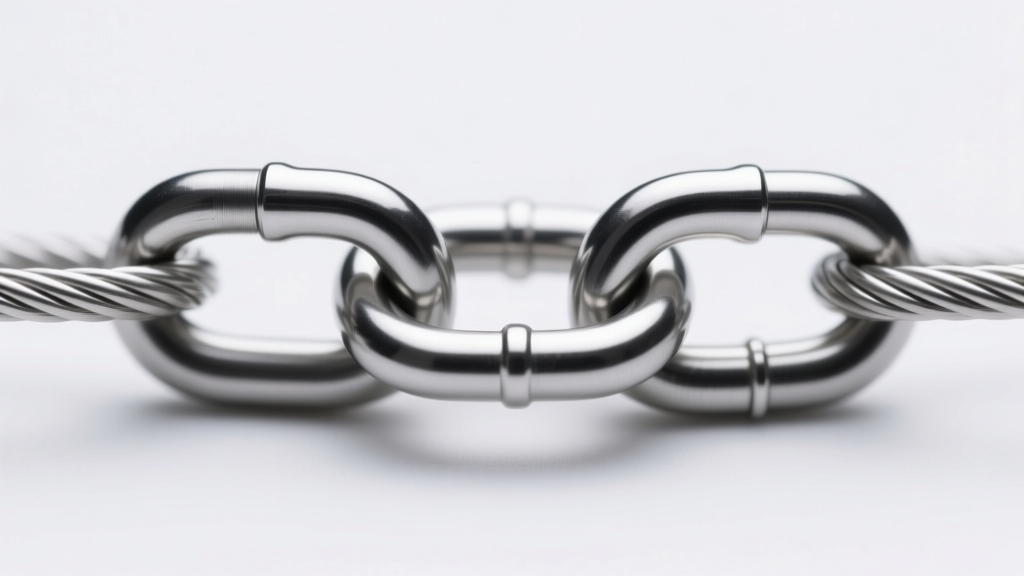
Chain Link Styles and Snag Coefficients
The geometry of the chain links dictates how the jewelry interacts with your environment. Snagging is the primary cause of cartilage trauma and jewelry breakage. Here is how common chain styles perform in a helix to lobe configuration:
- Cable Chain: The classic oval-link design. It offers excellent flexibility and a moderate snag risk. The smooth, rounded edges glide relatively well through hair.
- Box Chain: Composed of square, interlocking links. Box chains lay flat and have a very low snag coefficient, making them ideal for sleepers. However, they are more rigid and may not drape as naturally along the ear's contour.
- Rope Chain: Twisted links that mimic a rope. While visually striking, the spiraled texture creates a high snag coefficient, easily catching on knit sweaters and coarse hair.
- Snake Chain: Tightly joined rings forming a smooth, tubular surface. Snake chains are incredibly fluid and virtually snag-free, but they are significantly heavier than cable chains, increasing the gravitational pull on the helix.
Gauge Sizing and Tension Distribution
The thickness of the wire used to forge the chain links (the gauge) directly impacts both the durability of the chain and the health of the piercing channel. Most ear chains are manufactured in 18-gauge (1.0mm) or 16-gauge (1.2mm). Using a chain that is too thin for the piercing gauge introduces a localized pressure point, accelerating migration.
| Material | Recommended Gauge | Tensile Durability | Weight Impact on Helix | Relative Price Range |
|---|---|---|---|---|
| Implant-Grade Titanium | 18g (1.0mm) | Exceptional | Minimal (Ideal) | $45 - $85 |
| 14k Solid Gold | 18g (1.0mm) | High | Low to Moderate | $120 - $250 |
| 18k Solid Gold | 16g (1.2mm) | Moderate (Prone to stretching) | Moderate | $180 - $350+ |
| Niobium | 16g (1.2mm) | High | High (Avoid for fresh heals) | $35 - $65 |
| 316L Surgical Steel | N/A (Not Recommended) | High | Moderate | $15 - $30 |
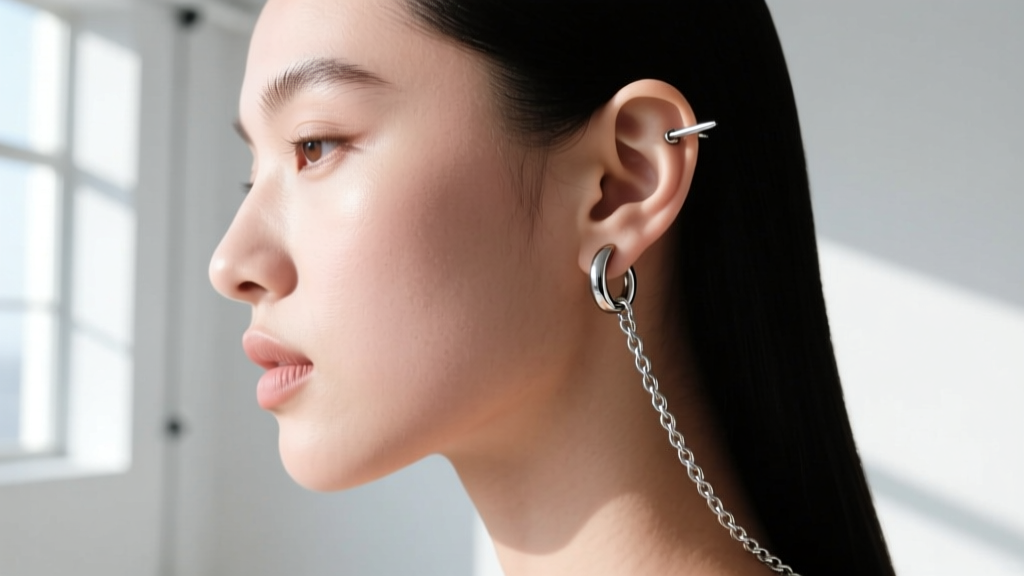
Real-World Failure Modes and Troubleshooting
Even with the perfect material, a helix to lobe earring can fail if the mechanical connections are poorly designed. Understanding these failure modes will help you troubleshoot and select superior pieces.
The Jump Ring Weak Point
Many mass-produced ear chains connect to the cartilage hoop and lobe stud via tiny, split jump rings. Under tension, these split rings can pull apart, dropping the chain. Premium body jewelry brands utilize laser-welded jump rings or continuous, soldered rings to eliminate this failure point entirely. Always inspect the connection points under a magnifying glass before purchasing.
The Cheese-Cutter Effect
If your helix piercing was done at 16-gauge, but you force an 18-gauge gold chain through it, the thinner wire will concentrate the tension over a smaller surface area. Over months of pulling, the wire will slowly slice through the cartilage tissue, causing the piercing to migrate outward and eventually reject. Rule of thumb: The chain gauge must exactly match or exceed the gauge of your helix piercing.
Clasp Interference
If your chain utilizes a lobster claw or spring-ring clasp at the lobe end, the bulky mechanism can press against the neck or catch on collars, transferring sudden shock loads to the helix. The most advanced helix to lobe earrings bypass clasps entirely, using a custom-bent continuous hoop at the top and a threadless or internally threaded pin at the bottom lobe connection for a seamless, flush fit.
Final Verdict: Engineering Your Perfect Ear Curation
A helix to lobe earring is a beautiful way to unify your ear styling, but it demands respect for the underlying anatomy. For the ultimate balance of lightweight comfort, snag resistance, and absolute biocompatibility, an 18-gauge implant-grade titanium cable chain remains the gold standard for daily wear. If you prefer the luxury of gold, opt for 14k solid gold to ensure the links possess the necessary hardness to resist stretching over time. By prioritizing material science and structural integrity over fast-fashion trends, you ensure your cartilage remains healthy, stable, and beautifully adorned for years to come.