Expert Guide to Jewelry Tragus Piercing: Sizing, Metals, and Fit
Discover the exact gauge sizes, implant-grade metals, and backing types needed for tragus piercing jewelry to ensure rapid healing and long-term comfort.

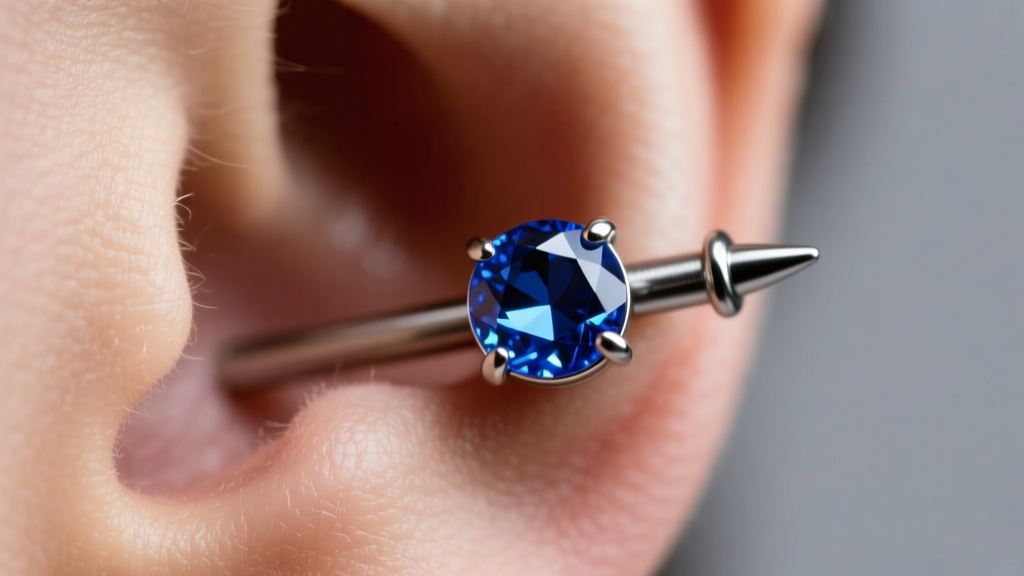
The Anatomy of a Tragus Piercing and Why Jewelry Choice Matters
The tragus is the small, thick flap of cartilage that projects anterior to the ear canal, serving to partially obscure the opening and direct sound waves. Because of its unique anatomical position and dense cartilaginous matrix, selecting the correct jewelry tragus piercing hardware is not merely an aesthetic choice—it is a biomechanical necessity. Unlike the soft tissue of an earlobe, the tragus lacks a robust vascular network, meaning healing relies heavily on minimizing mechanical stress, preventing bacterial biofilm adherence, and avoiding allergic contact dermatitis.
When evaluating jewelry for this specific placement, professional piercers and metallurgists focus on three critical vectors: dimensional precision (gauge and post length), material biocompatibility (alloy composition and surface finish), and mechanical stability (threading and backing mechanisms). A failure in any of these three areas routinely leads to hypertrophic scarring, prolonged inflammation, or the dreaded "cheese-cutter" migration effect.
Technical Sizing: Gauge, Diameter, and Post Length
The most common error consumers make when purchasing tragus jewelry is relying on generic "one-size-fits-all" metrics. The tragus thickness typically ranges from 4mm to 8mm, but swelling during the initial inflammatory phase can increase this by 30% to 50%. Therefore, initial jewelry must accommodate this expansion without extending so far that it catches on headphones, hair, or clothing.
| Sizing Metric | Initial Piercing Phase | Healed / Downsized Phase |
|---|---|---|
| Gauge (Thickness) | 16G (1.2mm) - Standard | 16G or 18G (1.0mm) for delicate anatomy |
| Post Length (Labrets) | 8mm (5/16") to 10mm (3/8") | 5mm (3/16") to 6mm (1/4") |
| Inner Diameter (Hoops) | N/A (Strictly Avoid Initially) | 6mm (1/4") to 8mm (5/16") |
The Danger of Premature Hoop Insertion
While captive bead rings (CBRs) and seamless hoops are popular for healed tragus piercings, inserting them before the fistula is fully mature is a primary cause of migration. Hoops introduce a rotational vector; every time the ear is bumped, the ring spins, dragging bacteria from the outside environment directly into the healing wound channel. Furthermore, the curvature of a hoop places uneven pressure on the straight piercing channel, leading to localized tissue necrosis and angle distortion. According to the Association of Professional Piercers (APP), flat-back labrets are the only acceptable geometry for initial tragus piercings.
Metallurgy and Biocompatibility: What to Actually Buy
The environment of the ear canal is warm, humid, and slightly acidic, creating an ideal incubator for corrosion if substandard metals are used. The term "surgical steel" is largely a marketing misnomer; most commercial 316L stainless steel contains between 10% and 14% nickel. As the steel degrades microscopically, nickel ions leach into the tissue, triggering severe allergic contact dermatitis and chronic rejection.
ASTM F-136 ELI Titanium: The Gold Standard
For initial and long-term tragus wear, implant-grade titanium alloyed with aluminum and vanadium (Ti-6Al-4V ELI) is the undisputed standard. The "ELI" stands for Extra Low Interstitial, meaning the oxygen, nitrogen, carbon, and iron impurities are strictly minimized to increase fracture toughness and corrosion resistance. When exposed to oxygen, ASTM F-136 titanium instantly forms a passive oxide layer that is entirely inert to human tissue. For a comprehensive breakdown of acceptable body jewelry alloys, refer to the BVLA Metallurgy Standards, a leading manufacturer of precision body jewelry.
Niobium for Healed Hoops
If you are transitioning to a hoop after 9 to 12 months of healing, Niobium (Nb) is a highly recommended alternative to titanium for seamless rings. Niobium is a highly reactive, non-alloying elemental metal that can be safely anodized to produce vibrant colors without the use of toxic surface dyes or platings that can flake off inside the fistula.
Surface Roughness and Biofilm Adherence
Material composition is only half the battle; surface finish is equally critical. High-quality tragus jewelry must feature a mirror polish with a surface roughness (Ra) of less than 0.2 micrometers (µm). Matte, sandblasted, or brushed finishes possess microscopic valleys that harbor Staphylococcus aureus and Pseudomonas aeruginosa, making them impossible to fully sterilize with standard saline aftercare.
Backing Mechanisms and Failure Modes
The mechanism that secures the jewelry to the post dictates both the safety of the insertion process and the long-term stability of the piercing. There are three primary mechanisms used in modern tragus jewelry:
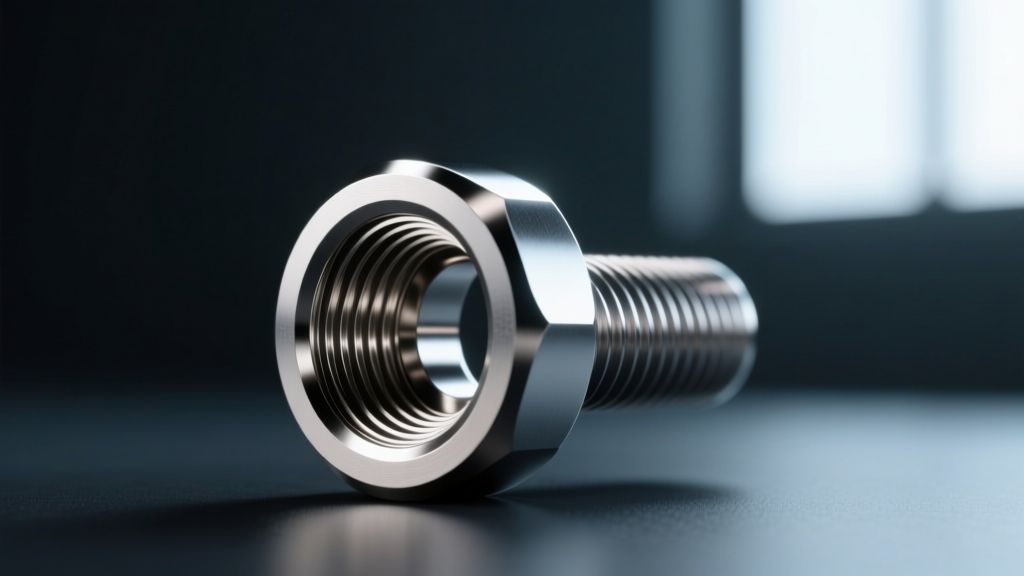
- Internal Threading: The threads are machined into the inside of the decorative end, while the post remains completely smooth. This ensures that no sharp metal edges pass through the delicate fistula during insertion or removal.
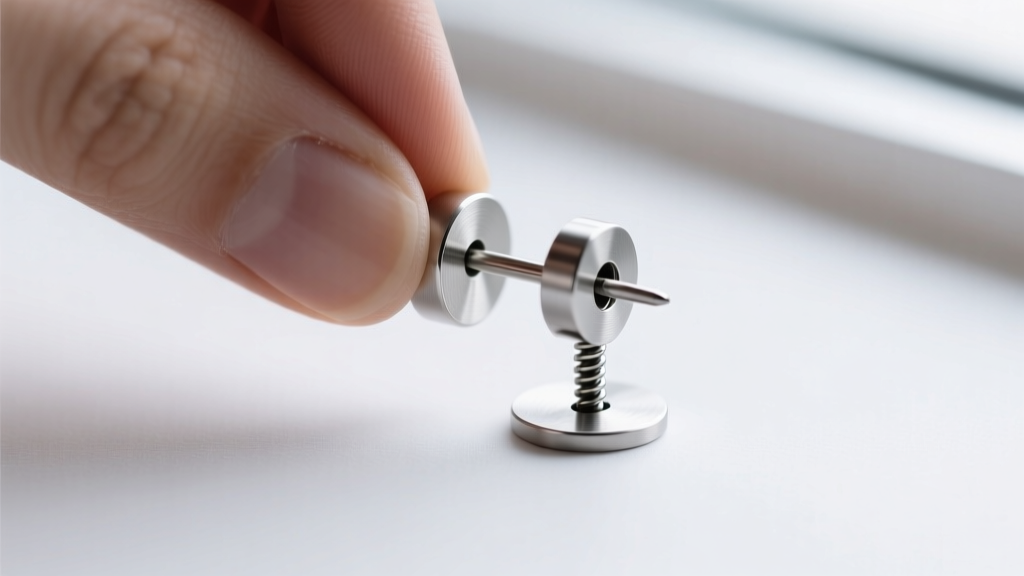
- Threadless (Push-Pin): This system relies on mechanical tension. A slightly bent pin on the decorative end is inserted into a hollow, smooth post. The tension creates a secure lock that is highly resistant to accidental unthreading, making it ideal for the tragus, which is frequently bumped by phones and pillows.
- External Threading (Avoid): The threads are cut into the post itself. When inserted, these sharp, spiral edges act like a file, tearing the microscopic epithelial cells lining the fistula. This causes micro-trauma, scar tissue buildup, and delayed healing.
Healing Dynamics and Downsizing Protocols
The tragus is notorious for producing hypertrophic bumps (localized, non-infectious swellings) if the jewelry post is left too long after the initial swelling subsides. The standard healing protocol requires a "downsize" appointment.
"The most critical window for a tragus piercing is weeks 4 through 8. The initial swelling has usually subsided, leaving excess post length protruding behind the ear. This excess acts as a lever; every time the client sleeps on that side or removes a shirt, the long post pivots, irritating the internal channel and triggering a bump. Downsizing to a 5mm or 6mm post at week 6 eliminates this lever effect and allows the fistula to lay flat and mature."
Troubleshooting Common Tragus Complications
Embedding: If the initial post is too short (e.g., 6mm used on a thick tragus with high swelling), the flat back disc will be swallowed by the tissue. This is a medical emergency requiring immediate intervention by a professional piercer to swap to a longer post and prevent the skin from healing over the metal.
Angle Rejection: The tragus must be pierced at a strict 90-degree perpendicular angle to the cartilage plate. If pierced at a slant, the body's natural immune response will treat the jewelry as a splinter, slowly pushing it toward the surface of the skin until it rejects entirely. No jewelry material can overcome a poorly angled piercing.
Final Checklist for Purchasing Tragus Jewelry
Before adding any jewelry to your cart, verify the following technical specifications to ensure you are purchasing safe, body-compatible hardware:
- Verify the material is explicitly listed as ASTM F-136 Implant-Grade Titanium or Niobium.
- Confirm the threading is Internal or the system is Threadless.
- Check the surface finish description for terms like "mirror polish" or "high-polish finish."
- Ensure the flat back disc is 2mm to 3mm in diameter; anything larger will press uncomfortably into the ear canal, while anything smaller risks embedding into the tissue.
By treating your jewelry tragus piercing selection as a precise medical and biomechanical decision rather than a simple fashion accessory choice, you guarantee a smoother healing process, a perfectly angled fistula, and a lifetime of comfortable wear.