Jewelry Daith Piercing Buying Guide: What to Look For
Discover what to look for when shopping for jewelry daith piercing styles. Learn about implant-grade materials, exact sizing, and clicker mechanisms.

The Biomechanics of the Daith Fold
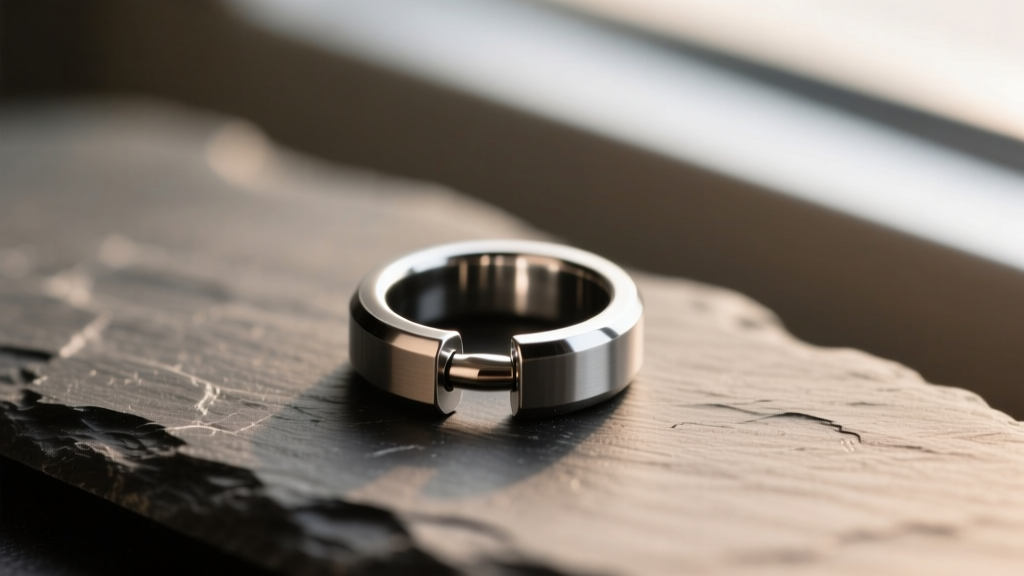
The daith piercing is uniquely situated through the innermost cartilage fold of the ear, anatomically known as the crus of the helix. Unlike a standard lobe piercing that passes through soft, vascular tissue, the daith punctures a dense, rigid ridge of cartilage. This specific anatomical location dictates strict requirements for the hardware you choose. When shopping for jewelry daith piercing options, you cannot simply rely on aesthetic appeal; the curvature, gauge, and closure mechanism must perfectly accommodate the ear's natural topography to avoid pressure necrosis, migration, or chronic irritation bumps.
Because the daith sits deep within the conchal bowl, it is highly susceptible to snagging on hair, clothing, and earbuds. Furthermore, the angle of the piercing channel is rarely perfectly horizontal; it often follows the natural curve of the cartilage ridge. This means that rigid or improperly curved jewelry will place continuous tension on the fistula (the piercing channel), leading to delayed healing or rejection. Understanding these biomechanical realities is the first step in making an informed purchase.
Material Metallurgy: Beyond the 'Hypoallergenic' Myth
The term 'hypoallergenic' is largely unregulated in the jewelry industry and is frequently used as a marketing shield for low-grade alloys. When selecting jewelry for a daith piercing, especially one that is still healing or prone to irritation, you must look for specific metallurgical certifications. The Association of Professional Piercers (APP) strictly recommends implant-grade materials for fresh and sensitive cartilage piercings.
Implant-Grade Titanium (ASTM F-136)
This is the gold standard for daith jewelry. ASTM F-136 specifies a titanium alloy (Ti-6Al-4V ELI) that is entirely nickel-free and biologically inert. It is the exact same material used in orthopedic joint replacements and pacemaker casings. Unlike 'surgical steel' (which can contain up to 10% nickel and cause severe allergic contact dermatitis), F-136 titanium will not react with your body's fluids or trigger an immune response.
Solid 14k or 18k Gold
If you prefer precious metals, opt for nickel-free, solid 14k or 18k gold. Avoid gold-plated or gold-filled jewelry, as the thin outer layer can easily wear away inside the high-friction environment of a cartilage piercing, exposing the reactive base metals underneath. According to the Mayo Clinic, nickel allergy is one of the most common causes of allergic contact dermatitis, making solid, alloy-controlled gold a much safer investment.
Niobium
Niobium is a highly biocompatible, nickel-free reactive metal that is often used for custom-bent seamless rings. While it cannot be anodized to the same bright colors as titanium, it is exceptionally safe for sensitive ears.
The Sizing Matrix: Gauge and Inner Diameter
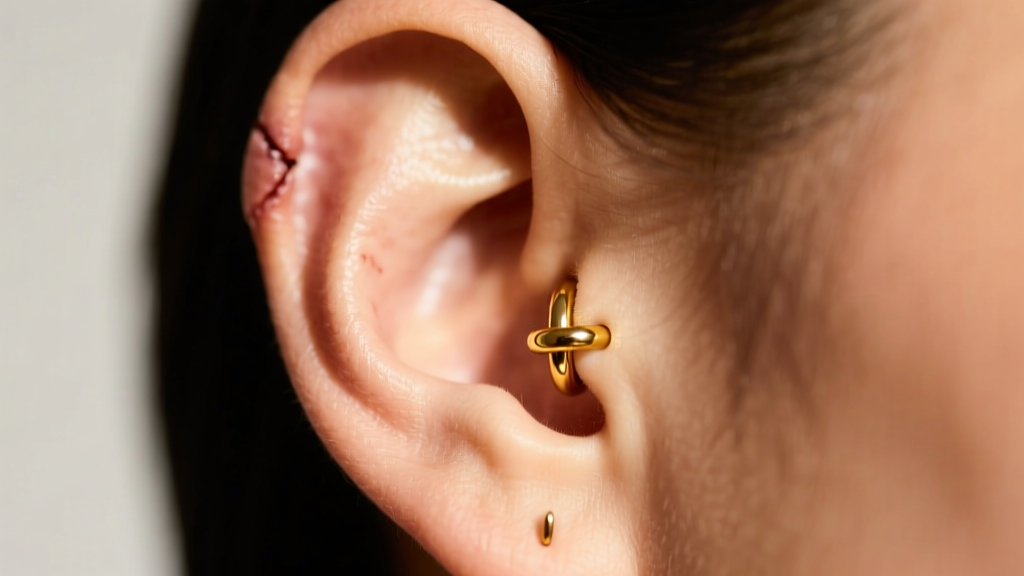
Sizing is where most online buyers make critical errors. A daith ring must have the correct inner diameter (ID) to sit flush against the cartilage without squeezing it, while also being large enough to accommodate the natural swelling that occurs during the healing process or daily temperature fluctuations.
| Piercing Stage | Standard Gauge | Ideal Inner Diameter | Recommended Hardware |
|---|---|---|---|
| Fresh / Healing (0-9 Months) | 16G (1.2mm) | 5/16" (8mm) or 3/8" (10mm) | Captive Bead Ring (CBR) |
| Fully Healed (Standard Anatomy) | 16G (1.2mm) | 5/16" (8mm) | Hinged Clicker Ring |
| Fully Healed (Snug / Deep Fold) | 16G (1.2mm) | 1/4" (6mm) | Small Hinged Clicker |
| Stretched / Heavy Gauge | 14G (1.6mm) | 3/8" (10mm) | Heavy CBR or Clicker |
How to Measure for a Perfect Fit
If you are replacing a healed daith ring, do not guess the size. Purchase a cheap digital caliper and measure the inner diameter of your current jewelry, not the outer edge. If your current ring feels like it is pulling upward on the piercing hole, you need to increase the diameter by 1mm. If it hangs too low and catches on your phone, decrease it by 1mm. A properly fitted 8mm clicker should cradle the daith ridge with roughly a millimeter of breathing room.
Mechanism Showdown: Clickers, CBRs, and Seamless Rings
The closure mechanism of your jewelry drastically impacts both your daily comfort and the long-term health of the fistula.
Hinged Segment Rings (Clickers)
Clickers are the undisputed champions of the healed daith piercing. Featuring a microscopic hinge and a secure snap closure, they offer a nearly seamless 360-degree circle. Pros: Easy to insert and remove without tools; the smooth closure point prevents hair snagging. Cons: The hinge mechanism can trap soap and dead skin cells, requiring regular flushing with warm water. Furthermore, clickers cannot be custom-bent; if your daith channel is pierced at an extreme angle, a rigid clicker may sit crookedly.
Captive Bead Rings (CBRs)
CBRs rely on the tension of the ring to hold a small bead in place. Pros: They offer a perfectly smooth, continuous inner surface that is ideal for fresh piercings. Cons: Changing a CBR in a daith piercing is notoriously difficult. The tight space of the conchal bowl makes maneuvering ring-opening pliers nearly impossible without professional help, and dropping the tiny captive bead is a common frustration.
Seamless / Continuous Rings
These rings feature a subtle slit where one end tucks into the other. While they look elegant, they are generally discouraged for daith piercings. The microscopic gap can harbor bacteria, and the act of twisting the ring open and closed can warp the metal, causing the ends to misalign and scratch the delicate inside of the piercing channel.
Troubleshooting Irritation Bumps and Migration
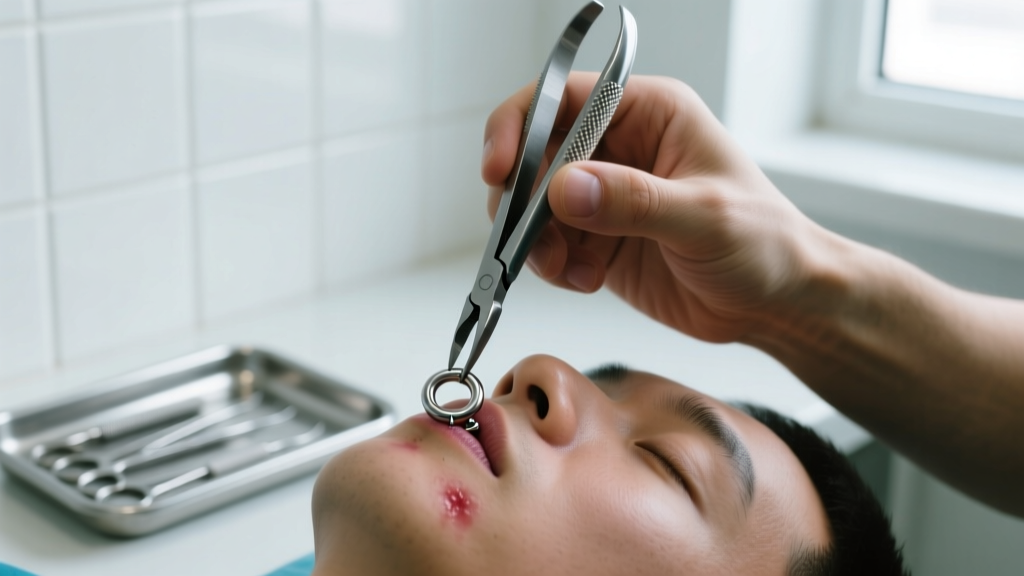
If you are experiencing a localized irritation bump (hypergranulation) near your daith piercing, your jewelry choice is often the primary culprit. An inner diameter that is too small will act like a cheese wire, applying constant upward pressure on the cartilage. This pressure restricts blood flow and forces the body to create excess scar tissue to protect the area. Conversely, a ring that is too large will swing like a pendulum, introducing friction and external bacteria into the healing wound.
Another frequent failure mode is the use of jewelry with heavy, oversized gemstone clusters on the closure point. If a heavy charm rests directly against the daith fold, gravity will pull the ring out of alignment, causing the bottom of the ring to press painfully against the opposite side of the conch. Always opt for lightweight, paved stones or minimalist designs for everyday wear.
Red Flags: What to Avoid When Shopping
- 'Surgical Steel' or 'Stainless Steel': Unless specifically labeled as implant-grade ASTM F-138, assume it contains nickel and will cause a reaction.
- Butterfly Backs and Push-Pins: These are designed exclusively for lobe piercings. The sharp posts and bulky backs will cause severe trauma if forced through a cartilage fold.
- Acrylic or Bioflex Gems: These porous plastics cannot be properly sterilized and will harbor bacteria inside the warm, moist environment of the ear.
- Unverified Online Marketplaces: Extremely cheap 'titanium' rings on mass-market sites are often painted aluminum or low-grade steel. Always buy from reputable, dedicated piercing studios or verified body jewelry brands like BVLA, Anatometal, or NeoMetal.
Final Pre-Purchase Checklist
Before you add a piece to your cart, verify the following specifics:
- Is the material explicitly listed as ASTM F-136 Titanium or solid 14k/18k Nickel-Free Gold?
- Is the gauge correct for your specific piercing (usually 16G / 1.2mm)?
- Have you measured your inner diameter to ensure it matches the natural curve of your ear (usually 8mm)?
- Does the closure mechanism suit your lifestyle and dexterity?
By prioritizing anatomical precision and metallurgical safety over fleeting trends, you ensure your daith piercing remains a healthy, stunning feature for decades to come.


