Helix Hook Earrings: 2026 Budget & Value Assessment
Assess the true value of helix hook earrings in 2026. We break down material grades, gauge safety, and pricing tiers to help you avoid cartilage damage.

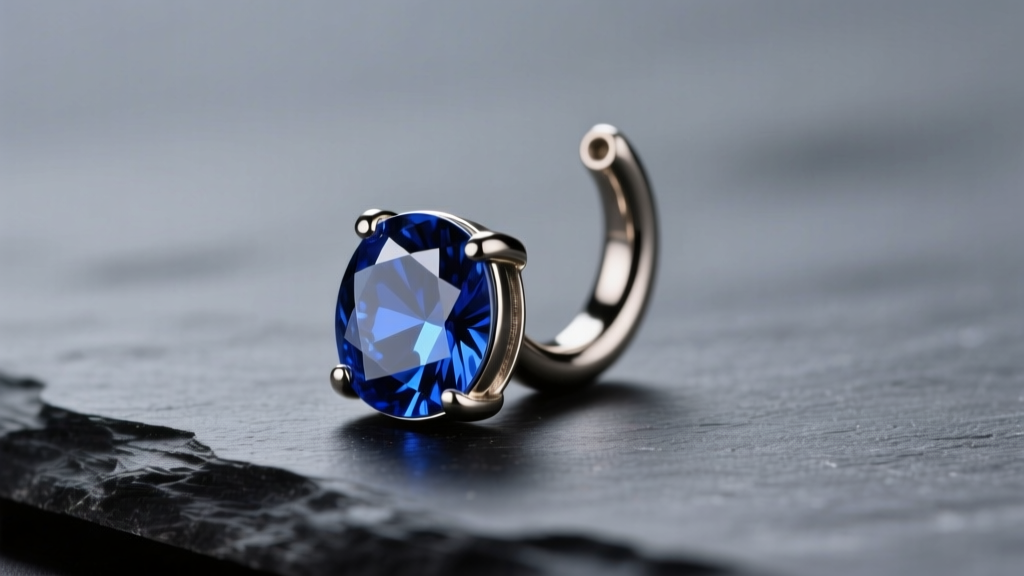
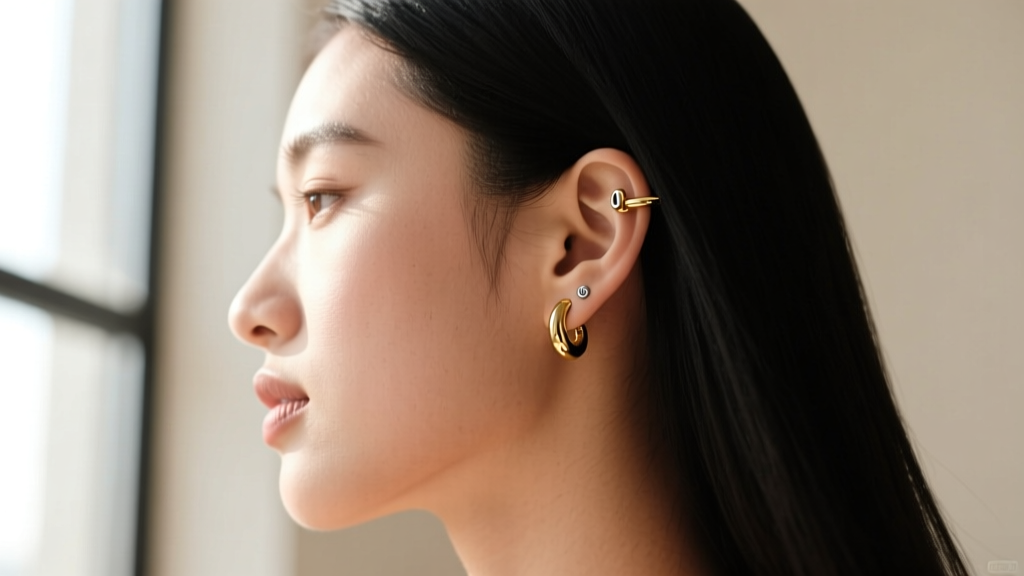
When it comes to upper ear styling, helix hook earrings offer an undeniable aesthetic advantage: movement. Unlike standard labret studs or captive bead rings, hook-style dangles catch the light and sway with your natural motion, creating a dynamic, high-fashion look. However, as the demand for cartilage dangles has surged through the 2020s, the market has been flooded with ultra-cheap, mass-produced fashion hooks that pose a severe risk to your piercing's long-term health.
As a senior jewelry analyst, I frequently see clients suffering from migration, irritation bumps, and torn fistulas simply because they opted for a $12 fashion hook over a properly engineered body-safe alternative. In this comprehensive budget and value assessment, we will dissect the true cost of helix hook earrings, evaluating material grades, gauge mechanics, and long-term cost-per-wear to help you make an informed investment in your cartilage.
The Gauge Trap: Why 'Budget' Fashion Hooks Destroy Cartilage
The most critical failure point of cheap helix hook earrings is the wire thickness. Standard helix piercings are typically performed at 16-gauge (1.2mm) or 14-gauge (1.6mm) using hollow needles to create a clean, stable fistula. However, the vast majority of budget-friendly 'fashion' hook earrings found in mall kiosks and fast-fashion retailers are manufactured at 20-gauge (0.8mm) or 22-gauge (0.6mm) to save on metal costs.
When you insert a 22-gauge wire into a 16-gauge helix fistula, you introduce the dreaded cheese-cutter effect. Because the wire is significantly thinner than the piercing channel, it rests under tension against the bottom edge of the cartilage. Over time, the weight of the dangle combined with the thin wire slowly slices through the tissue, leading to downward migration, thinning of the ear's edge, and eventual rejection. True value in cartilage jewelry dictates that you must never wear a hook thinner than 18-gauge (1.0mm), with 16-gauge being the optimal standard for structural integrity.
Material Value Matrix: Steel vs. Titanium vs. Gold
Beyond gauge, the metallurgical composition of your helix hook earrings determines their biocompatibility and longevity. Cartilage is notoriously avascular (lacking direct blood supply), meaning it heals slowly and is highly susceptible to contact dermatitis. According to the Association of Professional Piercers (APP), only specific, highly polished implant-grade materials should be worn in cartilage piercings. Furthermore, the Cleveland Clinic notes that nickel exposure is a primary trigger for allergic contact dermatitis, a common complication with cheap alloy earrings.
| Material Grade | Average Price Range | Nickel Content | Value Rating |
|---|---|---|---|
| 316LVM Surgical Steel | $15 - $35 | Contains Nickel (8-12%) | Fair (Budget Option) |
| ASTM F-136 Titanium | $30 - $65 | Zero Nickel | Excellent (Best Value) |
| 14k / 18k Solid Gold | $85 - $250+ | Zero (if alloyed correctly) | Premium (Heirloom) |
Tier 1: Budget Surgical Steel (The Compromise)
If your budget is strictly under $30, 316LVM surgical steel is your only safe option. While it does contain nickel, the high polish and chromium oxide layer trap the nickel ions, making it safe for fully healed piercings for most people. However, if you have a known nickel sensitivity, this tier is a false economy; the resulting allergic reaction will cost you far more in dermatological treatments than a titanium upgrade.
Tier 2: Mid-Range Implant-Grade Titanium (The Sweet Spot)
ASTM F-136 Ti-6Al-4V ELI is the undisputed champion of value. Priced between $30 and $65, implant-grade titanium is completely nickel-free, 40% lighter than steel (reducing the cheese-cutter drag on your helix), and can be anodized to create vibrant, scratch-resistant colors. For daily-wear helix hook earrings, titanium offers the best intersection of safety, weight distribution, and affordability.
Tier 3: Premium Solid Gold (The Investment)
For those seeking luxury, 14k or 18k solid gold (specifically palladium-white or yellow gold, avoiding rose gold which contains copper and can irritate sensitive cartilage) represents a lifetime investment. Brands like BVLA and Anatometal craft 16-gauge gold hooks that will literally last generations. While the upfront cost exceeds $100, the cost-per-wear over a decade drops to pennies.
Design Mechanics: Why Standard Fishhooks Fail in the Helix
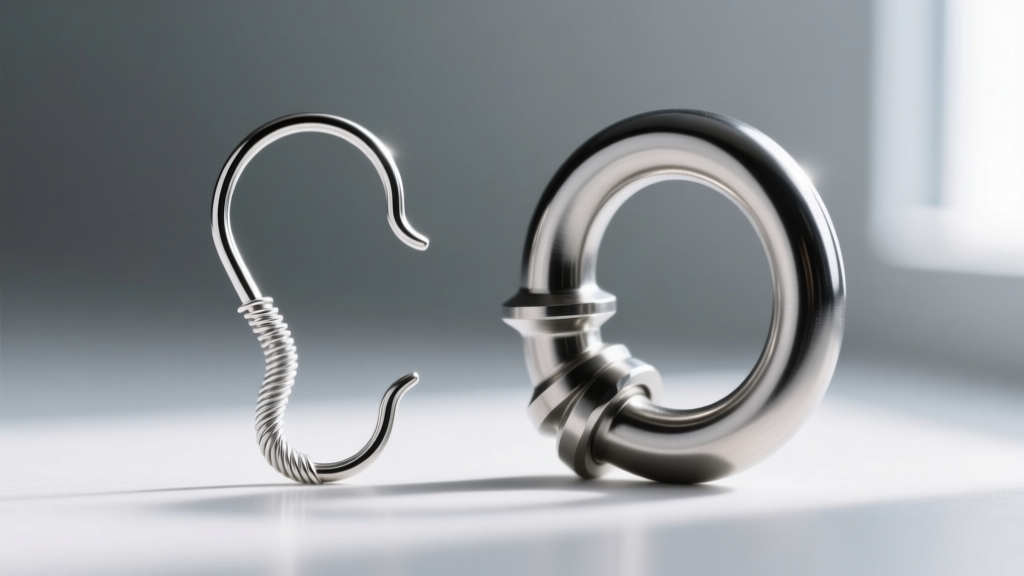
The traditional 'fishhook' or 'shepherd hook' design features a long, open wire that relies on gravity to stay in the ear. In a standard earlobe, this works fine. In a helix piercing, it is a mechanical disaster. The helix fistula is angled, and the open back of a fishhook is highly prone to snagging on hair, sweaters, and pillowcases.
When a standard fishhook snags, it pulls violently backward, driving the unpolished, blunt tip of the wire into the delicate skin behind the ear, often causing lacerations or severe irritation bumps. When assessing the value of helix hook earrings, you must prioritize secure closure mechanisms. Look for:
- Locking Latch-Backs: A hinged wire that clicks securely into a locked groove, preventing accidental removal.
- J-Hooks with O-Rings: A wire bent into a 'J' shape, secured at the back with a tiny, snug silicone or metal O-ring to prevent sliding.
- Hinged Segment Rings with Dangles: While technically not a 'hook', a hinged 16-gauge clicker ring with a suspended charm offers the exact same visual movement with 100% snag-proof security.
2026 Market Pricing & Cost-Per-Wear Analysis
To truly understand value, we must look beyond the sticker price and calculate the cost-per-wear (CPW), factoring in the lifespan of the jewelry and the biological cost of replacing damaged piercings.
Scenario A: The Fast-Fashion Hook ($12)
Material: Unknown alloy, 22-gauge.
Lifespan: 3 weeks before tarnishing or causing an irritation bump that forces you to remove it and downsize to a titanium stud to heal the cartilage ($45 for the stud + $50 for a piercer consultation).
True Cost: $107 + 4 months of healing time.
Scenario B: The Implant-Grade Titanium Locking Hook ($48)
Material: ASTM F-136 Titanium, 16-gauge, locking latch.
Lifespan: Indefinite. Will not tarnish, rust, or cause allergic reactions. Can be worn 24/7, including in the shower and while sleeping (though removing dangles for sleep is always recommended for cartilage health).
True Cost: $48 (CPW over 2 years = $0.06 per day).
Final Verdict: Are Helix Hook Earrings Worth the Investment?
Helix hook earrings are absolutely worth the investment, provided you refuse to compromise on gauge thickness and material integrity. The market in 2026 offers incredible mid-range options from reputable body jewelry manufacturers that bridge the gap between high-end luxury and fast-fashion fragility. By insisting on a minimum of 16-gauge thickness, choosing ASTM F-136 titanium or solid gold, and opting for locking mechanics over open fishhooks, you secure a piece of jewelry that enhances your personal style without holding your cartilage health hostage. True value in body modification is never found in the bargain bin; it is forged in biocompatibility, structural engineering, and timeless design.