Helix Permanent Jewelry Welder: 2026 Cost & Value Guide
Is a helix permanent jewelry welder worth the investment? We break down 2026 costs, micro-welding safety, titanium vs. gold, and snag risks.

The Rise of Welded Ear Chains: Beyond the Wrist
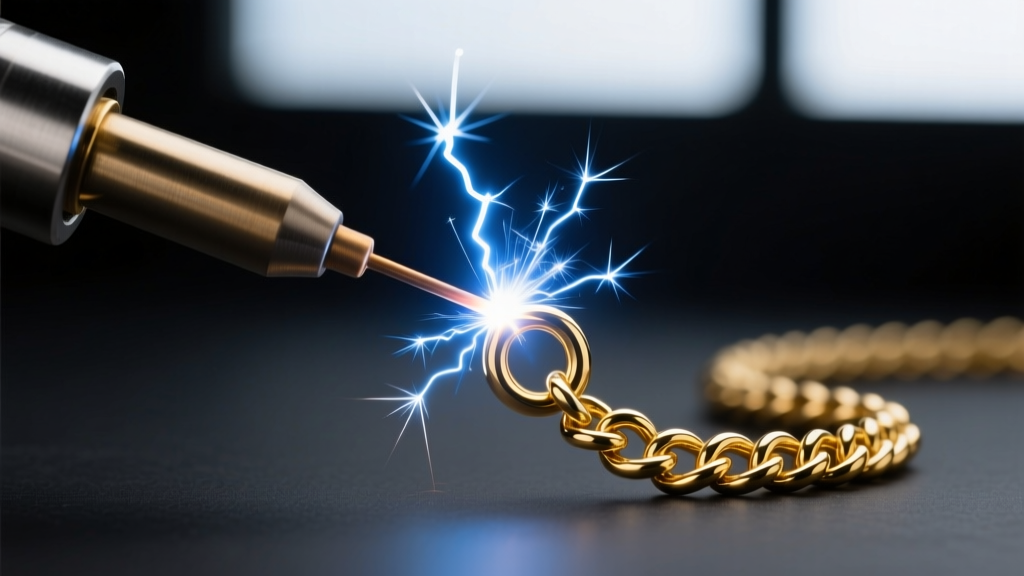
As we move through 2026, the permanent jewelry trend has officially migrated from the wrist to the ear. The seamless, clasp-free aesthetic of a continuous chain connecting a helix piercing to a lobe piercing—or draping delicately across the conch—is the ultimate minimalist statement. However, executing this look requires far more precision than welding a standard bracelet. Enter the helix permanent jewelry welder: a highly specialized professional utilizing micro-TIG technology to fuse tiny, delicate ear chains without damaging the cartilage or vaporizing the metal. But with specialized services comes specialized pricing. Is investing in a welded helix chain genuinely worth the premium, or are you better off sticking to traditional threadless ends and captive bead rings? In this comprehensive budget and value assessment, we dissect the true costs, metallurgical realities, and safety considerations of permanent ear jewelry.
What Exactly is a Helix Permanent Jewelry Welder?
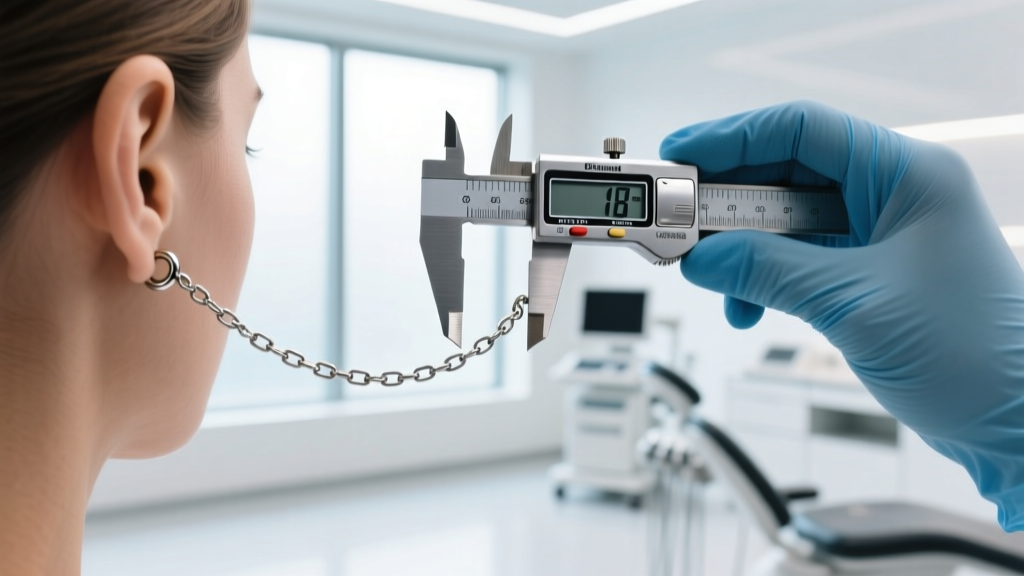
A standard permanent jewelry welder, often used for 14k gold wrist chains, operates using a high-energy arc pulse. When applied to the thick links of a bracelet, this is perfectly safe. However, helix ear chains typically feature micro-links ranging from 1.2mm to 1.5mm in diameter, crafted from 16-gauge or 18-gauge wire. If a standard bracelet welder is used on these delicate links, the excessive watt-second (Ws) output will instantly vaporize the gold, leaving behind a sharp, oxidized burr that can embed into your healing cartilage and cause severe irritation bumps.
A dedicated helix permanent jewelry welder uses advanced micro-welding equipment—such as the Orion mPulse or specialized Sunstone welders—dialed down to extremely precise energy outputs, typically between 3 and 8 watt-seconds. Furthermore, because the welding occurs mere millimeters from the client's ear, the welder must employ a localized argon gas shield. According to metallurgical guidelines from Stuller, argon shielding is non-negotiable for preventing oxidation and ensuring the structural integrity of the fused jump ring, especially when working near sensitive biological tissue.
Machine Specs: Standard vs. Micro Ear Welders
| Feature | Standard Bracelet Welder | Helix Micro-Welder |
|---|---|---|
| Energy Output | 15 - 40 Watt-Seconds | 2 - 10 Watt-Seconds |
| Argon Gas Flow | Standard / Intermittent | Continuous / High-Purity |
| Electrode Size | Standard Tungsten | Micro-Tapered Tungsten |
| Ideal Wire Gauge | 14g - 10g | 20g - 16g |
Budget Breakdown: Traditional vs. Welded Helix Jewelry
When assessing value, we must compare the upfront and long-term costs of permanent helix jewelry against traditional high-end body jewelry. While a welded chain carries a higher initial service fee, it eliminates the recurring costs of replacing lost threadless ends or upgrading basic steel hoops.
2026 Pricing Comparison
- Traditional 14k Gold Seamless Hoop (16g): $65 - $110 (Requires manual opening/closing, prone to warping)
- Traditional Titanium Threadless Post + 14k Gold End: $55 - $95 (High risk of losing the decorative end)
- Permanent Helix Chain (Service + Solid 14k Gold): $140 - $240 (Includes custom fitting, micro-welding, and chain)
- Permanent Helix Chain (Service + Implant-Grade Titanium): $95 - $150 (More affordable, highly biocompatible)
From a pure budget perspective, traditional titanium setups are the most economical. However, the value of the welded chain lies in its bespoke drape and the elimination of mechanical failure points (like bent posts or lost ends). If you frequently lose jewelry ends or struggle with the dexterity required to insert threadless pins, the $150+ investment in a permanent welder's service pays for itself in frustration saved.
Material Realities: What Can Actually Be Welded?
One of the most common budget traps in the permanent jewelry space is the assumption that any gold-colored chain can be welded. This is a dangerous misconception. A reputable helix permanent jewelry welder will flat-out refuse to weld gold-filled, gold-plated, or vermeil chains. The intense heat of the arc will instantly burn away the microscopic outer layer of gold, vaporizing the brass or copper core and releasing toxic fumes, while leaving a brittle, blackened weld point that will snap within days.
For a successful micro-weld, you are limited to homogeneous metals:
- Solid 14k Gold: The undisputed champion of permanent ear chains. It offers the perfect balance of durability, malleability, and weldability. 18k gold is often too soft for ear chains and can stretch under the weight of hair or clothing.
- Solid Platinum: Extremely durable and welds beautifully, but the material cost pushes the total service price well over $400.
- ASTM F136 Implant-Grade Titanium: The most biocompatible option, highly recommended by the Association of Professional Piercers (APP). However, titanium requires 99.999% pure argon gas during welding to prevent oxygen embrittlement. Not all permanent jewelry studios have the gas purity required for safe titanium ear welds.
The Snag Dilemma: Sacrificial Links and Cartilage Safety
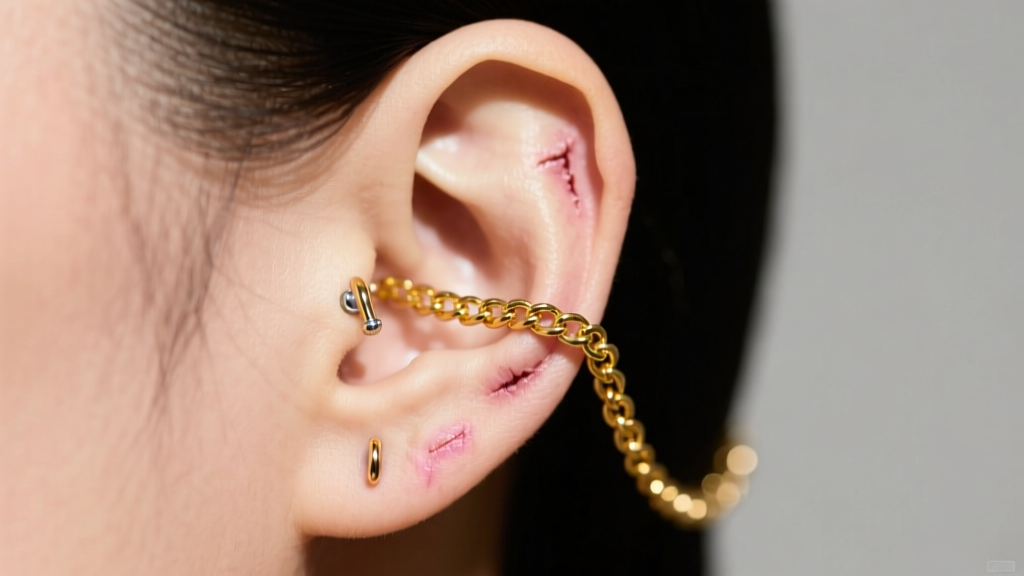
Here is where genuine expertise separates a master helix permanent jewelry welder from an amateur with a welding pen. The ear is a high-snag environment. Hairbrushes, sweaters, towels, and headphones constantly interact with the helix. If a continuous, fully welded 16-gauge gold chain snags on a heavy winter coat, the chain will not break; instead, the kinetic energy will transfer directly to your cartilage, potentially causing a severe tear or blowout.
To mitigate this catastrophic failure mode, an expert welder will intentionally engineer a sacrificial link. This involves using a slightly lower amperage setting on one specific, strategically placed jump ring (usually near the lobe connection or hidden behind the ear). This creates a controlled weak point. If the chain experiences sudden, high-tension trauma, the sacrificial weld will pop open, saving your cartilage from irreversible damage. When assessing the value of a welder, always ask if they incorporate a breakaway safety link into their ear chain designs. If they don't, walk away.
Healing, Maintenance, and the MRI Factor
Permanent ear jewelry should only be installed in fully healed piercings (minimum 9-12 months for helix piercings). The micro-sparks from the welder, while shielded, can cause thermal shock to a fistula that is still remodeling collagen. Furthermore, you must consider future medical imaging. While solid gold and titanium are generally non-magnetic, hospital protocols for MRI machines often mandate the removal of all continuous metal loops to prevent radiofrequency thermal burns. Because a welded helix chain has no clasp, removal requires cutting the chain with flush cutters. A good studio will offer a complimentary or low-cost re-weld service (usually $15-$25) once your medical scan is complete.
Final Verdict: Is the Investment Justified?
So, is hiring a specialized helix permanent jewelry welder worth the premium? If you are seeking a flawless, continuous aesthetic that eliminates the hassle of tiny clasps and lost threadless ends, the $140 to $240 investment is entirely justified—provided you choose a professional who understands micro-TIG energy settings and sacrificial link engineering. However, if you are on a strict budget, frequently change your jewelry to match your outfits, or work in an environment with strict metal-snag hazards, traditional high-quality titanium threadless jewelry remains the smarter, safer, and more economical choice for your cartilage.