Hoop Earring Tragus Trends 2026: Sizing & Style Guide
Discover 2026 hoop earring tragus trends, from seamless clickers to precise inner diameters. Expert sizing, material, and styling advice inside.

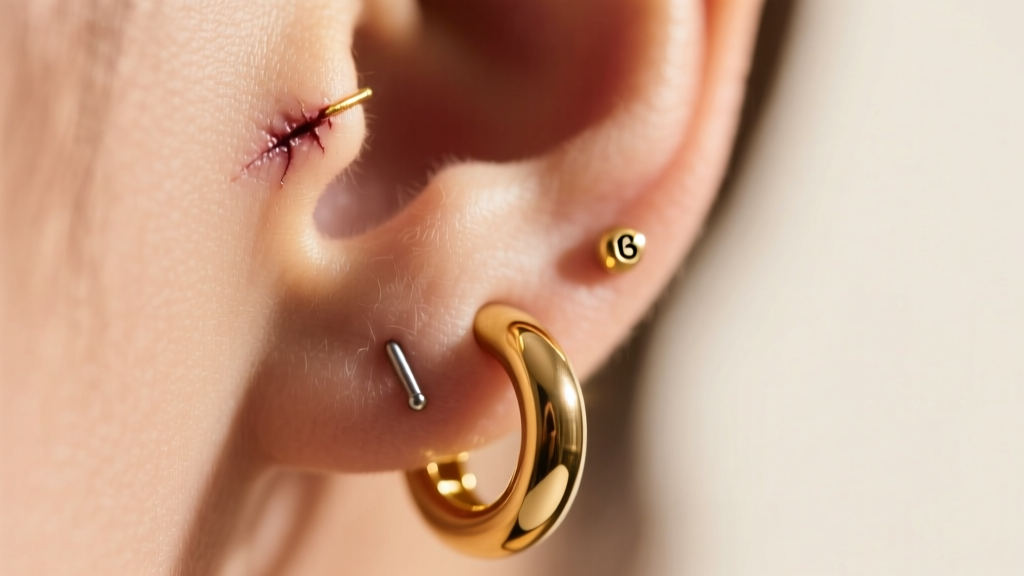
The tragus is arguably the most versatile and visually striking real estate on the human ear. As we navigate the body modification landscape of 2026, the hoop earring tragus look has evolved far beyond the bulky, ill-fitting captive bead rings of the early 2010s. Today, the focus is on precision metallurgy, micro-mechanics, and anatomical tailoring. Whether you are curating a minimalist ear project or looking to upgrade a healed piercing, understanding the exact geometry of tragus jewelry is the difference between a stunning aesthetic and chronic irritation.
In this comprehensive style and trend analysis, we break down the exact gauge sizes, inner diameter (ID) mathematics, and 2026 styling frameworks you need to master the tragus hoop.
The Anatomy of a Perfect Fit: Gauge and Inner Diameter
The most common failure mode for a hoop earring tragus setup is improper inner diameter. Unlike the earlobe, which has ample space to accommodate a 10mm or 12mm hoop, the tragus is a dense, rigid flap of cartilage that projects directly over the ear canal. If a hoop is too large, it will catch on hair, headphones, and phone receivers, leading to trauma. If it is too small, it will compress the tissue, restrict lymphatic drainage, and cause hypertrophic scarring (irritation bumps).
According to the Association of Professional Piercers (APP), initial jewelry must accommodate swelling while maintaining a low profile. However, once fully healed (which takes 6 to 12 months for the tragus), downsizing to a snug-fitting hoop is critical.
The 2026 Sizing Matrix
| Gauge Size | Thickness (mm) | Healed Tragus ID (Snug) | Healed Tragus ID (Relaxed) | Best Jewelry Type |
|---|---|---|---|---|
| 18g | 1.0mm | 6.0mm - 7.0mm | 8.0mm | Micro-Clickers, Continuous Rings |
| 16g (Standard) | 1.2mm | 7.0mm - 8.0mm | 9.0mm | Hinged Clickers, CBRs |
| 14g (Rare) | 1.6mm | 8.0mm - 9.0mm | 10.0mm | Heavyweight CBRs |
Pro Tip: Always measure your inner diameter using a digital caliper. Measuring the outer diameter of the hoop will result in a ring that is 2 to 3 millimeters too large for your tragus, guaranteeing snagging and irritation.
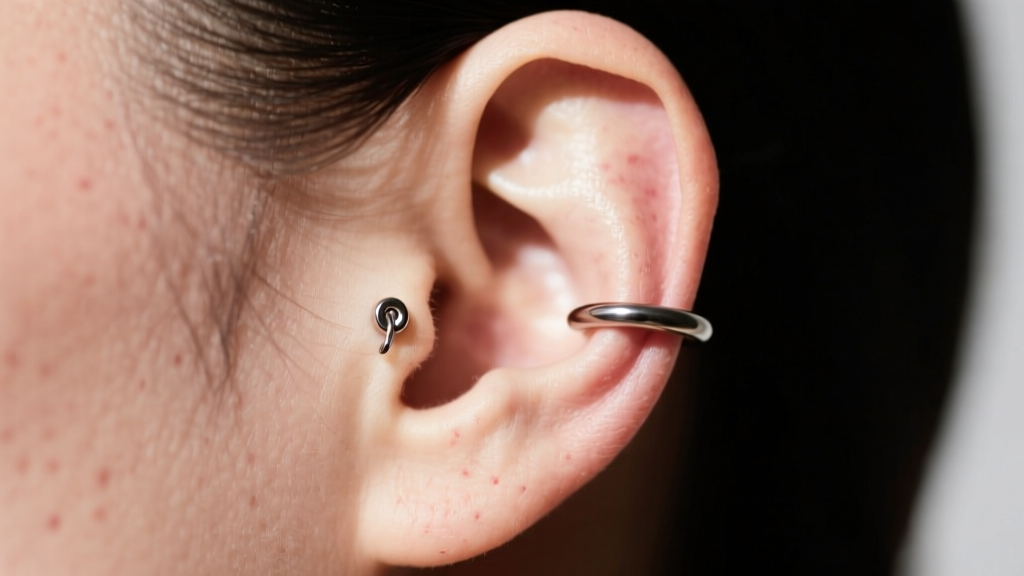
Metallurgy Matters: What to Wear in 2026
The 2026 trend in high-end body jewelry heavily favors biocompatibility and 'quiet luxury.' The days of mystery-metal surgical steel are over. When selecting a hoop for your tragus, the material must be non-porous, nickel-free, and mirror-polished to prevent bacterial adhesion inside the fistula (the piercing channel).
Top Material Grades for Tragus Hoops
- ASTM F-136 Implant-Grade Titanium: The gold standard for healing piercings. It is lightweight, completely nickel-free, and can be anodized to create vibrant colors without using dyes or platings. Brands like BVLA and Anatometal lead this space.
- Niobium: A highly malleable, reactive metal that is excellent for continuous (seamless) rings because it can be easily bent and shaped by a piercer to achieve a custom inner diameter.
- Solid 14k or 18k Gold: For healed piercings, nickel-free gold alloys are the pinnacle of luxury. Avoid gold-plated or gold-filled hoops, as the friction of the hoop moving through the cartilage will eventually wear away the plating, exposing base metals to the tissue.
'The mirror finish on high-end titanium and gold body jewelry is not just for aesthetics; a microscopic scratch on a hoop can harbor bacteria and cause chronic inflammation in a tight space like the tragus.' — Master Piercer Guidelines, 2025 APP Conference
Mechanics: Clickers vs. CBRs vs. Seamless Rings
Choosing the right closure mechanism is just as important as the metal. The tragus is notoriously difficult to access with your own hands, making the mechanics of the hoop a major factor in your daily life.
1. The Hinged Clicker
The undisputed champion of the 2026 tragus trend. Clickers feature a hidden hinge and a secure 'click' closure. They are incredibly easy to open and close without tools, making them perfect for clients who like to swap jewelry. Warning: Never put a clicker in a healing tragus. The hinge gap can harbor bacteria and crust.
2. The Captive Bead Ring (CBR)
CBRs rely on the tension of the ring to hold a small bead in place. While they offer a seamless, unbroken circle that is excellent for healing (when sized correctly), they require ring-opening pliers to change. If you drop the captive bead, it is gone forever.
3. The Continuous / Seamless Ring
These feature a tiny segment that pulls out and twists back into place. They offer the most minimalist, invisible seam. However, repeated twisting can warp the metal, causing the ends to misalign and scratch the inside of your piercing channel.
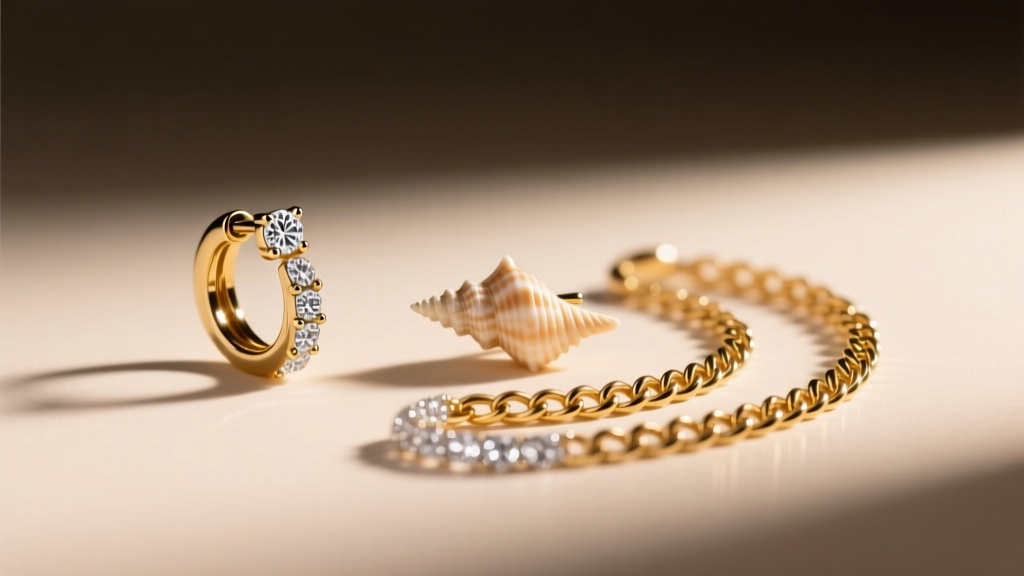
2026 Curated Ear Styling: The Negative Space Rule
Ear curation has matured. The 'more is more' approach of the late 2010s has been replaced by intentional, balanced compositions. When styling a hoop earring tragus setup, professional piercers rely on the Negative Space Rule to ensure the ear doesn't look cluttered.
- The Focal Point: If your tragus features a diamond-encrusted or textured hoop, keep the adjacent conch piercing minimal. A simple, flush-set bezel stud in the conch allows the tragus hoop to breathe and catch the light.
- Shape Contrast: If the tragus is a hoop, the helix and lobe should ideally feature studs or straight barbells (like an industrial). If the tragus is a stud, you have visual permission to wear a large hoop in the lobe or a daith clicker.
- The Chain Trend: In 2026, connecting a delicate tragus hoop to a mid-helix stud via a micro-chain is a massive trend. Ensure the chain has enough slack so that pulling on the helix does not yank the tragus hoop out of alignment.
Troubleshooting: Why Your Tragus Hoop Keeps Irritating
If you have switched to a hoop and are experiencing persistent redness, flaking, or a bump on the back of the tragus, you are likely experiencing the 'Hooping Effect.' Because hoops rotate, they drag dried lymph, dead skin cells, and external bacteria from the outside of the ear directly into the healing fistula.
How to fix it:
- Stop spinning the ring. Many people have a nervous habit of twisting their tragus hoop. This micro-trauma prevents the tissue from settling.
- Check your sleep hygiene. Sleeping on a tragus hoop puts direct, sustained pressure on the cartilage. Invest a U-shaped travel pillow and sleep with your ear in the center hole to eliminate compression.
- Evaluate the seam. Run your fingernail over the closure of the hoop. If you feel a 'catch' or a sharp edge, the jewelry is defective or warped and must be replaced immediately to prevent scarring.
Final Verdict: Investing in Quality
A high-quality hoop earring tragus setup is an investment in your anatomy. Expect to pay between $45 and $90 for premium implant-grade titanium clickers, and anywhere from $250 to $800+ for solid 14k/18k gold options featuring ethically sourced diamonds from brands like Maria Tash or Junipurr Jewelry. By prioritizing exact inner diameters, biocompatible metals, and intentional styling, your tragus piercing will remain a stunning, healthy focal point for years to come.