Surface Tragus Jewelry: A Beginner's Guide to Healing
Discover everything about surface tragus jewelry, from staple barbell sizing and titanium grades to healing tips that prevent rejection.

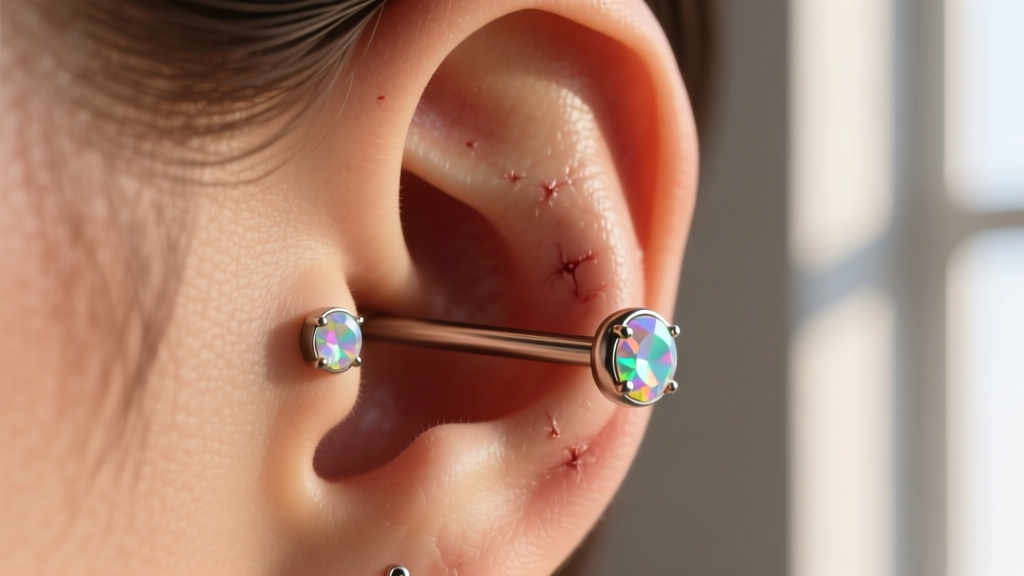
The Great Anatomy Confusion: Standard vs. Surface Tragus
Before we dive into the specifics of surface tragus jewelry, we need to clear up one of the most common anatomical misunderstandings in the piercing world. When most people hear the word 'tragus,' they picture the small, thick flap of cartilage that projects just in front of the ear canal. A standard tragus piercing punctures directly through this cartilage shelf, typically utilizing a flat-back labret stud.
A surface tragus piercing, however, is an entirely different procedure. Instead of punching through the cartilage, a surface tragus is placed on the flat skin of the cheek or the side of the face just adjacent to the tragus itself. The jewelry enters and exits the skin without ever touching the underlying cartilage structure. Because the jewelry sits parallel to the surface of the skin rather than perpendicular to it, the mechanical forces acting on the piercing are vastly different. This unique anatomy dictates a highly specific approach to jewelry selection, sizing, and long-term aftercare.
Why Standard Tragus Studs and Curved Barbells Fail
Beginners often assume they can use a standard flat-back labret or a curved barbell (CBR) for a surface tragus. Doing so is a guaranteed recipe for piercing migration and ultimate rejection.
The Problem with Flat-Back Labrets
A flat-back labret is designed for a 90-degree angle of entry through a solid piece of tissue. If placed in a surface tragus, the flat disc would sit awkwardly under the skin, creating immense localized pressure. The body will quickly recognize this unnatural pressure point and push the jewelry out, a process known as the 'cheese-cutter effect.'
The Danger of Curved Barbells
Curved barbells are equally problematic. The natural arc of a curved barbell creates a perpetual outward rotational force against the entry and exit holes. According to the Association of Professional Piercers (APP), any jewelry that creates tension or rotational pressure on a surface piercing will trigger an immune response leading to rejection. The body will slowly push the curved metal upward until the skin between the entry and exit points thins out completely.
The Only Right Choice: Surface Barbells Explained
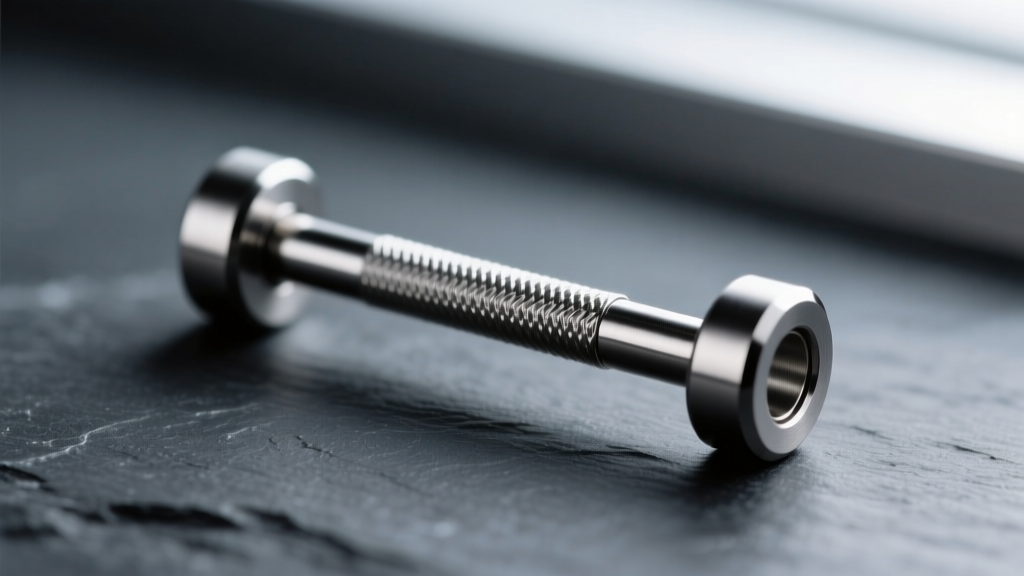
To survive the harsh environment of a surface piercing, you must use a specialized piece of hardware known as a surface barbell (often called a staple barbell). Unlike a curved barbell, a surface barbell features a straight central post with two sharp, 90-degree bends that point upward, resembling a medical staple.
This geometric design is crucial. The straight base rests entirely flush and parallel beneath the dermis, distributing pressure evenly across a wider area of tissue. The 90-degree rises allow the threaded ends to exit the skin cleanly without pulling on the entry and exit holes. When fitted correctly, a surface barbell moves harmoniously with your skin rather than fighting against it.
Internal Threading vs. Threadless Ends
For the ends of your surface barbell, you must choose between internally threaded or threadless (push-pin) options. Externally threaded jewelry—where the screw threads are on the post itself—creates micro-tears in the fistula (the piercing channel) every time it is inserted or removed. High-end brands like NeoMetal and Anatometal manufacture threadless and internally threaded ends that ensure a mirror-smooth transition from post to gemstone, protecting your healing tissue.
The Sizing Matrix: Gauge, Rise, and Width
Sizing a surface barbell is a three-dimensional puzzle. Getting the exact measurements right is the difference between a piercing that heals beautifully and one that rejects in three months. Below is the standard sizing framework used by professional piercers for surface tragus placements.
| Measurement Type | Initial Sizing (Swelling) | Downsized Sizing (Healed) | Why It Matters |
|---|---|---|---|
| Gauge (Thickness) | 14G (1.6mm) | 14G (1.6mm) | Thicker metal resists the cheese-cutter effect far better than 16G or 18G. |
| Rise (Height) | 5/16' (8mm) or 3/8' (10mm) | 1/4' (6mm) | Accommodates initial lymph and blood swelling; downsizing prevents snagging later. |
| Width (Base Length) | 1/4' to 3/8' (6mm-10mm) | Custom to Anatomy | Measured between the inside of the bends; must perfectly match the piercer's needle depth. |
The rise is arguably the most critical factor for a beginner to monitor. Your piercer will install a longer rise (like 3/8') on day one to give the tissue room to swell. If you do not return to the studio for a downsize to a 1/4' rise once the swelling subsides (usually around weeks 4 to 6), the tall posts will act as levers. Every time you brush your hair or pull off a shirt, you will catch the tall ends, yanking the base and tearing the delicate healing fistula.
Material Science: Defeating the Rejection Reflex
Surface piercings are inherently unstable. The body treats any subdermal foreign object with suspicion, and surface piercings sit in shallow tissue where the immune system can easily push them out. Therefore, the material of your surface tragus jewelry must be biologically inert to avoid triggering an accelerated rejection response.
- Implant-Grade Titanium (ASTM F-136): This is the absolute gold standard. Ti-6Al-4V ELI titanium is entirely nickel-free, highly biocompatible, and can be polished to a mirror finish that resists bacterial adhesion.
- Niobium: A safe alternative for those with specific titanium sensitivities, though it is heavier and less commonly used for surface barbells.
- Surgical Steel (Avoid): Even 'implant-grade' steel (ASTM F-138) contains nickel. In a shallow surface piercing, prolonged contact with nickel can cause localized contact dermatitis, which the body interprets as an infection, accelerating the rejection process.
Always verify that your piercer is using certified implant-grade titanium. Reputable studios will gladly show you the mill certificates or packaging from trusted manufacturers like Industrial Strength or NeoMetal to prove the alloy's authenticity.
Healing Timeline and Aftercare Realities
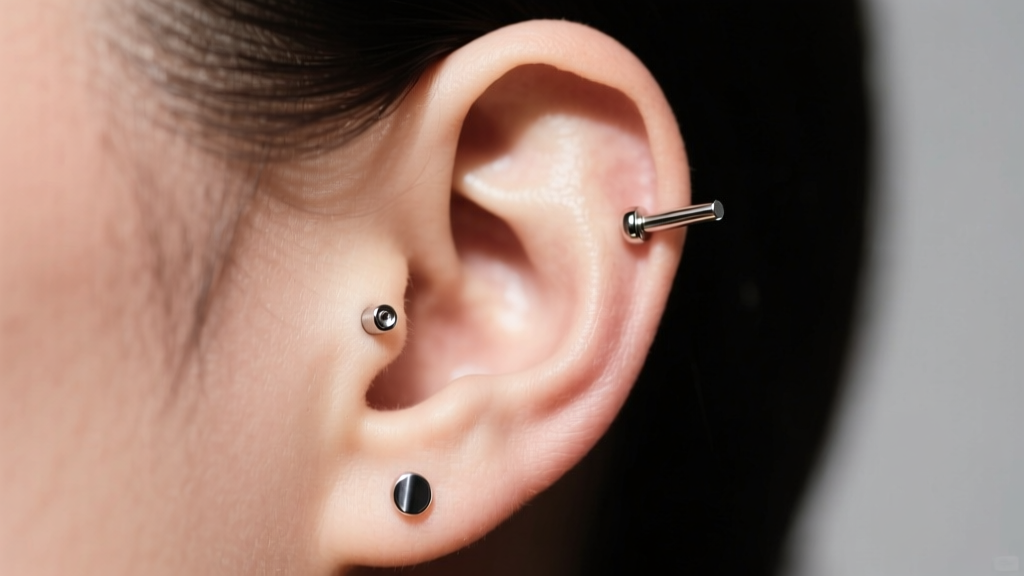
A surface tragus is not a quick-healing piercing. While a standard earlobe might heal in eight weeks, a surface tragus requires a minimum of 6 to 12 months of dedicated aftercare. During this time, the body is slowly building a tube of scar tissue (the fistula) around the straight base of the barbell.
The Snag Hazard
The greatest threat to your healing surface tragus is physical trauma. Because of its location near the hairline, jaw, and collar, it is highly susceptible to snagging on towels, headphones, over-ear masks, and turtleneck sweaters. Every snag creates micro-trauma, resetting the healing clock and inviting inflammation.
Cleaning Protocol
Follow the APP recommended aftercare guidelines strictly. Spray the entry and exit points twice daily with sterile 0.9% sodium chloride wound wash. Do not twist, turn, or rotate the jewelry. The old myth of 'twisting to break up crusties' is incredibly damaging; it tears the newly formed cellular scaffolding inside the piercing channel. Let the warm saline soften any lymph crusties, and gently wipe them away with a piece of non-woven gauze.
Recognizing the Signs of Migration
Even with perfect jewelry, flawless technique, and religious aftercare, surface piercings carry a lifelong risk of migration. The body may eventually decide it no longer wants the hardware. As a beginner, you must learn to read the early warning signs of rejection so you can visit your piercer before scarring occurs.
Look out for these red flags:
- Thinning Tissue: The skin between the two holes looks translucent or noticeably thinner than the surrounding tissue.
- Flaking and Redness: Persistent, dry, flaky skin directly over the barbell base that doesn't respond to saline soaks.
- Hole Elongation: The entry and exit holes begin to look like slits rather than perfect circles, indicating the jewelry is being pulled toward the surface.
- Visibility: You can see the dark shadow of the titanium barbell clearly through the skin, meaning the tissue layer above it is receding.
If you notice any of these signs, do not wait. Return to your professional piercer immediately. In many cases, they can remove the jewelry cleanly, allowing the area to heal with minimal scarring. Attempting to 'save' a migrating surface piercing by changing the jewelry or applying topical creams will only result in a jagged, permanent scar.
Final Thoughts on Your Surface Tragus Journey
Choosing the right surface tragus jewelry is an exercise in precision and patience. By insisting on a 14-gauge, internally threaded, implant-grade titanium surface barbell, and committing to a strict downsizing schedule, you give your piercing the best possible statistical chance of long-term survival. Treat your surface tragus with the respect it demands, and it will reward you with a stunning, unique piece of body modification that stands out from the standard cartilage crowd.

