Value Assessment: Best 1.5 Inch Hoop Earrings in 2026
Discover the true value of 1.5 inch hoop earrings. We break down materials, gauge sizes, and cost-per-wear to help you choose the perfect pair.

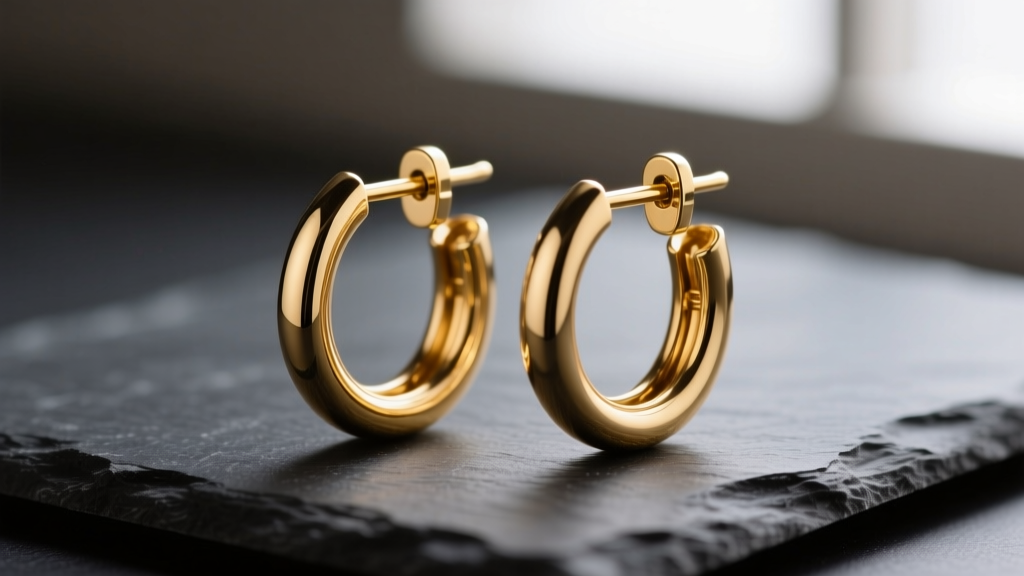
The 1.5 inch hoop earring—measuring exactly 38 millimeters in diameter—occupies a unique sweet spot in jewelry design. It is large enough to make a definitive style statement and frame the jawline, yet compact enough to avoid catching on high collars or interfering with active lifestyles. However, as we navigate the 2026 jewelry market, the pricing for this specific silhouette varies wildly. You can find 1.5 inch hoop earrings for as little as $12 on fast-fashion marketplaces, or upwards of $600 from luxury heritage brands.
How do you separate genuine metallurgical value from marketing markup? This comprehensive budget and value assessment breaks down the exact specifications, material grades, and cost-per-wear metrics you need to make an informed purchase, ensuring you never overpay for compromised craftsmanship again.
The Anatomy of a 1.5 Inch Hoop: Dimensions and Gauge
Before assessing price, you must understand the physical architecture of a 38mm hoop. The diameter dictates the visual footprint, but the wire gauge (thickness) dictates the structural lifespan and comfort.
- 20-Gauge (0.81mm): Often found in budget-friendly or 'delicate' styles. At a 1.5 inch diameter, 20g wire lacks the rigidity to hold a perfect circle. It is highly prone to bending when sleeping or taking off sweaters.
- 18-Gauge (1.02mm): The industry standard for everyday hoops. It provides a balance of lightweight comfort and enough tensile strength to resist minor warping.
- 16-Gauge (1.29mm): The premium choice for durability. Essential for 'continuous' or 'endless' hoop styles where the wire itself acts as the clasp, requiring high tension to stay securely in the lobe.
Furthermore, consider the cross-section profile. Budget hoops are often made from hollow tubing to save on precious metal costs. While lightweight, hollow 1.5 inch hoops will permanently dent if dropped on a tile floor. Solid wire hoops, though slightly heavier and more expensive, offer lifelong durability and can be polished repeatedly without wearing through the metal.
Material Tier List: Where Your Money Actually Goes
Not all metals are created equal, especially when considering skin sensitivities and long-term wear. According to the Centers for Disease Control and Prevention (CDC), nickel allergies affect a significant portion of the population, making the base metal of your hoops a critical health and value factor.
| Material Grade | Avg. Price Range | Expected Lifespan | Allergy Risk | Value Rating |
|---|---|---|---|---|
| 316L Surgical Steel | $15 - $35 | 5 - 10 Years | Moderate (Contains Nickel) | B |
| ASTM F136 Titanium | $30 - $65 | Lifetime | Zero (Biocompatible) | A |
| Gold Vermeil (Sterling Base) | $45 - $95 | 1 - 3 Years | Low (If plating holds) | C |
| Solid 14k Gold | $150 - $350 | Lifetime | Very Low | A+ |
Note: True gold vermeil requires a sterling silver base and a minimum gold plating thickness of 2.5 microns. Anything less is simply 'gold plated' and will wear through to the base metal within months of daily wear.
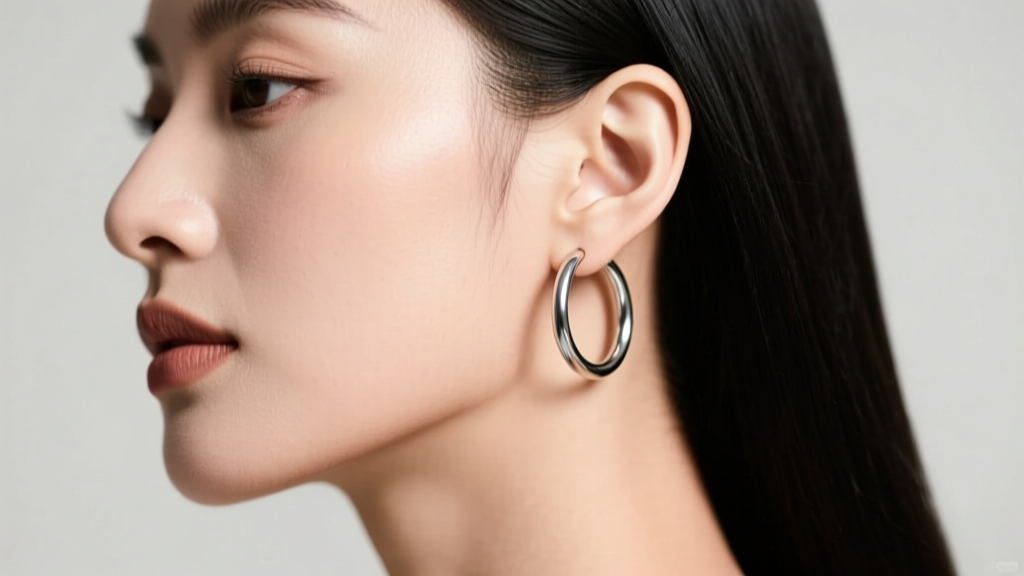
Cost-Per-Wear Analysis: Vermeil vs. Solid Gold
When evaluating 1.5 inch hoop earrings, the initial sticker price is a poor indicator of true value. We must calculate the Cost-Per-Wear (CPW) and factor in end-of-life value.
The Vermeil Trap
A high-quality pair of 18g gold vermeil hoops might cost $85. If worn three times a week, the friction from the clasp and exposure to cosmetics will typically wear through the 2.5-micron gold layer at the post and hinge within 18 months.
CPW: $85 / 78 weeks = $1.08 per week. Once the silver base tarnishes and the gold is gone, the earrings are essentially worthless unless you pay $35 to have them professionally replated.
The Solid 14k Investment
A pair of solid 14k gold 1.5 inch hoops (weighing approx. 3.5 grams) will cost around $250. Because the gold is alloyed throughout, they will never 'wear off.' They can be polished, scratched, and worn in the shower for 20 years. Furthermore, gold retains intrinsic melt value.
CPW: $250 / 1,040 weeks = $0.24 per week.
When you factor in the scrap gold value at the end of its life, the net cost drops even further.
Expert Insight: If your budget is strictly under $100, abandon the idea of gold-toned jewelry. Instead, invest in ASTM F136 Implant-Grade Titanium hoops. They offer a lifetime of hypoallergenic wear and a sleek, modern grey aesthetic that outlasts any plated alternative.
Common Failure Modes in Mid-Size Hoops
Through extensive wear-testing and market analysis, we have identified three primary mechanical failures that plague 1.5 inch hoops, particularly in the $30 to $100 price bracket.
1. Clicker Hinge Fatigue
The 'clicker' hinge is popular for its satisfying snap and secure closure. However, in budget manufacturing, the microscopic pin holding the hinge together is often made of soft brass. After roughly 400 to 600 open/close cycles (about one year of daily removal), the pin shears or the hinge barrel cracks. Value Fix: Look for brands that explicitly state their hinges are machined from stainless steel or solid gold, or opt for continuous (endless) hoops which have zero moving parts.
2. Post Shear and Bending
Sleeping in 1.5 inch hoops puts lateral torque on the post. If the post is 20-gauge or made of soft, high-purity silver, it will bend. Repeated bending back and forth causes metal fatigue, eventually snapping the post entirely. Value Fix: Always remove hoops before sleeping, or ensure the post is crafted from hardened 14k gold or titanium.
3. Clasp Friction Wear
On saddle-back or latch-back hoops, the post rubs against the inside of the catch mechanism every time you put them on. On vermeil or plated earrings, this specific friction point is always the first to lose its gold coating, exposing the base metal directly to your piercing. Value Fix: Continuous hoops or clickers eliminate this specific friction point.
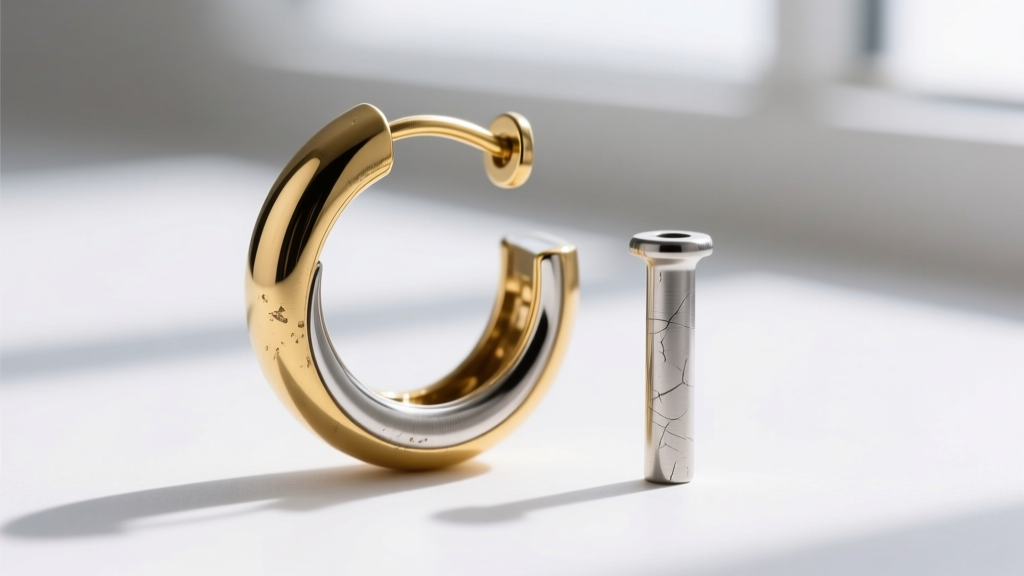
Face Shape Proportions and the 38mm Advantage
Beyond metallurgy, the value of a jewelry piece relies on its versatility. The 1.5 inch (38mm) diameter is universally flattering because of where it terminates relative to facial anatomy.
- Round Faces: A 38mm hoop drops just below the earlobe, drawing the eye vertically without adding excessive width to the cheeks, which larger 2.5 inch hoops often do.
- Square Faces: The soft curve of a medium-sized hoop helps to balance and soften a strong, angular jawline.
- Oval Faces: The universal donor of face shapes; 1.5 inch hoops provide a classic, balanced frame without overwhelming delicate features.
Because this size works across virtually all demographics, the Cost-Per-Wear potential is maximized. You are far more likely to reach for a 38mm hoop on a daily basis than a highly specialized, oversized statement piece, making the investment in higher-quality materials mathematically sound.
The 2026 Buying Framework: Final Verdict
How much should you actually spend on 1.5 inch hoop earrings? Use this decision framework based on your current budget and long-term intentions.
Budget: Under $50
The Strategy: Prioritize biocompatibility over color.
What to Buy: ASTM F136 Implant-Grade Titanium continuous hoops (16-gauge).
Why: You get a lifetime, allergy-proof staple. Avoid gold-plated brass or steel at this tier, as the plating will fail quickly, leading to contact dermatitis and wasted money. The Gemological Institute of America (GIA) frequently warns consumers about the misleading nature of ultra-cheap 'gold' jewelry that lacks proper alloy standards.
Budget: $50 - $150
The Strategy: The Transitional Tier.
What to Buy: Heavy Gold Vermeil (minimum 3 microns if available) with a stainless steel clicker hinge, OR save for an additional 3 months to reach the solid gold tier.
Why: This is the 'danger zone' of jewelry pricing where marketing markups are highest. If you must buy here, seek out independent jewelers who offer replating services included in the initial purchase price.
Budget: $150 and Above
The Strategy: Generational Value.
What to Buy: Solid 14k Yellow or White Gold (18-gauge solid wire, seamless or clicker).
Why: At this price point, you are paying for the raw commodity and the labor. Solid 14k gold offers the perfect balance of hardness (due to copper/zinc alloys) and intrinsic value. A well-made pair of 1.5 inch solid gold hoops will outlive you and can be passed down as an heirloom.
Ultimately, assessing the value of 1.5 inch hoop earrings requires looking past the display window and into the metallurgical reality. By prioritizing correct gauge thickness, understanding the limitations of plating, and calculating true cost-per-wear, you can build a jewelry collection that is both economically sound and endlessly stylish.


