Emerald Cut Emerald Earrings: 2026 Style Trends & Buying Guide
Discover 2026 style trends for emerald cut emerald earrings. Expert analysis on step-cut facets, clarity grades, oiling treatments, and bespoke settings.

The 2026 Renaissance of the Step-Cut Silhouette
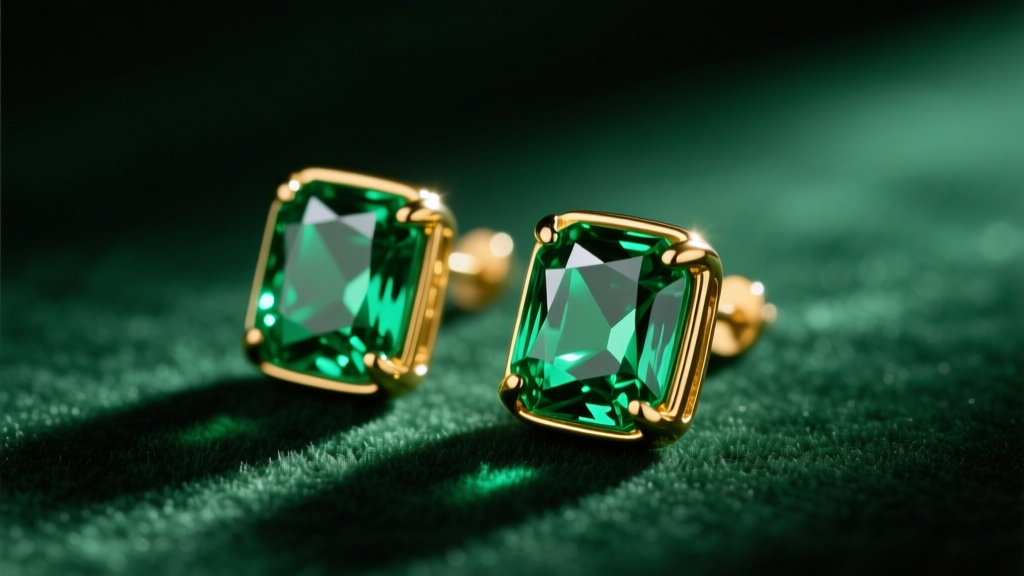
The fine jewelry landscape in 2026 has decisively pivoted away from the hyper-sparkle of brilliant-cut diamonds toward the quiet, architectural luxury of step-cut colored gemstones. At the absolute forefront of this movement are emerald cut emerald earrings. Unlike the crushed-ice appearance of oval or pear cuts, the emerald cut relies on broad, open, parallel facets that act as a mirror to the soul of the stone. This shift aligns perfectly with the broader 'quiet luxury' aesthetic dominating 2026 ear styling, where sophisticated geometry and deep color saturation take precedence over sheer scintillation.
However, choosing the perfect pair of emerald cut emerald earrings requires navigating a complex web of gemological realities. The step-cut is entirely unforgiving; it hides nothing. This comprehensive trend and buying analysis dissects the specific clarity expectations, treatment disclosures, and structural hardware innovations defining this elite earring category today.
Gemology Deep Dive: Clarity, Jardin, and the Step-Cut Challenge
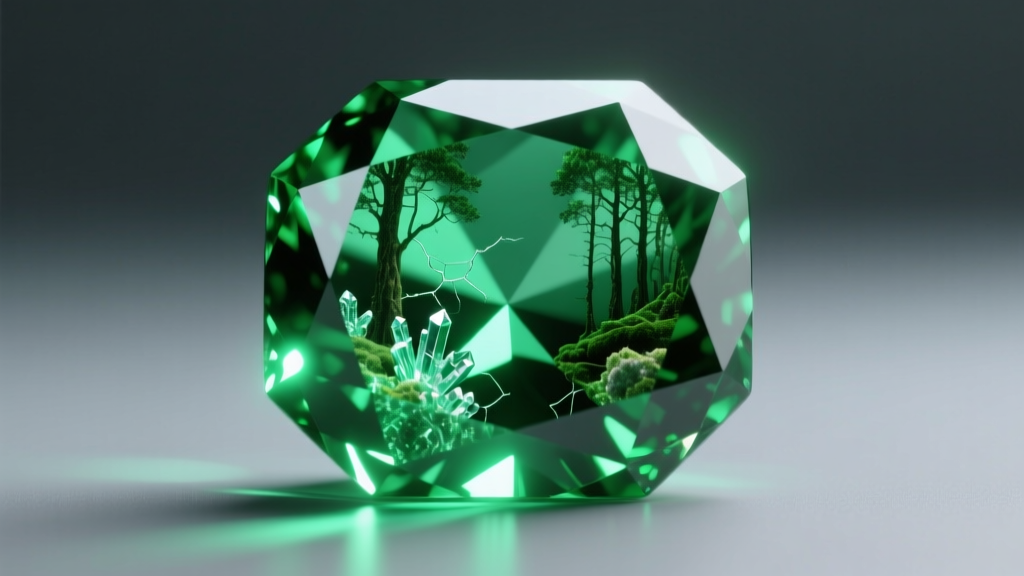
To understand the market for emerald cut emeralds, one must first understand the mineralogical nature of beryl. Emeralds are a Type III gemstone, meaning they are almost universally born with significant internal inclusions, poetically referred to by the French as jardin (garden). While a brilliant cut can scatter light to mask these internal fractures and liquid pockets, the long, linear facets of an emerald cut act as a window, making inclusions highly visible to the naked eye.
According to the Gemological Institute of America (GIA), eye-clean emeralds are exceptionally rare and command astronomical premiums. Therefore, the 2026 buying framework for emerald cut earrings prioritizes tone and saturation over flawless clarity. A deeply saturated, slightly included emerald cut stone will face-up far more beautifully than a pale, eye-clean one. The broad table facet of the emerald cut demands a rich, velvety green hue to prevent the stone from looking washed out or 'sleepy' in low-light environments.
The Treatment Disclosure Matrix
Because of the inherent fracturing caused by the geological formation of emeralds, clarity enhancement is an industry standard. However, not all treatments are created equal, and the step-cut's open facets make the stone more susceptible to leaking fillers if exposed to heat or ultrasonic cleaners. When evaluating emerald cut emerald earrings, always request a lab report detailing the extent and type of enhancement.
| Treatment Grade | Material Used | Stability & Care | Market Impact |
|---|---|---|---|
| None (F1) | No oils or resins | Highly stable; requires standard care | Ultra-rare; commands highest premium |
| Minor (F2) | Traditional Cedar Oil | Moderate; can dry out over time, requiring re-oiling | Industry standard; widely accepted by purists |
| Moderate (F3) | Opticon or Synthetic Oils | High stability; masks significant surface-reaching fractures | Acceptable in commercial jewelry; lowers value |
| Highly Enhanced | Epoxy Resins / Polymers | Permanent but heavily frowned upon; alters refractive index | Severely depreciates value; avoid for investment pieces |
Architectural Settings: Protecting the Vulnerable Corners
The emerald cut was literally invented in the 1500s to reduce chipping during the faceting process by truncating the sharp, vulnerable corners of the rectangular rough. Despite these clipped corners, emeralds possess a Mohs hardness of 7.5 to 8 but remarkably poor toughness due to their internal jardin. A sharp knock against a marble countertop can easily cleave an emerald along a natural fracture plane.
In 2026, bespoke jewelers are moving away from traditional four-prong settings for emerald cut earrings, favoring architectural bezels and specialized corner prongs that offer superior structural integrity without sacrificing the stone's geometric beauty.
- The Full Bezel: The ultimate choice for daily-wear studs. A flush 18k gold rim completely encircles the girdle, protecting the edges from lateral impacts while creating a sleek, modern silhouette that aligns with 2026 minimalist trends.
- The V-Prong Corner Setting: For drop earrings where maximum light return is desired, V-prongs are mandatory. Unlike standard round prongs that rest on the fragile clipped corner, a V-prong cups the entire corner, distributing pressure evenly across the strongest axis of the cut.
- The Half-Bezel / Tension Hybrid: A rising trend for evening drops, this setting secures the stone on the two longest sides with thick gold bands, leaving the short ends exposed to create an illusion of a floating gemstone. This requires a highly skilled setter to ensure the tension does not fracture the beryl.
Hardware & Ergonomics: Preventing the 'Forward Droop'
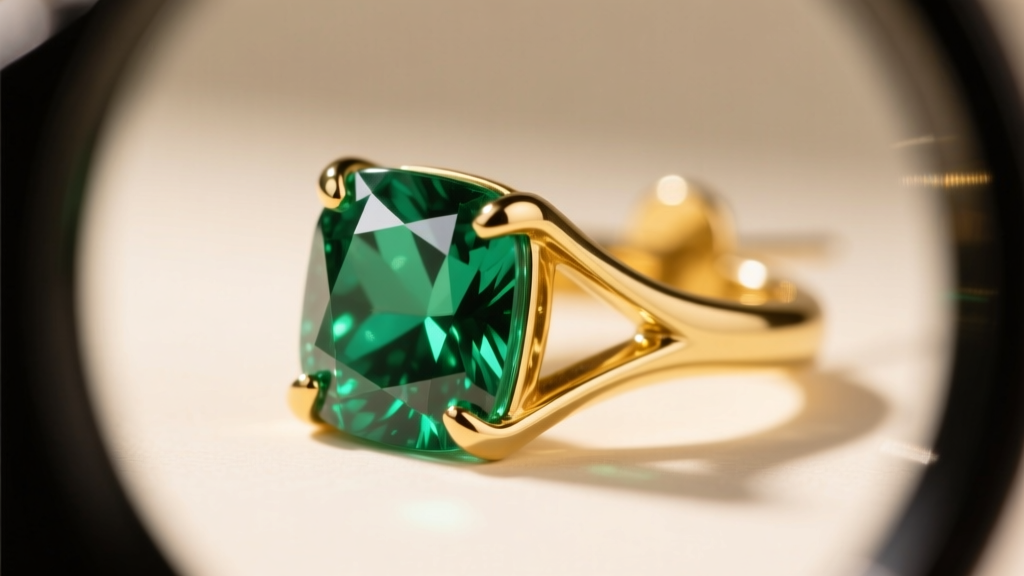
A critical, often overlooked aspect of buying emerald cut emerald drop earrings is the hardware. Emeralds are dense, heavy stones. A pair of 4-carat total weight (CTW) emerald cut drops set in 18k gold can easily exceed 6 grams per ear. Standard 20-gauge posts and lightweight butterfly friction backs will inevitably fail to support this weight, causing the earring to droop forward, stretching the earlobe and hiding the beautiful face-up geometry of the step-cut.
For any emerald cut earring exceeding 2.5 CTW, insist on 18-gauge or 16-gauge posts paired with heavy-duty silicone disc backs, omega clips, or leverback closures. This ensures the earring sits perfectly perpendicular to the floor, allowing the broad table facet to catch the light exactly as the lapidary intended.
2026 Styling Framework: Origin, Color, and Face Shape
The visual impact of emerald cut emerald earrings is heavily dictated by their geographical origin, which influences their color profile and how they interact with different skin tones and face shapes.
Colombian vs. Zambian Color Profiles
Colombian emeralds (particularly from the Muzo and Chivor mines) are renowned for their warm, pure, intensely saturated green with a slight yellowish undertone. Zambian emeralds, conversely, offer a cooler, bluish-green hue and generally possess higher natural clarity with less visible jardin. In 2026, Zambian emerald cut earrings are highly sought after for their icy, modern aesthetic that pairs beautifully with platinum and white gold settings, while Colombian stones remain the undisputed queens of classic 18k yellow gold vintage-inspired mounts.
Face Shape Proportions
The elongated, linear geometry of the emerald cut makes it a powerful tool for facial balancing. According to the GIA quality factors framework, the length-to-width ratio of an emerald cut typically ranges from 1.30 to 1.60.
- Round & Square Faces: Opt for elongated emerald cut drop earrings with a ratio above 1.50. The vertical lines draw the eye downward, creating a slimming, lengthening illusion that softens strong jawlines.
- Oval & Heart Faces: Square or slightly rectangular emerald cut studs (ratio closer to 1.20 or 1.30) provide a grounding, architectural focal point that complements the natural symmetry of these face shapes without over-elongating them.
The step-cut is a masterclass in restraint. It does not scream for attention with erratic flashes of light; rather, it draws the viewer in with deep, hall-of-mirrors reflections and unapologetic color. - Master Lapidary, 2026 Baselworld Symposium
Investment & Pricing Realities for 2026
Navigating the pricing matrix for emerald cut emerald earrings requires an understanding of the exponential value curve tied to carat weight and origin. Because large, clean rough emerald crystals are incredibly rare, the price per carat jumps dramatically once a single stone crosses the 2.00-carat threshold.
- Commercial Grade ($150 - $800 per carat): Heavily included, opaque, or heavily resin-treated stones. Often cut with poor symmetry to save weight. Acceptable for fashion jewelry, but lacks the velvety luster of fine emeralds.
- Fine Grade ($1,500 - $4,500 per carat): Eye-visible inclusions that do not compromise durability or transparency. Rich green saturation, typically minor cedar oil treatment. This is the sweet spot for luxury designer earrings.
- Extra Fine / Investment Grade ($6,000 - $15,000+ per carat): Exceptional transparency, vivid saturation, and minor-to-no treatment. Colombian origin with verifiable provenance. These pieces are acquired as heirloom assets.
Final Verdict: Curating Your Pair
Emerald cut emerald earrings are not a passive purchase; they are an intentional curation of geological history and architectural design. The 2026 market rewards buyers who prioritize rich color saturation and structural setting security over the impossible pursuit of flawless clarity. By demanding V-prongs or bezels, verifying treatment disclosures via independent labs, and selecting the correct post gauge for your specific carat weight, you ensure that your step-cut earrings remain a secure, breathtaking staple of your fine jewelry wardrobe for decades to come.


