Mastering Cartilage: The Technical Guide to 13mm Hoop Earrings
Discover the exact specs for 13mm hoop earrings. Learn about gauge sizes, implant-grade titanium, and closure types for cartilage and lobe piercings.

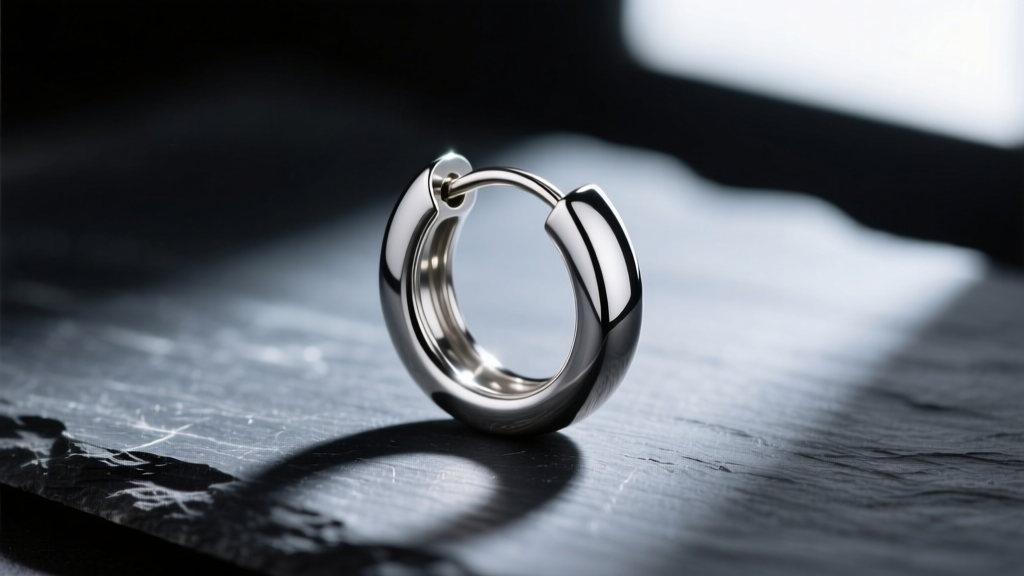
The Anatomy of a 13mm Hoop: Why Size Matters
In the precision-driven world of body jewelry, a single millimeter dictates the difference between a comfortable, healed piercing and a migrating, irritated one. When discussing 13mm hoop earrings, we are looking at a highly specific transitional size. Standard huggies typically max out at 12mm, designed to tightly hug the earlobe. Small hoops generally begin at 15mm, offering a noticeable dangle. The 13mm inner diameter (ID) occupies a critical middle ground, making it the holy grail for advanced ear curations, particularly for secondary lobe piercings and specific cartilage placements.
It is vital to distinguish between Inner Diameter (ID) and Outer Diameter (OD). The ID is the measurement of the empty space inside the hoop, which determines how the jewelry fits around your tissue. The OD includes the thickness of the wire itself. For example, if you purchase a 13mm hoop with a 1.2mm (16-gauge) wire thickness, the actual outer footprint of the earring will be 15.4mm. Understanding this distinction is crucial when calculating clearance for swellings in healing piercings or avoiding snag hazards in active lifestyles.
Gauge Thickness and the "Cheese-Cutter" Effect
The most common technical failure when wearing 13mm hoops in cartilage is the "cheese-cutter effect." This phenomenon occurs when a wire is too thin relative to the weight of the jewelry and the tension applied to the fistula (the piercing channel). According to basic physics, pressure equals force divided by area. A thinner wire reduces the surface area resting against the tissue, exponentially increasing the localized pressure. Over time, or with sudden snags, a thin 20-gauge (0.8mm) or 22-gauge (0.6mm) 13mm hoop will slowly slice through cartilage, leading to migration, rejection, or severe scarring.
To mitigate this, professional piercers universally recommend a minimum of 16-gauge (1.2mm) or 14-gauge (1.6mm) for any 13mm hoop intended for cartilage wear. Thicker gauges distribute the mechanical load across a wider surface area, stabilizing the fistula and preventing tissue rejection.
Standard Gauge Dimensions for 13mm Hoops
| Gauge Size | Millimeter (mm) | Recommended Piercing Locations | Risk of Migration |
|---|---|---|---|
| 20g | 0.81mm | Standard Earlobe Only | High (in cartilage) |
| 18g | 1.02mm | Earlobe, Tragus (if healed) | Moderate |
| 16g | 1.29mm | Helix, Forward Helix, Upper Lobe | Low (Industry Standard) |
| 14g | 1.63mm | Conch, Daith, Industrial (rare) | Very Low |
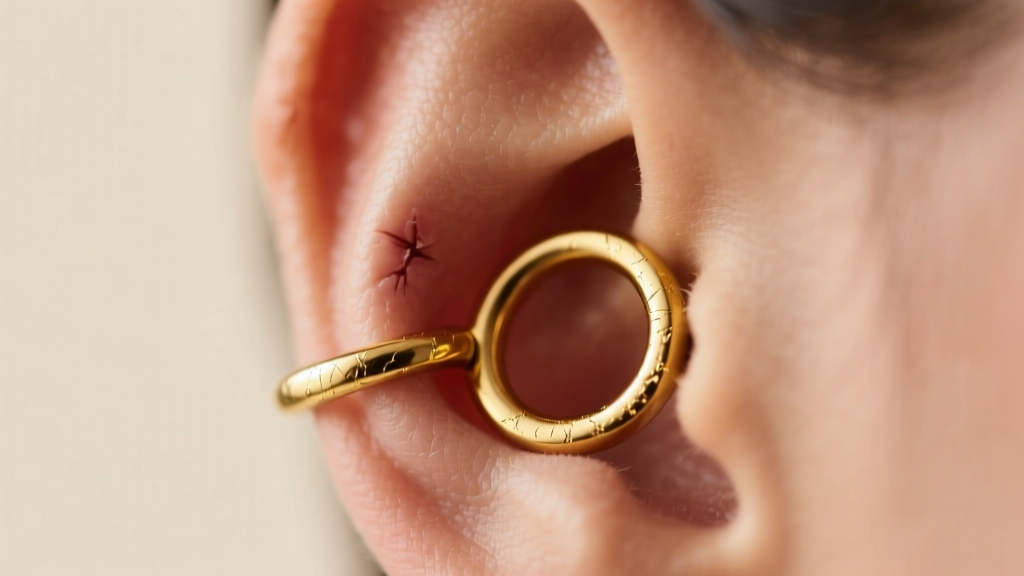
Metallurgy: Choosing the Right Alloy for Your Piercing
The material composition of your 13mm hoop earrings is just as critical as the physical dimensions. The human body is a harsh, saline, 98.6°F (37°C) environment that actively corrodes reactive metals. For both healing and long-term wear in cartilage, the Association of Professional Piercers (APP) strictly outlines acceptable biocompatible materials.
ASTM F136 Titanium vs. 316L Surgical Steel
Many commercial brands market "surgical steel" as a hypoallergenic option. However, 316L stainless steel contains between 8% and 10% nickel. When exposed to the body's natural acids and sweat, nickel ions leach into the fistula, triggering contact dermatitis, localized swelling, and the dreaded "piercing bump" (hypertrophic scarring).
Conversely, Implant-Grade Titanium (specifically ASTM F136 Ti-6Al-4V-ELI) contains zero nickel. The "ELI" stands for Extra Low Interstitial, meaning impurities like oxygen and iron are strictly minimized. This alloy is the exact same material used in aerospace engineering and medical joint replacements. When sourcing a 13mm titanium hoop, always demand mill certificates or proof of ASTM F136 compliance from the manufacturer, as cheap "titanium-colored" plated brass is rampant in the mass market.
Expert Note on Solid Gold: If you prefer gold, ensure it is 14k or 18k nickel-free alloyed with palladium or silver. Avoid white gold unless the manufacturer explicitly guarantees a palladium base, as traditional white gold is alloyed with nickel to achieve its silver color.
Closure Mechanisms: Hinged, Clicker, and Continuous
The structural integrity of a 13mm hoop relies heavily on its closure mechanism. Because 13mm is a relatively small diameter, the joint must be precision-machined to avoid sharp edges that can tear the delicate epithelial lining of the fistula.
- Hinged Segment Rings: These feature a tiny hinge on one side and a friction-fit post on the other. They are the easiest to insert and remove. However, the hinge joint can harbor sebum and dead skin cells, requiring rigorous cleaning with a soft-bristled brush and sterile saline to prevent odor and bacterial buildup.
- Clickers: Clickers utilize a spring-loaded tension mechanism that produces an audible "click" when locked. They are incredibly secure and ideal for active individuals. The drawback is that the clicker housing is slightly thicker than the rest of the wire, which can cause irritation in tightly spaced piercings like a forward helix cluster.
- Continuous (Endless) Hoops: These feature a seamless pin-and-tube joint. They offer the sleekest, most uninterrupted aesthetic. However, inserting a continuous 13mm hoop requires a specific twisting motion; bending the ring out of its circular plane to force it into the piercing will permanently warp the metal and ruin the tension of the joint.
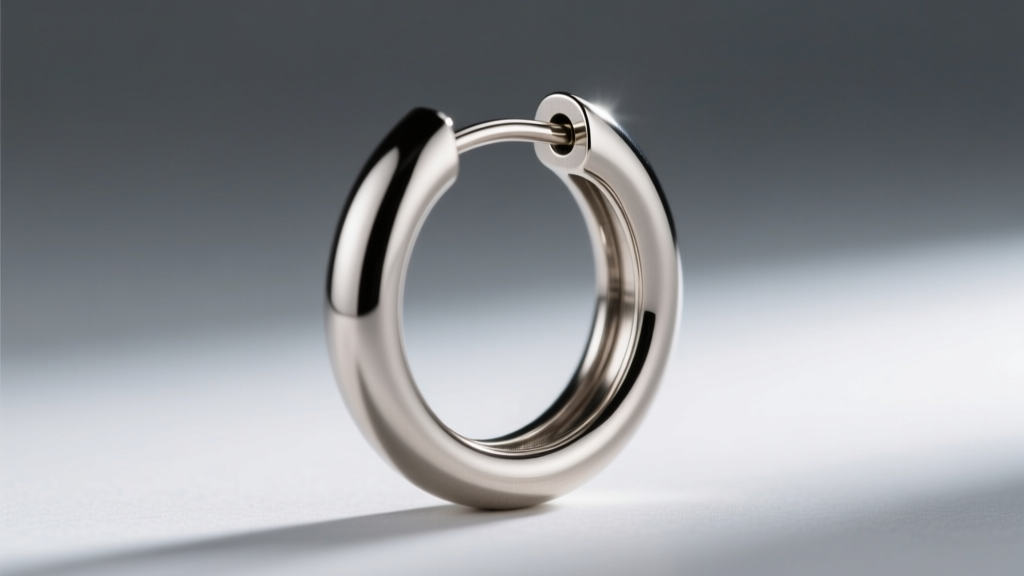
Placement Dynamics: Where 13mm Actually Fits
A 13mm hoop is not a universal fit. Ear anatomy varies wildly, but based on standard anthropometric data of the human auricle, here is how a 13mm inner diameter performs across different piercing sites:
- Outer Helix: Perfect. A 13mm hoop will typically sit flush or with a very slight dangle on an average helix, providing a clean, contoured look without extending far enough to catch on hair or headphones.
- Tragus: Usually Too Large. Most tragus piercings require an 8mm to 10mm ID to hug the cartilage flap. A 13mm hoop will likely extend past the tragus and rest against the cheek or jawline, causing friction.
- Conch: Too Small. The conch bowl is deep. A 13mm hoop will not have the clearance to wrap around the outer rim of the ear; you will need a 14mm to 18mm ID depending on your anatomy.
- Second/Third Lobe: Ideal. For upper lobe piercings where the tissue is closer to the cartilage ridge, a 13mm hoop mimics the look of a huggie without applying the restrictive pressure that a 10mm hoop might cause on a slightly thicker lobe.
Sourcing and Pricing: What to Expect in 2026
When investing in precision body jewelry, you are paying for CNC machining tolerances, metallurgical purity, and hand-polished mirror finishes. Mass-market fashion brands often sell 13mm gold-plated hoops for $30 to $60. While acceptable for fully healed, low-stress lobe piercings, the plating will eventually wear off, exposing reactive base metals to the fistula.
For authentic, implant-grade 13mm hoop earrings, expect the following pricing tiers from reputable body jewelry manufacturers:
- Entry-Level Professional (e.g., NeoMetal, Body Circle): $25 – $45 for polished ASTM F136 titanium seamless rings or basic hinged segments.
- Mid-Tier Luxury (e.g., Anatometal, Industrial Strength): $50 – $90 for precision-machined titanium or solid 14k gold clickers with flawless joint tolerances.
- High-End Curated (e.g., BVLA, Maria Tash): $120 – $350+ for 14k/18k solid gold clickers featuring prong-set diamonds or intricate gemstone settings. These pieces are manufactured with microscopic attention to detail, ensuring the gemstone casing does not irritate the piercing channel.
Final Verdict
The 13mm hoop earring is a highly specialized tool in the realm of ear styling. It requires a deliberate approach to gauge thickness, metallurgical safety, and anatomical placement. By prioritizing 16-gauge or 14-gauge wire thicknesses, insisting on ASTM F136 titanium or nickel-free solid gold, and selecting the appropriate closure mechanism for your lifestyle, you transform a simple piece of metal into a permanent, comfortable, and structurally sound addition to your ear curation. Always consult with an APP-certified professional piercer to verify your specific anatomical measurements before purchasing cartilage hoops.


