1.5 kt Diamond Earrings: 2026 Metal & Stone Value Guide
Decode the 1.5 kt diamond earrings search term. Compare platinum, 18k, and 14k metals, and analyze 1.5 carat diamond properties for optimal stud settings.

Decoding the Search: The 'kt' vs 'ct' Intersection
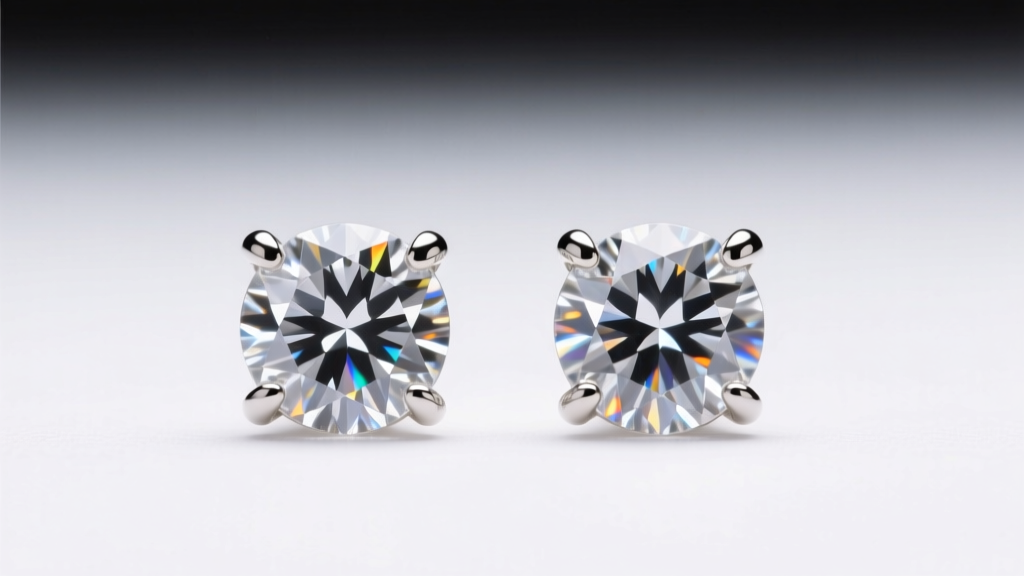
When consumers search for 1.5 kt diamond earrings, they are usually navigating a common jewelry nomenclature overlap. In the gemological and metallurgical worlds, 'kt' (karat) refers exclusively to the purity of gold alloys, while 'ct' (carat) denotes the metric weight of a diamond. Therefore, a search for '1.5 kt diamond earrings' technically translates to a desire for diamond earrings set in 1.5 karat gold—which does not exist, as gold jewelry requires a minimum of 8k to 10k for structural integrity. What searchers truly intend to find are 1.5 carat total weight (ctw) diamond earrings set in an optimal karat gold or platinum mounting.
As a domain expert, I will address the core intent behind this search by analyzing the material properties of both the 1.5 carat diamond stones and the specific metal alloys (the 'kt' aspect) required to securely house them. In 2026, with shifting market dynamics between lab-grown and natural stones, understanding the physical and optical properties of these materials is critical for making an investment-grade purchase.
Metallurgical Properties: Selecting the Right 'Karat' for 1.5 ctw Studs
A 1.5 carat total weight pair of diamond studs (0.75 ct per ear) carries a physical weight of approximately 0.3 grams. While this sounds negligible, the lever-action force applied to the earring post when brushing hair or removing clothing requires a metal with high tensile strength and adequate Vickers hardness (HV). According to the FTC Jewelry Guides, metal markings must accurately reflect purity, but they do not dictate structural suitability.
Platinum (95% Pt / 5% Ru or Ir)
Platinum is the undisputed champion for heavy diamond settings. With a specific gravity of 21.45 g/cm³, it is remarkably dense. More importantly, platinum exhibits 'malleable memory'—when a platinum prong is bent, it displaces rather than snaps or work-hardens to the point of fracture. For a 1.5 ctw diamond, a platinum four-prong martini setting ensures the stone remains secure for decades without the prongs wearing thin.
18k Gold (75% Au / 25% Alloy)
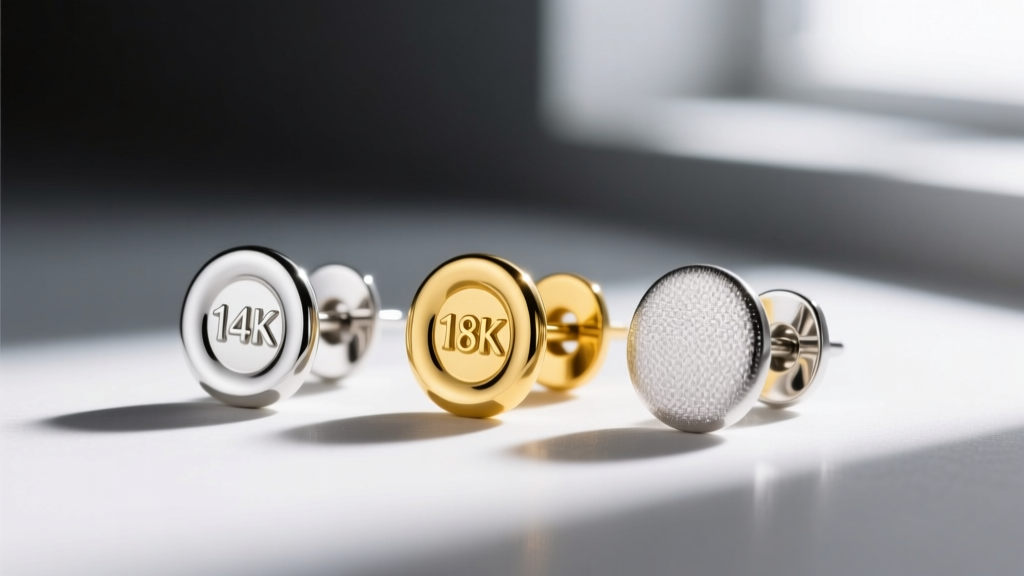
Available in yellow, white, and rose, 18k gold offers a rich color profile but a lower Vickers hardness (approx. 125-140 HV) compared to platinum. The alloy mix (copper, zinc, silver, or palladium) dictates the color. For white gold, the 25% alloy usually contains palladium or nickel to bleach the yellow hue. However, 18k white gold requires rhodium plating to appear truly white, which wears off over time, revealing the slightly yellowish underlying metal.
14k Gold (58.5% Au / 41.5% Alloy)
14k gold is significantly harder (approx. 150-170 HV) due to the higher concentration of base metals. It is highly resistant to scratching and bending, making it a practical choice for active lifestyles. However, the high alloy content increases the risk of contact dermatitis for those with nickel or copper sensitivities.
Material Comparison Matrix
| Metal Alloy | Purity (Karat) | Vickers Hardness (HV) | Specific Gravity | Prong Wear Resistance | 2026 Avg. Premium over 14k |
|---|---|---|---|---|---|
| Platinum (95/5 Ru) | N/A (950 Pt) | 135 HV | 21.45 | Exceptional (Displaces) | +85% to +110% |
| 18k White Gold (Pd) | 18k | 125 HV | 15.80 | Moderate (Wears down) | +35% to +45% |
| 14k White Gold (Ni/Zn) | 14k | 160 HV | 13.50 | High (Brittle over time) | Baseline |
Diamond Material Properties: Evaluating the 1.5 Carat Stone
Moving from the metal to the stone, a 1.5 carat total weight diamond pair relies on the optical properties of carbon crystallized in an isometric system. The Gemological Institute of America (GIA) established the 4Cs, but when selecting material for stud earrings, certain properties outweigh others.
Refractive Index and Light Performance
Diamond possesses a remarkably high refractive index (RI) of 2.417 and a dispersion rate of 0.044. This is what creates the 'brilliance' (white light return) and 'fire' (spectral color flashes). Because earrings are viewed from a distance and in constant motion, the Cut is the most critical material property. A 1.5 ctw pair with 'Excellent' or 'Ideal' cut grades will face up larger and sparkle more intensely than a poorly cut 1.8 ctw pair. Always demand GIA or AGS certificates that verify cut proportions, specifically looking for a table percentage between 54-58% and a depth between 59-62.5%.
Clarity and Color: The Stud Earring Compromise
Unlike engagement rings, which are scrutinized at a distance of 12 inches, earrings are viewed from 2 to 3 feet away. This physical reality allows for intelligent material compromises:
- Clarity: VS2 to SI1 clarity grades are optimal. Inclusions in this range are microscopic and invisible to the naked eye, especially when the diamond is in constant motion on the earlobe. Paying for VVS or Flawless material yields zero visual return on investment for studs.
- Color: G to H color grades offer the best value. These near-colorless stones face up completely white when set in white gold or platinum. If you choose 18k yellow gold settings, you can safely drop to I or J color, as the yellow metal reflects through the diamond, masking any faint warmth.
Structural Mechanics: Post Gauges and Backing Systems
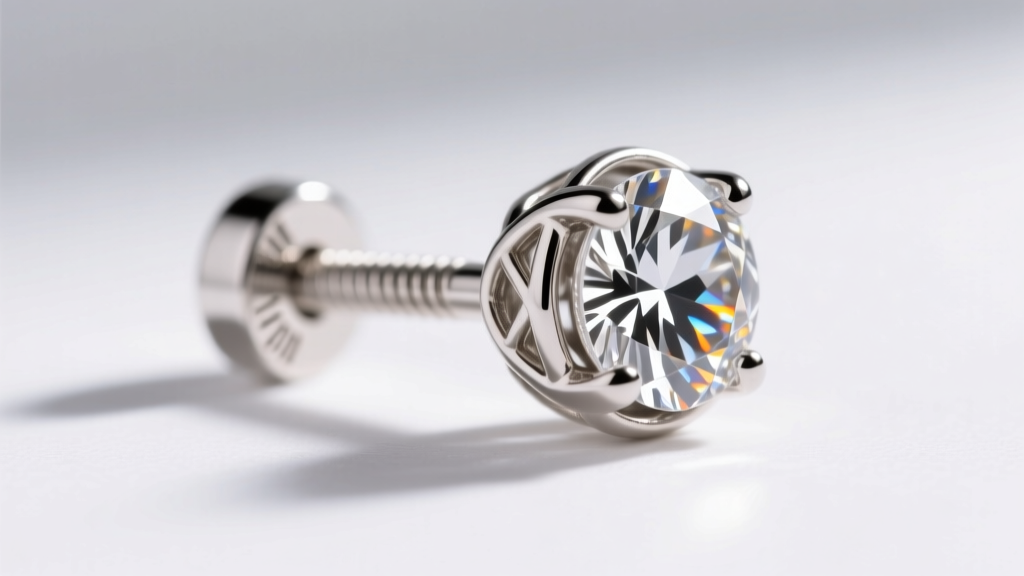
The intersection of the diamond and the metal occurs at the earring post and setting basket. A standard earring post is 0.8mm thick (approximately 20 gauge). However, a 1.5 carat total weight diamond pair requires a heavier post to prevent the stud from drooping forward on the earlobe.
Optimal Post Thickness
For 1.5 ctw diamonds, the post should be upgraded to 1.0mm or 1.1mm (18 to 16 gauge). This thicker wire provides the necessary rigidity to keep the diamond facing forward, parallel to the face. If the post is too thin, the weight of the diamond will cause the earring to tilt downward, hiding the light return and ruining the visual impact of the stone.
Friction Backs vs. Mechanical Clutches
Standard 'butterfly' friction backs rely on the tension of the metal to grip the post's grooves. Over time, this tension weakens, posing a severe risk of losing a valuable 1.5 ctw diamond. For stones of this size, you must utilize mechanical backing systems:
- Screw Backs: The post is threaded, and the backing screws on. This is the most secure method but requires patience to align the threads.
- La Pousette Clutches: A spring-loaded mechanism that locks into the post groove with an audible click. They are highly secure, easy to operate, and represent the gold standard for heavy diamond studs in 2026.
2026 Market Dynamics: Lab-Grown vs. Natural Material
From a purely chemical and optical standpoint, lab-grown diamonds (LGDs) and natural diamonds are identical. Both are pure carbon with the same RI and dispersion. However, their material formation histories differ. HPHT (High Pressure High Temperature) lab diamonds may contain microscopic metallic flux inclusions, making them slightly magnetic, while CVD (Chemical Vapor Deposition) stones may show strain patterns under specialized UV imaging.
In 2026, the pricing gap between natural and lab-grown 1.5 ctw earrings has widened significantly. A high-quality 1.5 ctw natural diamond stud pair (G/VS2) commands between $6,500 and $9,000, retaining a measurable degree of secondary market value. Conversely, an identical 1.5 ctw lab-grown pair can be acquired for $900 to $1,400. Lab-grown material offers unparalleled optical performance for budget-conscious buyers, but it should be viewed as a consumable luxury rather than a store of financial value.
Final Expert Recommendations
To maximize the beauty and security of your 1.5 carat diamond earrings, prioritize an 'Excellent' cut grade above all other diamond metrics. Pair the stones with a platinum or 14k white gold setting featuring a 1.1mm post and a La Pousette locking back. By understanding the true material properties behind the 'kt' and 'ct' terminology, you ensure your investment remains secure, brilliant, and structurally sound for a lifetime of wear.


