Gold Pendant Earrings: A Material & Karat Comparison Guide
Explore our expert material comparison guide for gold pendant earrings. Learn about karats, vermeil, gold-filled alloys, and structural durability.

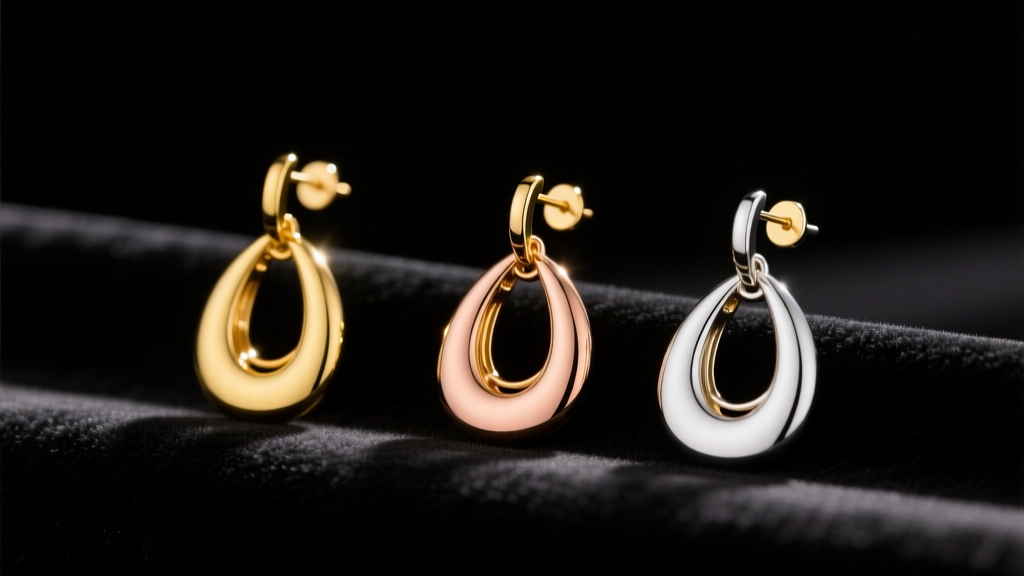
The Physics of Gold Pendant Earrings
When selecting gold pendant earrings, most buyers focus solely on the aesthetic of the dangling charm. However, from a metallurgical and structural engineering perspective, pendant earrings are vastly more complex than standard studs or huggies. The defining characteristic of a pendant earring is its kinetic nature. Every time you turn your head, the pendant swings, creating a pendulum effect that places repetitive tensile stress on the ear wire, the jump ring, and the clasp.
Because of this dynamic movement, the material composition of your gold pendant earrings dictates not just their color and hypoallergenic properties, but their ultimate lifespan. A soft, high-karat gold might look luxurious, but it can lead to structural failure at the connection points. In this comprehensive guide, we break down the exact material properties, alloy compositions, and failure modes associated with every type of gold used in pendant earring manufacturing.
Solid Gold Karats: Hardness vs. Purity
According to the Gemological Institute of America (GIA), pure 24-karat gold is far too malleable for functional jewelry. To create durable gold pendant earrings, gold is alloyed with metals like copper, silver, zinc, and nickel. The karat system dictates the ratio of pure gold to alloy, which directly impacts the Vickers hardness (HV) of the metal.
10K Gold (41.7% Pure Gold)
With a Vickers hardness of approximately 135 HV, 10K gold is the most durable solid gold option. It is highly resistant to scratching and bending. For pendant earrings, 10K is an excellent choice for the structural components—specifically the French wire hooks and the jump rings. However, its higher alloy content gives it a slightly pale, less saturated yellow hue, which some purists find less desirable for the pendant body itself.
14K Gold (58.3% Pure Gold)
Registering around 125 HV, 14K gold is the industry standard for fine jewelry. It offers the perfect equilibrium between tensile strength and rich color. A 20-gauge (0.81mm) 14K gold ear wire possesses enough spring tension to securely hold the earring in the lobe without permanently deforming, while the pendant charm retains a warm, classic gold tone. Pricing for standard 14K gold pendant earrings typically ranges from $150 to $450, depending on the weight of the gold and the presence of gemstones.
18K Gold (75% Pure Gold)
At 115 HV, 18K gold is noticeably softer and more prone to micro-scratches. Its deep, buttery yellow color is highly prized in luxury markets. When used for pendant earrings, 18K gold is best reserved for the pendant charm itself rather than the load-bearing ear wire. If an 18K French wire is made too thin (e.g., 22-gauge or 0.64mm), the repetitive friction against the earlobe and the weight of the pendant can cause the wire to thin and eventually snap at the bend.
22K and 24K Gold
While 22K (91.6% gold) and 24K (99.9% gold) offer unparalleled color and purity, they are entirely unsuitable for the structural elements of pendant earrings. They will bend under the pendulum weight of a charm and fail to secure the earring in the lobe.
Gold Alternatives: Vermeil, Filled, and Plated
For those seeking the look of gold pendant earrings at a lower price point, the market offers several alternatives. However, the Federal Trade Commission (FTC) has strict guidelines on how these terms can be used, and understanding them is crucial for assessing longevity.
| Material Type | Base Metal | Gold Layer Thickness | Estimated Lifespan | Avg. Price Range |
|---|---|---|---|---|
| Solid 14K Gold | N/A (Homogeneous) | N/A | Lifetime | $150 - $450 |
| Gold Vermeil | Sterling Silver (925) | Minimum 2.5 microns | 2 - 5 Years | $60 - $120 |
| Gold-Filled | Jeweler's Brass | 5% of total weight (1/20) | 5 - 10 Years | $40 - $90 |
| Gold-Plated | Brass, Copper, or Steel | 0.5 microns (Flash) | 6 - 12 Months | $15 - $40 |
The Vermeil Advantage for Pendants
Gold vermeil is widely considered the best alternative for pendant earrings. Because the base metal is sterling silver, the structural integrity remains high, and the metal retains a degree of flexibility without becoming brittle. Furthermore, if the 2.5-micron gold layer eventually wears off at the high-friction jump ring, the underlying silver is hypoallergenic and visually acceptable, unlike the green-oxidizing brass found in standard plated jewelry.
Structural Vulnerabilities and Failure Modes
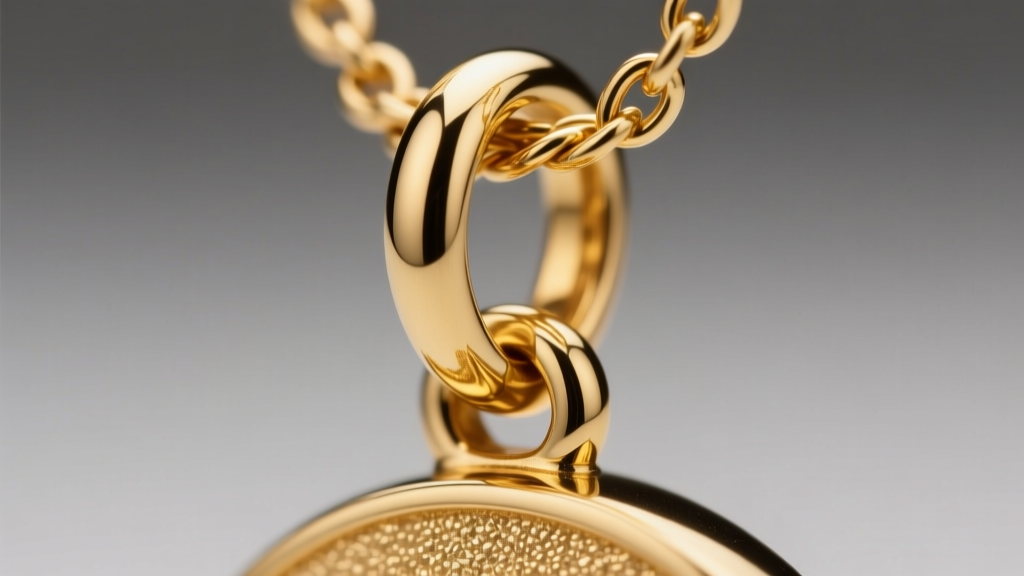
When evaluating gold pendant earrings, you must inspect the connection points. The most common point of failure in pendant designs is the jump ring—the small circular wire that connects the charm to the ear hook.
- The Pendulum Pull: In mass-produced, lower-priced gold-plated or 10K earrings, jump rings are often left unsoldered (meaning there is a tiny slit where the wire ends meet). The swinging motion of the pendant acts as a wedge, gradually prying this slit open until the charm detaches and is lost.
- The Soldered Solution: High-quality solid gold pendant earrings will feature a laser-welded or soldered jump ring. This creates a continuous, unbroken circle of metal that physically cannot be pulled apart by the weight of the pendant.
- Ear Wire Fatigue: The semi-circular bend of a French wire hook experiences immense mechanical stress when inserting and removing the earring. If the gold alloy is too soft (18K+) or the gauge is too thin (24-gauge), this bend will eventually suffer from metal fatigue and snap.
Hypoallergenic Properties and Nickel Sensitivities
Material composition directly impacts biocompatibility. According to the EU Nickel Directive, jewelry worn against the skin must not release more than 0.5 micrograms of nickel per square centimeter per week. This is a critical consideration for gold pendant earrings, as the ear wire sits inside the piercing tract for hours at a time.
Yellow and Rose Gold: These alloys typically utilize copper, silver, and zinc. They are generally safe for sensitive ears, provided they are 14K or higher.
White Gold: Traditional white gold is alloyed with nickel to achieve its silver-like color and increase hardness. If you have a nickel allergy, standard white gold pendant earrings will cause contact dermatitis. Instead, look for white gold alloyed with palladium, or opt for platinum-plated sterling silver vermeil.
Care and Maintenance by Material Type
The maintenance protocol for your gold pendant earrings must be tailored to their specific material grade to avoid catastrophic damage to the finish.
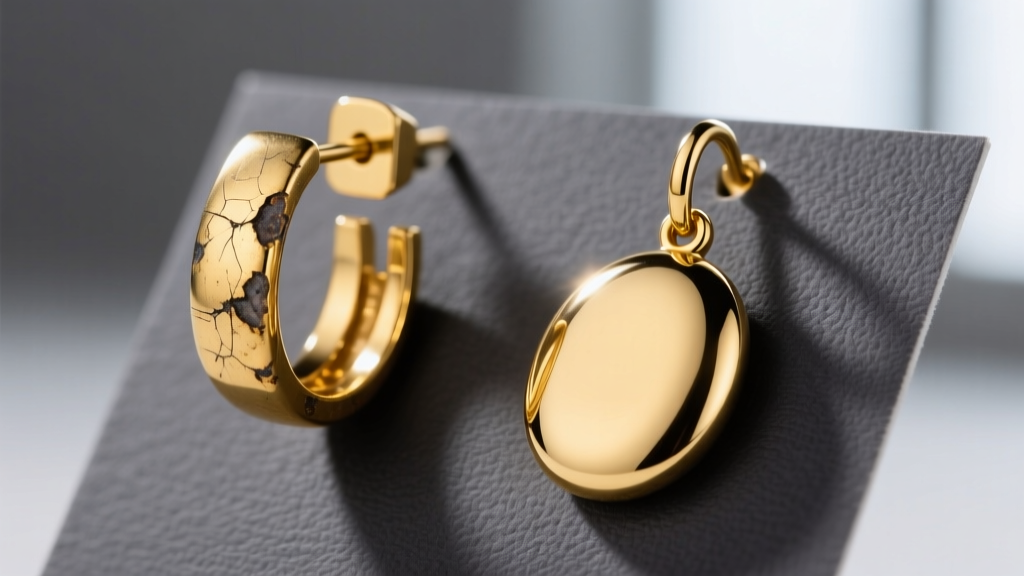
Never place gold vermeil or gold-plated pendant earrings in an ultrasonic cleaner. The high-frequency acoustic cavitation will strip the micron-thin gold layer from the base metal in a matter of minutes, ruining the piece entirely.
For solid 10K, 14K, and 18K gold, ultrasonic cleaners are safe, provided the pendant does not contain fracture-filled gemstones or soft organics like pearls. For routine cleaning, a few drops of mild dish soap in warm water, agitated with a soft-bristled baby toothbrush, will remove sebum and skin cells from the intricate crevices of the pendant charm.
For vermeil and gold-filled alternatives, avoid abrasive polishing cloths. These cloths are impregnated with micro-abrasives designed to remove tarnish from solid metals, but they will act like sandpaper on a 2.5-micron layer of gold, stripping it down to the base metal. Instead, wipe them gently with a damp microfiber cloth and dry them immediately to prevent water spots.
Final Verdict: Choosing Your Material
When investing in gold pendant earrings, prioritize structural integrity at the connection points above all else. If your budget allows, 14K solid gold remains the undisputed champion for pendant earrings, offering the exact tensile strength required for ear wires and jump rings, paired with a rich, enduring color. If you are opting for alternatives, demand gold vermeil with a verified sterling silver base to ensure that even after years of kinetic wear, your earrings remain hypoallergenic and structurally sound.


