Girl With The Pearl Earring Painting: A Technical Jewelry Analysis
A gemological and structural analysis of the iconic jewelry in the Girl With The Pearl Earring painting, exploring pearl grading and lobe mechanics.

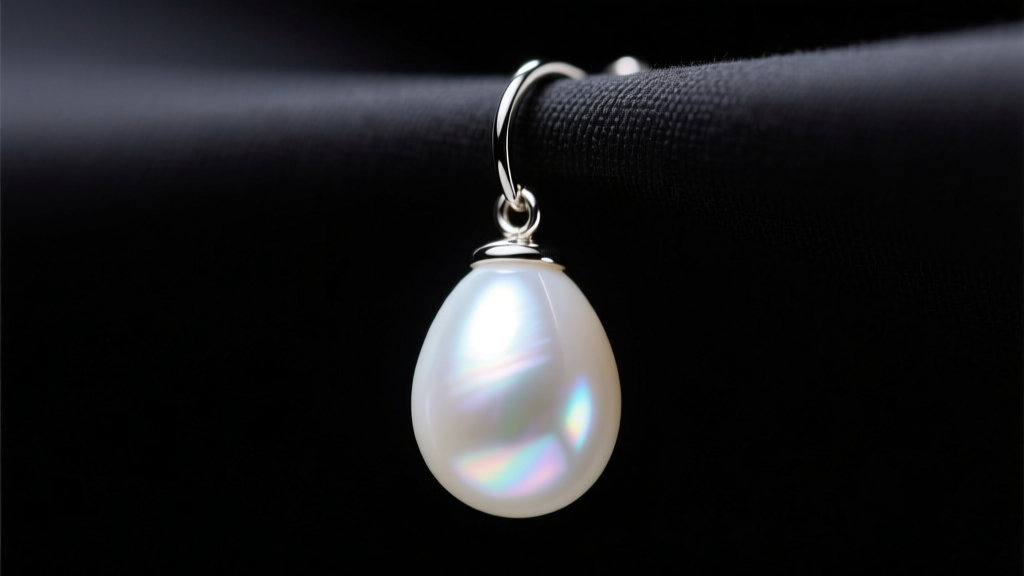
Johannes Vermeer’s masterpiece, often referred to as the Mona Lisa of the North, is anchored by a single, captivating focal point: a massive, luminous pearl earring. For art historians, it is a masterclass in chiaroscuro. But for master jewelers and gemologists, the girl with the pearl earring painting presents a fascinating technical puzzle. What exactly is the anatomical and gemological reality of this piece of jewelry? How would a modern bench jeweler engineer a wearable replica that captures Vermeer’s exact optical illusions while respecting the biomechanics of the human earlobe?
In this expert deep dive, we deconstruct the iconic earring through the lens of modern gemology, structural jewelry engineering, and optical physics. We will explore the material realities of 17th-century pearl sourcing, the precise specifications required for a modern recreation, and the hidden structural challenges of suspending heavy drop earrings.
The Gemological Enigma: Natural Drop vs. 17th-Century Imitation
When analyzing the girl with the pearl earring painting, the first question a gemologist asks is: Is it real? Based on the scale of the painting and the proportions of the subject’s head, the pearl is estimated to be between 18mm and 22mm in diameter. In the 1660s, a natural saltwater drop pearl of this magnitude—likely sourced from the Persian Gulf or Ceylon (modern-day Sri Lanka)—would have been an astronomical rarity, reserved exclusively for European royalty or ultra-wealthy aristocrats.
However, the subject of the painting is not a wealthy patron. She is a tronie—a study of an exoticized character type, dressed in a turban and a yellow garment that Vermeer likely kept in his studio as a prop. This historical context led researchers at the Mauritshuis museum during their 2018 macro-X-ray fluorescence scanning project to a startling conclusion: the earring is highly likely an imitation.
"The sheer size and flawless teardrop shape of the pearl, combined with the subject's socioeconomic context, strongly suggest Vermeer painted a 17th-century glass 'drop'—a blown glass tear coated with a tin or silver amalgam to simulate the luster and orient of natural nacre."
Alternatively, it could be a much smaller, natural baroque pearl encased in a massive, polished silver or white enamel drop casing. From a modern jewelry design perspective, recreating this visual weight requires balancing material authenticity with the optical tricks Vermeer employed.
Material Matrix: Sourcing the Modern Equivalent
If a private client commissioned a master jeweler to recreate the earring from the girl with the pearl earring painting today, the jeweler faces a critical material decision. Sourcing a natural 20mm saltwater drop is virtually impossible in the modern market. Therefore, the jeweler must choose between modern cultured alternatives or historically accurate glass composites.
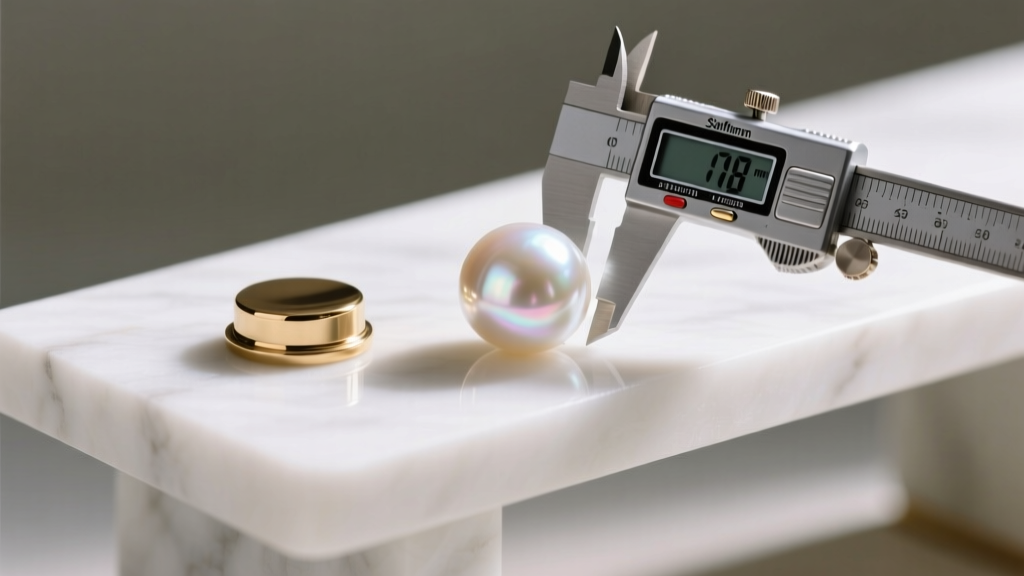
| Material Option | Average Size | Weight (Grams) | Luster & Orient | Estimated Cost (USD) |
|---|---|---|---|---|
| White South Sea (Cultured) | 15mm - 18mm | 12g - 16g | Excellent, deep mirror | $2,500 - $8,000 |
| Edison Freshwater (Bead-Nucleated) | 14mm - 16mm | 8g - 11g | Very High, metallic | $300 - $900 |
| 17th-C. Style Glass/Foil Imitation | 18mm - 22mm | 4g - 6g | Artificial, surface-only | $150 - $400 |
For the most authentic visual match to Vermeer’s brushwork, a White South Sea drop pearl is the superior choice. According to the Gemological Institute of America (GIA), South Sea pearls possess a thick nacre layer (typically 2mm to 4mm) that creates the soft, glowing "orient"—the iridescent play of color beneath the surface—that Vermeer so masterfully captured with subtle layers of lead white and vermilion underpainting.
Biomechanics of the Drop: Managing Earlobe Tension
The most overlooked aspect of the girl with the pearl earring painting is the sheer physical burden the subject’s earlobe must endure. In the painting, the earring hangs perfectly perpendicular to the floor, with the heavy drop facing slightly forward to catch the light. In reality, suspending a 15-gram South Sea pearl from a standard ear piercing presents severe biomechanical challenges.
The Problem with Standard Gauges
Standard modern earrings are manufactured with 20-gauge (0.81mm) or 18-gauge (1.02mm) wire posts. When an 18mm South Sea pearl (weighing approximately 14 grams) is suspended from a 20-gauge wire, the center of gravity pulls the earlobe downward. This results in "earlobe droop," where the fistula (the piercing hole) stretches, and the earring swings backward against the neck rather than resting forward against the cheek. Over time, this constant tension can cause micro-tears in the lobe tissue or permanent elongation of the piercing.
Structural Solutions for Heavy Drops
To engineer a wearable replica that sits exactly as it does in the painting, a master jeweler must implement specific structural reinforcements:
- Custom 14-Gauge French Wire: Upgrading the ear wire to 14-gauge (1.63mm) provides the necessary rigidity to hold the heavy drop away from the neck. This requires the client to have slightly stretched piercings, common in the high jewelry sector.
- Omega Clip-Back with Hinged Post: Instead of relying solely on the soft tissue of the earlobe, an Omega back grips the upper cartilage ridge of the ear. This transfers up to 60% of the earring's weight from the lobe to the structural cartilage, keeping the drop perfectly vertical.
- Silicone Stabilizer Discs: For clients who prefer standard posts, a 12mm medical-grade silicone O-ring or "ear jacket" is placed behind the lobe. This widens the surface area of the earring back, distributing the 14-gram load across a broader section of tissue and preventing the "cheese-cutter" effect.
Optical Physics: Replicating Vermeer’s Catchlights
Vermeer’s genius lay in his understanding of optical physics. The pearl in the painting is defined by two distinct specular highlights, or "catchlights." The primary catchlight is a large, bright, rectangular reflection at the top of the pearl, representing a large window. The secondary catchlight is a smaller, dimmer reflection near the bottom, suggesting a secondary light source or the reflection of the girl’s white collar.
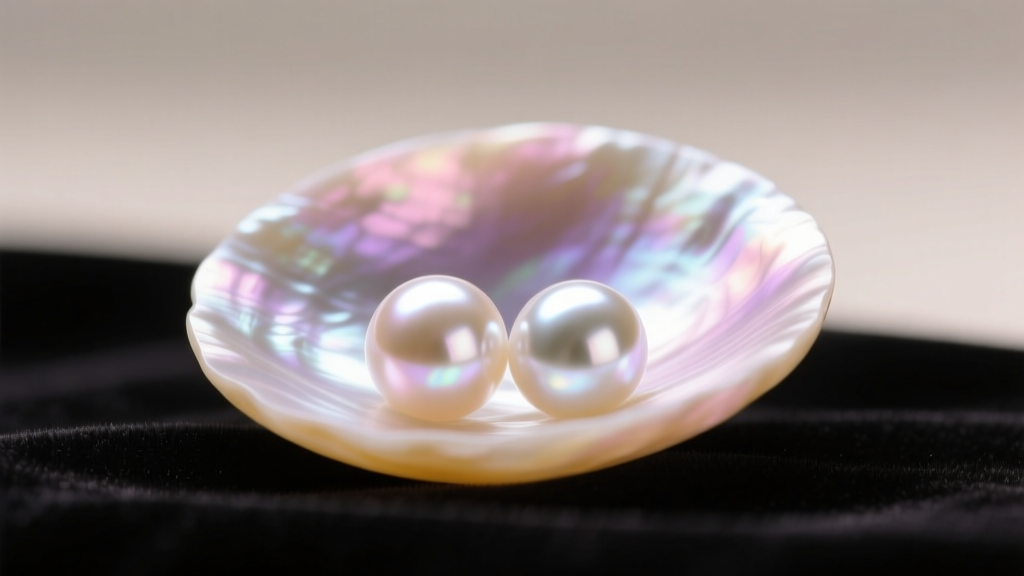
To replicate this exact optical behavior in a modern jewel, the pearl’s nacre quality must be graded as Excellent on the GIA luster scale. The nacre must act as a semi-translucent mirror. If the nacre is too thin (as seen in lower-grade Akoya or early-harvested Freshwater pearls), the light will penetrate to the bead nucleus and scatter, resulting in a chalky, flat appearance that lacks the deep, three-dimensional glow Vermeer painted.
Furthermore, the shape of the pearl must be a highly specific symmetrical drop. A perfectly spherical pearl would project a circular catchlight. A heavily baroque (asymmetrical) pearl would distort the window reflection into an unrecognizable smear. The jeweler must source a "teardrop" or "pendant" shape with a smooth, continuous curve to bend the specular reflection exactly as depicted in the 1665 oil painting.
Conclusion: The Intersection of Art and Engineering
Analyzing the girl with the pearl earring painting through a technical jewelry lens reveals that Vermeer was not just a painter of light, but an astute observer of material properties and gravity. Whether the original subject wore a royal natural pearl, a clever glass imitation, or a silver-cased drop, the visual impact relies on perfect proportions. For modern jewelers tasked with bringing this masterpiece into the physical realm, success requires more than just sourcing a large gemstone. It demands a rigorous understanding of gemological luster, structural wire gauges, and the biomechanical limits of the human ear. Only by mastering these technical details can a jeweler truly honor the enduring legacy of Vermeer’s iconic drop.


