Which Is the Gay Earring? Debunking the Left vs Right Piercing Myth
Wondering which is the gay earring? We explore the history of the left vs right ear piercing code and share modern earring styles for men.


If you have found yourself typing which is the gay earring into a search engine, you are not alone. For decades, a pervasive cultural myth dictated that the side of a man's ear piercing served as a secret code for his sexual orientation. But as we navigate the fashion landscape of 2026, the rules of men's jewelry have completely transformed. The short answer? There is no such thing as a 'gay ear' anymore. Today, ear piercings are a universal form of self-expression, untethered from outdated binary codes.
In this comprehensive beginner's guide, we will unpack the fascinating history of the left-versus-right ear piercing myth, explain when and why the code died, and provide you with an expert-level breakdown of how to choose, size, and care for your first earring with confidence.
The Origins of the 'Right Ear' Code
To understand the myth, we have to look back to the 1970s and 1980s. During an era when LGBTQ+ individuals faced severe discrimination and lacked mainstream representation, clandestine signaling methods were necessary for community building and safe socialization. Much like the 'hanky code' (where different colored bandanas worn in specific back pockets indicated sexual preferences), the ear piercing code emerged as a subtle visual cue.
'Left is right, and right is wrong.' This controversial and deeply outdated rhyme was whispered among teenagers and young men in the 1980s, suggesting that a left-ear piercing was heterosexual, while a right-ear piercing signaled that a man was gay.
This code was never universal, nor was it officially recognized by any LGBTQ+ advocacy group like GLAAD. It was largely a product of suburban rumor mills and middle-school playgrounds. However, because mainstream media rarely depicted queer men authentically, these rumors solidified into a widespread cultural anxiety. Men who simply wanted to wear a stud or a hoop often found themselves paralyzed by the fear of being misidentified, leading to a generation of men strictly adhering to the left-ear-only rule.
When Did the Code Die?
The dismantling of the 'gay ear' myth did not happen overnight; it was a gradual erosion driven by pop culture, music, and shifting generational attitudes.
The 1990s and Early 2000s: The Blurring Lines
In the 1990s, icons like George Michael and Elton John wore earrings in both ears, but they were already out and proud. The real shift happened when heterosexual heartthrobs and athletes began experimenting with right-ear piercings. By the early 2000s, the punk, emo, and pop-punk scenes popularized asymmetrical and multi-lobe piercings for all genders and orientations. Bands like Fall Out Boy and Good Charlotte made right-ear piercings a staple of alternative fashion, completely stripping the 'gay ear' of its exclusive signaling power.
The 2010s to 2026: Total Liberation
Today, the idea that one ear denotes sexual orientation is viewed as a historical relic. Modern style icons—from A$AP Rocky to Harry Styles, and countless athletes in the NBA and NFL—routinely wear pearls, diamonds, and custom hoops in both ears. Gen Z and younger millennials view jewelry as genderless and orientation-neutral. In 2026, the only 'code' that matters is whether your jewelry matches your personal aesthetic.

A Beginner's Guide to Men's Earrings: Styles That Work
Now that we have debunked the myth, how do you actually choose an earring? If you are stepping into a piercing studio for the first time, the terminology can be overwhelming. Here are the three most versatile, beginner-friendly styles for men.
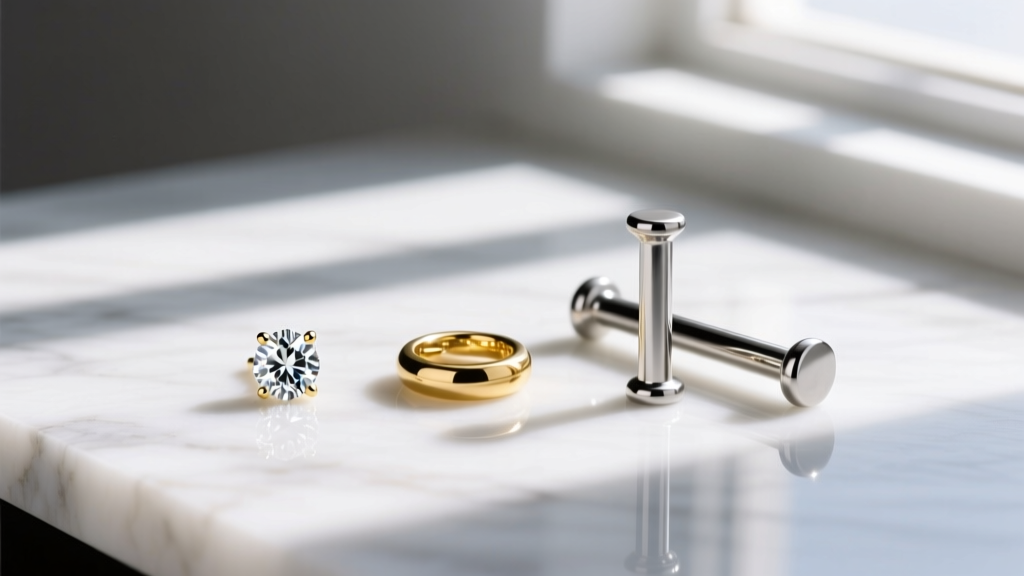
- Flatback Labret Studs: Unlike traditional butterfly-back studs that poke you while you sleep, flatback labrets feature a smooth, flat disc that rests flush against the back of your earlobe. They are the gold standard for comfort and healing.
- Huggie Hoops: These are small, thick hoops that 'hug' the earlobe. They offer a masculine, structured look without the risk of snagging on clothing or hair that larger dangling hoops present.
- Threadless Seamless Rings: For a minimalist aesthetic, a continuous ring with no visible clasp provides a clean, unbroken circle of metal.
Material Grades: Protecting Your Skin
The biggest mistake beginners make is buying cheap jewelry from mall kiosks or unverified online marketplaces. Low-quality metals contain nickel, which causes contact dermatitis, green skin, and severe allergic reactions. According to the Association of Professional Piercers (APP), you must prioritize biocompatible materials, especially for fresh piercings.
| Material | Grade / Standard | Pros | Cons | Avg. Price Range |
|---|---|---|---|---|
| Implant-Grade Titanium | ASTM F-136 | Hypoallergenic, lightweight, nickel-free, ideal for fresh piercings. | Limited color options (usually silver or anodized). | $30 - $80 |
| Solid Gold | 14k or 18k (Nickel-Free) | Premium look, highly durable, excellent for healed piercings. | Expensive; softer metal can scratch if not alloyed properly. | $80 - $300+ |
| Surgical Steel | 316L | Affordable, widely available, classic silver look. | Contains trace nickel; not recommended for initial healing. | $10 - $25 |
Gauge Sizes and Mechanics: The Technical Details
Understanding gauge (the thickness of the jewelry post) is critical for a comfortable fit. The standard lobe piercing is typically done at 20G (0.81mm) or 18G (1.02mm). However, many professional piercers recommend 16G (1.29mm) for men's lobes, as the slightly thicker post provides better stability and reduces the 'cheese-cutter effect' (where thin wire slowly migrates through the flesh over time).
Furthermore, pay attention to the threading. Avoid externally threaded jewelry (where the screw is on the post), as it tears the healing tissue upon insertion. Instead, opt for internally threaded or threadless (press-fit) jewelry. Threadless jewelry uses a slight bend in the pin to create tension against the hollow post, offering a secure fit that will never unscrew and fall out in the shower.
Healing and Aftercare Protocol
Even though earlobes are relatively forgiving, they are still open wounds that require meticulous care. The APP Aftercare Guidelines recommend a strict, minimalist approach to healing:
- Sterile Saline Only: Spray the front and back of the piercing twice a day with a sterile, wound-wash saline solution (0.9% sodium chloride with no additives).
- Leave It Alone: Do not twist, turn, or play with the earring. Twisting tears the delicate fistula (the tube of healing skin) and introduces bacteria.
- Avoid Submersion: Keep your head out of pools, hot tubs, and lakes for at least 4 to 6 weeks.
- Sleep on Your Back: Use a travel neck pillow to keep pressure off your healing lobes while you sleep.
Final Verdict: Wear What You Want
So, which is the gay earring? Whichever one you want to wear. The historical anxiety surrounding left and right ear piercings belongs in a museum of 20th-century sociology, not in your jewelry box. Whether you are opting for a subtle titanium stud in your right ear, a diamond hoop in your left, or a curated constellation of cartilage piercings across both, the only rule in modern menswear is authenticity. Visit a reputable, APP-certified piercer, choose implant-grade titanium, and wear your jewelry with absolute confidence.


