14k Gold Cameo Earrings: Material Properties & Setting Guide
Discover the material properties of 14k gold cameo earrings. Compare shell, agate, and resin carvings and learn how 14k settings affect durability.

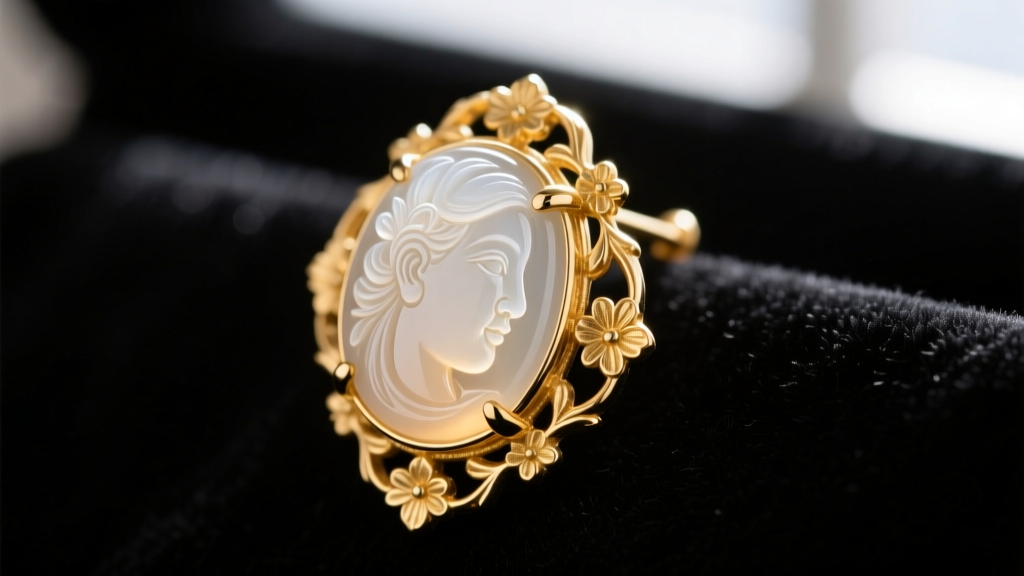
The Anatomy of 14k Gold Cameo Earrings
When evaluating vintage or contemporary jewelry, 14k gold cameo earrings represent a masterclass in material synergy. The enduring appeal of the cameo lies in the contrast between the carved relief and the metal setting. However, from a metallurgical and gemological perspective, the success of these earrings depends entirely on the physical properties of 14-karat gold interacting with the specific carving medium. Pure 24k gold is far too malleable (Mohs hardness of 2.5) to securely hold a carved stone or shell over decades of wear. By alloying 58.5% pure gold with 41.5% secondary metals—typically copper, silver, and zinc—jewelers create a 14k alloy with significantly higher tensile strength and scratch resistance. According to the World Gold Council, this specific alloy ratio provides the ideal balance of workability for intricate bezel pushing and the structural rigidity required to protect fragile cameo edges from impact deformation.
Cameo Material Comparison: Shell vs. Agate vs. Resin
The term "cameo" refers to the carving technique (a raised relief image) rather than a specific material. The physical properties of the base material dictate how the 14k gold setting must be engineered. Hand-carved shell cameos, traditionally sourced from the Cassis madagascariensis (sardonyx shell) in Torre del Greco, Italy, possess a Mohs hardness of just 2.5 to 3. This makes them incredibly susceptible to scratching and thermal shock. In contrast, agate and onyx cameos boast a Mohs hardness of 6.5 to 7, making them highly durable but requiring more aggressive setting techniques. Modern resin or polymer cameos sit at the bottom of the durability spectrum, often degrading under the friction of tight metal settings.
| Material | Mohs Hardness | Durability & Failure Risks | 14k Gold Setting Price Range |
|---|---|---|---|
| Sardonyx Shell | 2.5 - 3.0 | High risk of delamination; porous; sensitive to acids and ultrasonic vibrations. | $450 - $2,500+ |
| Agate / Onyx | 6.5 - 7.0 | Highly durable; resistant to scratching; prone to cleavage if struck on a hard axis. | $600 - $3,000+ |
| Molded Resin | 1.0 - 2.0 | Low durability; melts under high friction; yellows with UV exposure over time. | $150 - $350 |
As noted by the Gemological Institute of America (GIA), identifying the base material is crucial for long-term preservation. Shell cameos exhibit a subtle waxy luster and distinct growth lines under magnification, whereas agate cameos display a glassy vitreous luster and conchoidal fracturing patterns if chipped.
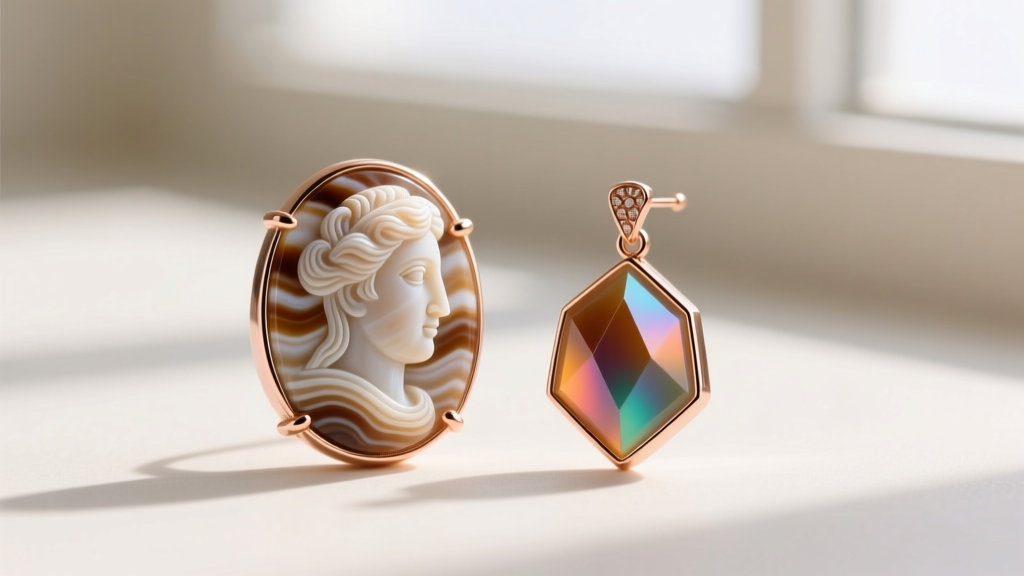
Setting Mechanics: Bezel vs. Prong in 14k Gold
The structural interface between the 14k gold and the cameo is where most jewelry failures occur. Because cameos are rarely perfectly symmetrical due to the hand-carving process, the setting must be custom-fitted to the exact topography of the stone.
The Bezel Setting
For shell cameos, a full bezel setting is mandatory. Jewelers typically use 22-gauge (0.64mm) or 20-gauge (0.81mm) 14k gold sheet metal to form a collar around the cameo. The metal is then pushed over the edge of the shell using a bezel roller. Because shell is highly porous and brittle, the gold must be annealed (softened) right before setting to ensure it folds over the edge without applying excessive downward pressure that could crack the shell's underlayers. A properly executed 14k bezel will show a smooth, continuous lip with no gaps where moisture could infiltrate and degrade the shell backing.
The Prong Setting
Prong settings are generally reserved for agate or onyx cameos. The high tensile strength of 14k gold allows jewelers to use 18-gauge (1.0mm) or 16-gauge (1.3mm) wire to create robust prongs. However, setting a cameo with prongs requires cutting small notches (seats) into the sides of the stone. While agate can withstand this lapidary work, attempting to notch a shell cameo for prongs will almost certainly result in catastrophic structural failure. Therefore, if you see a shell cameo held by prongs, it is a major red flag indicating poor craftsmanship or a modern synthetic imitation.
"The true test of a master cameo setter is not how tightly they can grip the stone, but how evenly they can distribute the compressive force of the 14k gold bezel to prevent micro-fractures in the shell's crystalline matrix." — Master Lapidary and Setting Guild Guidelines
14k Gold Alloys: Yellow, White, and Rose
The visual impact of 14k gold cameo earrings is heavily influenced by the specific alloy mix, which changes both the color and the metallurgical behavior of the setting.
- 14k Yellow Gold: Alloyed primarily with silver and a smaller percentage of copper. This classic pairing provides a warm, high-contrast frame for white-on-orange sardonyx shell cameos. The silver content keeps the gold relatively soft, making bezel pushing easier for the jeweler.
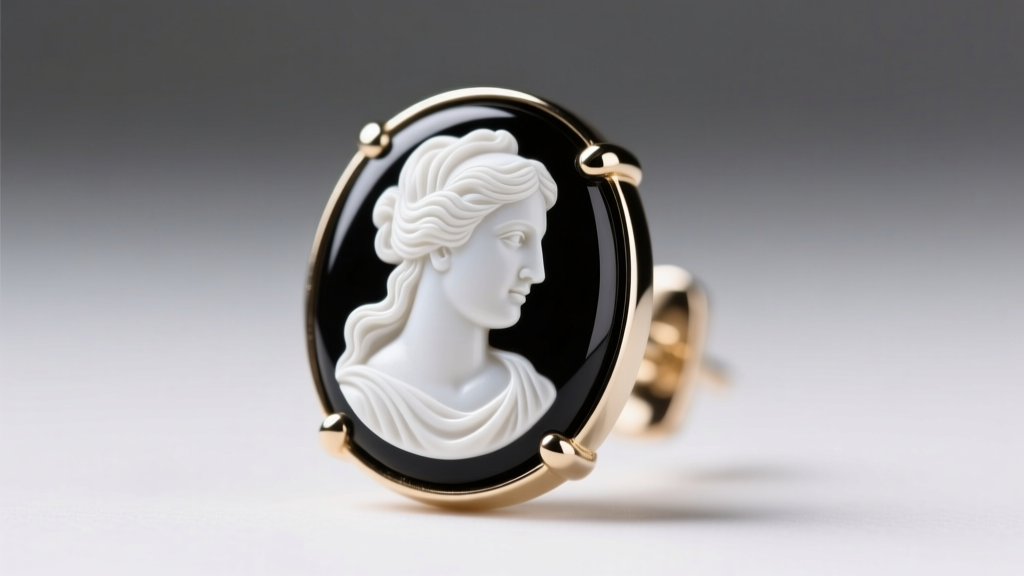
- 14k White Gold: Alloyed with nickel, palladium, or manganese, and usually rhodium-plated. White gold is significantly harder and more brittle than yellow gold. It is the preferred setting for black onyx cameos, as the stark white metal mimics the platinum settings of the Art Deco era. However, its brittleness means that if a white gold bezel is bent during an impact, it is more likely to snap or crack rather than deform smoothly.
- 14k Rose Gold: Contains a high copper content (often up to 20% or more of the total alloy). The copper provides excellent tensile strength and a warm pink hue that beautifully complements cameos carved from pink conch shell or coral-toned agates. Over decades, the copper in the 14k rose alloy will develop a rich patina, adding to the antique aesthetic of the earrings.
Care, Maintenance, and Failure Modes
Owning 14k gold cameo earrings requires an understanding of the specific failure modes associated with these composite materials. The most common issue is bezel creep. Over years of wear, the natural oils from the skin, combined with the slight differences in thermal expansion rates between the 14k gold and the organic shell, can cause the metal bezel to slowly pull away from the cameo edge. This creates a microscopic gap where dirt and moisture accumulate, eventually leading to the rotting of the shell's backing membrane.
Another critical failure mode is delamination. Shell cameos are composed of multiple calcium carbonate layers. If a wearer uses an ultrasonic jewelry cleaner—which operates at high-frequency sound waves (typically 40-80 kHz)—the vibrations will penetrate the microscopic fissures in the shell. This rapidly accelerates the separation of the carved white top layer from the darker background layer, destroying the cameo's visual depth.
Proper Cleaning Protocols
To maintain the integrity of both the 14k gold setting and the carved material, adhere to the following maintenance framework:
- Dry Dusting: Use a soft, natural-bristle makeup brush to gently remove skin oils and cosmetic dust from the intricate relief carvings. Avoid stiff toothbrushes, which can leave micro-scratches on shell surfaces.
- Metal Polishing: If the 14k gold bezel becomes tarnished, apply a minimal amount of non-abrasive gold polishing cloth strictly to the metal. Never allow liquid silver or gold dips to touch the cameo, as the harsh chemicals (like thiourea) will permanently etch and dull the surface of organic shell materials.
- Storage: Store cameo earrings in a climate-controlled environment with moderate humidity. Excessively dry conditions will cause shell and agate to desiccate and crack, while high humidity can cause the 14k gold alloy's copper or silver components to oxidize and stain the porous edges of the cameo.
By understanding the precise material properties of both the 14k gold alloys and the specific cameo mediums, collectors and wearers can ensure these intricate sculptural earrings survive for generations without structural compromise.


