How to Clean Dangle Beaded Earrings Without Damage
Learn how to safely clean dangle beaded earrings. Expert tips on washing glass, gemstone, and seed beads without damaging delicate wire wraps.

The Anatomy of Dangle Beaded Earrings: Why They Require Special Care
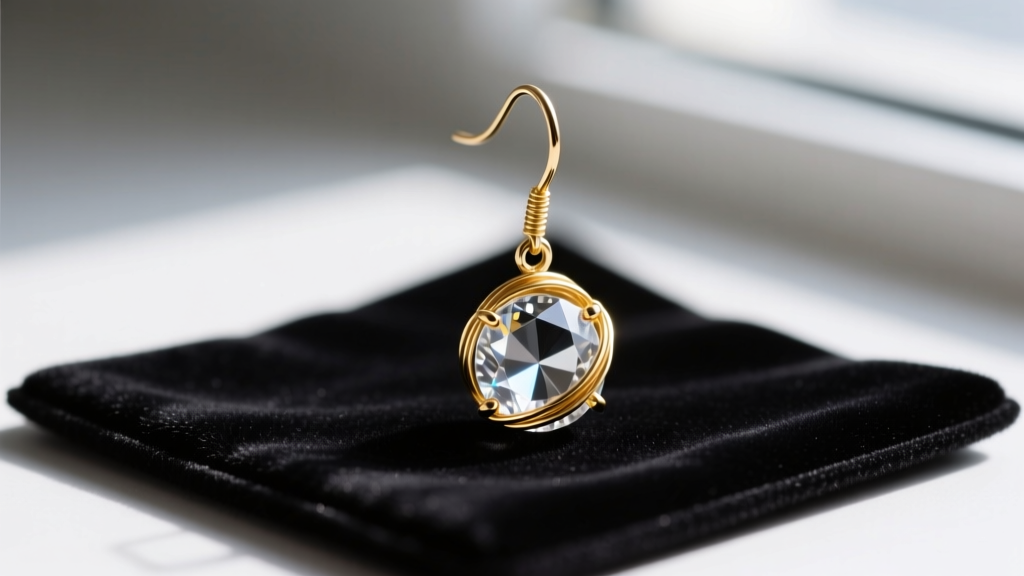
Dangle beaded earrings are a masterclass in kinetic jewelry design. Unlike static studs, dangles move with the wearer, catching the light and drawing attention to the jawline and neck. However, this constant movement introduces mechanical stress to the components, while the combination of mixed materials—metal wires, glass, porous gemstones, and synthetic threads—creates a complex cleaning challenge. Using the wrong cleaning method can easily strip the protective wax coatings off turquoise, shatter included crystals in an ultrasonic bath, or cause delicate wire wraps to snap.
To properly maintain these pieces, you must first understand their anatomy. Most artisan and high-quality commercial dangle beaded earrings rely on 24-gauge or 26-gauge dead-soft wire for wrapping and linking. These thin gauges are highly malleable, allowing for intricate loops and rosary-style chains, but they are notoriously prone to bending and work-hardening (becoming brittle) if scrubbed aggressively. The ear wires themselves are typically thicker, ranging from 20-gauge to 21-gauge, to support the weight of the beads without warping. Recognizing the fragility of these connection points is the first step in establishing a safe, long-term care routine for your collection.
Material-Specific Cleaning Matrix
Not all beads are created equal. The Mohs Hardness Scale and the porosity of the material dictate whether a bead can withstand moisture, mild surfactants, or mechanical agitation. Below is a quick-reference framework for identifying your bead type and selecting the appropriate cleaning protocol.
| Bead Material | Mohs Hardness | Porosity | Safe Cleaning Method | Agents to Avoid |
|---|---|---|---|---|
| Glass & Crystal | 5.5 - 7.0 | Non-Porous | Mild wet wash, distilled water | Hydrofluoric acid, harsh abrasives |
| Turquoise & Lapis | 3.0 - 6.0 | Highly Porous | Dry dusting, microfiber only | Water, ultrasonic, ammonia, oils |
| Pearls & Coral | 2.5 - 4.0 | Organic/Porous | Damp cloth wipe, immediate dry | Acids, vinegar, ultrasonic, steam |
| Seed Beads (Glass) | 5.5 | Non-Porous (but threaded) | Surface wipe, minimal moisture | Prolonged soaking (ruins thread) |
The Wet Cleaning Protocol (For Non-Porous Glass and Crystals)
For dangle beaded earrings made entirely of glass, Swarovski-style crystals, or hard, non-porous gemstones like quartz and agate, a gentle wet cleaning is the most effective way to remove skin oils, hairspray residue, and environmental dust. Tap water often contains dissolved minerals like calcium and magnesium, which can leave stubborn hard-water spots on faceted beads, dulling their refractive brilliance. Therefore, always use distilled water.
Step-by-Step Wet Wash
- Prepare the Solution: Mix a few drops of pH-neutral, lotion-free dish soap (such as original Dawn) into a bowl of lukewarm distilled water. Avoid hot water, as sudden temperature changes can cause thermal shock in glass beads with internal fractures.
- Agitate Gently: Dip the beaded dangles into the solution. Do not submerge the ear wires if they are made of base metals or oxidized silver, as moisture trapped in the crevices can accelerate rust or strip intentional patinas.
- Targeted Scrubbing: Use an extra-soft baby toothbrush to gently sweep the bristles around the wire wraps and the tops of the beads where grime accumulates. Never apply lateral pressure to the 24-gauge wire loops, as this will warp the dangle's hang.
- Rinse and Dry: Rinse briefly under a slow stream of distilled water. Immediately pat dry with a lint-free microfiber cloth. To remove trapped moisture from tight wire coils, use a can of compressed air or a hairdryer on the 'cool' setting.
The Dry Cleaning Alternative (For Porous and Organic Gems)
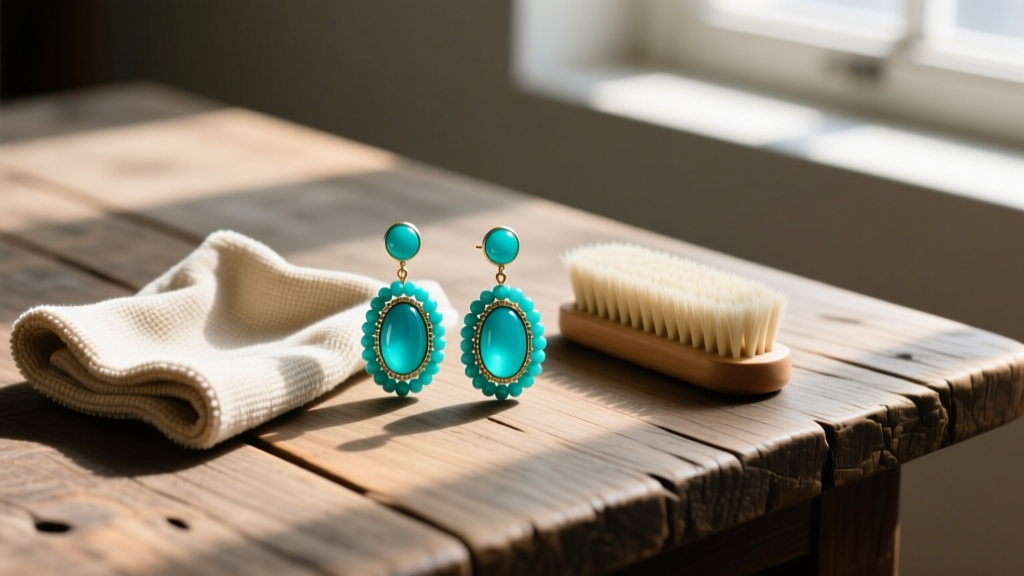
Porous gemstones and organic materials require a strictly dry approach. According to the GIA Turquoise Care Guide, turquoise is frequently treated with wax or oil to enhance its color and stability. Submerging these beads in water or using commercial jewelry dips will strip these treatments, leaving the stone dry, brittle, and susceptible to permanent discoloration from skin oils and cosmetics.
Similarly, pearls and coral are calcium carbonate-based organics. The GIA Pearl Care Guide warns that even mildly acidic solutions like vinegar or lemon juice will etch the nacre of a pearl, destroying its luster permanently. For these delicate dangle beaded earrings, rely on mechanical dry cleaning. Use a clean, dry, soft-bristled makeup brush to sweep away dust from the crevices between the beads and the wire wraps. Follow up by gently buffing the surface of the beads with a dry, untreated microfiber polishing cloth. If a pearl bead becomes heavily soiled with body oils, lightly dampen a corner of the cloth with distilled water, wipe the bead, and dry it instantly—never let the moisture sit.
Caring for Seed Bead and Threaded Dangles
Seed bead dangle earrings present a unique structural vulnerability: the stringing material. While the glass beads themselves are impervious to water, the threads used to weave or string them are not. Artisans frequently use nylon threads like Nymo or Silamide, or bonded silk. Prolonged exposure to water, soap, and humidity can cause nylon to stretch and degrade over time, while silk is highly susceptible to mildew and rot if trapped in a damp state.
Furthermore, many seed beads feature metallic linings (such as silver-lined or galvanized finishes) inside the bead hole. Moisture trapped inside these tiny channels can cause the interior lining to oxidize and flake off, ruining the bead's optical effect. To clean seed bead dangles, avoid soaking them entirely. Instead, use a slightly damp cloth to wipe the surface of the beads, and allow the earrings to dry flat in a well-ventilated area, ensuring no water wicks into the thread tension points.
Storage and Preventative Maintenance
Proper storage is arguably more critical than the cleaning process itself for dangle beaded earrings. Because of their elongated silhouette and delicate wire components, tossing them into a communal jewelry box guarantees tangled chains, bent headpins, and scratched bead surfaces.
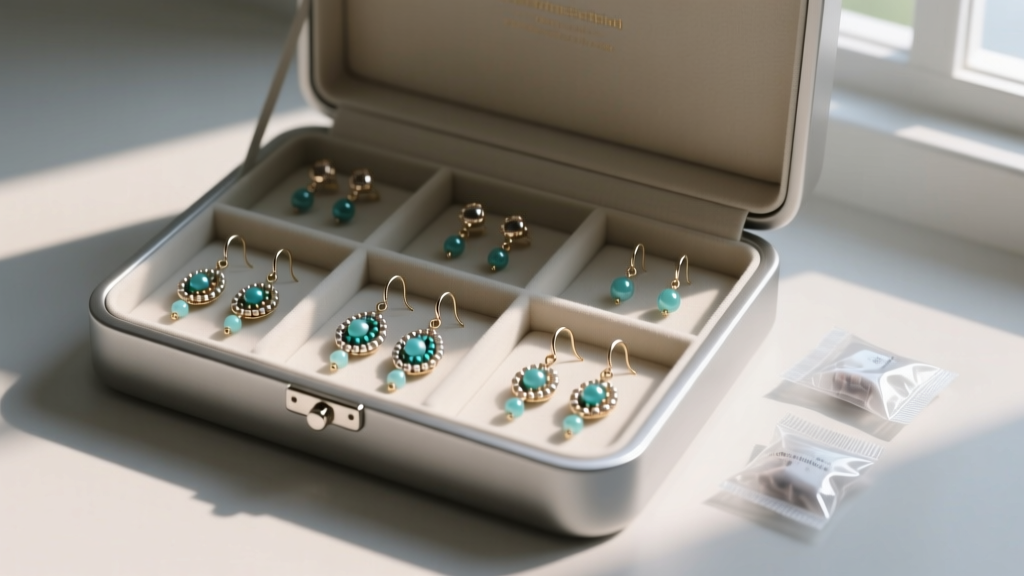
- Hang Them Up: Utilize a jewelry organizer with dedicated hooks or a slotted stand. Hanging dangle earrings allows gravity to keep the wire wraps aligned and prevents the beads from pressing against one another, which can cause micro-abrasions on softer stones.
- Control the Atmosphere: Silver and copper wire components are prone to sulfide tarnishing. Store your earrings in individual zip-top polyethylene bags alongside 3M anti-tarnish strips, which absorb airborne sulfur compounds. Avoid PVC plastics, as they emit gases that accelerate corrosion.
- UV Protection: Certain dyed beads, as well as naturally UV-sensitive stones like amethyst and kunzite, will fade if exposed to prolonged sunlight. Keep your display or storage away from direct window light.
Troubleshooting Common Beaded Earring Issues
Even with meticulous care, mechanical wear and tear is inevitable. Here is how to address the most common failures in dangle beaded earrings without causing further damage:
1. Bent Wire Wraps and Headpins
If a 24-gauge wire loop bends out of shape, do not use your fingers to force it back, as this introduces uneven stress and risks snapping the metal. Instead, use a pair of nylon-jaw jewelry pliers. The nylon coating grips the wire firmly without marring the metal or leaving tool marks, allowing you to gently coax the loop back into a perfect circle.
2. Rattling or Loose Beads
A bead that rattles on the headpin indicates that the wire wrap or crimp has loosened, leaving a gap. If the bead is glass or crystal, you can carefully apply a microscopic drop of flexible jewelry adhesive (like E6000) to the base of the bead where it meets the wire. Allow it to cure for 24 hours. Never use cyanoacrylate (Super Glue), as it dries rigid, emits fumes that can 'fog' the surface of glass and crystal beads, and becomes brittle with movement.
3. Tarnished Ear Wires
If the 20-gauge ear wires have darkened due to oxidation, remove the beaded dangle component by opening the jump ring with two pairs of flat-nose pliers. Once the delicate beads are safely set aside, you can aggressively polish the ear wires with a treated silver polishing cloth or a mild baking soda paste without risking chemical damage to your porous or treated gemstones. For a deep dive into wire working and maintenance, the Fire Mountain Gems Beading Resources offers extensive tutorials on replacing damaged findings and re-wrapping loose beads.
By respecting the specific material properties of your beads and the mechanical limits of your wire wraps, you can ensure your dangle beaded earrings remain vibrant, structurally sound, and ready to catch the light for years to come.


