Earring on Left Ear Meaning Guy Guide: Myths & Modern Style
Decode the earring on left ear meaning guy trends. Learn gauge sizes, materials, and placements for modern men's ear styling in this step-by-step guide.

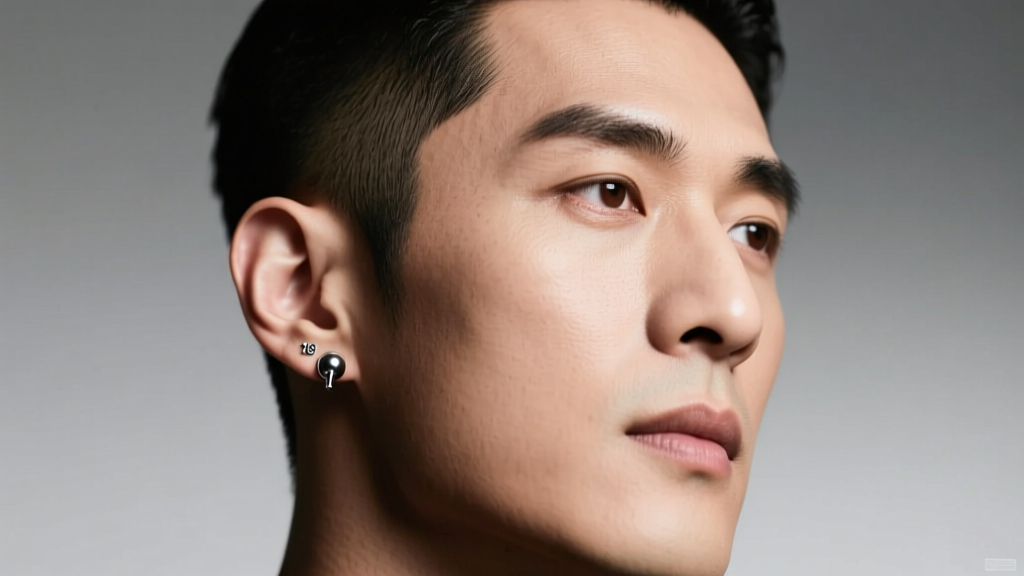
Decoding the Earring on Left Ear Meaning Guy Myths
When researching the earring on left ear meaning guy demographics often encounter a web of outdated urban legends. For decades, pop culture and schoolyard rumors perpetuated the idea that a left-ear piercing on a man signaled a specific sexual orientation, while the right ear signaled another. This covert coding system, born in the conservative climates of the 1970s and 1980s, was a necessary form of quiet expression for marginalized groups. However, as we navigate the fashion landscape of 2026, this binary code is entirely obsolete.
Today, the earring on left ear meaning guy style enthusiasts care about is rooted in aesthetic balance, facial symmetry, and personal curation. Men's jewelry has evolved from secret signals to bold, intentional style statements. Whether you are a professional navigating corporate environments or a creative pushing sartorial boundaries, understanding how to curate your left ear requires a grasp of anatomy, metallurgy, and spatial design. This step-by-step guide will walk you through building a sophisticated, modern left-ear curation from scratch.
Step 1: Assess Facial Symmetry and Hair Parting
Before selecting jewelry, you must analyze your facial canvas. The decision to curate the left ear should be driven by your natural asymmetry and grooming habits.
- The Hair Parting Rule: If you part your hair on the right side, your left ear is naturally more exposed. This makes the left ear the ideal focal point for jewelry, as it won't be hidden by sweeping bangs or heavy fringe.
- Facial Dominance: Most people have a slightly asymmetrical face, with one side being more "dominant" or expressive. If your left jawline is sharper or your left brow sits slightly higher, drawing attention to the left ear with a well-chosen stud or hoop will enhance your natural bone structure.
- Beard and Fade Transitions: If you sport a skin fade on the sides with a heavier beard, a left-ear piercing creates a striking visual bridge between the sharp haircut and the textured facial hair.
Step 2: Choose the Primary Lobe Piece (Gauge & Material)
The foundation of any ear curation is the primary lobe piercing. Standard lobe piercings are typically done at 20-gauge (0.81mm) or 18-gauge (1.02mm). For men seeking a refined, masculine aesthetic, an 18-gauge piece offers a slightly more substantial presence without looking overly delicate.
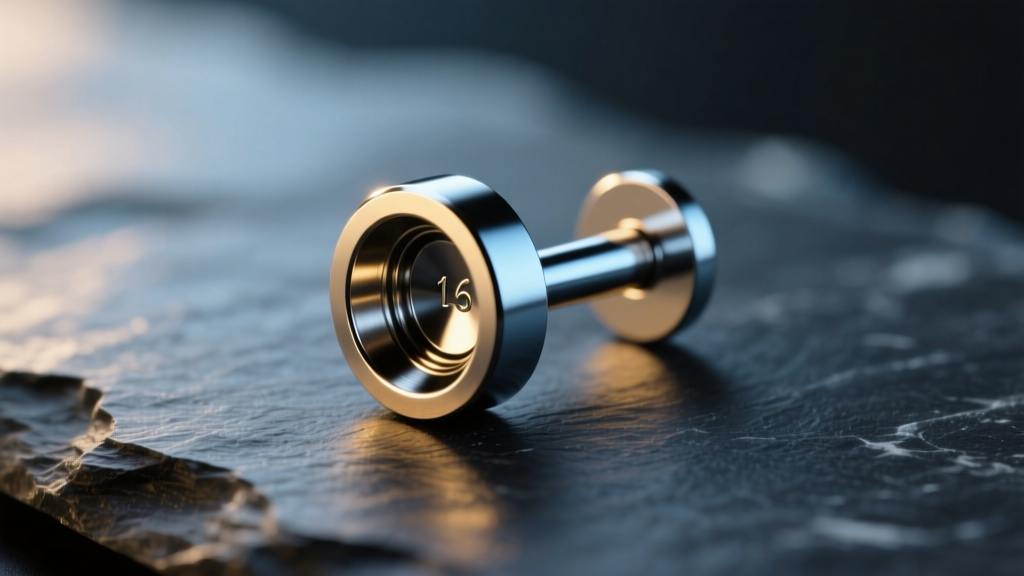
The Metallurgy Mandate: What to Wear
The Association of Professional Piercers (APP) strongly advises against wearing low-grade "surgical steel" (316L), which contains nickel and frequently causes contact dermatitis. Instead, your left-ear curation should exclusively feature:
- Implant-Grade Titanium (ASTM F136): The gold standard for biocompatibility. It is lightweight, completely nickel-free, and features a mirror polish that resists bacterial adhesion.
- Solid 14k or 18k Gold: Ensure it is nickel-free and alloyed for body jewelry. Avoid gold-plated or gold-filled options, as the friction of daily wear will eventually expose the base metal underneath.
- Niobium: A highly reactive metal that is anodized to create vibrant colors without the use of toxic dyes or paints.
Step 3: Expand to Cartilage (Helix and Tragus)
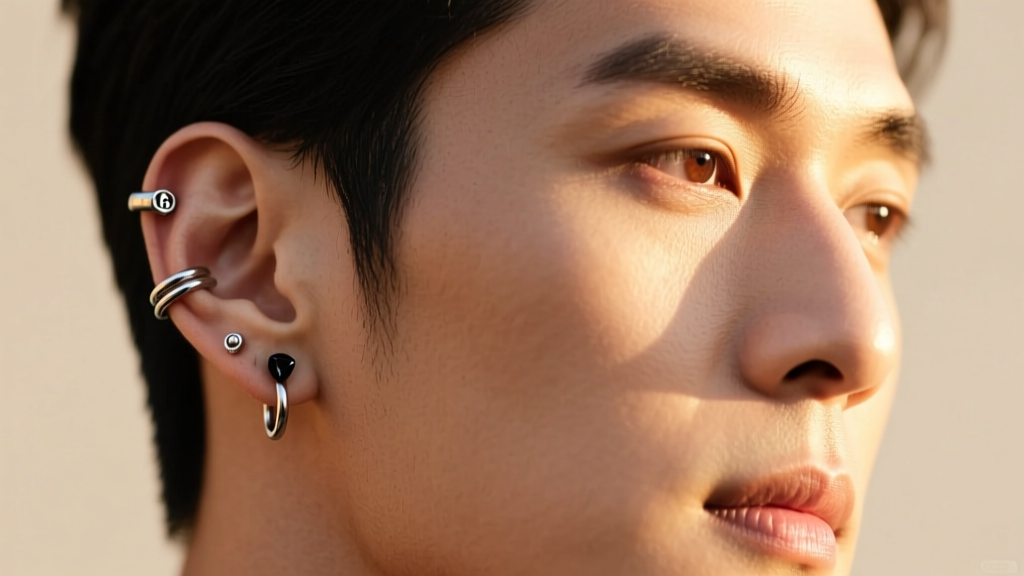
Once the lobe is established, the modern earring on left ear meaning guy wearers project is one of intentional, structured curation. Cartilage piercings add verticality and edge.
- The Flat Helix: Positioned on the upper outer rim of the ear. A 16-gauge flat-back labret stud with a subtle bezel-set black onyx or dark sapphire gemstone provides a rugged, understated look.
- The Tragus: The small, thick flap of cartilage directly in front of the ear canal. A 16-gauge tiny titanium ball stud here catches the light beautifully and pairs exceptionally well with over-ear headphones, provided the jewelry has a low profile.
- The Conch: For a bolder statement, a 14-gauge conch piercing in the bowl of the ear can accommodate a large, seamless clicker ring that wraps around the outer helix.
Technical Specs: Gauges, Healing, and Pricing
Understanding the technical specifications of your jewelry is crucial for both comfort and long-term tissue health. Below is a comprehensive breakdown of standard placements for a men's left-ear curation.
| Placement | Standard Gauge | Avg. Healing Time | Best Jewelry Type | Avg. Price Range (USD) |
|---|---|---|---|---|
| Standard Lobe | 20G - 18G | 6 - 8 Weeks | Flat-back Stud, Huggie | $30 - $150 |
| Upper Lobe | 18G - 16G | 8 - 12 Weeks | Small Hoop, Threadless Stud | $40 - $200 |
| Helix | 16G - 14G | 6 - 12 Months | Flat-back Labret, Cuff | $50 - $250 |
| Tragus | 16G | 6 - 12 Months | Small Stud, Tiny Hoop | $45 - $180 |
| Conch | 14G - 12G | 9 - 12 Months | Large Seamless Ring, Stud | $60 - $300 |
Note: Pricing reflects high-quality, body-safe metals from reputable brands like BVLA, Maria Tash, or Anatometal. Always factor in the cost of a professional, APP-certified piercer's service fee.
Troubleshooting Common Left Ear Piercing Issues
Even with perfect technique, the reality of daily life can introduce complications. Here is how to troubleshoot the most common issues specific to left-ear piercings.
The "Sleeper's Bump" (Irritation Bumps)
If you sleep on your left side, the constant pressure and friction against cotton pillowcases can cause localized swelling and the formation of hypertrophic scarring, commonly known as irritation bumps. The Fix: Switch to a silk or satin pillowcase to reduce friction. More importantly, invest in a U-shaped travel pillow and sleep with your left ear positioned in the hollow center, completely eliminating pressure on the healing fistula.
Moisture Traps and "Sleep Crust"
Cartilage piercings, particularly in the conch or lower helix, are prone to trapping moisture from showers or sweat. This creates an environment where bacteria thrive, leading to weeping and crusting. The Fix: Never use cotton swabs (Q-tips), as the microscopic fibers can snag on the jewelry and wrap around the post, causing severe irritation. Instead, use non-woven sterile gauze. After showering, gently pat the area dry, and use a hairdryer on the "cool" setting to completely evaporate trapped moisture from the ear's crevices.
Threadless vs. Internally Threaded Mechanics
When building your curation, avoid externally threaded jewelry (where the screw is on the post). Forcing a threaded post through a piercing tears the delicate fistula tissue. The Fix: Opt for internally threaded jewelry (the screw is on the decorative end) or threadless push-pin jewelry. Threadless jewelry uses tension to stay together; you simply bend the pin slightly before inserting it into the hollow post. This creates a secure, seamless fit that will not unscrew itself in your sleep or catch on clothing. The APP aftercare guidelines emphasize that smooth, snag-free jewelry is critical for long-term tissue health.
Final Thoughts on Men's Ear Curation
The historical earring on left ear meaning guy wearers once relied upon has been entirely replaced by a culture of self-expression, anatomical precision, and high-end metallurgy. Whether you opt for a solitary 18-gauge titanium flat-back in the lobe or a fully curated constellation of helix and tragus pieces, the key to modern men's jewelry is intentionality. By prioritizing implant-grade materials, respecting healing timelines, and designing around your unique facial symmetry, your left ear will serve as a sophisticated hallmark of your personal style for decades to come.


