14k Earring Backs Value Guide: Cost, Quality, and Upgrades
Discover if 14k earring backs are worth the premium. We break down pricing, material durability, friction vs. screw types, and upgrade value.

The Hidden Insurance Policy: Why Earring Backs Matter
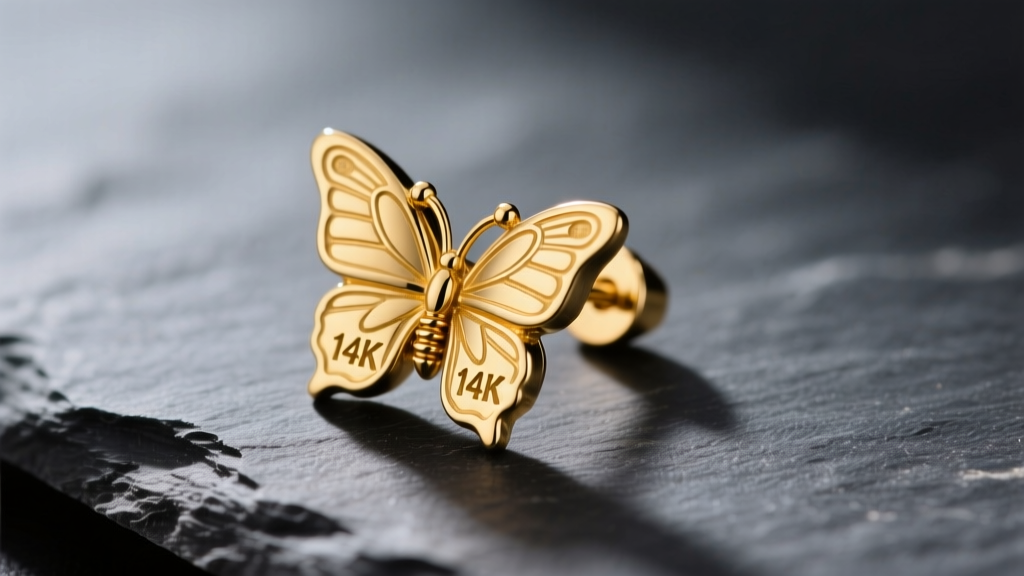
When investing in fine jewelry, the focus is almost entirely on the center stone or the primary metalwork. Yet, the most critical component for the physical security of your earrings is often the cheapest: the earring back. A $3,000 pair of diamond studs is only as secure as the $4 piece of metal holding it in place. This brings us to a crucial budget and value assessment for fine jewelry owners: are solid 14k earring backs worth the premium over gold-plated, vermeil, or lower-karat alternatives?
From a pure value perspective, upgrading to solid 14k gold findings is not merely an aesthetic choice; it is an insurance policy. Cheap base-metal backs are prone to bending, tension loss, and corrosion, which drastically increases the risk of losing your primary earrings. In this comprehensive guide, we evaluate the true cost, metallurgical advantages, and mechanical failure modes of 14k earring backs to help you make an informed, budget-conscious decision.
Metallurgy and Tension: Why 14k Gold is the Sweet Spot
To understand the value of 14k earring backs, we must look at the metallurgy of gold alloys. Pure 24k gold is far too soft for jewelry findings; it would bend under the slightest pressure. According to the Gemological Institute of America (GIA), alloying gold with metals like copper, silver, and zinc is necessary to achieve structural integrity.
14k gold consists of 58.5% pure gold and 41.5% alloy metals. This specific ratio creates a 'sweet spot' for earring backs. The alloy content provides high yield strength and excellent spring memory, which is vital for the tension scrolls inside a butterfly friction back. By comparison, 18k gold (75% pure) is softer and more prone to losing its grip over time, while 10k gold (41.7% pure) is stronger but highly susceptible to oxidation, tarnishing, and nickel-induced contact dermatitis.
Material Comparison: 14k Gold vs. Alternatives
How does 14k gold stack up against other common materials on the market? Below is a value assessment matrix comparing durability, safety, and cost.
| Material | Gold Content | Tension Retention | Allergy Risk | Avg. Price (Pair) |
|---|---|---|---|---|
| 14k Yellow/White Gold | 58.5% | Excellent | Very Low | $30 - $60 |
| 18k Gold | 75.0% | Good (Softer) | Very Low | $60 - $120 |
| 10k Gold | 41.7% | Superior | Moderate/High | $15 - $25 |
| Gold Vermeil (Brass/Silver Core) | 0.5% - 2.5% | Poor (Bends Easily) | Moderate | $12 - $25 |
| Surgical Steel / Titanium | 0% | Superior | Very Low | $5 - $15 |
While titanium and surgical steel offer excellent tension retention and hypoallergenic properties, they lack the prestige and exact color-matching required for high-end yellow or rose gold earrings. 14k gold remains the most balanced choice for fine jewelry security.
Mechanism Types and Failure Modes in 14k Gold
The value of your 14k earring backs is heavily dependent on the mechanical design. Not all backs are created equal, and understanding their specific failure modes will help you choose the right mechanism for your lifestyle.
Friction (Butterfly) Backs
The standard butterfly back relies on two rolled metal scrolls that grip the notched groove on the earring post. Failure Mode: Metal fatigue. Over years of removal and insertion, the scrolls can flatten out, reducing the friction grip. Because 14k gold has excellent spring memory, high-quality 14k friction backs will outlast base-metal alternatives by years, but they still require occasional professional tightening by a jeweler.
Screw Backs
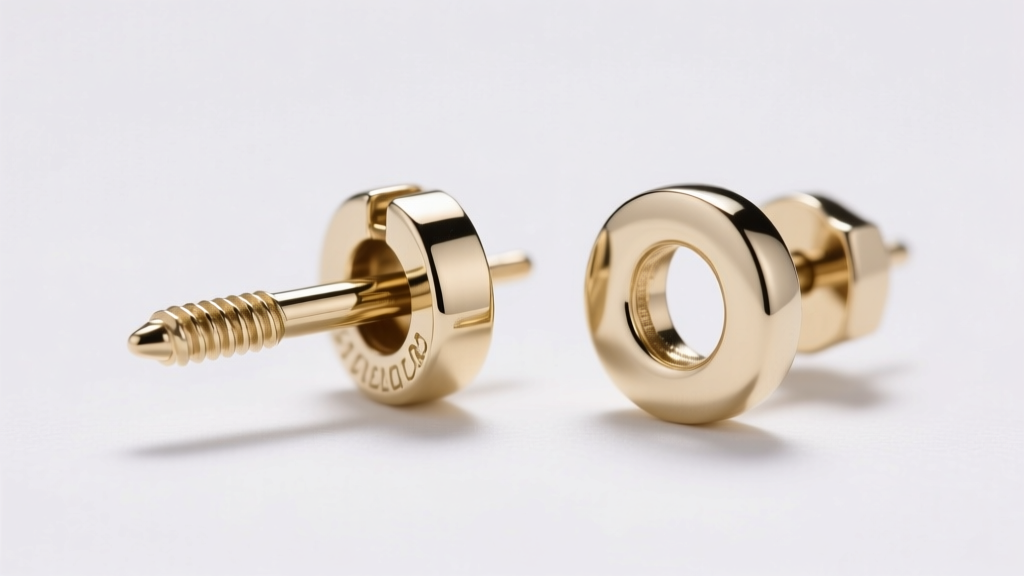
Screw backs feature a threaded post and a matching threaded 14k back. They are the gold standard for security. Failure Mode: Thread stripping. If the user forces the back at an angle (cross-threading), or if the manufacturer used a soft 18k post with a harder 14k back, the threads will strip, rendering the set useless. Always ensure both the post and the back are machined from the same 14k alloy hardness.
La Pousette (Locking) Backs
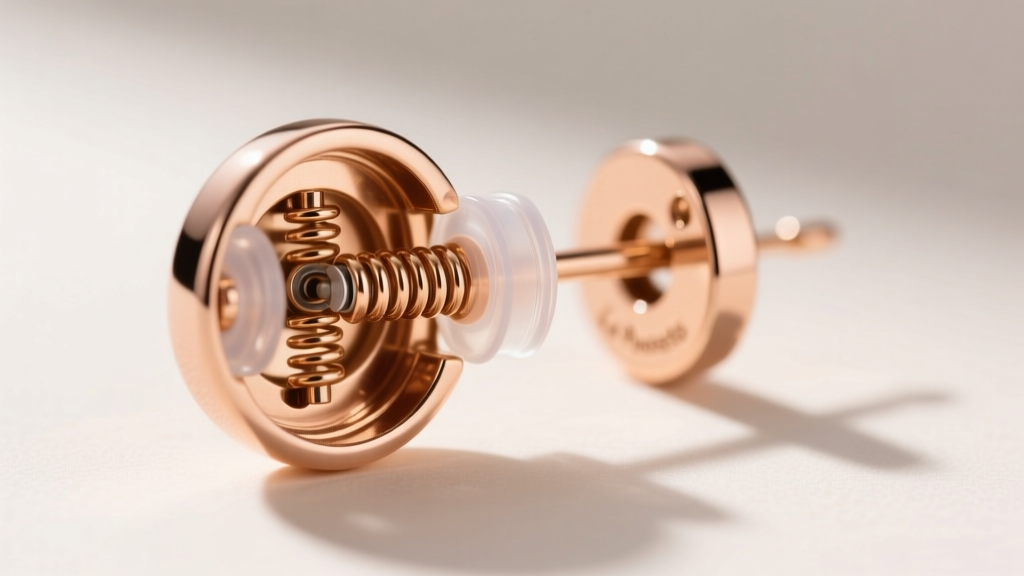
Originally designed in France, La Pousette backs use a spring-loaded internal mechanism paired with a silicone or metal sleeve that locks over the post. Failure Mode: Silicone degradation. While the 14k gold housing will last a lifetime, the internal silicone friction sleeves dry out and crack every 2 to 4 years. Fortunately, these sleeves are inexpensive to replace, making the long-term value proposition excellent.
2026 Pricing Tiers: What You Should Actually Pay
When budgeting for 14k earring backs, consumers are often subjected to massive retail markups at brick-and-mortar mall jewelers. To assess true value, you must understand the wholesale-to-retail pricing tiers for solid 14k findings.
- Standard 14k Friction Backs: Fair retail price is $30 to $50 per pair. If a local jeweler quotes over $75 for standard butterfly backs, you are paying for brand markup, not material value.
- 14k Screw Backs: Fair retail price is $65 to $110 per pair. The precision CNC machining required to cut microscopic threads into a 20-gauge post justifies the higher cost.
- 14k La Pousette / Locking Backs: Fair retail price is $130 to $220 per pair. These are complex, multi-part assemblies. While expensive upfront, they completely eliminate the risk of losing high-value diamond or gemstone studs.
For authoritative guidance on jewelry pricing and metal standards, the Jewelers of America (JA) provides excellent consumer resources on what to expect when purchasing fine jewelry findings.
The Gauge Matching Rule: 18G vs. 20G Posts
A critical, often overlooked aspect of budget assessment is gauge compatibility. Earring posts are not universally sized. The vast majority of fine diamond and gemstone studs are manufactured with 20-gauge (0.81mm) posts. Heavier drops, cartilage pieces, or custom bespoke studs may use 18-gauge (1.02mm) or even 16-gauge (1.29mm) posts.
If you purchase premium 14k earring backs without verifying your post gauge, you will waste your money. A 20G friction back on an 18G post simply will not fit. Conversely, an 18G back on a 20G post will slide freely, completely defeating the purpose of the upgrade. Always measure your post thickness with a digital caliper or consult your jeweler before ordering replacement 14k backs.
Maintenance and Long-Term Value
To maximize the lifespan and value of your 14k earring backs, routine maintenance is required. Lotions, hairsprays, and natural skin oils accumulate inside the friction scrolls and screw threads, creating a hardened matrix that weakens the grip and harbors bacteria.
Actionable Cleaning Protocol: Once a month, soak your 14k earring backs in a small dish of warm water mixed with a few drops of mild, ammonia-free dish soap. Use a soft-bristled baby toothbrush to gently agitate the inside of the scrolls or threads. Rinse with distilled water and dry completely with a microfiber cloth. Avoid ultrasonic cleaners for La Pousette backs, as the high-frequency vibrations can damage the internal spring tension and degrade the silicone sleeves.
Final Verdict: When to Upgrade Your Earring Backs
Are 14k earring backs worth the investment? The answer depends entirely on the value of the earrings they are securing.
The 0.50 CTW Rule: If your diamond or gemstone studs have a total carat weight of 0.50 carats or higher, or if their replacement value exceeds $1,000, upgrading to solid 14k screw backs or La Pousette locking backs is a non-negotiable necessity. The $100 investment in secure findings protects a $2,000+ asset.
For lightweight, everyday fashion studs or lower-carat melee diamonds, standard 14k friction backs offer the perfect balance of budget and security. Avoid gold-plated or vermeil backs entirely for fine jewelry; the risk of tension loss and subsequent earring loss makes them a false economy. By investing in solid 14k gold findings, you ensure that your most cherished pieces remain safely in your jewelry box—and in your ears—for a lifetime.


