Best Materials for Fishbone Earrings: A Complete Guide
Discover the best materials for fishbone earrings. Compare sterling silver, titanium, and gold vermeil for durability, weight, and skin safety.

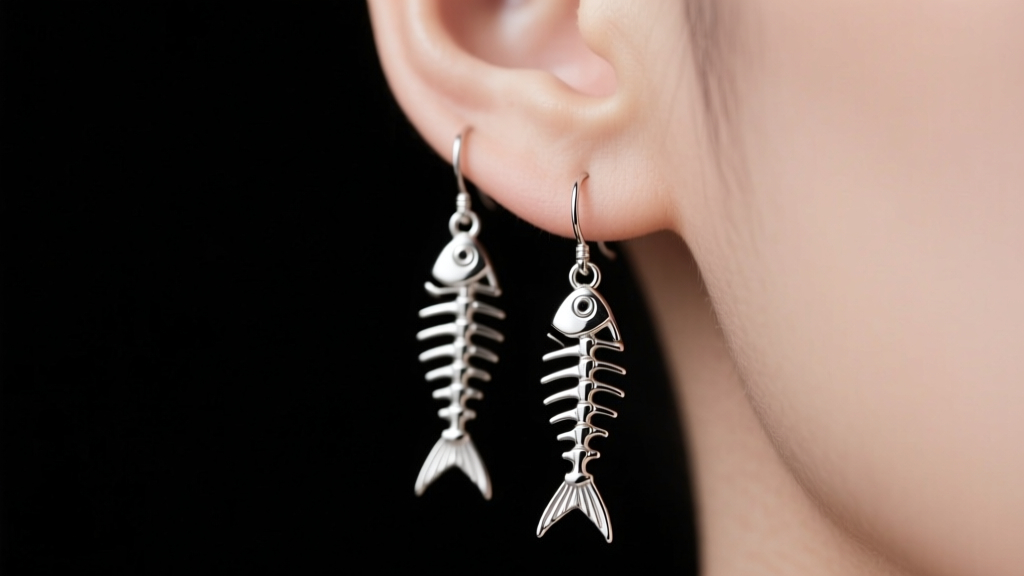
Fishbone earrings—often referred to as skeleton or spine earrings—have solidified their place as a staple in both avant-garde and minimalist jewelry collections. By 2026, the demand for hyper-realistic, articulated fishbone designs has surged, pushing jewelers to engineer increasingly complex micro-joints. However, the intricate anatomy of these earrings presents unique metallurgical challenges. The tight crevices between the 'ribs,' the kinetic stress on the 'vertebrae,' and the overall dangling weight mean that not all metals are created equal for this specific silhouette.
Choosing the wrong material can result in rapid tarnishing in unreachable gaps, snapped solder joints, or severe contact dermatitis. In this comprehensive material comparison guide, we dissect the physical properties, structural integrity, and skin safety of the most common metals used in fishbone earrings, helping you make an informed, expert-level purchase.
The Anatomy of Fishbone Earrings: Why Material Matters
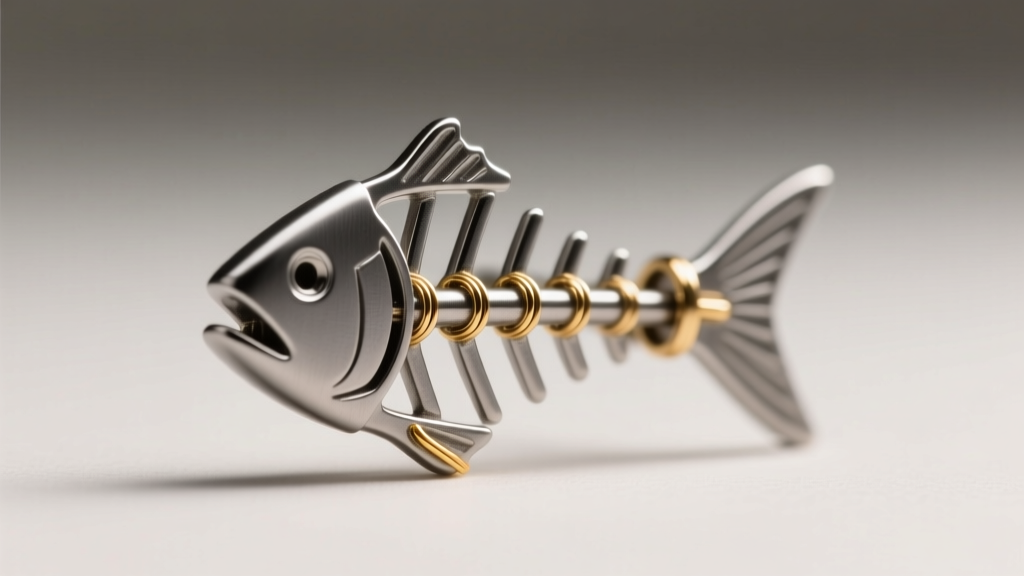
Unlike a simple cast stud, a high-quality fishbone earring is an articulated marvel. It typically consists of a central spine with dozens of individually cast or stamped 'ribs' connected by micro-jump rings or hinge pins. This articulation allows the earring to mimic the fluid, undulating movement of a real fish skeleton as the wearer moves.
This kinetic movement introduces metal fatigue. Every time the earring bends, the microscopic solder joints endure shear stress. Furthermore, the overlapping ribs create moisture traps. Sweat, humidity, and cosmetic residues easily become lodged in these crevices, accelerating oxidation and corrosion in reactive metals. Therefore, the ideal material must possess high tensile strength, excellent corrosion resistance, and a favorable strength-to-weight ratio to prevent earlobe stretching over time.
Material Breakdown: Pros, Cons, and Properties
Implant-Grade Titanium (ASTM F136)
For those prioritizing skin safety and lightweight wear, implant-grade titanium (specifically Ti-6Al-4V ELI, certified to ASTM F136) is the undisputed champion. According to the Association of Professional Piercers (APP), this specific alloy is entirely nickel-free and biocompatible, making it the only safe choice for freshly pierced lobes or highly reactive skin.
- Weight: Titanium is roughly 45% lighter than stainless steel and significantly lighter than silver or gold. For long, dramatic fishbone dangles, this prevents lobe fatigue and stretching.
- Tarnish Resistance: Titanium forms a passive oxide layer that completely prevents tarnishing. You will never have to dig polishing compound out of the tiny rib gaps.
- Manufacturing Challenge: Titanium cannot be traditionally torch-soldered; it requires precision laser welding. Consequently, articulated titanium fishbone earrings are more expensive to produce, as each vertebra must be individually laser-fused.
Sterling Silver (925) vs. Argentium (960)
Sterling silver (92.5% silver, 7.5% copper) is the most traditional metal for cast fishbone designs due to its excellent malleability and brilliant luster. However, the copper content makes it highly susceptible to sulfide tarnishing—a major issue for articulated designs where polishing cloths cannot reach.
The 2026 Upgrade: Argentium Silver. Modern jewelers are increasingly utilizing Argentium silver (96% silver, with germanium replacing some copper). The germanium creates a transparent, self-healing oxide layer that drastically slows tarnishing. If you are buying silver fishbone earrings, seeking out an Argentium hallmark ensures your intricate skeleton design won't turn black in the crevices within a month of wear.
Gold Vermeil vs. Gold Plated Brass
The market is flooded with gold-toned skeleton earrings, but the base metal dictates their lifespan. The Gemological Institute of America (GIA) and FTC guidelines dictate that true 'Gold Vermeil' must consist of a sterling silver base plated with at least 2.5 microns of gold (usually 14k or 18k).
Cheaper alternatives use a brass or zinc-alloy base with a microscopic 0.5-micron flash plating. In articulated fishbone earrings, the constant friction of the ribs rubbing against each other will wear through thin plating in weeks. Once the brass is exposed, the zinc undergoes dezincification when exposed to sweat, leading to structural snapping at the joints and leaving green copper salts on your neck.
The Tarnish Trap: Cleaning Articulated Crevices
Maintaining the intricate gaps of a fishbone earring requires specific protocols. Standard silver polishing cloths are useless for the interior joints of a skeleton design. Here is how professionals handle maintenance based on the material:
Pro Tip: Never use abrasive silver dips on gold vermeil fishbone earrings. The thiourea chemicals in dip cleaners will strip the gold plating instantly, leaving you with a patchy, ruined brass skeleton.
For Sterling and Argentium Silver, a 40kHz ultrasonic cleaner is the most effective tool. The high-frequency cavitation bubbles physically blast tarnish and sebum out of the micro-crevices without requiring manual scrubbing. However, limit ultrasonic cycles to 3 minutes; prolonged vibrations can fatigue the micro-jump rings connecting the ribs, eventually causing the spine to detach.
For Titanium and Solid Gold, a simple soak in warm water with a few drops of pH-neutral dish soap, followed by a gentle brushing with an extra-soft baby toothbrush, is all that is required to dislodge trapped skin cells from the vertebrae.
Material Comparison Matrix
Use the table below to evaluate which metal aligns with your lifestyle, budget, and anatomical needs.
| Material | Weight Profile | Tarnish Risk | Hypoallergenic | Avg. Price Range | Best For |
|---|---|---|---|---|---|
| Implant-Grade Titanium | Ultra-Light | None | Yes (100%) | $85 - $250 | Sensitive skin, heavy/long dangles |
| Argentium Silver (960) | Medium-Heavy | Very Low | Mostly | $60 - $180 | High-end shine, low maintenance |
| Standard Sterling (925) | Medium-Heavy | High | Mostly | $40 - $120 | Budget-conscious silver lovers |
| Gold Vermeil (over 925) | Medium-Heavy | Low (if intact) | Yes | $90 - $220 | Gold aesthetics with safe base |
| Gold Plated Brass | Heavy | Extreme | No | $15 - $45 | Short-term costume wear only |
Gauge Sizing and Structural Integrity
A frequently overlooked aspect of buying fishbone earrings is the gauge (thickness) of the ear wire or post. Because articulated skeleton earrings carry their weight at the very bottom of the dangle, they create a pendulum effect that exerts disproportionate downward leverage on the piercing fistula.
Standard fashion earrings often use 22-gauge (0.64mm) or 20-gauge (0.81mm) wires. For a rigid stud, this is fine. For a 3-inch articulated fishbone dangle, a 20-gauge wire will inevitably bend and warp under the kinetic swinging motion, eventually snapping at the loop. When shopping, actively seek out designs that utilize an 18-gauge (1.02mm) or 16-gauge (1.29mm) ear wire. The thicker gauge provides the necessary structural rigidity to support the dangling spine without deforming the piercing hole over time.
Final Verdict: Choosing Your Metal
The 'best' material for fishbone earrings ultimately depends on your primary constraint: budget, weight tolerance, or skin reactivity.
If you are commissioning a custom piece or investing in a high-end designer skeleton earring, Implant-Grade Titanium is the superior engineering choice. Its featherlight nature solves the pendulum weight issue, and its immunity to tarnish means the intricate ribs will remain pristine with zero maintenance.
For those who prefer the traditional, brilliant white luster of silver, bypass standard 925 and hunt for Argentium Silver. The slight premium in cost pays for itself by eliminating the nightmare of trying to polish tarnish out of microscopic skeletal joints. Finally, if you desire the warmth of gold, strictly verify the 2.5-micron vermeil threshold to ensure the friction points of the articulated spine do not wear down to a reactive brass core. By prioritizing metallurgical properties over mere aesthetics, your fishbone earrings will remain a fluid, striking statement piece for decades.


