The Difference Between 18 and 20 Gauge Earrings: A Care Guide
Discover the crucial differences between 18 and 20 gauge earrings, focusing on proper cleaning routines, fistula care, and long-term maintenance tips.

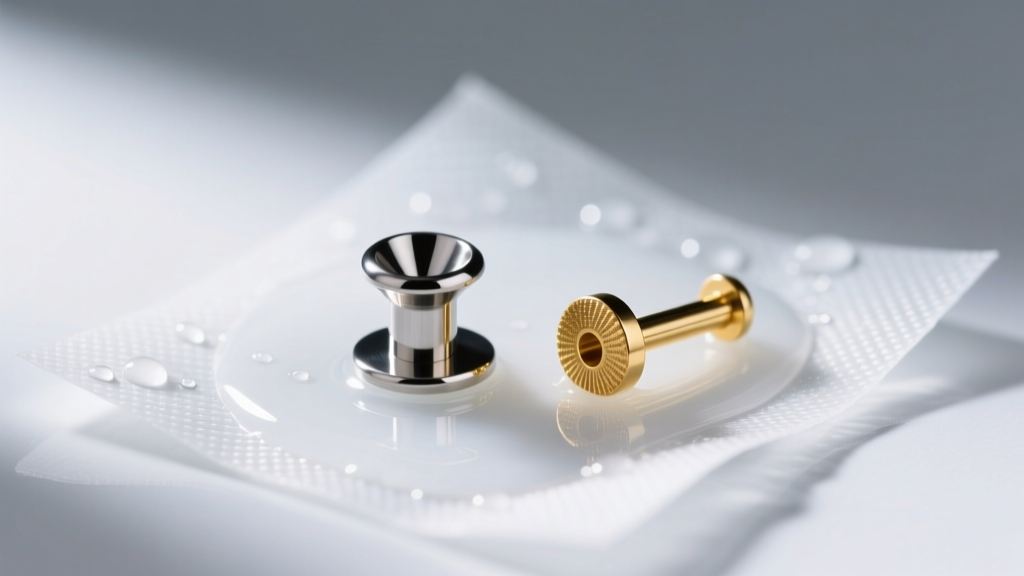
When building a curated ear stack or managing a fresh piercing, the thickness of your jewelry post plays a massive role in both aesthetics and tissue health. While the visual difference between jewelry posts might seem negligible to the naked eye, the biological impact on your earlobe is profound. When browsing piercing forums, you will often see beginners asking about the difference bt 18 and 20 gauge earring posts, usually because they are experiencing unexpected irritation, migration, or difficulty cleaning their piercings. As of 2026, dermatological and professional piercing guidelines emphasize that understanding gauge measurements is the first step toward a flawless, infection-free healing process and long-term ear health.
The Core Measurements: 18g vs. 20g Explained
To properly care for your piercings, you must first understand the physical dimensions of the jewelry sitting inside your fistula (the tunnel of skin that forms around a piercing). The gauge system is inverse, meaning the higher the number, the thinner the metal.
- 18 Gauge (1.02mm): This is the modern gold standard for standard lobe piercings and many cartilage placements. It provides enough structural integrity to support decorative tops without bending, while remaining comfortable for most earlobes.
- 20 Gauge (0.81mm): Often used for delicate earlobes, nose piercings, or secondary upper-lobe holes. At just 0.81 millimeters thick, it is significantly more fragile and exerts higher localized pressure on the surrounding tissue.
That 0.21mm difference in diameter translates to a roughly 40% reduction in cross-sectional area. This drastic change in surface area directly dictates how your skin reacts to friction, weight, and daily cleaning routines.
Cross-Sectional Area and Tissue Tension
Because a 20g post has less surface area resting against the inside of the fistula, any downward pull—whether from a heavy earring backing, snagging on a towel, or sleeping on your side—concentrates that force onto a much smaller band of skin. This increased tension is the primary reason 20g earrings require a much gentler, more meticulous cleaning approach to avoid micro-tearing the delicate healing tissue.
Fistula Health and the "Cheese-Cutter" Effect
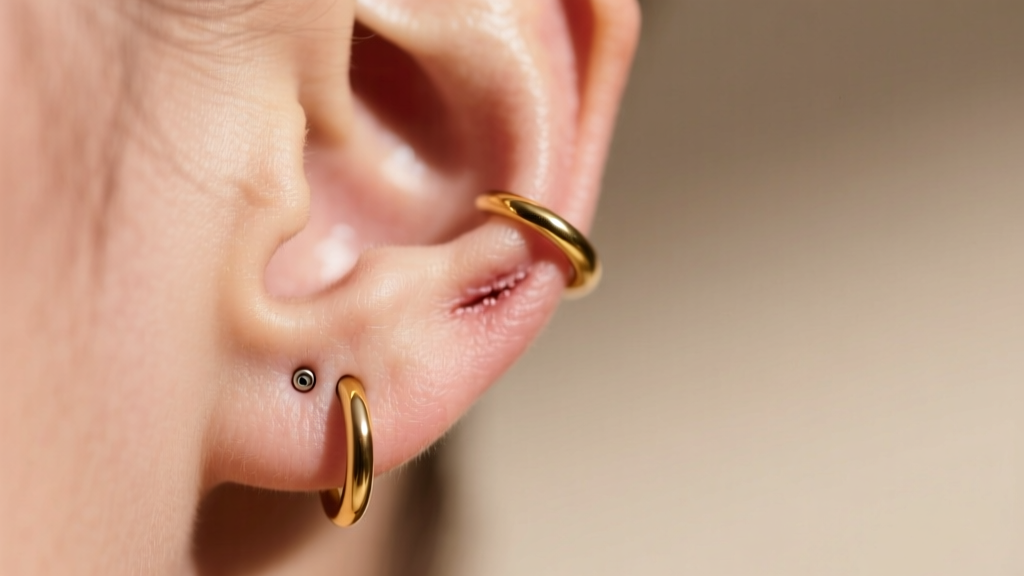
The most critical concept in earring maintenance is avoiding the "cheese-cutter effect." This phenomenon occurs when a thin wire (like a 20g or 22g post) is subjected to lateral pressure, causing it to slowly slice through the earlobe tissue, much like a wire cheese cutter gliding through a block of cheddar.
When a 20g earring migrates downward due to this effect, it creates an open micro-wound inside the fistula. If you are actively cleaning your ears with harsh chemicals or rotating the jewelry (an outdated 2010s practice that is now universally condemned by the Association of Professional Piercers), you will force bacteria and debris directly into these micro-tears. An 18g earring, being 1.02mm thick, distributes weight more evenly, vastly reducing the risk of migration and making the cleaning process significantly safer and more straightforward.
Step-by-Step Cleaning Protocols by Gauge
In 2026, the consensus among dermatologists and professional piercers is that you must separate ear cleaning (caring for the fistula) from jewelry cleaning (maintaining the metal). Here is how your gauge size alters the protocol:
| Maintenance Factor | 18 Gauge (1.02mm) | 20 Gauge (0.81mm) |
|---|---|---|
| Fistula Cleaning | Standard 0.9% sterile saline spray twice daily. | Standard 0.9% sterile saline spray; avoid any physical rotation. |
| Jewelry Removal | Easy to grip and remove for deep cleaning once healed. | Prone to bending; requires careful handling to avoid warping the post. |
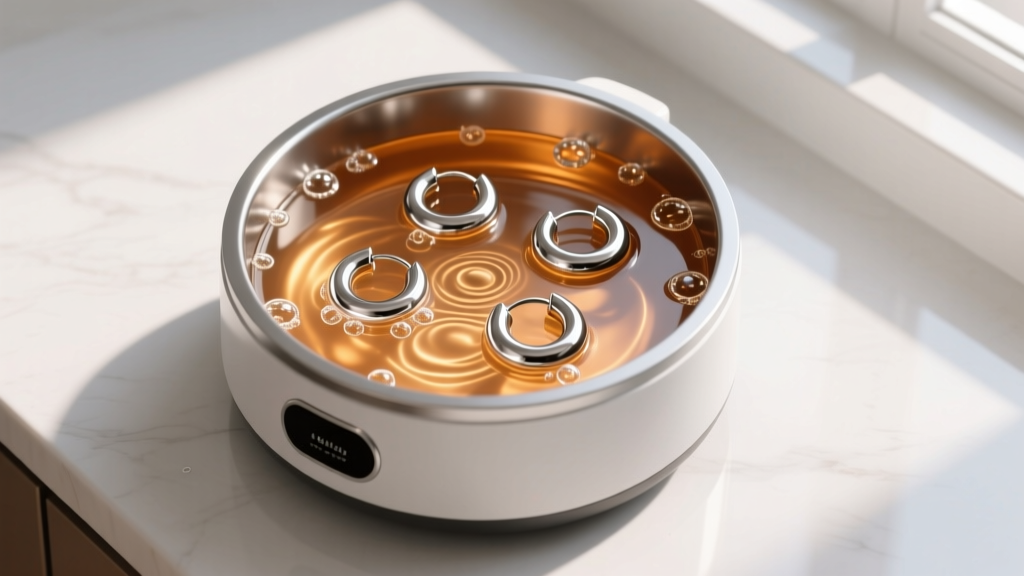
| Deep Cleaning Method | Ultrasonic cleaner (40kHz) or warm soapy soak. | Gentle soapy soak only; ultrasonic vibrations can weaken thin 20g solder points. |
| Drying Technique | Pat dry with disposable non-woven gauze. | Use a hair dryer on the cool setting to avoid snagging thin wires on gauze. |
The 0.9% Sterile Saline Rule
Regardless of whether you wear 18g or 20g, your daily fistula flush should consist solely of sterile 0.9% sodium chloride wound wash with zero additives. Avoid solutions containing benzalkonium chloride, rubbing alcohol, or hydrogen peroxide. These harsh astringents destroy the newly forming epithelial cells inside the fistula, leading to crust buildup and delayed healing. Spray the saline directly onto the entry and exit points, let it sit for 30 seconds to soften any lymphatic crusties, and gently wipe away with a sterile gauze pad.
The Role of Jewelry Backings in Hygiene
A massive, often overlooked factor in earring maintenance is the backing mechanism. Traditional "butterfly" or "push" backs are notorious hygiene hazards. They feature tiny friction grooves that trap sebum, dead skin cells, shampoo residue, and bacteria.
With 20g butterfly backs, the grooves are so minuscule that they are nearly impossible to clean thoroughly without a specialized ultrasonic bath, and the thin post bends easily when you try to pry the tight backing off. Conversely, the modern standard for 18g earrings is the internally threaded or threadless flat-back labret. These backings sit flush against the earlobe, eliminating the dark, damp pocket behind the ear where bacteria thrive. If you are struggling with persistent odor or irritation bumps behind your lobes, upgrading from a 20g butterfly post to an 18g titanium flat back is often the immediate cure.
Material Considerations for Sensitive Healing Earlobes
The thinner the gauge, the more critical the material purity becomes. A 20g post has less surface area, meaning any nickel leaching from low-quality surgical steel is concentrated into a smaller area of tissue, drastically increasing the likelihood of contact dermatitis.
- ASTM F-136 Implant-Grade Titanium: The absolute best choice for both 18g and 20g healing piercings. It is completely nickel-free, highly polished, and biocompatible.
- 14k or 18k Solid Gold: Excellent for healed 20g piercings, provided it is alloyed for body safety (nickel-free). Avoid gold-plated jewelry, as the thin plating will wear off rapidly on a 0.81mm post due to high friction.
- 316L Surgical Steel: Acceptable for fully healed 18g lobes, but not recommended for fresh piercings or those with known metal sensitivities.
Troubleshooting Common Gauge-Related Irritation Bumps
Irritation bumps (hypertrophic scarring) are localized swellings that form when the fistula is subjected to chronic trauma. According to dermatological resources like the American Academy of Dermatology, these are not infections, but rather the body's inflammatory response to friction.
When to Upsize or Downsize
If you are wearing a 20g earring and notice a persistent bump forming at the exit hole, the post is likely too thin to support the weight of the jewelry's decorative end, causing an angle that creates uneven pressure. The solution is to upsize to an 18g post. The thicker 1.02mm metal will stabilize the jewelry, straighten the angle of the fistula, and allow the bump to dissipate over a few weeks of proper saline care. Conversely, if an 18g post feels overly tight, causes throbbing, or leaves a deep indent in the skin, you may have a naturally tight fistula that requires a downsizing to 20g, paired with a lightweight, minimalist stud to prevent the cheese-cutter effect.
Expert Takeaways for Long-Term Ear Health
Ultimately, the choice between 18g and 20g earrings extends far beyond what fits into your piercing hole. It dictates how you handle, clean, and maintain your jewelry for years to come. For standard earlobes, 18g remains the superior choice for structural integrity, ease of cleaning, and long-term tissue stability. However, if your anatomy requires 20g, you must compensate by choosing ultra-lightweight jewelry, utilizing threadless flat backs to maximize hygiene, and handling the delicate posts with extreme care during your weekly deep-cleaning routines. By respecting the physics of gauge sizes and adhering to modern, evidence-based aftercare protocols, you ensure your ear stack remains as healthy as it is stylish.


