The Painting Pearl Earring: Technical Jewelry Guide
Discover the technical jewelry secrets behind the iconic painting pearl earring, from baroque nacre refraction to 17th-century wire metallurgy.

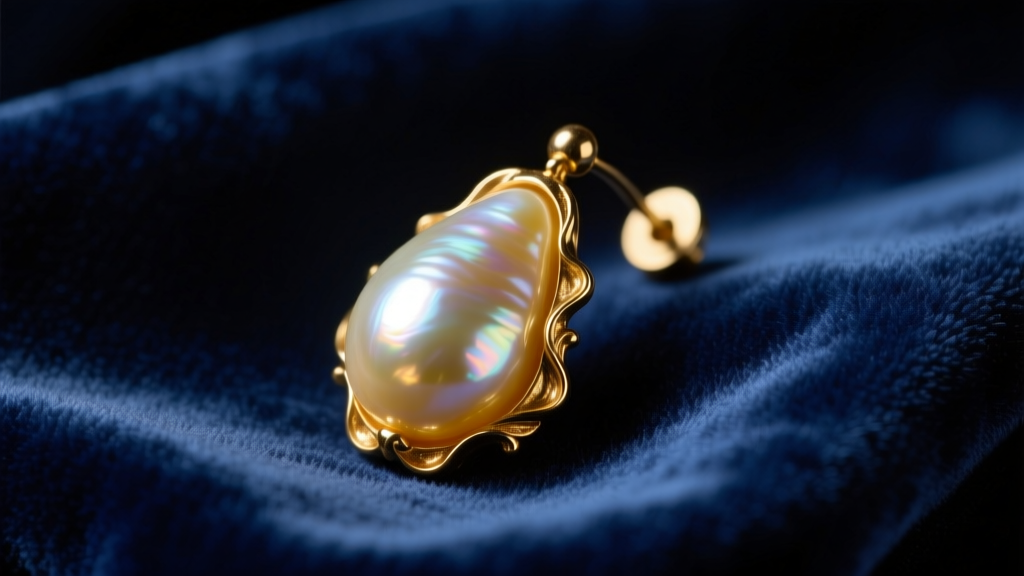
Johannes Vermeer’s masterpiece, Girl with a Pearl Earring (c. 1665), has captivated art historians and jewelers alike for centuries. In the modern fine jewelry market, the term 'painting pearl earring' refers to the meticulous technical recreation of this iconic teardrop pearl, as well as the artisanal practice of hand-painting enamel to mimic its luminescence. Translating a two-dimensional oil paint illusion into a three-dimensional, wearable object requires a profound understanding of gemological optics, historical metallurgy, and structural engineering. This expert deep dive explores the exact specifications, material grades, and bench-jewelry techniques required to craft a historically accurate and structurally sound painting pearl earring in 2026.
The Optical Physics of the Vermeer Pearl
Vermeer used merely a few strokes of white and yellow lead paint to create the illusion of a massive, luminous pearl catching the light from a nearby window. To replicate this optically in physical form, jewelers must understand the microscopic structure of nacre. A pearl’s luster and 'orient' (the iridescent play of colors) are dictated by the diffraction of light through microscopic platelets of aragonite, a crystalline form of calcium carbonate.
These aragonite platelets are approximately 0.5 micrometers thick and are bound together by an organic protein called conchiolin. When light enters the pearl, it bounces between these layers. The refractive index of aragonite ranges from 1.53 to 1.69. To achieve the deep, mirror-like luster depicted in the painting, a modern painting pearl earring must utilize a pearl with a high nacre thickness and tightly packed, uniform aragonite layers. According to the Gemological Institute of America (GIA), luster is the most critical value factor for any pearl, and achieving the 'Vermeer glow' requires selecting stones with an 'Excellent' luster grade, where reflections appear sharp, bright, and distinct.
Sourcing the Perfect Baroque Drop
The pearl in the painting is not a perfect sphere; it is a heavy, teardrop-shaped baroque pearl. Historically, these were sourced from the Persian Gulf or the Americas via Dutch East India Company trade routes. Today, bench jewelers have three primary material options for crafting a high-quality painting pearl earring replica.
| Pearl Type | Average Size | Nacre Thickness | Luster Profile | 2026 Price Range (Per Stone) |
|---|---|---|---|---|
| White South Sea Baroque | 13mm - 16mm | 2.0mm - 4.0mm | Deep, satiny, high orient | $400 - $1,200 |
| Freshwater Keshi Drop | 10mm - 14mm | 100% Solid Nacre | Sharp, metallic, bright | $80 - $250 |
| Majorica Glass (Coated) | 14mm - 18mm | 0.1mm (Essence d'Orient) | Uniform, glassy, flat | $40 - $90 |
For the most historically and optically accurate recreation, a White South Sea Baroque pearl is the superior choice. Its large size and thick nacre produce the exact soft, deep glow seen in 17th-century portraiture. Freshwater Keshi pearls offer a more affordable, highly durable alternative, though their luster tends to be sharper and more metallic than the soft satiny finish Vermeer painted.
Metallurgy of the 17th-Century Shepherd Hook
The metalwork supporting the pearl is just as critical as the gemstone itself. In the 1650s and 1660s, ear wires were typically forged from high-karat gold (often 20k or 22k) or brass alloys. These metals are incredibly soft, which allowed artisans to draw them into very thin wires, but they lacked the yield strength required to support a heavy 14mm baroque pearl without bending.
Wire Gauge and Structural Integrity
When engineering a modern painting pearl earring, jewelers must balance historical visual accuracy with modern structural mechanics. The ear wire depicted in the painting appears to be roughly 22-gauge (0.64mm in diameter). However, a 22-gauge 18k gold wire will easily deform under the 4-gram weight of a large South Sea pearl, leading to a high risk of the earring slipping out of the lobe.
- 22-Gauge (0.64mm): Historically accurate but structurally compromised for heavy drops. Best reserved for lightweight enamel or hollow glass replicas.
- 20-Gauge (0.81mm): The ideal compromise. Provides a delicate visual profile while offering sufficient tensile strength when work-hardened.
- 18-Gauge (1.02mm): Recommended for modern, everyday wear, particularly if the earring features a heavy diamond-set cap or bail.
To ensure the ear wire maintains its shape, modern jewelers use a process called annealing followed by controlled work-hardening. The wire is heated to relieve internal stresses, shaped into the shepherd's hook, and then lightly tumbled or hammered to align the metal's crystalline structure, increasing its stiffness without making it brittle.
The Enamel Alternative: Literal 'Painting'
Some contemporary artisans interpret the 'painting pearl earring' concept literally, utilizing vitreous enamel to paint the pearl's optical effects onto a metal substrate. This technique, known as en ronde bosse (enamel in the round), was highly popular in the Renaissance and 17th centuries.
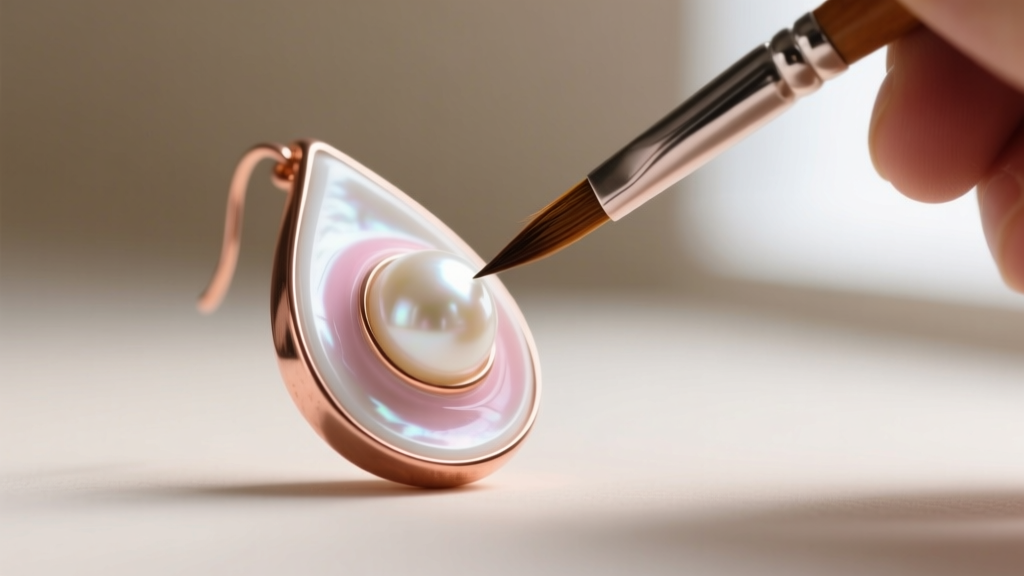
To mimic the translucent depth of a pearl, the jeweler begins with a copper or silver teardrop base. The metal is first coated with an opaque white enamel flux and fired in a kiln at approximately 800°C. Subsequent layers of opalescent white and soft pink enamel powders are carefully painted on using a fine sable brush. The final layer often includes a microscopic dusting of metallic silver foil beneath a clear enamel glaze, which catches the light and simulates the aragonite diffraction of a real pearl. This method requires immense technical skill, as the thermal expansion coefficients of the enamel and the metal base must match perfectly to prevent crazing or cracking during the cooling process.
Authentication and Quality Control
Whether you are sourcing a natural baroque pearl or an enameled replica, rigorous quality control is essential. The Mauritshuis museum, home to the original painting, notes that the pearl's defining characteristic is its interaction with light—specifically, the sharp white highlight at the top and the softer, diffused reflection at the bottom.
When inspecting a physical painting pearl earring, follow this technical checklist:
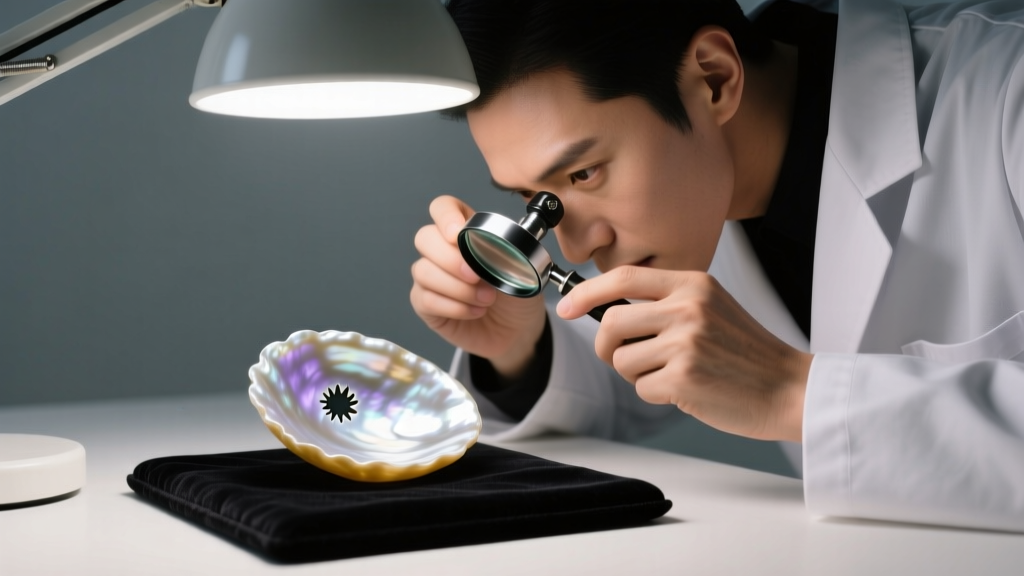
- Drill Hole Inspection: Use a 10x jeweler's loupe to examine the drill hole. A real pearl will show sharp, clean edges where the nacre meets the hole. Glass or coated imitations will often show chipping, peeling, or a rounded, melted edge around the drill site.
- The Orient Test: Roll the pearl slowly under a daylight-equivalent LED lamp. A high-quality baroque pearl will display 'orient'—a shifting rainbow of colors just beneath the surface. If the reflection remains static and purely white, the stone is likely coated or synthetic.
- Ear Wire Tension: Gently pull the shepherd's hook open. It should offer firm resistance and snap back precisely to its original shape. If it remains slightly open, the wire has not been properly work-hardened and poses a security risk.
Conclusion
Crafting the perfect painting pearl earring is an exercise in bridging the gap between fine art and materials science. It demands more than just sourcing a large stone; it requires a masterful understanding of how light interacts with aragonite, how historical wire gauges can be adapted for modern durability, and how centuries-old enameling techniques can trick the human eye. By adhering to these strict technical parameters, modern jewelers can successfully capture the timeless, luminous magic that Vermeer immortalized on canvas over three centuries ago.


