2026 Earring Trends: Budget vs Investment Value Guide
Discover which 2026 earring trends offer the best long-term value. We analyze material costs, price ranges, and budget hacks for top styles.

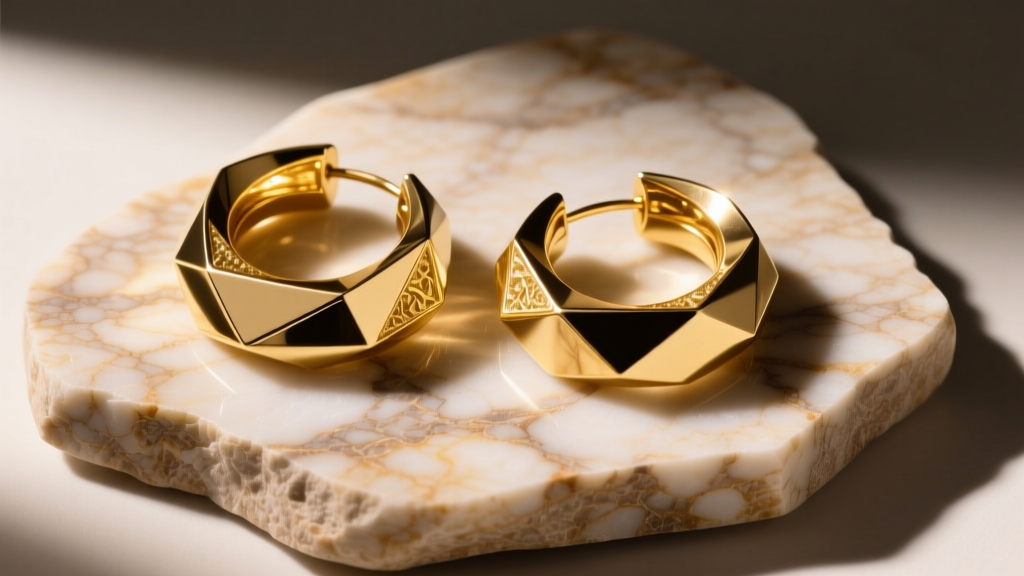
The 2026 Earring Trends Landscape: Expression Meets Economics
The macroeconomic climate of 2026 has fundamentally shifted how consumers approach jewelry. We are moving away from the ultra-minimalist 'quiet luxury' of previous years into an era of 'expressive structuralism.' However, with inflation impacting discretionary spending, the modern collector is no longer just asking, 'Is this beautiful?' They are asking, 'Is this a sound financial decision?' Understanding the intersection of the latest 2026 earring trends and long-term material value is crucial for building a curated ear stack that doesn't depreciate the moment you click checkout.
According to market analysts at Forbes Jewelry, consumers are increasingly utilizing the 'Cost-Per-Wear' (CPW) metric to justify higher upfront costs for versatile pieces, while strictly capping budgets for hyper-trendy, seasonal silhouettes. In this comprehensive guide, we break down the top three earring trends dominating 2026, analyzing their material realities, pricing tiers, and ultimate investment value.
Trend 1: Oversized Sculptural Hoops (The Weight vs. Value Dilemma)
Sculptural, free-form hoops are the undisputed heavyweight champions of 2026 earring trends. These pieces feature organic, molten-looking textures and asymmetrical curves. However, their physical weight presents a massive value trap for unwary buyers. Cheap, solid brass or copper-alloy hoops often weigh upwards of 20 grams per ear. This triggers the 'cheese-cutter effect,' where the sheer gravity of the earring slowly tears through the earlobe piercing over time, causing irreversible tissue damage.
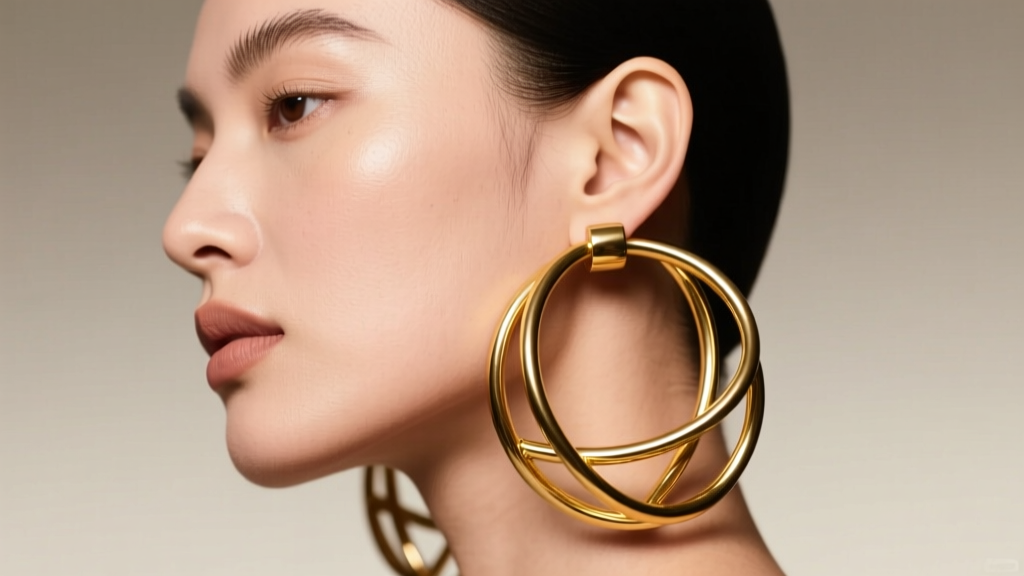
To safely wear oversized hoops, the earring must weigh under 12 grams per ear. Achieving this in solid 14k gold requires expensive hollow-tube casting techniques, pushing retail prices above $800. So, how do you capture this 2026 trend on a budget without sacrificing your earlobe integrity?
Material Breakdown & Pricing Tiers
| Material Grade | Avg. Weight (50mm Hoop) | Price Range | Longevity & Value |
|---|---|---|---|
| Solid Brass (Plated) | 18 - 24g (Dangerous) | $25 - $60 | Poor. Plating wears off; heavy weight damages lobes. |
| Sterling Silver Vermeil | 14 - 18g (Heavy) | $85 - $150 | Fair. Silver is lighter than brass, but still heavy for oversized styles. |
| 14k Gold-Filled (Hollow) | 6 - 9g (Safe) | $120 - $220 | Excellent. Gold-filled offers 5-10 years of wear at a fraction of solid gold cost. |
| Solid 14k Gold (Hollow-Tube) | 5 - 8g (Ideal) | $650 - $1,200 | Investment Grade. Retains intrinsic metal value; lifetime durability. |
Expert Verdict: For sculptural hoops, avoid cheap plated brass entirely. The best budget-to-value ratio in 2026 is 14/20 gold-filled hollow tubing. It provides the lightweight comfort of solid gold with a price tag that respects a moderate budget.
Trend 2: Bi-Metallic Ear Cuffs & Constellation Piercings
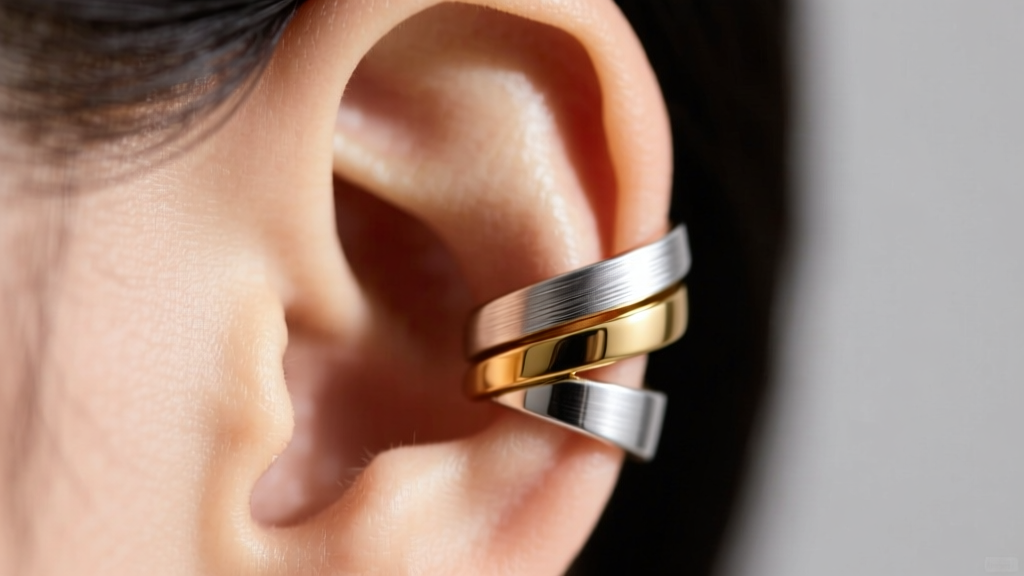
The non-pierced ear cuff has evolved. The 2026 earring trends forecast highlights 'bi-metallic' cuffs—pieces that seamlessly blend yellow gold and oxidized silver or rose gold in a single, continuous wire. These are designed to mimic the look of a fully curated 'constellation' piercing without the commitment of multiple needle punctures.
The primary failure mode of budget ear cuffs is structural fatigue and skin discoloration. Cheap manufacturers use copper-nickel alloys that lack the 'spring-back' memory required to grip the helix cartilage securely. Furthermore, the copper reacts with sweat to create copper chloride, leaving a green stain on the ear. According to the Gemological Institute of America (GIA), base metal alloys are notorious for causing contact dermatitis, especially on the sensitive, thin skin of the upper ear.
The Engineering of a Secure Ear Cuff
If you are buying a bi-metallic ear cuff, the base wire must be crafted from a material with high tensile strength and biocompatibility. Look for brands utilizing ASTM F-136 implant-grade titanium as the core wire, even if it is PVD-coated in gold and silver tones. Titanium provides the exact amount of tension needed to grip a 16-gauge (1.29mm) or 18-gauge (1.02mm) helix curve without permanently bending out of shape when removed.
Pro-Tip for Cuff Sizing: Never buy 'one-size-fits-all' adjustable cuffs for cartilage. The upper helix requires a tight 18g or 16g inner diameter (usually 8mm to 10mm). Buy cuffs specifically sized to your cartilage gauge to prevent loss.
Trend 3: Asymmetrical Drop Earrings (The Mismatched Aesthetic)
Asymmetry is a cornerstone of 2026 earring trends, with consumers pairing a heavy, gemstone-laden drop on one side with a minimalist stud or huggie on the other. This trend is a massive win for budget-conscious collectors because it breaks the traditional 'pair' pricing model.
Historically, jewelers forced consumers to buy matching pairs, effectively doubling the cost. In 2026, direct-to-consumer artisans and progressive brands are selling 'singles.' This allows you to allocate your budget strategically: splurge on a high-impact, solid gold and ethically sourced sapphire drop for your dominant side, and save by purchasing a simple, 316L surgical steel or titanium huggie for the other.
Navigating Steel Grades on a Budget
When buying budget-friendly minimalist pieces to balance an expensive drop, you will frequently encounter 'stainless steel.' Be highly critical of this term. Much of the dropshipped stainless steel jewelry is 304-grade, which contains higher levels of nickel and can cause allergic reactions in newly healed or sensitive piercings. Always verify that the budget piece is crafted from 316L surgical steel, which has a lower nickel content and higher corrosion resistance, making it a safe, ultra-budget alternative to titanium for secondary piercings.
The 2026 Value Matrix: Where to Splurge and Save
To maximize your jewelry budget this year, you must categorize trends by their lifespan and material requirements. Below is our proprietary Value Matrix to help you decide where to deploy capital and where to exercise extreme frugality.
| 2026 Trend | Budget Strategy (Save) | Investment Strategy (Splurge) | Expected Lifespan |
|---|---|---|---|
| Sculptural Molten Hoops | 14k Gold-Filled Hollow Tube | Solid 14k/18k Gold (Recycled) | 5-10 Years (Filled) / Lifetime (Solid) |
| Bi-Metallic Ear Cuffs | PVD Titanium over Sterling | Solid Two-Tone Gold Soldered | 2-4 Years (PVD) / Lifetime (Solid) |
| Asymmetrical Drops | 316L Steel Huggie + Single Gem Drop | Matching Platinum & Diamond Set | Decades (High intrinsic value) |
| Resin & Enamel Studs | Buy Costume/Plated (Trend will fade) | N/A (Do not invest in resin) | 1-2 Seasons (Strictly fast-fashion) |
Expert Sourcing Tips for the 2026 Market
Finding true value in the 2026 earring trends landscape requires looking beyond traditional mall jewelers and mega-brands. Here are three actionable sourcing strategies for the modern collector:
- Direct-to-Caster Artisans: Platforms like Etsy have filters for 'Solid Gold' and specific karat weights. By purchasing directly from independent casters, you eliminate the 300% retail markup applied by traditional boutiques. Look for sellers who provide the exact gram weight of their pieces in the description.
- Estate and Vintage Markets: The 'molten' and 'organic' gold textures trending in 2026 were heavily popularized in the 1970s and 1980s. Sourcing vintage 14k gold hoops from estate sales often costs 30-40% less than buying newly cast equivalents, while offering superior, heavy-duty vintage craftsmanship.
- The FTC Vermeil Check: If you are buying gold vermeil (gold plated over sterling silver), the Federal Trade Commission (FTC) dictates that the gold layer must be at least 2.5 microns thick to be legally sold as vermeil. If a brand cannot confirm their micron thickness, it is likely 'flash plated' (under 0.5 microns) and will wear through to the silver base within weeks.
Conclusion: Curating with Intent
The 2026 earring trends offer a thrilling mix of bold self-expression and structural innovation. However, true style is not just about wearing what is current; it is about wearing what is enduring. By understanding the metallurgy behind your jewelry—respecting gauge sizes, demanding specific steel and titanium grades, and calculating the true cost-per-wear—you can navigate this year's trends without compromising your financial goals or your ear health. Build your stack with intent, prioritize biocompatible materials for your cartilage, and let your budget dictate the medium, not the masterpiece.


