2026 Earring Trends: The Material Science Behind the Styles
Discover the 2026 earring trends driving the shift toward implant-grade titanium, niobium, and recycled gold. Compare properties and costs.

The Biocompatibility Revolution in 2026 Earring Trends
When we analyze the most prominent earring trends of 2026, the conversation has decisively shifted from purely aesthetic silhouettes to the fundamental material science of the jewelry itself. Today’s consumers and professional piercers are demanding hyper-personalization, extended wear comfort, and absolute biocompatibility. The era of mystery-metal fashion jewelry causing contact dermatitis is over. Instead, the market is being driven by a deep understanding of metallurgy, alloy composition, and surface finishing. Whether you are curating a curated ear project or simply looking for everyday studs that will not irritate your lobes, understanding the atomic and structural properties of your earrings is no longer optional—it is the baseline of modern jewelry literacy.
The Association of Professional Piercers (APP) has long advocated for specific material standards for fresh piercings, but in 2026, these standards have become the expectation for healed piercings and fashion jewelry alike. According to the Association of Professional Piercers (APP), the porosity, polish, and elemental makeup of a metal dictate how the human immune system interacts with it. This guide breaks down the exact materials driving this year's trends, comparing their tensile strength, allergen profiles, and real-world pricing.
Implant-Grade Titanium vs. Commercial Alloys
The undisputed heavyweight champion of the 2026 earring trends for sensitive ears and fresh piercings is implant-grade titanium. However, not all titanium is created equal. The jewelry industry frequently uses the word 'titanium' as a catch-all, but there is a vast difference between commercially pure titanium (ASTM B265) and implant-grade titanium (ASTM F136).
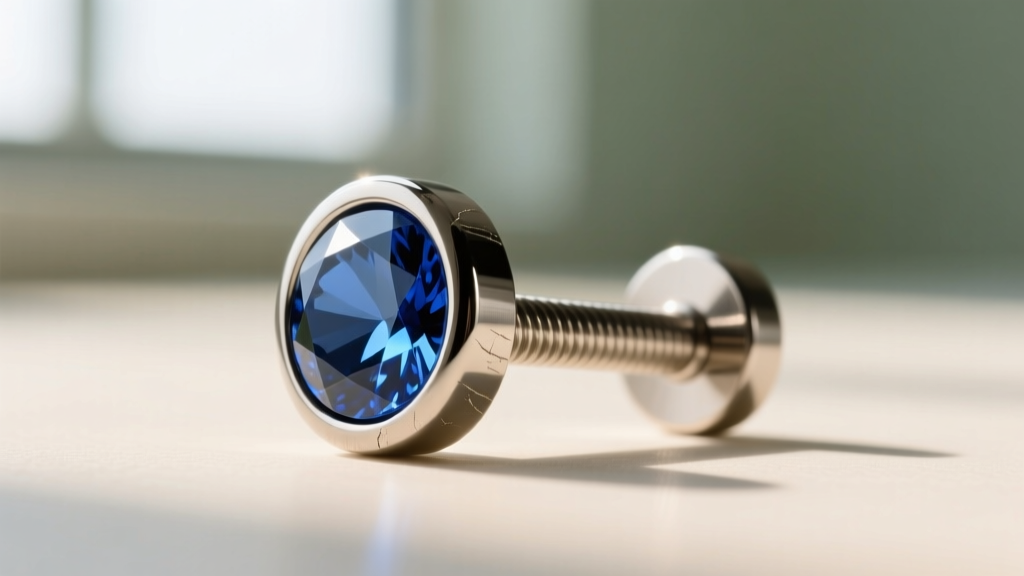
Implant-grade titanium, specifically Ti-6Al-4V ELI (Extra Low Interstitial), is an alloy containing 6% aluminum and 4% vanadium, with strictly controlled, ultra-low levels of oxygen, nitrogen, carbon, and iron. This specific composition provides superior fracture toughness and fatigue strength compared to commercially pure titanium. More importantly for jewelry, it can be polished to a flawless mirror finish that resists bacterial adhesion and biofilm formation. When you see high-end brands charging $40 to $85 for a single titanium labret stud or huggie, you are paying for the F136 certification, the internal threading or threadless pin engineering, and the mirror-polish surface treatment.
The Niobium Alternative
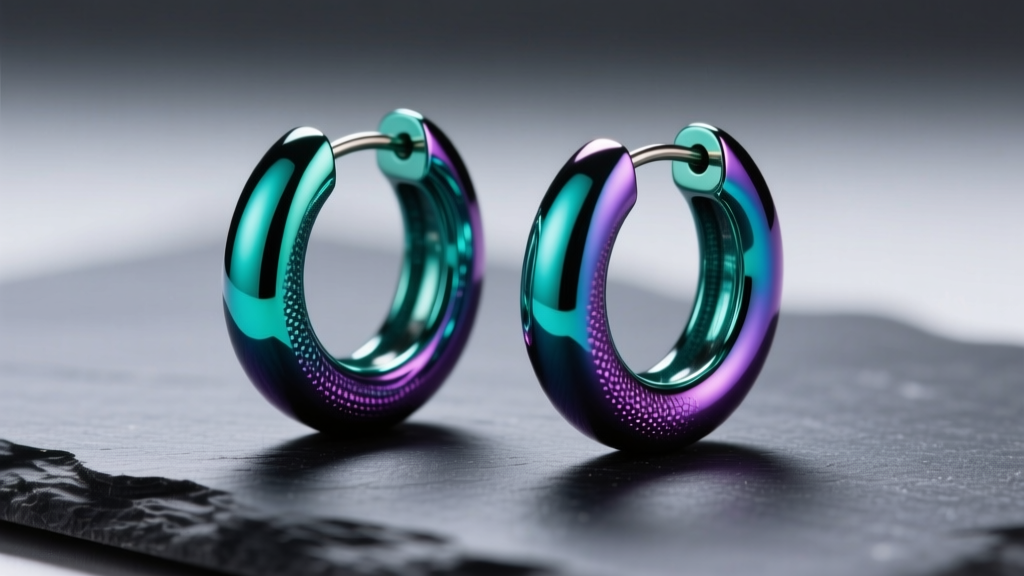
Niobium is another elemental metal dominating the biocompatible jewelry space. Unlike titanium, niobium is an element, not an alloy, which means it cannot be certified to an 'implant-grade' alloy standard. However, its biocompatibility is exceptional. Niobium is highly malleable and, most notably, can be anodized using electrical voltage to create a permanent, non-toxic oxide layer in a spectrum of vibrant colors. A voltage of 15V yields a rich purple, while 90V produces a vivid green. Because anodizing alters the surface structure rather than applying a foreign plating, the color will never chip or flake, making niobium seamless rings and huggies a staple in 2026's colorful cartilage stacking trends.
Precious Metal Alloys: Beyond the Karat Stamp
While biocompatible base metals rule the piercing studio, precious metals remain the cornerstone of luxury fashion earrings. The 2026 earring trends heavily feature recycled 14k and 18k gold, driven by eco-conscious consumerism. But understanding gold requires looking past the karat stamp and examining the alloy matrix. Pure 24k gold is too soft for functional earring posts, clasps, or prongs; it will bend under minimal pressure and lose grip on gemstones.
To create durable jewelry, gold is alloyed with metals like copper, silver, zinc, and sometimes nickel or palladium. The Gemological Institute of America (GIA) notes that 14k gold contains exactly 58.3% pure gold, with the remaining 41.7% consisting of these strengthening alloys. The specific ratio of copper to silver determines whether the gold will present as yellow, rose, or white. Rose gold achieves its signature blush through a higher copper content, which also inherently increases the metal's tensile strength and scratch resistance.
The Nickel Directive and White Gold
White gold presents a unique challenge in material science. Historically, nickel was used to bleach the yellow hue out of gold. However, nickel is a primary sensitizer, and prolonged exposure can trigger severe allergic contact dermatitis. In 2026, reputable jewelers strictly adhere to the EU Nickel Directive, which limits nickel migration from jewelry to less than 0.2 micrograms per cm² per week. Modern high-quality white gold is instead alloyed with palladium or manganese, and finished with a thick rhodium plating. If you have a known nickel allergy, always verify that your white gold earrings are palladium-alloyed or opt for platinum, which is naturally white and inherently hypoallergenic.
| Material | Standard / Composition | Nickel Content | Best Application | 2026 Avg. Price Range |
|---|---|---|---|---|
| Implant-Grade Titanium | ASTM F136 (Ti-6Al-4V ELI) | 0% (Nickel-Free) | Fresh piercings, daith, rook, lobe | $25 - $85 |
| Niobium | Elemental (Anodized) | 0% (Nickel-Free) | Seamless rings, huggies, cartilage | $20 - $50 |
| 14k Yellow Gold | 58.3% Au, Cu, Ag, Zn | Typically 0% | Healed lobes, helix, fine dangles | $90 - $350 |
| 18k White Gold | 75% Au, Pd, Ag | 0% (if Pd alloyed) | High-end studs, diamond settings | $250 - $800+ |
| Platinum | 95% Pt, 5% Ru or Ir | 0% (Nickel-Free) | Heirloom pieces, heavy tension sets | $400 - $1,200+ |
Non-Metallic Innovations: Borosilicate Glass and Bio-Resins
The 2026 earring trends are not limited to metals. For stretched lobes and healing cartilage, borosilicate glass has emerged as a premier material. Glass is completely non-porous, inert, and can be sterilized in an autoclave. Unlike acrylic, which can off-gas toxic chemicals and harbor bacteria in microscopic scratches, high-quality borosilicate glass is smooth, heavy, and chemically stable. Glass ear weights and tapers are increasingly popular for their ability to provide gentle, even stretching without the risk of allergic reactions.
Simultaneously, advanced bio-compatible resins are being utilized for oversized, architectural statement earrings. Traditional heavy brass or bronze dangles can cause lobe tearing and migration over time due to their density. Modern bio-resins, often reinforced with carbon fiber or fiberglass matrices, allow designers to create massive, voluminous ear cuffs and drop earrings that weigh only a fraction of their metallic counterparts. This material innovation directly enables the 'maximalist silhouette' trend of 2026, prioritizing dramatic visual impact without sacrificing the structural integrity of the earlobe.
Structural Integrity: How Tensile Strength Shapes Silhouettes
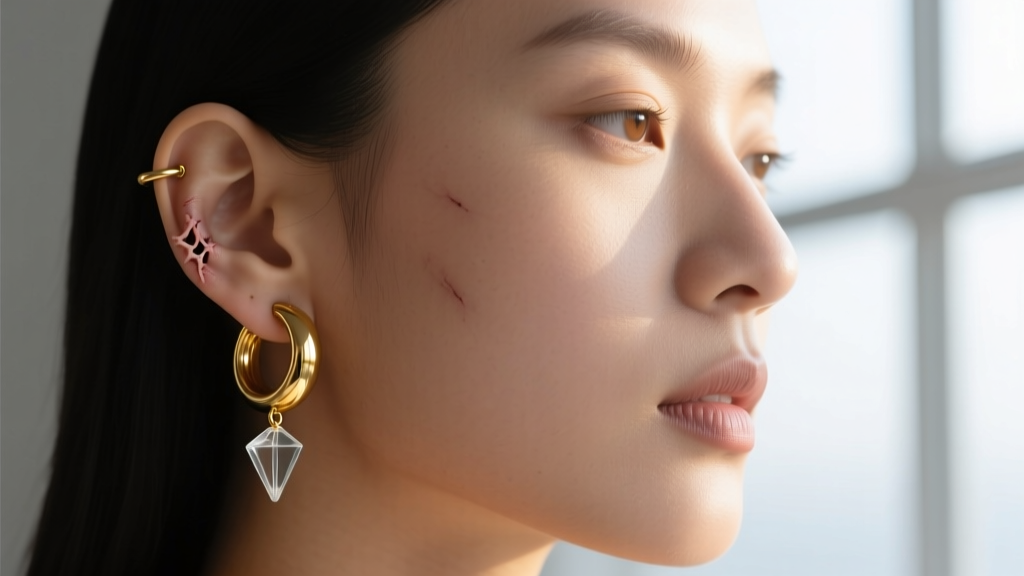
Material properties directly dictate what shapes are physically possible in jewelry design. The micro-hinge mechanisms seen in 2026's trending huggie hoops require metals with high yield strength to prevent the hinge pin from warping during daily opening and closing. Platinum and high-palladium white gold excel here, allowing for incredibly tiny, precise mechanical components that will not fail over thousands of cycles.
Conversely, the trend of ultra-delicate, micro-pave diamond ear threads relies on the malleability of 18k gold. Jewelers can burnish 18k gold tightly around microscopic diamonds without the need for traditional prongs, creating a seamless 'floating diamond' effect. However, this same malleability means 18k gold ear threads are prone to kinking if pulled too sharply through the fistula. Understanding the trade-off between tensile strength and malleability allows buyers to select the right metal for their specific lifestyle and wearing habits.
Piercing Location and Gauge Requirements
Finally, material selection must be paired with correct gauge sizing to ensure proper tissue health. The standard lobe piercing is typically 20g (0.81mm) or 18g (1.0mm) when done with a needle, though mall kiosk piercings often force 22g posts, which can cause the 'cheese-cutter effect' under the weight of heavy earrings. Cartilage piercings, such as the helix, conch, or tragus, are almost universally pierced at 16g (1.2mm) or 14g (1.6mm) to provide stability and reduce the risk of migration.
When shopping for 2026 earring trends, always verify the gauge of the post or wire. Inserting a 20g earring into a healed 16g cartilage piercing can cause the tissue to shrink around the thinner post, making it difficult to reinsert properly sized jewelry later. Furthermore, internal threading (where the screw is on the post, not the decorative end) or threadless tension-fit systems are vastly superior to external threading, which can tear delicate fistula tissue upon insertion. By aligning your material choices with precise anatomical gauges and high-quality engineering, you ensure your ear curation remains healthy, secure, and stylish for years to come.


