Sparkle Earring Guide: Moissanite vs Lab Diamond vs CZ Properties
Discover which gemstone delivers the ultimate sparkle earring effect. We compare moissanite, lab diamond, and CZ on brilliance, hardness, and price.

The Physics of Sparkle: Refractive Index and Dispersion
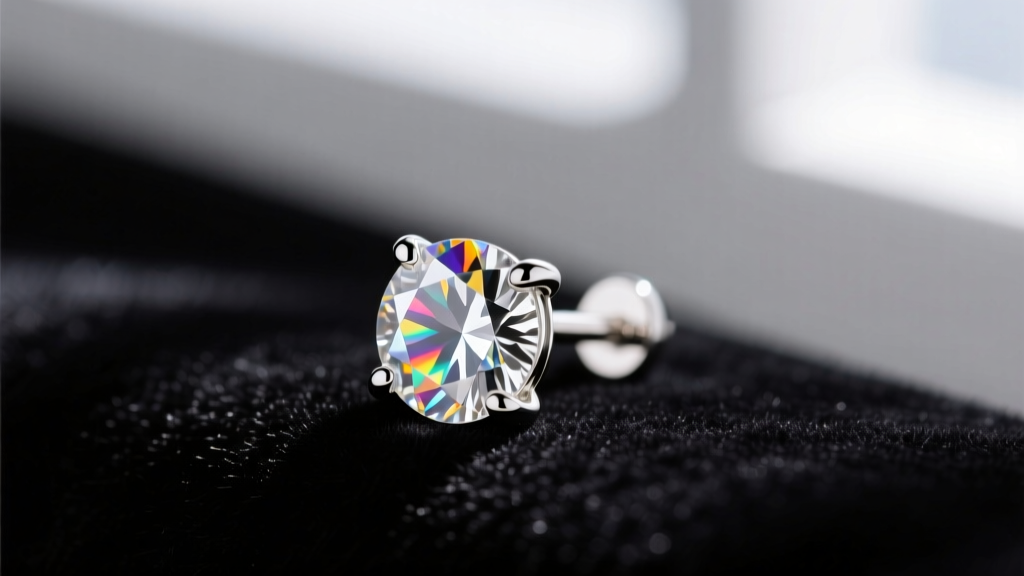
When shopping for the perfect sparkle earring, understanding the optical physics of gemstones is non-negotiable. The visual impact of any earring is dictated by two primary metrics: Refractive Index (RI), which measures brilliance (white light return), and Dispersion, which measures fire (the scattering of light into spectral colors). In 2026, consumers have unprecedented access to advanced lab-created stones, making it crucial to look beyond marketing jargon and focus on measurable gemological data. According to the Gemological Institute of America (GIA), a stone's cut quality interacts directly with its inherent RI to produce the scintillation that catches the eye across a room.
For earrings specifically, light performance is even more critical than in rings. Earrings sit vertically on the earlobe and are constantly in motion, meaning they catch ambient light from multiple angles. A stone with high dispersion will flash vibrant rainbow colors as the wearer moves, while a stone with high brilliance will emit a crisp, icy white flash. Let us break down the three dominant materials in the modern jewelry market to determine which truly earns the title of the ultimate sparkle earring.
Material Deep-Dive: Lab-Grown Diamonds
Lab-grown diamonds possess the exact same chemical, physical, and optical properties as mined diamonds. Composed of pure crystallized carbon, they remain the gold standard for traditionalists who want uncompromising durability and classic light performance.
- Refractive Index: 2.42
- Dispersion: 0.044
- Mohs Hardness: 10 (The hardest known natural material)
- Average Price (1.00 CTW Studs): $350 - $800
The primary advantage of a lab-grown diamond sparkle earring is its unmatched scratch resistance. With a Mohs hardness of 10, diamonds will never suffer from surface abrasion, ensuring that the facet edges remain razor-sharp for decades. Sharp facet edges are essential for crisp light return. However, because their dispersion (0.044) is relatively low compared to simulants, diamonds rely heavily on an 'Ideal' or 'Super Ideal' cut grade to maximize their sparkle. When purchasing, always demand a grading report from the IGI or GIA to verify the cut grade; a poorly cut lab diamond will look dead and glassy, regardless of its origin.
The Firepower Contender: Moissanite
Originally discovered in a meteor crater, moissanite (silicon carbide) is now exclusively lab-created for jewelry. It is famous for its intense 'fire,' which often leads to it being described as a 'disco ball' in direct sunlight.
- Refractive Index: 2.65 - 2.69 (Higher than diamond)
- Dispersion: 0.104 (2.4 times greater than diamond)
- Mohs Hardness: 9.25
- Average Price (1.00 CTW Studs): $80 - $180
Moissanite is doubly refractive, meaning light entering the stone is split into two rays. This creates a mesmerizing, kaleidoscopic effect that many prefer for a high-impact sparkle earring. However, this double refraction can cause a 'fuzzy' or 'sleepy' appearance in stones larger than 8mm. For earrings, sticking to the 6mm to 7.5mm range (approximately 0.75 to 1.25 carats per ear) ensures the stone remains crisp and optically sharp. As noted by Charles & Colvard, the pioneers of gem-quality moissanite, selecting a 'Hearts and Arrows' cut pattern in moissanite mimics the precise symmetry of a top-tier diamond, taming some of the chaotic rainbow flashes in favor of structured, elegant scintillation.
The Budget Option: Cubic Zirconia (CZ)
Cubic Zirconia is a synthetic crystalline substance made from zirconium dioxide. While it offers an accessible entry point into diamond simulants, its material properties make it a poor long-term investment for everyday fine jewelry.
- Refractive Index: 2.15 - 2.18
- Dispersion: 0.058 - 0.066
- Mohs Hardness: 8.0 - 8.5
- Average Price (1.00 CTW Studs): $15 - $40
The Inevitable Clouding Effect
While a brand-new CZ sparkle earring can look quite convincing, the material's fundamental flaw is its hardness. At 8.5 on the Mohs scale, CZ is susceptible to micro-scratches from everyday dust and debris (which often contains quartz, a 7 on the Mohs scale, but can pick up harder environmental particulates). Over 12 to 18 months of daily wear, these micro-abrasions accumulate on the facet junctions, scattering light chaotically and causing the stone to look cloudy, milky, and dull. Furthermore, CZ is highly oleophilic, meaning it attracts and holds onto skin oils and lotions much faster than diamond or moissanite, requiring constant cleaning to maintain any semblance of brilliance.
Head-to-Head Gemological Comparison
To make an informed decision, review the hard data below. This table synthesizes the optical and physical properties that dictate how each material performs as an earring over time.
| Material | Refractive Index (Brilliance) | Dispersion (Fire) | Mohs Hardness | Longevity & Maintenance |
|---|---|---|---|---|
| Lab Diamond | 2.42 | 0.044 | 10 | Exceptional; requires only routine degreasing. |
| Moissanite | 2.65 - 2.69 | 0.104 | 9.25 | Excellent; highly scratch-resistant, intense fire. |
| Cubic Zirconia | 2.15 - 2.18 | 0.058 - 0.066 | 8.0 - 8.5 | Poor; will cloud and scratch within 1-2 years. |
Optimizing Settings for Maximum Earring Sparkle
The gemstone is only half the equation; the metal setting dictates how much light can enter and exit the stone. When designing or purchasing a sparkle earring, consider the following structural mechanics:
'A diamond's brilliance is entirely dependent on light entering through the crown and reflecting back through the table. Any metal that obstructs the pavilion or covers the table will suffocate the stone's optical performance.' — American Gem Society Light Performance Guidelines.
- The 4-Prong Martini Setting: This is the undisputed champion for stud earrings. By using only four minimal prongs and a V-shaped basket, the martini setting exposes the maximum surface area of the stone's pavilion to ambient light. It also allows the earring to sit flush against the earlobe, preventing the dreaded 'droop' that plagues heavy earrings.
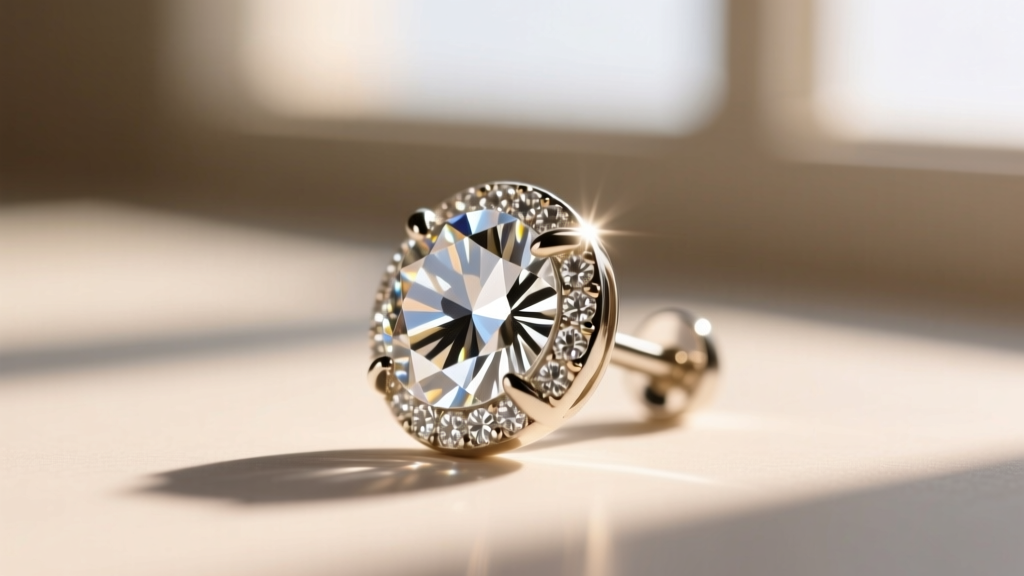
- The Halo Setting: If you want to maximize the perceived size and total light return of a smaller center stone (e.g., a 0.50 CTW center), a micro-pave halo adds an additional ring of scintillation. However, halos add physical width to the earring, which can look overwhelming on smaller earlobes or in secondary cartilage piercings.
- Bezel Settings for Cartilage: For helix, tragus, or conch piercings where hair snagging is a major concern, a bezel setting is mandatory for safety. Be aware that a full bezel can reduce light entry by up to 15%. To compensate, opt for a higher clarity moissanite or a super-ideal cut lab diamond to ensure the stone still performs well despite the metal enclosure.
Final Verdict: Choosing Your Sparkle Earring
If your priority is heirloom durability, traditional prestige, and a crisp, icy white brilliance, a lab-grown diamond is the superior choice. It will outlast generations without ever losing its sharp facet edges. If you prioritize sheer visual impact, intense rainbow fire, and exceptional value, a moissanite sparkle earring will outperform a diamond in terms of raw dispersion, provided you keep the size under 8mm to avoid the double-refraction fuzziness. Finally, cubic zirconia should be strictly reserved for temporary fashion jewelry or travel 'decoy' earrings, as its inevitable degradation makes it unsuitable for fine jewelry collections. Always pair your chosen stone with a 14k or 18k white gold setting with a rhodium flash to ensure the metal reflects as much white light back into the stone as possible, completing the ultimate sparkle effect.


