24k Earrings Gold: Technical Purity, Alloys, and Wearability Guide
An expert metallurgical breakdown of 24k earrings gold, analyzing Vickers hardness, structural failure modes, and biocompatibility for sensitive ears.

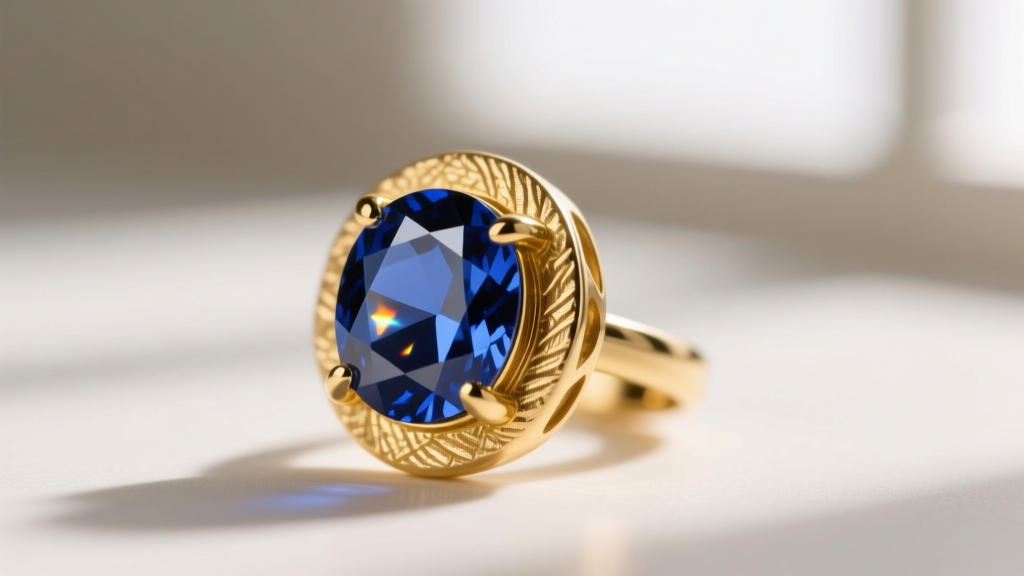
The Metallurgical Paradox of Pure Gold Jewelry
When consumers search for 24k earrings gold, they are typically driven by a desire for ultimate purity, rich color, and hypoallergenic safety. However, from a metallurgical and jewelry engineering perspective, 99.99% pure gold presents a profound structural paradox. Pure gold is exceptionally dense (19.32 g/cm³) and possesses a distinct, warm orange-yellow hue that cannot be replicated by lower karat alloys. Yet, its mechanical properties make it notoriously hostile to the functional requirements of modern earring hardware.
According to the Gemological Institute of America (GIA), 24k gold is defined by its absolute lack of alloying metals like copper, silver, or zinc. While this guarantees chemical inertness, it results in a Vickers Hardness (HV) of merely 25 to 30. To put this into perspective, a human fingernail registers at roughly 25 HV, and pure lead is around 5 HV. By contrast, standard 14k gold achieves an HV of 140-160. This extreme softness dictates everything about how 24k earrings must be designed, manufactured, and worn in 2026.
Structural Engineering: How 24k Earrings Are Actually Made
Because pure gold lacks the tensile strength to function as a structural wire, you will almost never find a genuine 24k gold earring post or ear wire. A standard 20-gauge (0.81mm) or 18-gauge (1.02mm) post made of pure gold would bend under the sheer weight of a 2-gram decorative head, and the shear stress of pushing a friction back (clutch) onto the post would permanently deform the metal.
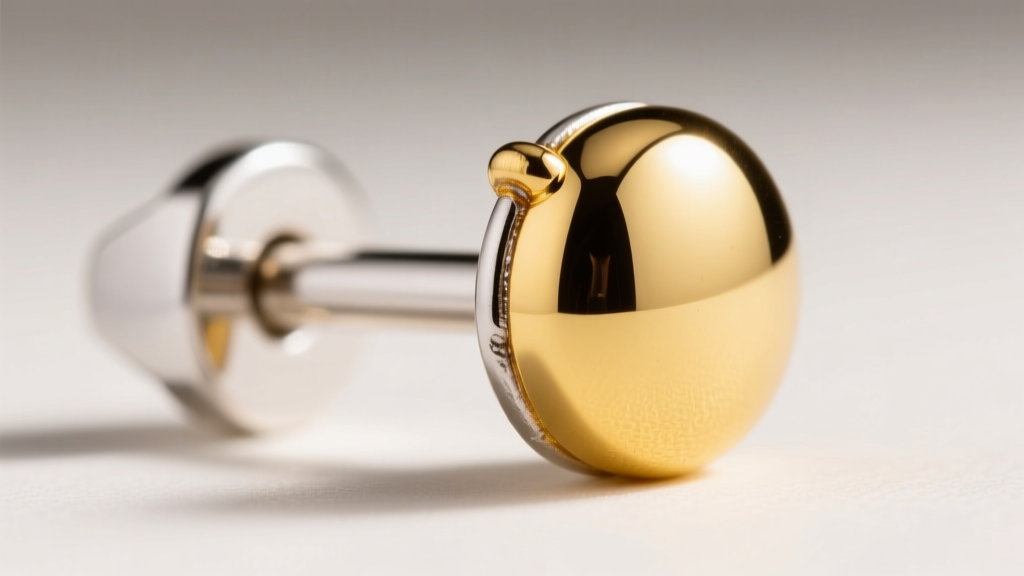
The Bi-Metal Solution and Laser Welding
To solve this, master jewelers utilize a bi-metal construction. The structural components—posts, hinges, and ear wires—are milled from 18k or 14k gold, or occasionally platinum, while the decorative heads, bezels, and granulation are cast or hand-fabricated in 24k gold. Historically, joining these two metals was risky; 24k gold melts at 1064°C, and its high thermal conductivity means traditional torch soldering often resulted in the pure gold head losing its crisp edges or melting before the solder flowed.
Today, the industry standard for assembling 24k earrings gold involves precision laser welding. Laser welders can fuse an 18k post to a 24k head in milliseconds, creating a localized heat-affected zone that prevents thermal distortion of the pure gold elements. This technological leap has allowed for more delicate, intricate 24k designs that would have been structurally impossible a decade ago.
Mechanical Properties and Failure Modes
Understanding the mechanical limitations of pure gold is critical for both designers and collectors. Below is a comparative analysis of gold karatages commonly used in fine earrings, highlighting why 24k requires specialized engineering.
| Karatage | Purity (%) | Vickers Hardness (HV) | Tensile Strength (MPa) | Earring Post Viability |
|---|---|---|---|---|
| 24k | 99.99% | 25 - 30 | ~120 | Poor (Bends/Snaps) |
| 22k | 91.67% | 50 - 70 | ~250 | Fair (Thick gauges only) |
| 18k | 75.00% | 120 - 140 | ~450 | Excellent (Standard) |
| 14k | 58.33% | 140 - 160 | ~550 | Superior (High stress) |
Common Failure Modes in Pure Gold Designs
- Bezel Tearing: When a 24k bezel is pushed over a gemstone's girdle, the metal work-hardens slightly. However, if the jeweler attempts to re-tighten a loose stone later, the pure gold is prone to micro-tearing and splitting rather than bending smoothly.
- Clutch Deformation: If a 24k groove is cut into a post for a butterfly clutch, the friction of daily removal will eventually shear the pure gold, causing the post to snap.
- Hoop Ovalization: A continuous 24k gold hoop, even at a thick 14-gauge (1.62mm), will slowly stretch and ovalize under its own weight and the tension of being opened and closed.
Biocompatibility and Hypoallergenic Performance
One of the primary drivers for seeking out 24k earrings gold is the pursuit of a truly hypoallergenic material. According to research published by the National Center for Biotechnology Information (NCBI) regarding allergic contact dermatitis, pure gold is biologically inert. It does not leach ions, oxidize, or react with the sulfur and chlorides present in human sweat.
"True gold allergy is exceptionally rare. The vast majority of adverse skin reactions attributed to gold jewelry are actually Type IV hypersensitivity reactions to nickel, cobalt, or copper present in the alloy matrix of lower-karat golds."
However, there is a mechanical caveat. Because 24k gold is so soft, it does not polish to a permanent, glass-like finish in the same way hardened alloys do. Micro-scratches and burrs can form on the surface of a 24k earring post or wire. These microscopic rough edges can cause mechanical irritation or micro-abrasions in the fistula (the piercing channel), which consumers often misdiagnose as an allergic reaction. For this reason, 24k ear wires must be meticulously finished and regularly inspected for surface gouging.
Design Constraints and Cultural Applications
While Western fine jewelry largely restricts 24k gold to bezels and inlays, traditional jewelry from regions like India, China, and the Middle East frequently utilizes 22k and 24k gold for entire earring structures. How is this achieved without the metal collapsing?
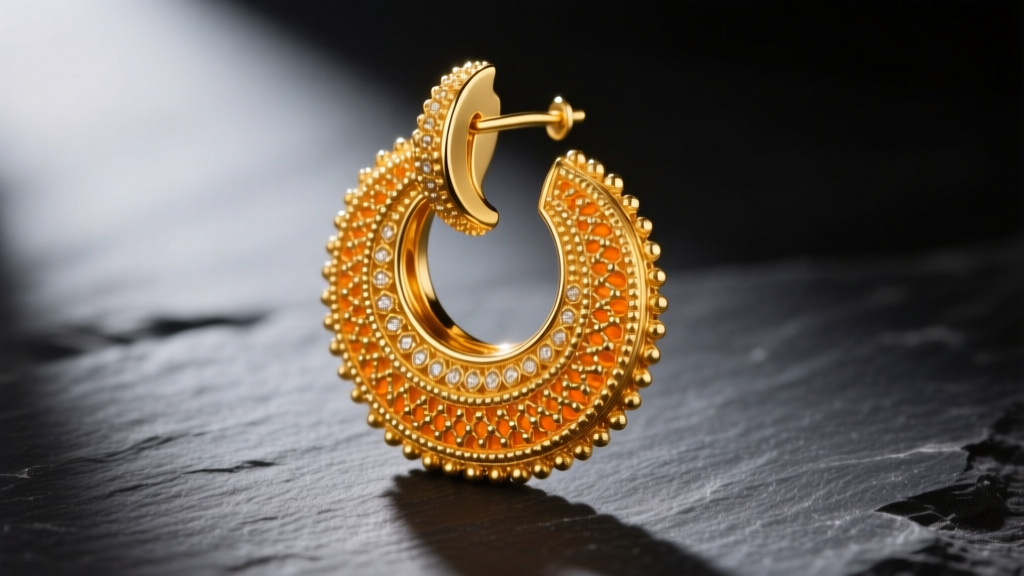
The answer lies in volume and structural geometry. Traditional jhumkas or heavy bridal hoops rely on massive cross-sectional thickness and complex granulation to provide rigidity. The structural integrity is derived from the sheer mass of the metal and the geometric interlocking of cast components, rather than the tensile strength of a thin wire. Furthermore, these pieces are often worn on heavily stretched or multiple-pierced lobes that can support the significant weight of solid pure gold, which is nearly twice as dense as sterling silver.
In modern CAD/CAM jewelry design, casting 24k gold presents unique challenges. Pure gold has a higher melting point and different fluid dynamics compared to eutectic alloys. It requires specialized investment powders and precise burnout cycles to prevent gas porosity. As noted by the World Gold Council, maintaining the 99.99% purity standard throughout the casting process requires crucibles and tools completely free of residual alloy contaminants, making small-batch 24k casting highly specialized and expensive.
Maintenance, Polishing, and Patina
Caring for 24k earrings gold requires a departure from standard jewelry maintenance protocols. You cannot use ultrasonic cleaners with harsh chemical solutions, not because the gold will tarnish (it cannot), but because the high-frequency vibrations can loosen stones held in soft pure gold bezels. Furthermore, mechanical polishing with a standard jeweler's rouge wheel will remove significant amounts of metal due to the low abrasion resistance of 24k gold.
Instead, experts recommend burnishing. Using a hardened steel or agate burnisher, a jeweler can compress the surface molecules of the 24k gold, smoothing out micro-scratches and creating a brilliant, reflective luster without removing any metal mass. Over decades of wear, 24k gold develops a distinct, soft patina—a network of microscopic surface compressions that gives antique pure gold its highly prized, velvety glow.
Verdict: Who Should Wear 24k Earrings Gold?
Pure gold earrings are not for the wearer who prioritizes structural resilience, lightweight comfort, or low-maintenance hardware. They are, however, the ultimate choice for collectors, investors, and individuals with severe contact dermatitis who require absolute elemental purity. By understanding the metallurgical realities of Vickers hardness, tensile limits, and bi-metal engineering, you can confidently select 24k earrings gold designs that offer both breathtaking aesthetic warmth and lifelong durability.


