30mm Gold Hoop Earrings: A Material & Karat Comparison Guide
Discover the best materials for 30mm gold hoop earrings. Compare 14k, 18k, and vermeil properties, durability, and pricing for your perfect pair.

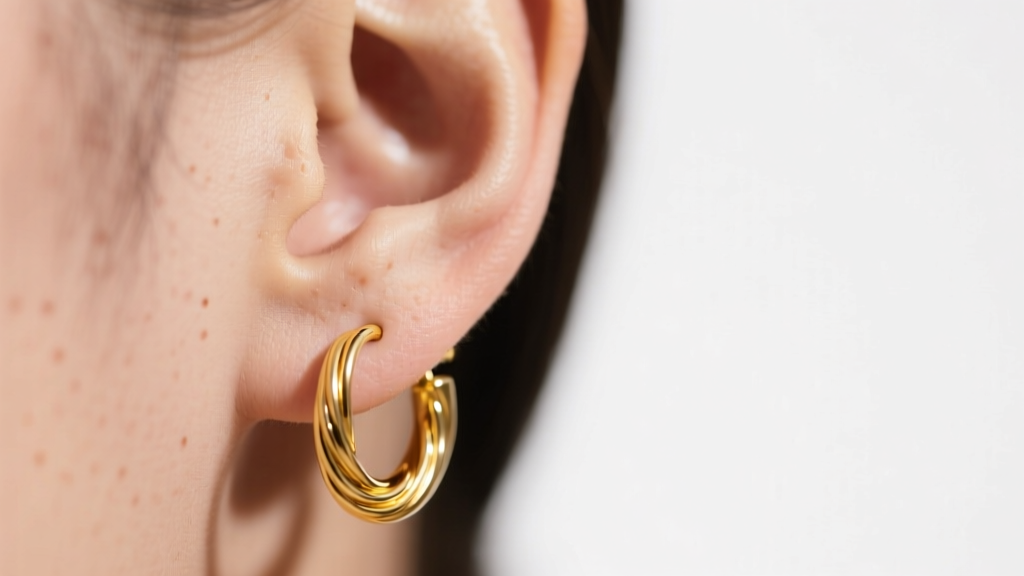
The 30mm Sweet Spot: Why Size Dictates Material Needs
When it comes to everyday luxury, 30mm gold hoop earrings (approximately 1.18 inches in diameter) occupy the ultimate sweet spot in jewelry design. They are large enough to make a distinct stylistic statement, framing the jawline beautifully, yet compact enough to avoid catching on high-collared clothing or heavy winter scarves. However, because a 30mm hoop possesses a wider structural arc than a huggie or a stud, it is subjected to unique mechanical stresses. The wider the diameter, the higher the leverage applied to the earlobe piercing and the earring's closure mechanism when accidentally snagged.
Consequently, selecting the right metal alloy is not merely an aesthetic choice; it is a structural necessity. A material that is too soft will warp out of its perfect circular shape, while a material that is too brittle may snap under pressure. In this comprehensive guide, we break down the metallurgical properties, karat differences, and structural realities of the most popular materials used for 30mm gold hoops in 2026.
Solid Gold Karats: 14k vs. 18k
Solid gold remains the gold standard for fine jewelry, but pure 24k gold is far too malleable for a 30mm hoop. It must be alloyed with other metals like copper, silver, and zinc to achieve the necessary tensile strength. According to the Gemological Institute of America (GIA), the karat system dictates the exact ratio of pure gold to alloy metals, which fundamentally alters the earring's hardness, color, and price point.
14k Solid Gold: The Durability Champion
Comprising 58.3% pure gold, 14k gold is the workhorse of the hoop earring world. The higher percentage of alloy metals (often copper and silver) increases its Vickers hardness to approximately 125-140 HV. This makes 14k gold highly resistant to scratching, denting, and bending. For a 30mm hoop, which rests just below the earlobe and is prone to being bumped during daily commutes or workouts, 14k gold offers the best structural integrity. The trade-off is a slightly paler yellow hue compared to higher karats, though many modern buyers actually prefer this subtler, less brassy tone.
18k Solid Gold: The Rich Hue Standard
At 75% pure gold, 18k gold delivers that unmistakable, deeply saturated yellow warmth that high-end jewelry collectors crave. However, its Vickers hardness drops to around 90-110 HV, making it noticeably softer. A 30mm hoop crafted in 18k gold will require a thicker wire gauge to compensate for the metal's inherent softness. If you choose 18k, expect to pay a premium not just for the gold content, but for the extra metal weight required to keep the hoop structurally sound.
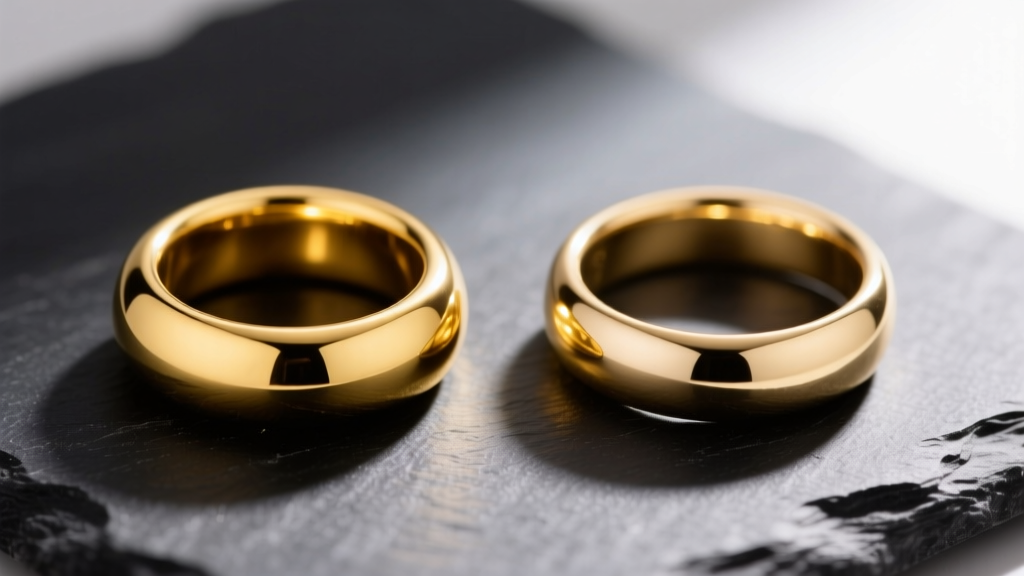
The Plated Alternatives: Vermeil vs. Gold Filled
For those seeking the look of solid gold without the four-figure price tag, plated alternatives are highly popular. However, not all plating is created equal, and understanding the Federal Trade Commission (FTC) guidelines on precious metal marketing is crucial to avoid buyer's remorse.
- Gold Vermeil: By FTC definition, vermeil must feature a base of .925 sterling silver coated with a minimum of 2.5 microns of gold (usually 14k or 18k). Because the base is silver, vermeil is hypoallergenic and safe for sensitive ears. However, on a 30mm hoop, the friction from hair and clothing will eventually wear through the 2.5-micron layer, exposing the silver beneath after 1 to 3 years of daily wear.
- Gold Filled: This material consists of a brass or copper core mechanically bonded with a thick layer of gold that must constitute at least 5% of the item's total weight. Gold filled is vastly more durable than vermeil and can last decades, but the base metals can cause contact dermatitis in wearers with severe nickel or copper allergies if the outer layer ever chips.
Material Properties Comparison Matrix
Use the table below to evaluate which material aligns with your budget, lifestyle, and longevity expectations for a 30mm hoop.
| Material | Gold Content | Base Metal | Hardness (HV) | Avg. Price Range | Longevity |
|---|---|---|---|---|---|
| 14k Solid Gold | 58.3% | Alloy (Cu/Ag/Zn) | ~130 HV | $180 - $450 | Lifetime |
| 18k Solid Gold | 75.0% | Alloy (Cu/Ag) | ~100 HV | $350 - $850+ | Lifetime |
| Gold Vermeil | Surface (2.5μm) | .925 Sterling Silver | ~60 HV (Silver) | $45 - $120 | 1 - 3 Years |
| Gold Filled | Surface (5% wt) | Brass / Copper | ~110 HV | $60 - $150 | 5 - 15 Years |
Wire Gauge and Closure Mechanics
The material you choose must be paired with the correct wire gauge (thickness) and closure type. A 30mm hoop acts as a lever; if the wire is too thin, it will bend irreparably.
Standard Gauges: 18G vs. 20G
Most standard earlobe piercings are done at 20 gauge (0.81mm) or 18 gauge (1.02mm). For 30mm solid gold hoops, an 18-gauge wire is highly recommended. The extra 0.21mm of thickness provides a massive increase in structural rigidity. If you opt for a softer metal like 18k gold or sterling silver vermeil, you should absolutely avoid 20-gauge wires, as they will warp into ovals within weeks of daily wear.
Closure Types: Continuous vs. Hinged
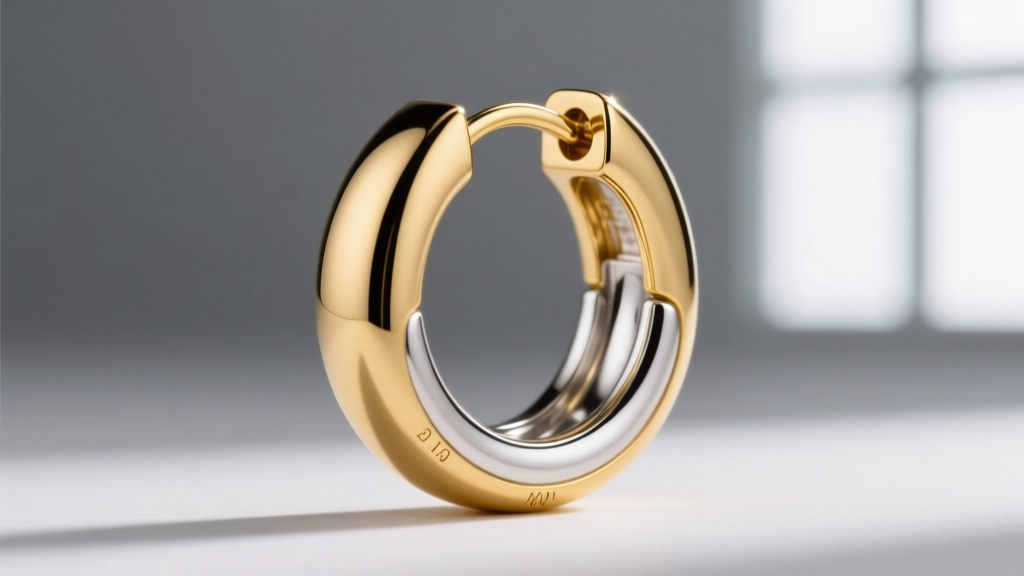
Expert Insight: For 30mm hoops, the continuous (or 'endless') hoop closure is vastly superior to hinged snap-backs. Hinges introduce a mechanical weak point and create a tiny gap that catches on fine hair. A continuous wire that threads seamlessly into the opposite tube offers a 360-degree smooth profile.
Environmental Degradation and Care Protocols
Gold itself is a noble metal and does not tarnish, but the alloy metals mixed into 14k and 18k gold are highly reactive to specific environmental chemicals. The most critical threat to your 30mm gold hoops is stress corrosion cracking. This occurs when the copper and zinc alloys in the gold are exposed to chlorine (found in swimming pools, hot tubs, and harsh household bleach) while the metal is under physical tension—such as when the earring is clasped tightly around the earlobe.
To maintain the structural integrity and luster of your hoops:
- Never swim in solid gold hoops. Chlorine can cause microscopic fractures in the alloy, leading to sudden snapping.
- Avoid ultrasonic cleaners for plated hoops. The high-frequency vibrations will strip the 2.5-micron gold layer right off vermeil and gold-filled pieces.
- Polish with a microfiber cloth. For solid 14k and 18k hoops, a simple rub with a jeweler's polishing cloth once a month removes sebum and environmental oils, restoring the mirror finish without removing any actual metal.
Final Verdict: Which 30mm Gold Hoop Should You Buy?
If you view your jewelry as a permanent wardrobe staple, 14k solid gold in an 18-gauge wire is the undisputed champion for 30mm hoops. It offers the perfect equilibrium of rich color, exceptional scratch resistance, and the tensile strength required to maintain a perfect circle over decades of wear. For trend-driven buyers or those on a strict budget, heavy gold vermeil over .925 silver provides a hypoallergenic, luxurious alternative, provided you accept that it is a consumable fashion item rather than a lifelong heirloom. By matching the metallurgical properties to your lifestyle, you ensure your 30mm hoops remain a flawless framing element for your face for years to come.


