Cat With Earrings Motif Jewelry: Troubleshooting Fixes
Troubleshoot common issues with cat with earrings motif jewelry. Learn how to fix micro-solder joints, upgrade posts, and prevent snagging.

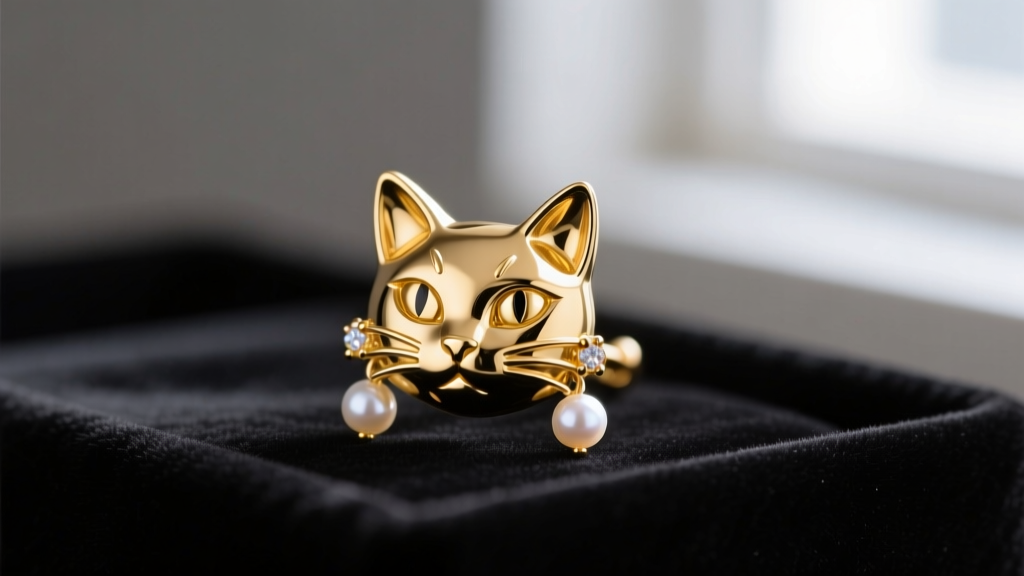
The "cat with earrings" motif—a whimsical feline face design where the cat itself is adorned with tiny, secondary dangling earrings—has become a beloved staple in expressive, novelty jewelry. As we navigate the 2026 landscape of hyper-personalized accessories, this specific multi-component design remains incredibly popular. However, from a bench jeweler’s perspective, these earrings are structural nightmares. The combination of micro-jump rings, cheap base metals, and protruding secondary dangles creates a perfect storm for breakage, contact dermatitis, and severe snag hazards.
If your favorite feline-themed studs are falling apart, turning your earlobes green, or constantly catching in your hair, this comprehensive troubleshooting guide will help you diagnose the failure points and execute professional-grade repairs at home or with a local jeweler.
The Anatomy of the "Cat With Earrings" Design Failure
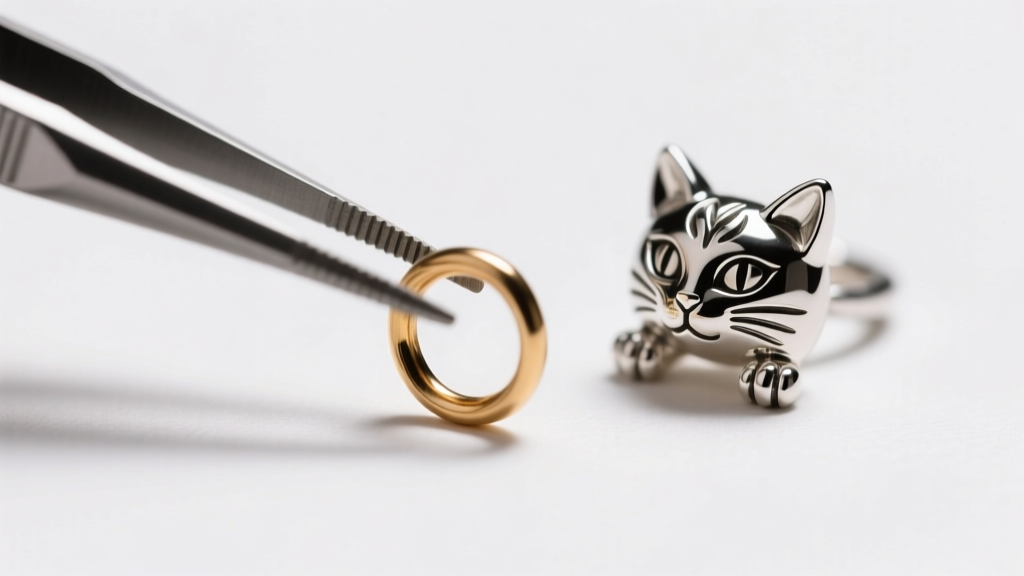
To troubleshoot these earrings, you must first understand why they fail. The primary face plate of the cat is usually cast as a single piece. The "cat's earrings," however, are attached via micro-jump rings that are typically 2mm or 3mm in outer diameter.
- The Gauge Problem: In mass-produced novelty jewelry, these jump rings are often stamped from 24-gauge or 26-gauge brass wire. This is roughly 0.4mm to 0.5mm thick—barely stronger than a human hair.
- Metal Fatigue: Every time the micro-dangle swings, it creates shear stress at the apex of the jump ring. Base metals like brass and zinc alloy lack the crystalline memory of precious metals, leading to rapid metal fatigue and eventual snapping.
- The Snag Multiplier: Because the dangles protrude outward from the main face plate, they act as microscopic grappling hooks for hair fibers and clothing threads.
Troubleshooting Metal Allergies and Post Upgrades
The most common complaint with novelty motif jewelry is contact dermatitis. According to the American Academy of Dermatology, nickel allergy is the leading cause of allergic contact dermatitis, and unfortunately, most affordable "cat with earrings" designs utilize a zinc-alloy (pot metal) base with a nickel flash-plating to achieve a bright silver or gold tone.
Step-by-Step Post Replacement Guide
If the earring post is causing irritation, you must upgrade it to implant-grade titanium. Here is how to execute the swap:
- Remove the Old Post: Use flush-cutting jewelry nippers to sever the base metal post as close to the face plate as possible. File the remaining nub flat with a 400-grit needle file.
- Select the Right Wire: Purchase an 18-gauge (1.02mm) or 20-gauge (0.81mm) ASTM F136 implant-grade titanium post with a flat pad. Standard lobe piercings accommodate 20g best, while stretched or older piercings may prefer 18g.
- Bonding: Because you cannot easily solder titanium to pot metal at home, use a two-part structural jeweler's epoxy (such as Devcon 5-Minute Steel Epoxy). Apply a microscopic drop to the titanium pad, press it firmly to the filed back of the cat face plate, and let it cure for 24 hours.
"Upgrading the post to ASTM F136 titanium eliminates 99% of allergic reactions, even if the front-facing motif still contains trace nickel, provided the front does not directly touch the skin."
The Snag Matrix: Risk Assessment and Modification
The secondary dangles on the cat motif are notorious for snagging. If you own an actual cat, or have long, textured hair, the risk of losing the earring entirely to a sudden yank is exceptionally high. Use the matrix below to determine your necessary modifications.
| Hair Type / Lifestyle | Snag Risk Level | Recommended Modification | Estimated Cost |
|---|---|---|---|
| Short Hair / No Pets | Low | Standard silicone friction backs | $2 - $5 |
| Long, Straight Hair | Medium | Swap to locking butterfly backs | $10 - $15 |
| Curly Hair / Pet Owner | High | Remove dangles; flush-set 2mm CZ | $35 - $60 (Bench fee) |
| Wear with Sweaters/Scarves | Extreme | Apply clear UV resin over dangles | $15 - $20 |
The UV Resin Encapsulation Trick
If you refuse to part with the dangling aesthetic but need to eliminate the snag hazard, encapsulation is your best defense. Using a precision UV resin kit, carefully paint a thin layer of clear resin over the cat's micro-dangles and the jump rings. Cure it with a 36W UV lamp for 60 seconds. This creates a smooth, glass-like dome that preserves the visual movement of the dangles while completely eliminating the physical gaps where hair gets trapped.
Repairing Pot Metal: Why Your Torch is Destroying the Earring
When the main face plate cracks or the post snaps off at the base, many DIY enthusiasts attempt to re-solder the piece. This almost always results in a melted, unrecognizable lump of metal.
As noted by educational resources from Rio Grande Jewelry Supply, understanding melting points is critical for bench repairs. Most novelty earrings are cast from zinc alloy (pot metal), which has a melting point of roughly 400°C (752°F). Standard silver solder, however, requires temperatures exceeding 600°C (1112°F) to flow. By the time your butane torch heats the piece enough for the solder to melt, the zinc alloy earring has already liquefied and collapsed.
The Laser Welding Alternative
If the structural integrity of the cat face plate has failed, traditional soldering is off the table. You must seek out a jeweler equipped with a pulse-arc laser welder. Laser welding concentrates heat into a microscopic 0.5mm spot, fusing the pot metal or attaching a new sterling silver post without raising the ambient temperature of the entire earring. Expect to pay between $45 and $85 for a laser weld on novelty base metals, as the Gemological Institute of America (GIA) frequently highlights the specialized skill required to manage heat dispersion in non-precious alloys.
Upgrading the Micro-Dangles for Longevity
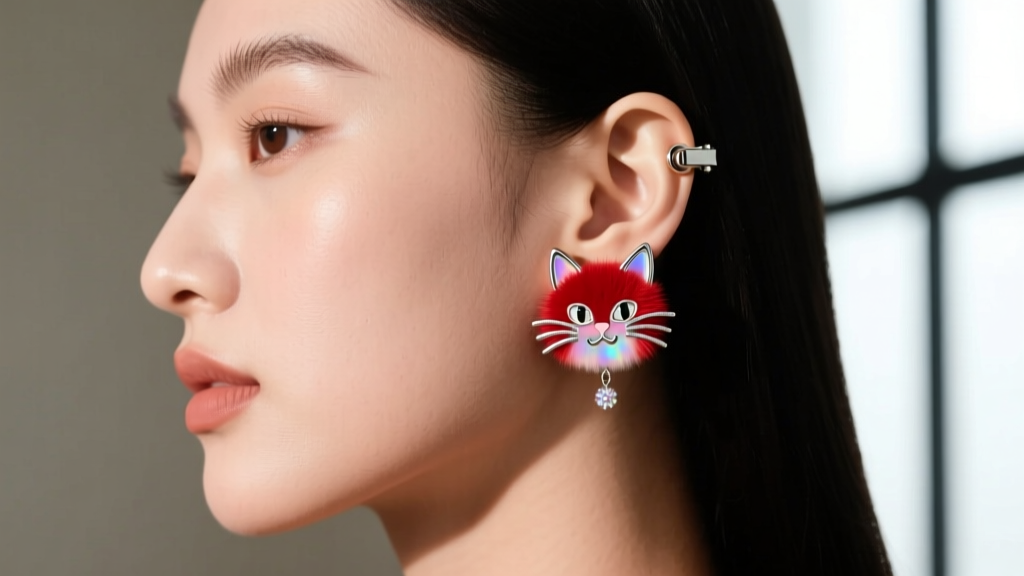
If the "cat's earrings" have already snapped off and the jump rings are too fatigued to be reused, consider upgrading the motif entirely. Instead of reattaching cheap base-metal dangles, take the main face plate to a bench jeweler and request a micro-bezel conversion.
A jeweler can use a flexible shaft rotary tool to drill out the attachment holes and friction-set 1.5mm or 2mm cubic zirconia or synthetic sapphire stones directly into the cat's "ears." This permanently solves the metal fatigue issue, eliminates the snag hazard, and elevates the novelty piece into a refined, everyday-wear stud. When drilling pot metal, jewelers must use high-speed steel (HSS) burrs at low RPMs with a constant drip of burr lube to prevent the zinc from gumming up the cutting teeth.
Final Maintenance Protocols
To ensure your repaired "cat with earrings" motif survives the rigors of daily wear in 2026 and beyond, adopt a strict maintenance protocol. Store the earrings in a hard-sided, compartmentalized jewelry box rather than a soft pouch; the pressure from other jewelry in a soft pouch will easily bend the 24-gauge jump rings. Once a month, inspect the micro-dangles with a 10x jeweler's loupe. If you notice the jump ring gap beginning to separate, gently squeeze it closed with flat-nose pliers before the metal fatigues and snaps. By treating novelty jewelry with the same bench-level respect as fine jewelry, you can preserve these whimsical designs for years to come.


