Beginner Guide to Choosing Stud Earrings Colours for Skin Tones
Discover how to choose the best stud earrings colours for your skin undertone. Learn metal grades, gemstone durability, and styling tips for beginners.

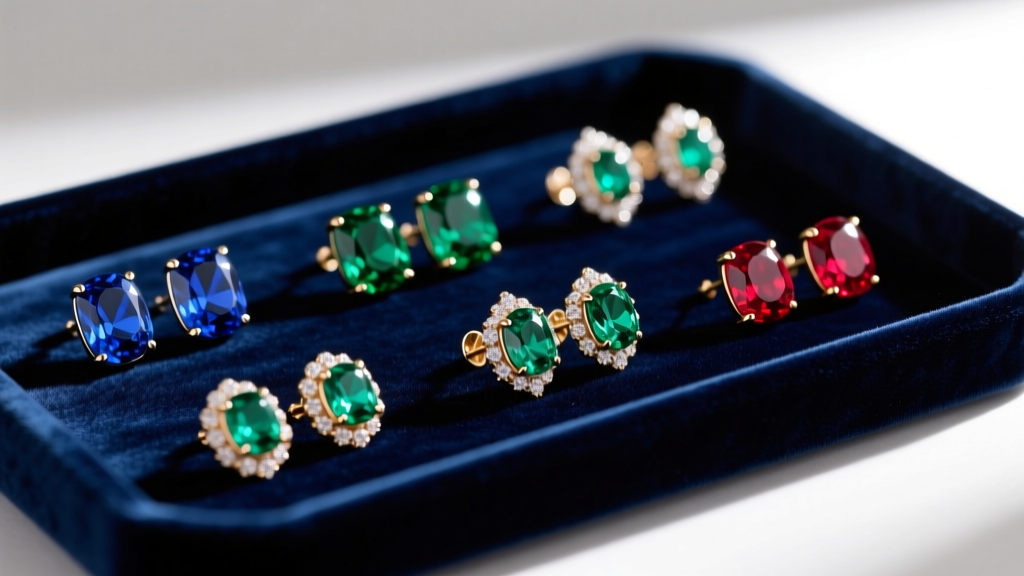
Selecting the perfect pair of studs goes far beyond simply picking your favourite shade. For beginners navigating the vast jewellery market, understanding how different stud earrings colours interact with your unique skin undertone, lifestyle, and piercing placement is the secret to effortless styling. Whether you are building your first curated ear project or simply looking for an everyday staple, this guide breaks down the science of colour, metal alloys, and gemstone durability.
The Science of Skin Undertones and Jewellery Colours
Before diving into specific gemstones or metal alloys, you must identify your skin's undertone. Unlike your surface skin tone—which can change with sun exposure or seasons—your undertone remains constant. Jewellery colours either harmonize with or clash against these underlying hues.
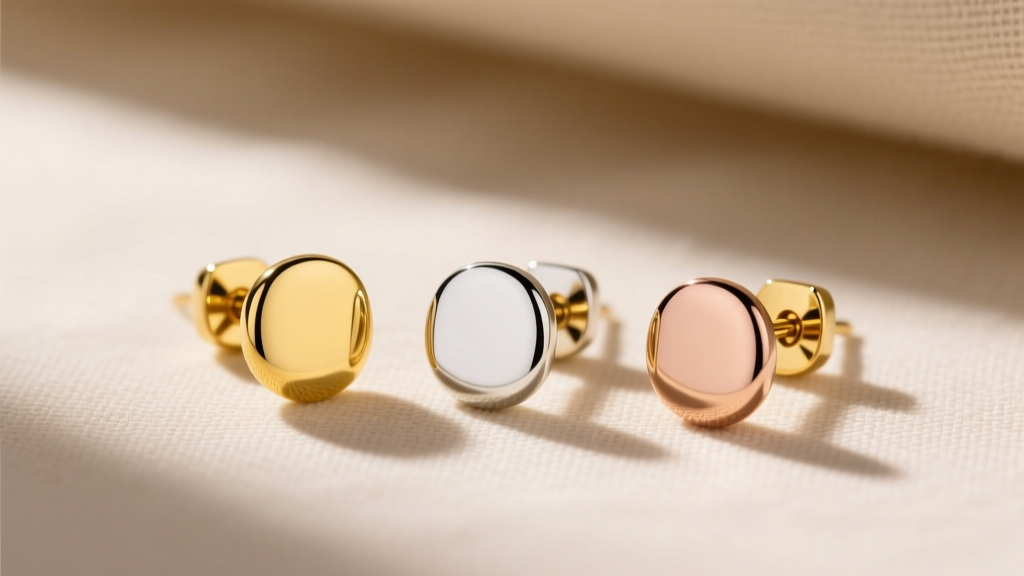
- Warm Undertones: Your skin has hints of peach, yellow, or golden. The Vein Test: The veins on your wrist appear greenish. Best Stud Colours: Earthy gemstones (citrine, peridot, warm amber) and rich metals like 14k or 18k yellow gold and rose gold.
- Cool Undertones: Your skin has hints of pink, red, or blue. The Vein Test: Your veins appear blue or purple. Best Stud Colours: Jewel tones (sapphire, amethyst, ruby) and crisp metals like white gold, platinum, or silver.
- Neutral Undertones: A balance of warm and cool. The Vein Test: Your veins appear teal or colourless. Best Stud Colours: You can pull off almost any colour, but muted or medium-saturated shades like dusty rose, teal, or champagne diamonds look exceptionally balanced.
Decoding Metal Colours: Karats, Alloys, and Anodization
When beginners think of metal colours, they usually picture yellow, white, and rose gold. However, the colour of gold is dictated by its alloy composition, which directly impacts both the hue and the structural integrity of the earring.
Gold Alloys and Colour Fastness
Pure 24k gold is naturally yellow but far too soft for daily wear studs. Therefore, it is alloyed with other metals. 14k yellow gold (58.5% pure gold) is alloyed with copper and silver, yielding a warm, durable stud that resists scratching. Rose gold achieves its pinkish-red colour through a higher copper content. White gold, however, is a yellow gold alloy mixed with white metals like palladium and plated with rhodium to achieve its bright silver colour. Beginners should note that white gold studs will eventually show their yellowish undertone as the rhodium wears off, requiring professional replating every few years.
The Magic of Anodized Titanium
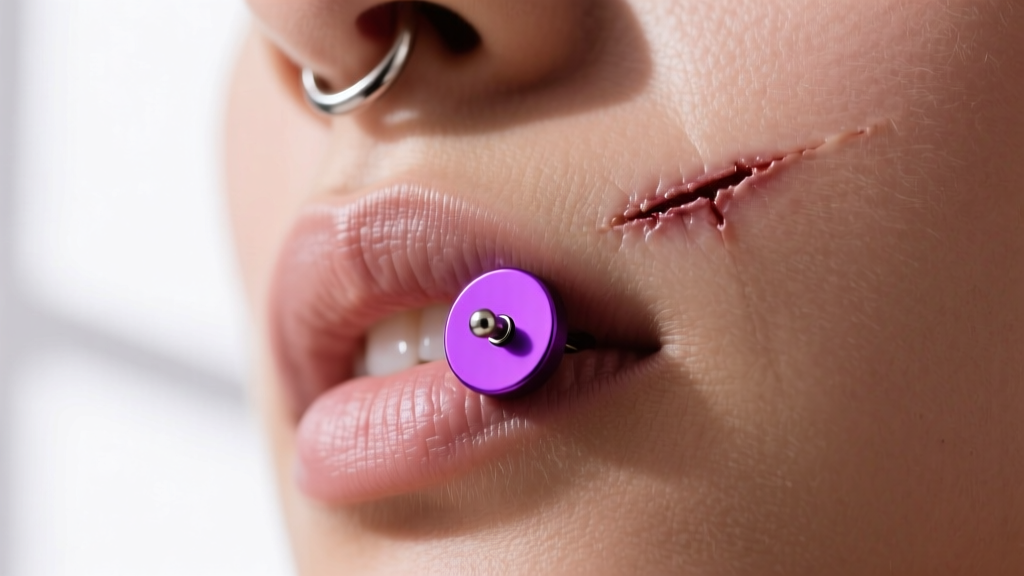
If you have sensitive ears or nickel allergies, the American Academy of Dermatology recommends avoiding mixed base metals. Instead, look for ASTM F136 implant-grade titanium. Titanium is naturally silver-grey, but through a process called anodization, it can be transformed into a spectrum of vibrant colours without using dyes or paints. By applying specific voltages, the oxide layer on the titanium's surface thickens, refracting light to create stunning shades of purple, blue, teal, and gold. This means your coloured titanium studs are 100% hypoallergenic and the colour will never flake or cause contact dermatitis.
Gemstone Colours and Durability: A Beginner's Matrix
Not all coloured gemstones are created equal. When choosing coloured stud earrings for daily wear, you must consider the Mohs Hardness Scale. Earrings are less prone to impact than rings, but they still encounter hairbrushes, towels, and pillows. According to the Gemological Institute of America (GIA), understanding gemstone hardness prevents you from buying a beautiful stone that will quickly scratch and cloud over.
| Gemstone Colour | Stone Type | Mohs Hardness | Daily Wear Suitability | Average Price Range (Stud Pair) |
|---|---|---|---|---|
| Deep Blue | Sapphire | 9.0 | Excellent (Highly scratch-resistant) | $300 - $1,500+ |
| Vivid Red | Ruby | 9.0 | Excellent | $400 - $2,000+ |
| Emerald Green | Emerald | 7.5 - 8.0 | Moderate (Prone to chipping due to inclusions) | $250 - $1,200 |
| Iridescent White | Opal | 5.5 - 6.5 | Poor (Easily scratched, sensitive to dryness) | $100 - $600 |
| Various | Cubic Zirconia | 8.0 - 8.5 | Good (Will cloud over time with oils) | $20 - $80 |
Expert Tip: If you love the look of deep green but want the durability of a sapphire, ask your jeweller for a Tsavorite Garnet (Mohs 7-7.5) or a Green Sapphire. They offer richer colour saturation and far better structural integrity than heavily included emeralds.
Lobe vs. Cartilage: Does Placement Change Colour Choices?
The physical location of your piercing drastically alters how coloured studs are perceived and how they should be fitted.
Visual Weight and Contrast
Standard earlobe piercings can support larger, darker, and more visually "heavy" coloured studs. A 6mm black onyx or deep burgundy garnet stud will anchor the lobe beautifully. Conversely, cartilage piercings (like the helix or tragus) are smaller and more delicate. Using dark, heavy colours in the upper ear can look unbalanced. Instead, opt for lighter, brighter, or translucent colours—such as pale aquamarine, champagne CZ, or anodized teal titanium—to draw the eye upward without overwhelming the ear's anatomy.
Gauge Sizes and Post Lengths
Beginners often buy standard 20-gauge (0.81mm) butterfly-back studs for their cartilage, which is a mistake. Cartilage piercings are typically done at 16-gauge (1.29mm) or 14-gauge (1.6mm) to prevent the "cheese-cutter effect," where a thin wire slowly migrates through the tissue. Furthermore, cartilage requires flat-back labret studs rather than butterfly backs to avoid sleeping on sharp posts. When buying coloured gems for your helix, ensure you are filtering for 16g flat-back options with an appropriate post length (usually 6mm to 8mm for healed lobes and cartilage).
Three Critical Beginner Mistakes to Avoid
- Buying Gold-Plated Brass for Sensitive Ears: Many affordable coloured studs are made of brass plated with a micro-layer of gold. Once the plating wears off, the copper and zinc in the brass react with your skin's pH, leaving a green stain and causing irritation. Always check the base metal; stick to solid 14k gold, surgical steel, or titanium.
Ignoring the Nickel Directive: Even some white gold and silver alloys contain nickel to increase hardness. If your earlobes itch or swell 24 hours after wearing new silver-coloured studs, you likely have a nickel allergy. Switch immediately to platinum, palladium, or implant-grade titanium.- Mismatching Colour Temperature with Wardrobe: If your daily wardrobe consists of cool-toned greys, blacks, and stark whites, wearing warm amber or citrine studs will create a jarring visual disconnect. Match the temperature of your stud colours to your most-worn clothing palette for a cohesive look.
"Mastering your personal jewellery palette isn't about following rigid rules; it's about understanding the material science and colour theory that make certain pieces naturally elevate your features. Start with high-quality, hypoallergenic metals, and build your colour collection intentionally."
Choosing the right stud earrings colours is a blend of aesthetic intuition and material knowledge. By matching your metals and gemstones to your skin's undertone, prioritizing Mohs hardness for daily wear, and respecting the gauge requirements of your specific piercings, you will build a collection that is as comfortable and safe as it is visually stunning.


