The Ultimate Material Guide for 30mm Hoop Earrings
Compare titanium, gold, and steel for 30mm hoop earrings. Discover weight, gauge thickness, and hypoallergenic properties for lobe and cartilage.

The Physics and Biology of 30mm Hoops
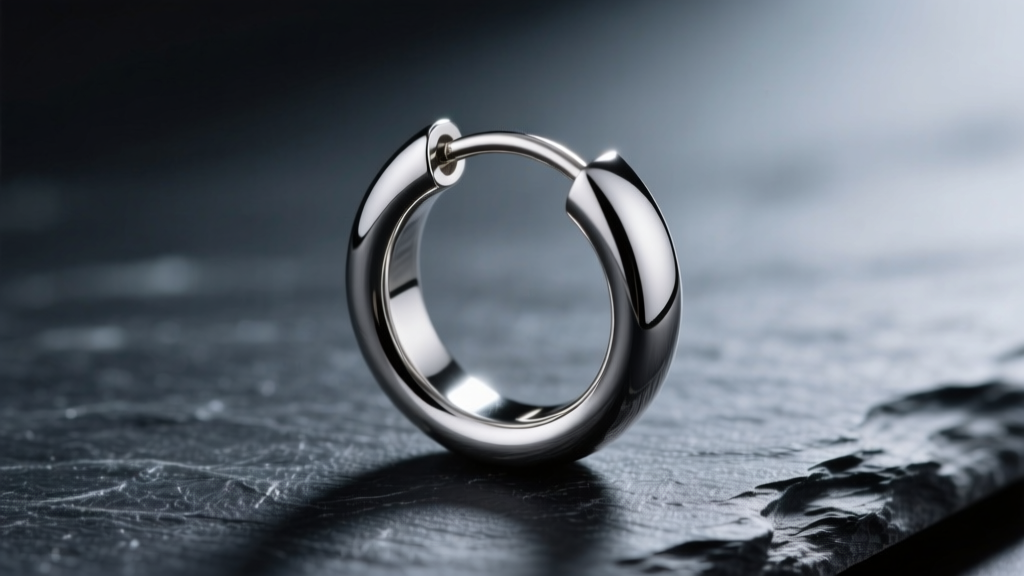
At exactly 30mm (1.18 inches), hoop earrings cross a critical threshold in wearable jewelry design. This diameter is widely considered the 'Goldilocks' zone—large enough to frame the face and make a distinct style statement, yet compact enough for daily, snag-free wear. However, from a metallurgical and anatomical perspective, a 30mm hoop introduces specific physical forces that smaller huggies (10-15mm) or larger statement hoops (50mm+) do not.
Because of the pendulum effect, a 30mm hoop generates moderate kinetic energy when the wearer moves, speaks, or exercises. This creates repetitive shear stress on the fistula (the piercing channel). If the metal is too heavy, it causes lobe migration and stretching. If the metal is too soft or the gauge too thin, the hoop will warp, creating micro-abrasions inside the cartilage or lobe. Furthermore, the surface area in contact with the skin is substantial enough that trace metal allergies will manifest rapidly. This guide breaks down the exact material properties, structural gauges, and biocompatibility factors you must consider when selecting 30mm hoop earrings.
Material Breakdown: Weight, Tensile Strength, and Biocompatibility
Implant-Grade Titanium (ASTM F136)
For sensitive ears, healing piercings, and cartilage placements, implant-grade titanium (specifically ASTM F136 ELI) is the undisputed benchmark. Titanium boasts a density of approximately 4.43 g/cm³, making a 16-gauge 30mm titanium hoop roughly 45% lighter than the exact same hoop crafted from surgical steel. This drastic weight reduction minimizes the downward drag on the earlobe, preventing the 'cheese-cutter' effect over time. More importantly, ASTM F136 titanium contains zero nickel and forms a passive oxide layer that prevents corrosion from sweat, saline, and environmental pollutants. According to the Association of Professional Piercers (APP), this specific alloy is the only recommended metal for fresh piercings due to its absolute biocompatibility.
Solid Gold: 14k vs. 18k Alloys
Gold is a classic choice, but its purity drastically alters its structural viability for a 30mm hoop. Pure 24k gold is far too malleable and will bend out of shape if used in a continuous hoop. Therefore, jewelers use alloys.
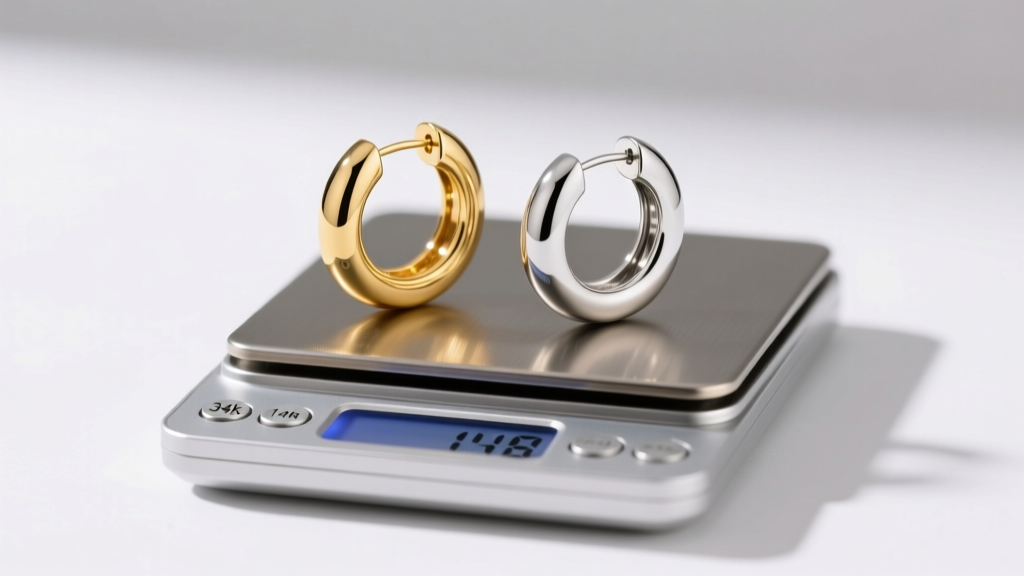
- 18k Gold (75% pure): Denser and heavier, with a rich color. However, it has a lower Vickers hardness, making it susceptible to scratching and warping if crafted in thinner gauges (18g or 20g).
- 14k Gold (58.5% pure): The optimal choice for structural integrity. The higher alloy content increases tensile strength, allowing a 14k 30mm hoop to maintain its perfect circle even when subjected to daily friction.
Surgical Steel (316L) vs. Sterling Silver (925)
While highly prevalent in commercial jewelry, both 316L steel and 925 silver present distinct failure modes for 30mm hoops. 316L surgical steel contains 8-10% nickel. While the chromium oxide layer traps most of it, prolonged exposure to the saline environment of a healing or irritated piercing can cause nickel leaching. The Mayo Clinic identifies nickel as the leading cause of allergic contact dermatitis, making steel a risky choice for long-term cartilage wear. Sterling silver (92.5% silver, 7.5% copper) is inherently hypoallergenic but structurally deficient. A 30mm continuous hoop in 18-gauge sterling silver will easily warp into an oval shape within weeks of wear due to silver's low yield strength.
Data Table: 30mm Hoop Material Comparison Matrix
| Material | Density (g/cm³) | Nickel Content | Structural Rigidity | Best Application |
|---|---|---|---|---|
| ASTM F136 Titanium | 4.43 | 0% | Exceptional | Healing piercings, sensitive cartilage, heavy daily wear |
| 14k Solid Gold | ~13.5 | 0% (if alloyed correctly) | High | Healed lobes, luxury daily wear, heirloom pieces |
| 18k Solid Gold | ~15.5 | 0% (if alloyed correctly) | Moderate | Special occasions, thick-gauge (14g+) clickers |
| 316L Surgical Steel | 8.00 | 8-10% | High | Budget-friendly healed lobe wear (non-sensitive) |
| 925 Sterling Silver | 10.36 | 0% | Low (Prone to warping) | Thick-gauge fashion pieces, occasional wear |
Gauge Thickness and Structural Integrity
The diameter of your hoop is only half the equation; the gauge (wire thickness) dictates its survival. In a 30mm hoop, the structural leverage applied to the wire is significant. Here is the definitive gauge guide for this specific diameter:
- 20-Gauge (0.8mm) & 18-Gauge (1.0mm): Avoid for 30mm hoops. At this diameter, thin wire acts like a blade against the fistula, leading to the aforementioned cheese-cutter effect, where the jewelry slowly migrates downward through the tissue.
- 16-Gauge (1.2mm): The industry standard for 30mm hoops. It provides an excellent balance of lightweight comfort and sufficient rigidity to resist bending when inserting or removing the jewelry.
- 14-Gauge (1.6mm): The premium choice for cartilage placements (like the helix, conch, or rook) and for those who sleep in their earrings. The 1.6mm thickness distributes weight evenly across the fistula, virtually eliminating migration risks.
Pro-Tip for Continuous Hoops: If you prefer a seamless, endless hoop design at 30mm, do not exceed 16-gauge. A 14-gauge solid metal continuous hoop is incredibly difficult to bend open and closed by hand, and doing so repeatedly will cause metal fatigue, eventually snapping the wire near the joint.
Lobe vs. Cartilage: Matching Metal to Placement
The anatomical placement of your 30mm hoop dictates which material and clasp mechanism you should choose.
Standard Earlobe Placements
Earlobes are highly vascular, heal quickly, and consist of soft tissue. For lobes, 14k or 18k gold is perfectly safe, provided the piercing is fully healed. Hinged 'clicker' clasps are highly recommended here, as they provide a secure, flush closure that won't catch on hair or clothing. Because lobes can stretch over time under heavy loads, opting for titanium or 14k gold in a 16-gauge thickness will preserve the integrity of the piercing hole for decades.
Cartilage Placements (Helix, Conch, Rook)
Cartilage is avascular and highly prone to irritation bumps (hypertrophic scarring) if subjected to friction, pressure, or allergens. For any 30mm hoop worn in cartilage, ASTM F136 titanium is non-negotiable, especially if the piercing is less than a year old. Furthermore, cartilage piercings are typically pierced at 16g or 14g. Inserting a standard 20g lobe hoop into a 16g cartilage hole will cause the fistula to shrink around the thinner wire, leading to discomfort and potential rejection. Always match the gauge of your 30mm hoop exactly to the gauge your piercer used.
Maintenance and Tarnish Resistance
Material choice also dictates your long-term maintenance routine. Titanium and high-quality solid gold (14k/18k) are virtually impervious to tarnish. They can be worn in the shower, pool, and ocean without degrading, though regular cleaning with a mild, fragrance-free soap is recommended to remove sebum and dead skin buildup. Conversely, sterling silver and lower-karat gold alloys will oxidize when exposed to sulfur in the air and chlorine in water. If you choose silver or steel for your 30mm hoops, you must commit to weekly polishing with a microfiber cloth and store them in an anti-tarnish pouch to prevent the black oxidation layer from transferring to your skin.
Final Verdict
Selecting the perfect 30mm hoop earring requires looking past the aesthetic and evaluating the metallurgy. For the ultimate combination of featherlight comfort, absolute hypoallergenic safety, and structural rigidity, a 16-gauge ASTM F136 titanium clicker hoop is the superior engineering choice. For those seeking luxury and warmth, a 14k solid gold hinged hoop offers the best compromise between precious metal value and the tensile strength required to maintain a perfect 30mm circle. Avoid thin-gauge silver and nickel-heavy steel to ensure your piercings remain healthy, stable, and beautifully framed for years to come.


