4 Carat Earrings: Material Properties & Setting Guide
Explore the material properties, structural settings, and hardware required for 4 carat earrings. Compare natural, lab, and simulant stones.

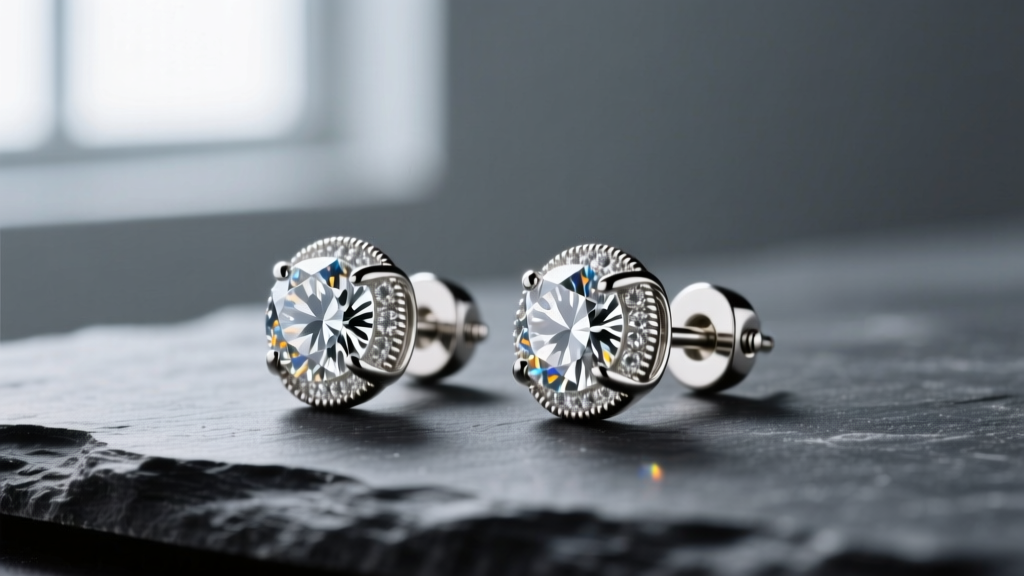
When entering the upper echelon of fine jewelry, 4 carat earrings represent a significant milestone in both luxury and structural engineering. Unlike delicate 1-carat studs that can be set in nearly any metal and worn with standard friction backs, a 4-carat diamond setup demands a rigorous approach to material science, weight distribution, and metallurgical strength. In 2026, the landscape of high-carat earrings has expanded dramatically, with lab-grown diamonds and advanced simulants offering new optical properties and price points. However, the physical realities of wearing heavy gemstones remain unchanged. This guide dissects the exact material properties, alloy requirements, and architectural settings necessary to safely and beautifully wear 4 carat earrings.
The 4 Carat Earrings Benchmark: Total Weight vs. Per Ear
Before analyzing materials, we must clarify the terminology that dictates the physical footprint of your earrings. In the jewelry industry, '4 carat earrings' almost universally refers to 4 Carats Total Weight (CTW), meaning each earring holds a 2.00-carat stone. A 2.00-carat round brilliant diamond measures approximately 8.1mm in diameter and weighs 0.4 grams. While 0.4 grams sounds negligible, the leverage exerted on the earlobe puncture creates a significant downward pivot point.
Conversely, if you are seeking 4 Carats Each Weight (CEW)—resulting in an 8-carat total pair—you are looking at stones measuring roughly 10.2mm each. This transitions the earring from a large stud to a massive statement piece, requiring entirely different structural support, often necessitating ear jackets or halo settings to distribute the visual and physical weight. For this guide, we will focus on the industry-standard 4 CTW (2.00 ct per ear) benchmark, as it is the most common entry point into high-carat luxury studs.
Stone Material Comparison: Optical and Physical Properties
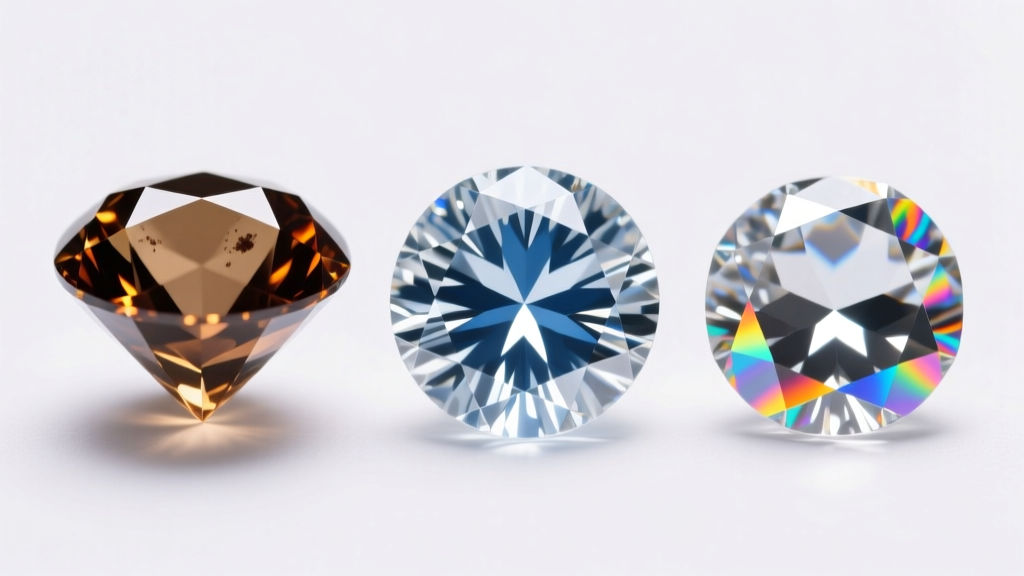
The choice of gemstone material fundamentally alters the refractive behavior, durability, and financial investment of your 4 carat earrings. As of 2026, the market is dominated by three primary materials for high-carat studs: Natural Diamonds, Lab-Grown Diamonds (CVD and HPHT), and Moissanite. According to the Gemological Institute of America (GIA), lab-grown diamonds possess the exact same chemical and physical properties as natural diamonds, but their market pricing and inclusion profiles differ vastly.
| Material | Mohs Hardness | Refractive Index | Dispersion (Fire) | Approx. 4 CTW Price Range (2026) |
|---|---|---|---|---|
| Natural Diamond | 10 | 2.417 | 0.044 | $25,000 - $80,000+ |
| Lab-Grown Diamond | 10 | 2.417 | 0.044 | $1,200 - $4,500 |
| Moissanite | 9.25 | 2.65 - 2.69 | 0.104 | $800 - $1,800 |
| Cubic Zirconia (CZ) | 8.0 - 8.5 | 2.15 - 2.18 | 0.058 | $50 - $150 |
Moissanite exhibits double refraction, which can cause a 'fuzzy' or doubled facet appearance in stones as large as 8.1mm (2.00 ct). While its dispersion (fire) is exceptionally high, giving it a rainbow-like flash, purists often prefer the singular refraction and crisp scintillation of a diamond. Cubic Zirconia, while visually similar when new, is highly porous and will absorb skin oils and lotions, becoming cloudy within months—making it unsuitable for a permanent 4-carat investment.
Structural Integrity: Metals and Alloys for Heavy Stones
The most critical mistake buyers make with 4 carat earrings is prioritizing the stone while neglecting the metallurgy of the setting. A 2-carat diamond requires a setting that can withstand daily impacts, hair snagging, and the constant pull of gravity. The American Gem Society (AGS) consistently emphasizes that the tensile strength of the prong metal is paramount for stones over 1.5 carats.
Platinum 950 vs. 18k White Gold
- Platinum 950: This is the mandatory choice for the 'head' or basket of a 4 CTW earring. Platinum is malleable enough to be shaped into secure prongs but possesses a unique 'memory' and tensile strength that prevents it from snapping under stress. When scratched, platinum merely displaces rather than losing metal mass.
- 18k White Gold: While excellent for the earring post, 18k white gold must be rhodium-plated to achieve a bright white color. Over time, this plating wears off, revealing a slightly yellowish alloy. More importantly, white gold prongs can become brittle over decades of wear, increasing the risk of a catastrophic stone loss.
- 14k Gold: Avoid 14k gold for the setting head of a 2-carat stone. The higher alloy content makes it stiffer but more prone to sudden fracturing if bent during a snag.
Setting Architecture: Managing the Center of Gravity
The physical architecture of the setting determines how the earring sits on the ear. An 8.1mm stone has a high center of gravity. If the setting is too tall, the earring will tilt forward, pointing toward the ground rather than facing outward.
The Martini vs. The Basket
The classic 3-prong Martini setting is lightweight and allows maximum light return from the sides. However, for a 2-carat stone, the Martini's narrow base can act like a pendulum, exacerbating the forward droop. Furthermore, the sharp points of a low-profile martini can poke the side of the neck if the post is too short.
For 4 carat earrings, a 4-prong or 6-prong Basket setting with a wide, flat base is vastly superior. The basket distributes the weight across a broader area of the earlobe, providing a stable foundation. Some modern baskets feature a 'floating' or articulated joint, allowing the stone to move slightly with the wearer's movements, reducing stress on the earlobe piercing.
The Hardware: Securing 4 Carat Earrings
Standard push-back friction earrings rely on a small groove in the post to hold the backing in place. For a 4 CTW pair, friction backs are a liability. The weight of the earrings, combined with the friction of pulling off a sweater or towel-drying hair, can easily overcome the tension of a standard friction back, resulting in the loss of thousands of dollars.
Advanced Backing Systems
- Screw Backs: The post is threaded, and the backing screws onto it. This is the most secure traditional method, but it requires patience to align the threads, and cross-threading can ruin the post.
- La Pousette Backs: Originally developed in France, these feature a mechanical locking mechanism with two small tabs. When squeezed, the backing slides on and off; when released, internal springs lock it firmly into place. This is the gold standard for high-carat studs in 2026.
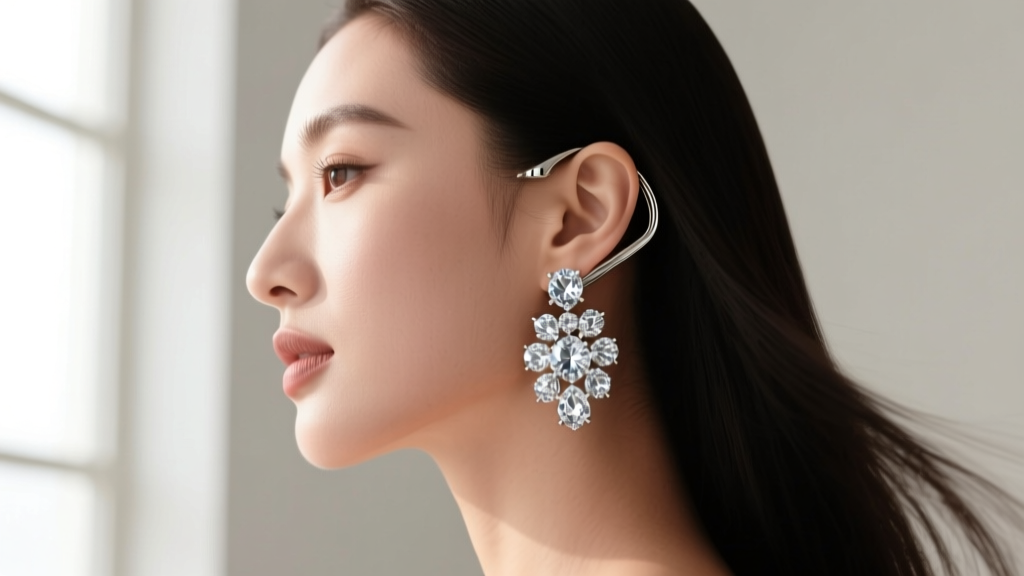
- Ear Jackets / Support Discs: For those with stretched or delicate earlobes, a silicone or 14k gold support disc sits behind the earlobe, sandwiching the flesh and distributing the 0.4-gram weight over a much larger surface area, completely eliminating the 'droop' effect.
Certification and Resale Properties
When purchasing 4 carat earrings, independent certification is non-negotiable. For natural diamonds, the GIA remains the undisputed authority for color and clarity grading. For lab-grown diamonds, the International Gemological Institute (IGI) and the Gem Certification & Assurance Lab (GCAL) are the industry leaders, providing precise data on whether the stone was created via Chemical Vapor Deposition (CVD) or High Pressure High Temperature (HPHT). HPHT stones in the 2-carat range sometimes exhibit magnetic inclusions or strain patterns that can affect transparency, making the grading report essential.
Expert Tip: Always request that the jeweler laser-inscribe the GIA or IGI report number onto the girdle of both stones in your 4 carat earrings. This not only proves authenticity but ensures you can identify your specific stones if they ever need to be removed from their settings for deep ultrasonic cleaning or prong re-tipping.
Final Verdict: Choosing Your 4 Carat Earrings
Building the perfect 4 carat earrings requires balancing optical brilliance with structural physics. If your priority is generational wealth and heirloom status, natural diamonds set in Platinum 950 with La Pousette backs are the ultimate configuration. If you seek maximum visual impact and ethical sourcing without the steep luxury tax, a 4 CTW lab-grown diamond pair in a 6-prong basket setting offers identical hardness and fire at a fraction of the cost. Regardless of the stone material, never compromise on the metallurgy of the setting or the security of the hardware; a 2-carat stone is only as valuable as the prongs holding it in place.


