5mm Earrings in 2026: Mastering the Micro-Stud Curated Ear Trend
Discover the 2026 micro-stud trend. Learn how to style 5mm earrings for a curated ear, compare titanium vs gold, and master placement.

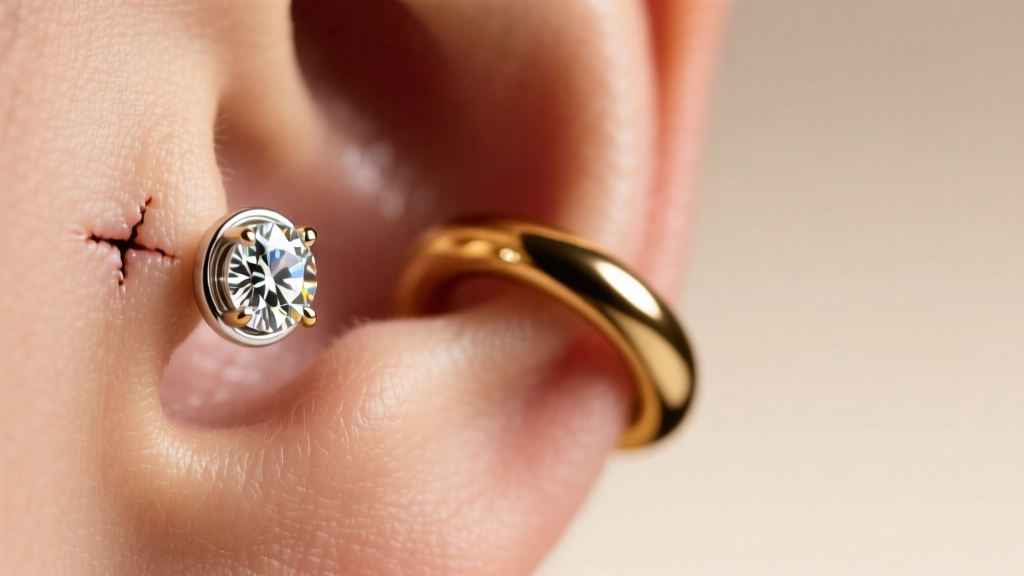
The era of the heavy, oversized statement earring is officially yielding to a more refined, intentional aesthetic. As we navigate the jewelry trends of 2026, the 'quiet luxury' movement has firmly taken root in the curated ear space, and the undisputed cornerstone of this shift is the 5mm earring. No longer viewed as mere afterthoughts or basic starter pieces, 5mm micro-studs are now recognized as critical anchor points in complex, multi-piercing constellations.
For jewelry stylists and piercing enthusiasts alike, mastering the 5mm stud requires moving beyond basic aesthetics into the realm of material science, structural integrity, and strategic placement. This comprehensive style and trend analysis breaks down exactly why the 5mm earring is dominating 2026, how to select the right metallurgical grade, and how to avoid the most common failure modes in micro-jewelry.
The Shift to Quiet Luxury: Why 5mm is the New Standard
In previous years, the curated ear trend leaned heavily into maximalism—think chunky chains, oversized shields, and heavy gem clusters. However, the 2026 trend cycle prioritizes negative space and precision. The 5mm frontal diameter offers the exact visual weight needed to catch the light without overwhelming the anatomical lines of the ear.
According to industry forecasts, consumer spending on micro-jewelry (defined as pieces with a frontal face of 6mm or less) has outpaced traditional statement pieces by a significant margin this year. The 5mm size is the mathematical 'sweet spot': it is large enough to showcase high-quality gemstone faceting, yet small enough to be worn comfortably in high-friction areas like the tragus or forward helix without catching on hair, clothing, or over-ear headphones.
The Anatomy of a High-Performance 5mm Stud
When analyzing 5mm earrings from an expert perspective, the frontal diameter is only half the equation. The post architecture dictates both the longevity of the piece and the health of the piercing channel.
Gauge and Structural Integrity
While 20-gauge (0.81mm) posts are common in mass-market mall kiosks, they are entirely unsuitable for a premium 5mm curated ear setup. The 2026 professional standard is 18-gauge (1.02mm) for standard lobes and upper lobes, and 16-gauge (1.29mm) for cartilage placements like the helix or conch. An 18g post provides the necessary rigidity to support a 5mm bezel or prong setting without bending under minor impact, which can warp the setting and loosen the gemstone.
The Death of the Butterfly Clutch
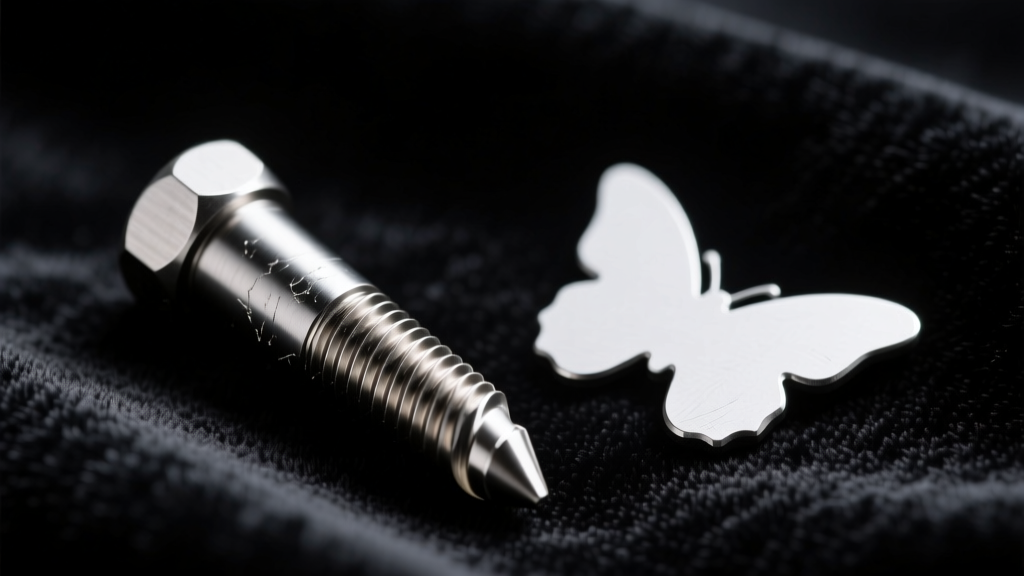
If you are still utilizing traditional push-pin butterfly clutches, your styling is outdated. Butterfly backs harbor bacteria, create uneven pressure on the fistula, and frequently cause pressure necrosis during sleep. The modern 5mm earring relies exclusively on flat-back labrets. These are available in two premium formats:
- Internally Threaded: The screw mechanism is inside the post, ensuring a smooth surface passes through the piercing channel. Ideal for 16g cartilage.
- Threadless (Press-Fit): Utilizes a slightly bent pin that creates tension inside the hollow post. This is the gold standard for 18g and 20g micro-studs, offering unparalleled security and ease of swapping.
Material Science: Titanium vs. Gold in Micro-Jewelry
Because 5mm earrings sit flush against the skin, the biocompatibility of the metal is paramount. The Association of Professional Piercers (APP) strictly advises against surgical steel due to its variable nickel content. When investing in micro-studs, you must choose between implant-grade titanium and high-karat, nickel-free gold.
| Material Grade | Specification | Average Price (5mm Bezel) | Best Use Case | Biocompatibility |
|---|---|---|---|---|
| Implant-Grade Titanium | ASTM F136 | $35 - $65 | Healing piercings, hyper-sensitive skin, everyday wear | Exceptional (Nickel-Free) |
| 14k Solid Gold | Nickel-Free Alloy | $110 - $180 | Fully healed lobes, luxury curation, warm skin tones | High (Verify Alloy) |
| 18k Solid Gold | 75% Pure Gold | $190 - $350+ | High-end statement curation, heirloom pieces | High (Softer metal, prone to scratching) |
| Surgical Steel | 316L / 316LVM | $15 - $30 | Not recommended for long-term or healing wear | Poor (Contains Nickel) |
According to the Gemological Institute of America (GIA), when purchasing gold micro-studs, consumers must explicitly verify that the alloy is nickel-free, particularly in white gold, which is frequently alloyed with nickel to achieve its silvery hue. For white gold alternatives, palladium-alloyed 14k gold is the superior, hypoallergenic choice for 2026.
Strategic Piercing Placements for 5mm Anchors
A 5mm earring is highly versatile, but its low-profile nature makes it uniquely suited for specific anatomical placements where larger jewelry would cause functional interference.
The Tragus and Anti-Tragus
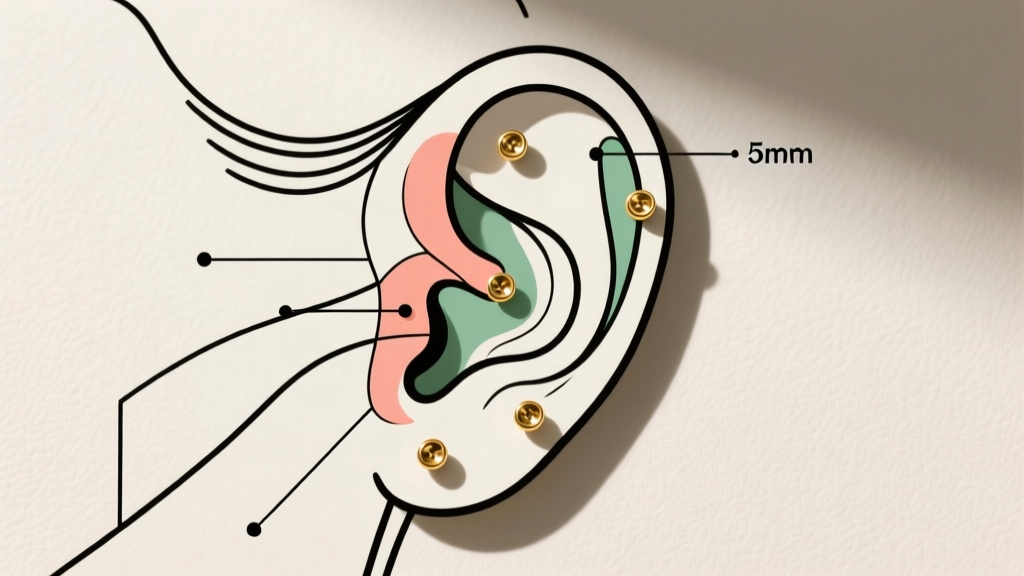
The tragus is a high-friction zone. Any stud with a frontal diameter larger than 5mm risks catching on phone screens, earbuds, and winter beanies. A 5mm (or even 4mm) flat-set gem on a 16g, 6mm post length is the ultimate functional choice for the tragus, providing a flash of light without the mechanical snagging.
The Forward Helix Constellation
When styling a forward helix cluster (typically 2 to 3 piercings stacked vertically), utilizing 5mm studs for the entire stack creates a cohesive, elegant line. Mixing a 5mm stud with a larger 8mm piece in this tight anatomical space often results in the jewelry physically overlapping and irritating the piercing channels.
The Upper Lobe 'Anchor'
In a standard three-piercing lobe setup, the 2026 styling framework dictates graduating the sizes downward. A 7mm or 8mm statement piece in the primary lobe, stepping down to a 5mm micro-stud in the second hole, and finishing with a 3mm or 4mm dot in the third hole creates a visually pleasing, mathematically balanced gradient.
The 70/20/10 Curation Framework
To achieve a professionally styled curated ear, stylists are adopting the 70/20/10 rule for jewelry distribution. This framework ensures the ear looks intentional rather than chaotic.
- 70% Micro-Anchors (5mm or smaller): These are your foundational studs. They provide the 'starry night' effect across the cartilage and upper lobes. They should be uniform in metal color and gemstone cut (e.g., all brilliant-round bezels).
- 20% Mid-Size Connectors (6mm - 12mm): This category includes huggies, small seamless hoops, and slightly larger feature studs. They bridge the gap between the micro-studs and the statement pieces.
- 10% Statement Pieces (13mm+): Reserved for the primary lobe or a featured conch piercing. This could be a drop earring, a large ornate shield, or a chunky chain.
By anchoring 70% of your ear curation with high-quality 5mm earrings, you allow the 10% statement pieces to truly pop without competing for visual dominance.
Troubleshooting: Embedding, Allergies, and Tension Loss
Even with premium 5mm earrings, mechanical and biological failures can occur if the hardware is not properly specified. Here is how to troubleshoot the most common issues encountered in micro-jewelry styling.
Post-Length and Embedding
Embedding occurs when the skin swells and grows over the flat back of the earring, or when the post is simply too short for the tissue thickness. The standard lobe thickness is between 4mm and 6mm, but cartilage can vary wildly. If you are experiencing redness, a 'dent' in the skin around the 5mm stud, or difficulty cleaning behind the ear, your post is too short. Upgrade from a standard 6mm post to an 8mm or 10mm post immediately. The APP Jewelry Guidelines emphasize that flat-backs must sit flush without compressing the tissue.
Contact Dermatitis vs. Mechanical Irritation
If a piercing becomes itchy and flaky, stylists often misdiagnose an allergy. If you are wearing ASTM F136 titanium, an allergy is virtually impossible. The irritation is likely mechanical, caused by a post that is too long (allowing the 5mm stud to flip and move excessively) or a threadless pin that has lost its tension, causing the front face to wobble and micro-tear the fistula.
Restoring Threadless Tension
Threadless 5mm studs stay secure via the bend in the insertion pin. Over time, repeated removal can straighten the pin, leading to lost earrings. To fix this, insert the pin one-third of the way into the post, and gently bend it slightly further (about a 5 to 10-degree angle). This restores the internal spring tension and ensures your 5mm micro-stud remains locked in place for months on end.
Final Thoughts on the Micro-Stud Movement
The dominance of the 5mm earring in 2026 is a testament to the jewelry industry's maturation. Consumers and stylists are no longer satisfied with mere decoration; they demand pieces that respect human anatomy, utilize biocompatible metallurgy, and adhere to sophisticated visual frameworks. By investing in 18-gauge, internally threaded or threadless 5mm studs crafted from ASTM F136 titanium or palladium-alloyed gold, you are not just following a trend—you are building a permanent, high-performance foundation for your curated ear.


