70's Style Earrings: 2026 Trend Analysis & Style Guide
Discover the 2026 revival of 70's style earrings. Explore trend analysis, material guides, and styling tips for retro hoops, dangles, and statement cuffs.


The cultural pendulum of fashion is swinging back to an era of unapologetic self-expression. In 2026, the resurgence of earrings 70's style is not merely a nostalgic blip; it is a dominant force in contemporary jewelry design. Moving away from the ultra-minimalist micro-studs of the early 2020s, today's collectors and style enthusiasts are embracing the bold geometry, rich textures, and substantial weight of 1970s-inspired ear adornments. This comprehensive trend analysis breaks down the anatomy of the decade's most iconic silhouettes, the metallurgical shifts defining modern reproductions, and the biomechanics of wearing heavy retro pieces safely.
The 2026 Resurgence: Why 70's Style Earrings Are Dominating
According to fashion historians and trend forecasters, the revival of 1970s aesthetics is driven by a collective desire for 'dopamine dressing' and tactile luxury. The 1970s was a decade of stark contrasts—from the sleek, futuristic disco glam of Studio 54 to the earthy, bohemian rebellion of the post-Woodstock era. Modern interpretations of these earrings 70's style trends merge both worlds. We are seeing a massive spike in demand for hammered gold textures, oversized tubular hoops, and organic gemstone inlays. As noted by the FIT Fashion History Timeline, the 70s democratized bold jewelry, shifting focus from exclusive fine jewels to expressive, oversized costume and demi-fine pieces. Today's 2026 market reflects this, with demi-fine brands leading the charge in accessible luxury.
Anatomy of the Decade: Core 70's Silhouettes
To authentically capture the 70's style, one must understand the structural hallmarks of the era's jewelry. The decade was defined by three primary earring archetypes, each requiring specific manufacturing techniques.
The Oversized Tubular Hoop
Unlike the thin wire hoops of the 90s, the 70s tubular hoop is substantial. Authentic vintage pieces and high-quality 2026 reproductions feature a tube thickness ranging from 3mm to 6mm, with diameters between 50mm and 80mm. The interior is often hollowed to reduce weight, but a solid pair can weigh between 12 to 18 grams. The hardware relies on a thick, snap-hinged post with a secure click-shut closure to support the frontal weight distribution.
The Macramé and Feather Dangle
Rooted in the bohemian movement, these dangles utilize intricate knotting techniques and natural materials. Modern luxury versions elevate this style by anchoring the macramé or ethically sourced feathers to 14k gold vermeil or solid brass caps. The wire wrapping for the gemstone accents (typically lapis lazuli or turquoise) is usually done in 20-gauge or 22-gauge wire, allowing for tight, secure bezels without overwhelming the organic texture of the piece.
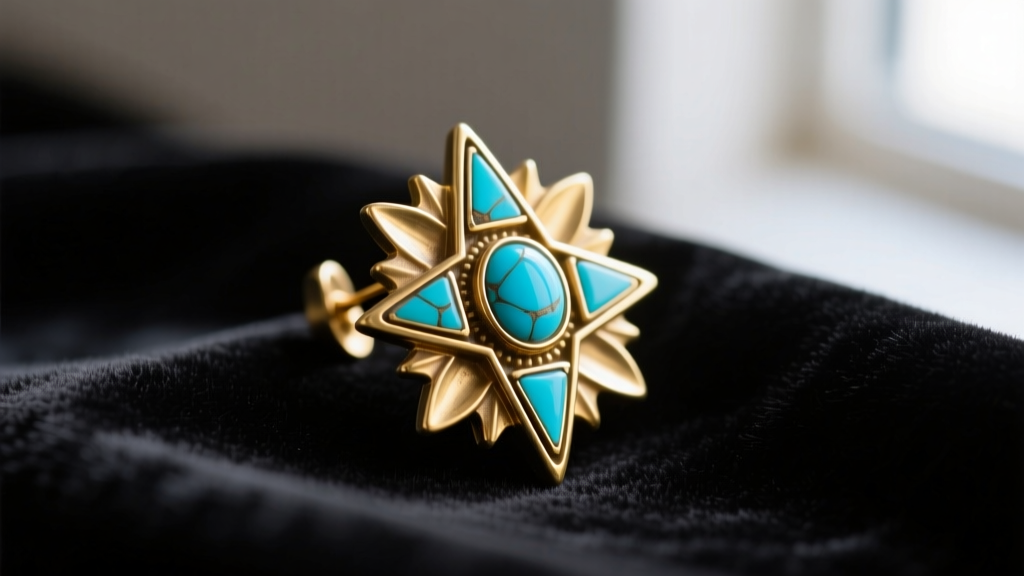
The Shield and Sunburst Stud
For those who prefer lobe-centric jewelry, the sunburst and geometric shield studs are quintessential 70's style. These pieces typically measure 15mm to 25mm in diameter. The defining feature is the textured metalwork—often achieved through hammering or granulation—surrounding a central cabochon stone.
Material & Hardware Matrix: Vintage vs. 2026 Reproductions
When shopping for earrings 70's style, consumers must navigate the differences between original vintage finds and modern 2026 reproductions. The table below outlines the critical material and hardware distinctions.
| Feature | 1970s Vintage Originals | 2026 Modern Reproductions |
|---|---|---|
| Base Metal | Brass, Copper, or low-karat gold alloys (8k-10k) | Recycled Sterling Silver, Solid 14k/18k Gold, or Bronze |
| Plating | Flash plating (thin, prone to rapid wear) | Heavy Gold Vermeil (minimum 2.5 microns) or PVD coating |
| Post Gauge | 0.7mm - 0.8mm (22g - 20g) - High tear risk | 1.0mm - 1.2mm (18g - 16g) - Structural support |
| Gemstones | Often dyed howlite or stabilized turquoise | Sleeping Beauty turquoise, ethically sourced Lapis |
| Price Range | $40 - $150 (Etsy, Vintage Dealers) | $120 - $450 (Demi-fine Brands) |
Biomechanics of Heavy Retro Earrings: Lobe Support
The most common failure mode when wearing heavy 70's style dangles or thick tubular hoops is lobe stretching and tearing. Original 1970s earrings often utilized thin 22-gauge (0.6mm) friction posts, which act like a cheese wire when subjected to the kinetic movement of a 15-gram earring.
Upgrading Your Hardware
If you are wearing authentic vintage pieces, it is highly recommended to have a jeweler swap the post for a modern 1.0mm (18-gauge) or 1.2mm (16-gauge) titanium or surgical steel post. For heavy hoops, avoid standard butterfly backs entirely. Instead, utilize Omega-back clasps or screw-back mechanisms. Omega backs distribute the weight across a wider surface area of the rear lobe, while screw-backs prevent the earring from slowly sliding forward and pulling on the piercing hole.
Using Silicone Support Discs
For 70's style shield studs that tend to droop forward due to top-heavy designs, adhesive silicone earring support patches (like the brand Lobe Wonder) are essential. These 8mm to 10mm discs adhere to the back of the earlobe, providing a rigid backstop that keeps the sunburst or shield sitting flush and upright against the face.
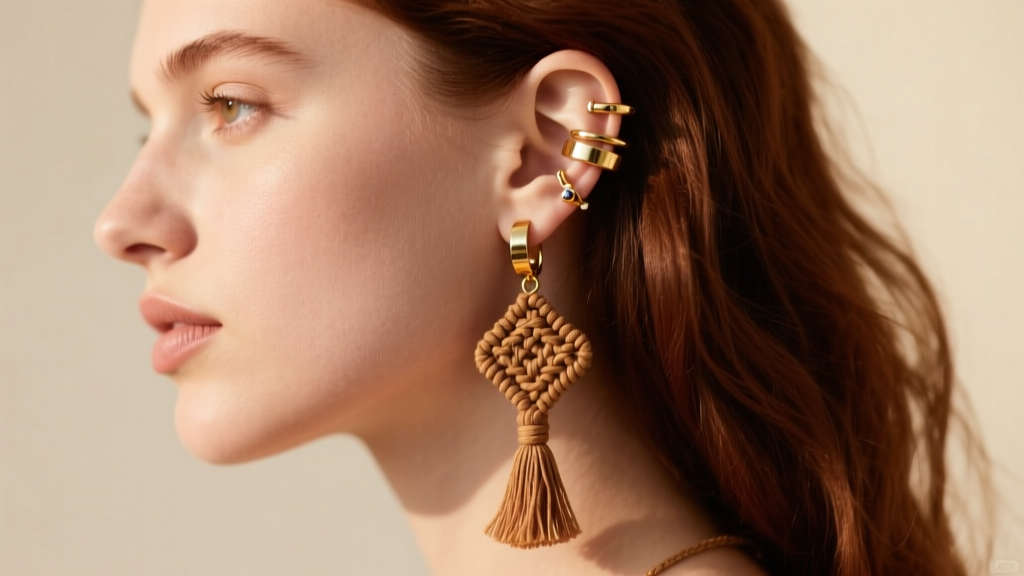
Curating the 2026 70's Ear Stack
The modern approach to the 70's style is not about wearing a full costume; it is about strategic juxtaposition. The 2026 styling rule is to anchor one loud, vintage-inspired piece with modern, architectural minimalism.
- The Lobe: A heavy, 60mm hammered gold tubular hoop or a large turquoise shield stud.
- The Helix: A sleek, 2mm modern gold huggie or a minimalist titanium cartilage cuff to balance the visual weight.
- The Conch: A simple, bezel-set diamond or white sapphire stud (3mm) to catch the light without competing with the 70s textures.
This stacking technique ensures the 70's style piece remains the focal point while the overall ear curation feels deliberate and contemporary. According to the Gemological Institute of America (GIA), when pairing turquoise pieces in a stack, be mindful of the stone's porosity; keep vintage turquoise away from modern rhodium-plated white gold pieces to avoid chemical transfer and discoloration.
Maintenance and Tarnish Prevention for Retro Alloys
Because many earrings 70's style rely on brass, copper, or bronze bases to achieve that warm, vintage glow, tarnish management is critical. Unlike pure gold, these reactive metals oxidize when exposed to the sulfur in the air and the natural acids in your skin.
Expert Tip: Never use ultrasonic cleaners on 70's style earrings featuring turquoise, lapis lazuli, or malachite. The high-frequency vibrations and harsh chemical baths will fracture the porous stones and strip away any stabilizing resins used in the 1970s. Always use a soft, dry microfiber cloth and a mild, phosphate-free soap for cleaning the metalwork around these gems.
To preserve the finish of gold vermeil reproductions, store them in anti-tarnish cloth pouches infused with activated charcoal. By understanding the material science and structural mechanics behind these iconic pieces, you can confidently integrate the bold, expressive energy of 70's style earrings into your 2026 wardrobe without compromising on comfort or longevity.


