Abalone Shell Earrings: 2026 Trend Analysis & Styling Guide
Discover the 2026 trends for abalone shell earrings. Learn how to style iridescent studs, hoops, and dangles for every face shape and occasion.

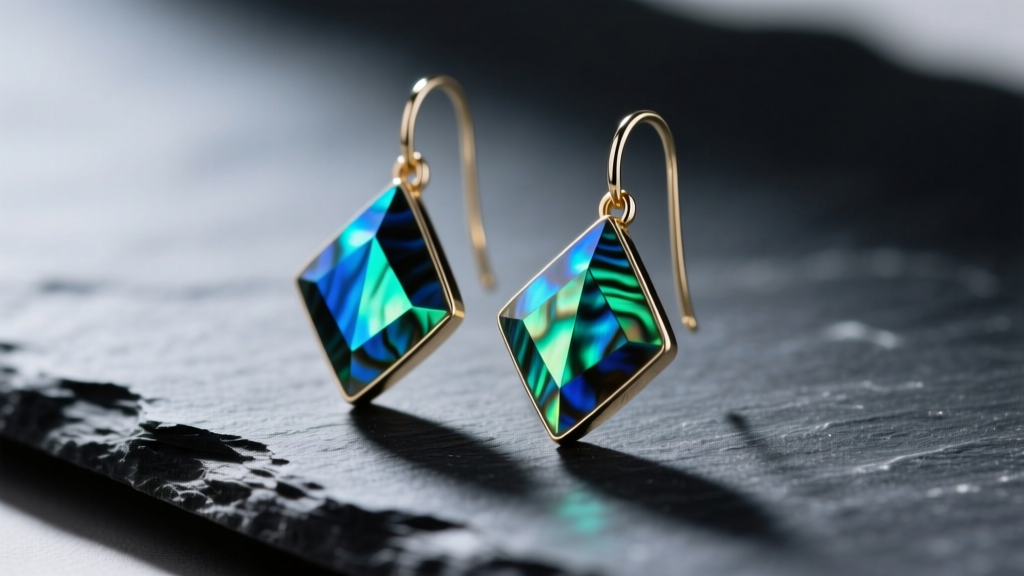
The jewelry landscape in 2026 has decisively pivoted toward biophilic design, with organic gems taking center stage. Among these, abalone shell earrings have emerged as a dominant force, bridging the gap between artisanal craftsmanship and oceanic maximalism. No longer relegated to souvenir shops or bohemian festival wear, high-grade abalone is now being set in solid 14k gold and precision-cut into architectural silhouettes. This comprehensive trend analysis breaks down the gemological properties, sourcing ethics, and precise styling frameworks you need to master the abalone earring trend this year.
The Resurgence of Abalone: Biophilic Design and Oceanic Hues
The 2026 trend cycle is heavily influenced by "aquatic escapism" and a desire for grounding, natural materials. According to global trend forecasters, iridescent finishes and oceanic color palettes are dominating accessory markets. Abalone, with its mesmerizing play-of-color (known in gemology as orient), perfectly captures this zeitgeist. The microscopic layers of aragonite platelets and conchiolin matrix within the shell diffract light, creating a dynamic, shifting canvas of electric blues, deep sea greens, and flashes of magenta.
Unlike static gemstones, abalone shell earrings offer a kinetic visual experience. Designers are leaning into this by pairing raw, unpolished shell edges with high-polish recycled gold bezels, creating a striking contrast between organic imperfection and refined metallurgy. This juxtaposition is the defining aesthetic of luxury ear styling in 2026.
Material Grades and Sourcing: Beyond the Iridescence
Not all abalone is created equal. The market is flooded with dyed howlite imitations and dangerously thin shell veneers. To invest in authentic, high-quality abalone shell earrings, you must understand the species and the construction mechanics.
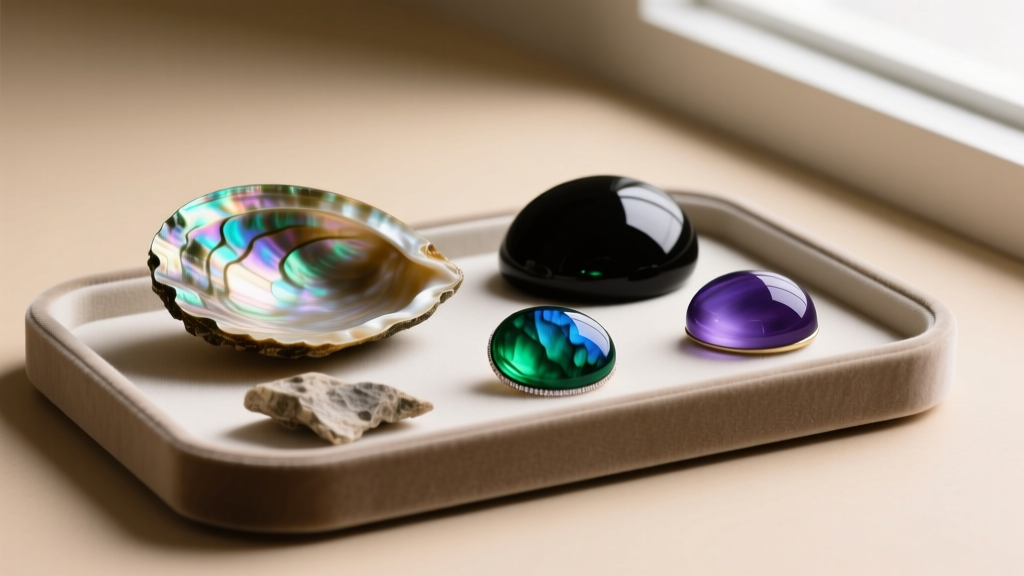
The Gemological Institute of America (GIA) classifies abalone as an organic gem, noting that its value is dictated by the thickness of the nacre, the intensity of the orient, and the species origin. Below is a breakdown of the primary species used in fine jewelry today:
| Species | Origin | Color Profile | Sustainability Status |
|---|---|---|---|
| Paua (Haliotis iris) | New Zealand | Electric blue, vibrant green, magenta flashes | Highly regulated, sustainably farmed |
| Blacklip (Haliotis rubra) | Australia / Indo-Pacific | Deep silver, green, subtle purple undertones | Managed wild harvest and aquaculture |
| Red (Haliotis rufescens) | California, USA | Coral pink, orange, soft green | Heavily restricted; CITES monitored |
The Mechanics of Doublet Construction
Solid abalone is inherently brittle and prone to snapping under the pressure of standard earring post settings. To mitigate this, premium jewelers use doublet construction. A 1.5mm to 2mm slice of premium abalone is bonded to a stabilizing backing—usually Mother of Pearl (MOP), onyx, or aerospace-grade resin—using optical-grade epoxy. When shopping, always check the product specifications for "doublet" or "backed" abalone. Unbacked, ultra-thin veneers glued directly to brass stampings are a hallmark of fast-fashion jewelry and will inevitably crack or delaminate.
Silhouette Breakdown: Matching Abalone to Face Shapes
The iridescent nature of abalone draws immediate attention to the ears and jawline. Selecting the correct silhouette is critical for balancing your facial proportions.
Geometric Studs and Huggies for Round Faces
Round face shapes benefit from angularity and structure. Opt for hexagonal or rectangular abalone studs set in sharp, yellow gold bezels. The geometric lines create an optical illusion that elongates the face. For cartilage piercings, an abalone-inlaid huggie hoop with a flat, architectural profile adds edge without adding unwanted width to the cheekbones.
Fluid Dangles and Asymmetrical Drops for Square Faces
Square faces with strong, angular jawlines require softening elements. Fluid, asymmetrical abalone drop earrings that mimic the natural, undulating edges of the ocean floor are ideal. Look for teardrop or oval cabochons that hang below the earlobe on delicate chains. The kinetic movement of the dangles softens the jawline and draws the eye vertically.
Ear Cuffs and Climbers for Heart and Oval Faces
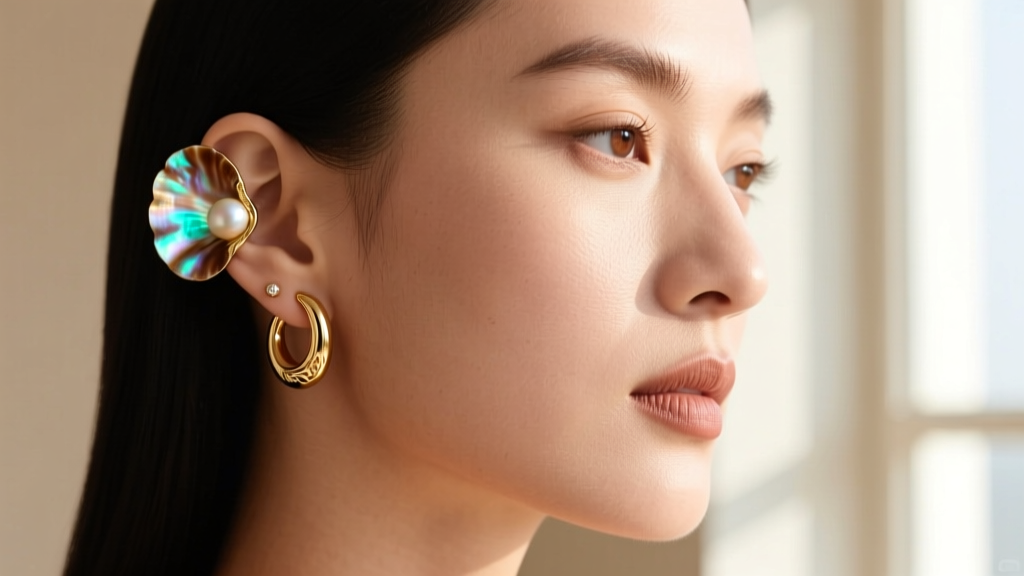
Heart-shaped faces (wider forehead, narrow chin) and oval faces can carry off complex ear curations. Abalone ear cuffs that wrap around the helix, paired with a simple abalone stud on the lobe, create a balanced, sweeping visual line that complements the natural taper of a heart-shaped face.
Skin Undertones and Metal Pairings
Because abalone contains a spectrum of colors, the metal setting you choose should complement your skin's undertone to maximize the shell's orient:
- Cool Undertones: Pair blue-dominant Paua abalone with platinum, white gold, or sterling silver. The cool metals amplify the icy, aquatic blues and purples within the shell.
- Warm Undertones: Select green-and-gold-dominant Blacklip abalone set in 14k or 18k yellow gold. The warm metal brings out the rich, earthy greens and subtle golden flashes in the nacre.
- Neutral Undertones: You have the versatility to wear rose gold settings, which beautifully highlight the rare magenta and coral pink flashes found in high-grade New Zealand Paua.
The Mechanics of Abalone: Durability, Failure Modes, and Care
Abalone ranks a mere 2.5 to 3.5 on the Mohs hardness scale, making it significantly softer than quartz or topaz. It is highly susceptible to scratching, chemical degradation, and thermal shock. Understanding its failure modes is essential for maintaining your earrings.
Expert Warning: Never wear abalone shell earrings in the shower, pool, or hot tub. Chlorine and saltwater will etch the calcium carbonate surface, permanently dulling the iridescence. Furthermore, hot water will degrade the optical-grade epoxy used in doublet construction, leading to delamination (the separation of the abalone slice from its backing).
Proper Care Protocol:
- Cleaning: Wipe gently with a dry, untreated microfiber cloth after wear to remove skin oils and perfume residue.
- Storage: Store in a soft pouch away from harder gemstones (like diamonds or sapphires) that will easily scratch the nacre.
- Polishing: Never use ultrasonic cleaners, steamers, or commercial silver dips. If the shell loses its luster, it must be professionally re-polished by a lapidary using specialized, non-abrasive compounds.
Price Tiers and Market Positioning in 2026
As JCK Online notes, the modern consumer demands transparency in both pricing and sourcing. Here is what you should expect to pay for authentic abalone shell earrings in the current market:
- Entry-Level ($30 - $75): Typically features sterling silver or gold-plated brass. The abalone is usually a thin veneer backed by resin or dyed MOP. Expect mass-produced, stamped settings. Good for occasional wear, but prone to tarnishing and veneer chipping.
- Mid-Range Artisan ($90 - $250): The sweet spot for quality. Features solid 14k gold-filled or recycled sterling silver settings. Utilizes thicker, doublet-backed New Zealand Paua or Australian Blacklip. Settings often include protective bezels to guard the soft edges of the shell.
- Fine Jewelry ($350 - $800+): Custom-carved, solid abalone pieces (rare) or precision-inlaid doublets set in solid 14k/18k gold with diamond or sapphire accents. These pieces are crafted by specialized lapidaries and are treated as heirloom investments.
Final Verdict: The 2026 Outlook
Abalone shell earrings have successfully transcended their casual, beach-side origins to become a staple of sophisticated, eco-conscious jewelry curation. By prioritizing sustainably farmed Paua, insisting on doublet construction, and matching the silhouette to your specific facial geometry, you can harness the mesmerizing, oceanic energy of this organic gem. As the industry continues to embrace biophilic textures, a well-crafted pair of abalone drops or architectural studs will remain a definitive statement piece for years to come.