How Much Are Pearl Earrings? 2026 Material & Price Guide
Wondering how much are pearl earrings? Discover 2026 pricing tiers, material properties, nacre grading, and setting costs for Akoya, Tahitian, and more.

The Short Answer: How Much Are Pearl Earrings in 2026?
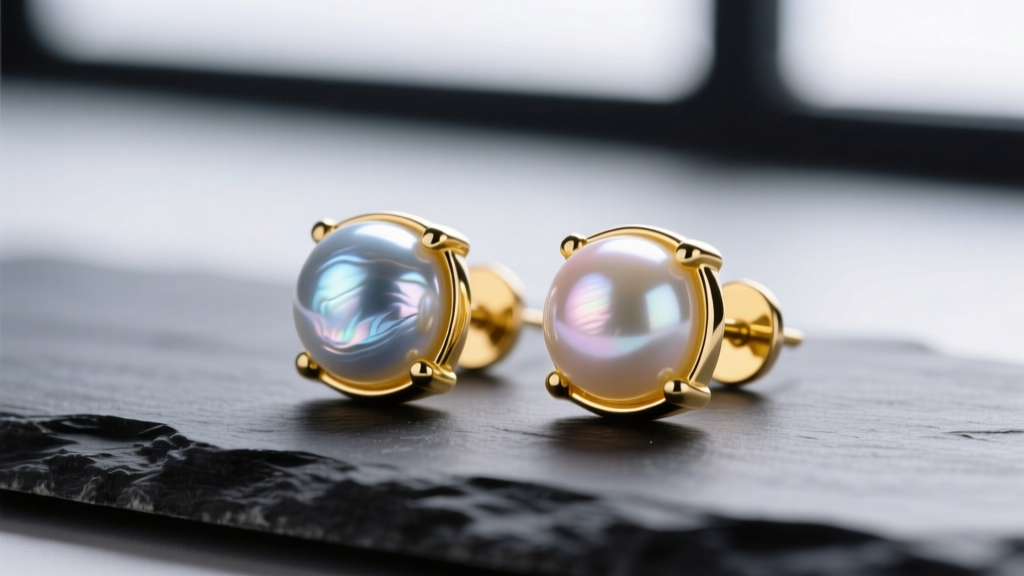
When shoppers ask how much are pearl earrings, the answer spans a massive spectrum based on organic material properties and hardware composition. In 2026, a standard pair of commercial-grade freshwater pearl studs can cost as little as $40, while a matched pair of gem-quality South Sea pearls set in platinum can easily exceed $12,000. The price is never arbitrary; it is a direct mathematical reflection of nacre thickness, luster quality, nucleation methods, and the precious metal used for the setting.
To help you navigate the market, we have broken down the exact pricing tiers you will encounter at reputable jewelers this year.
| Pearl Type | Typical Size (mm) | Nacre Property | 2026 Price Range (Pair) |
|---|---|---|---|
| Freshwater | 6.0 - 9.0 | Solid nacre, softer luster | $40 - $350 |
| Akoya (Saltwater) | 6.0 - 9.5 | Bead-nucleated, mirror luster | $300 - $2,500 |
| Tahitian (Saltwater) | 8.0 - 13.0 | Dark body, min 0.8mm nacre | $600 - $5,000+ |
| South Sea (Saltwater) | 9.0 - 16.0 | Thick nacre, satiny luster | $1,200 - $15,000+ |
Decoding Pearl Types: The Primary Cost Driver
The fundamental reason behind the price disparity lies in the biological and environmental conditions required to cultivate different pearl types. Saltwater pearls are inherently more expensive to produce because the oysters are more susceptible to disease, yield only one or two pearls at a time, and require pristine, nutrient-rich ocean environments.
Freshwater vs. Saltwater Nucleation
Most freshwater pearls are tissue-nucleated. A technician inserts a tiny piece of mantle tissue into the mussel, which then forms a pearl sac and secretes nacre. Because there is no hard bead nucleus, the resulting pearl is solid nacre all the way through. However, this process often results in off-round shapes and a softer, more muted luster. The exception is the Edison pearl, a bead-nucleated freshwater variety that rivals Akoya in roundness and luster, typically pricing in the $400 to $900 range for high-quality stud earrings.
Saltwater pearls (Akoya, Tahitian, South Sea) are bead-nucleated. A perfectly round mother-of-pearl bead is inserted alongside a piece of mantle tissue. The oyster secretes nacre over this bead. The thinner the nacre layer over the bead, the cheaper the pearl—but if the nacre is too thin, it will eventually peel or chip, ruining the earring.
The Tahitian Nacre Law
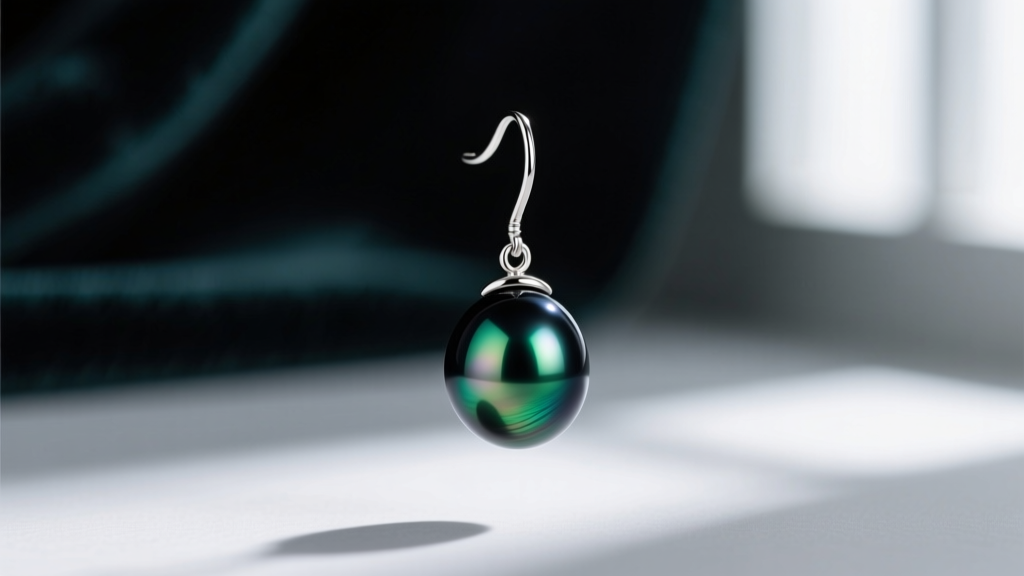
When evaluating Tahitian pearl earrings, you are paying for strict government-regulated material properties. By law in French Polynesia, any Tahitian pearl exported must have a minimum nacre thickness of 0.8mm over the bead nucleus. Pearls that fail this X-ray thickness test are destroyed. This legal baseline guarantees a level of structural integrity and deep, dark color saturation that justifies the $600+ starting price for genuine Tahitian studs.
Material Properties That Dictate Pearl Valuation
Beyond the origin species, gemologists evaluate the physical properties of the nacre itself. According to the Gemological Institute of America (GIA), seven primary value factors determine a pearl's worth. For earrings, where perfect symmetry and matching are required, three properties dominate the pricing algorithm.
1. Luster and Nacre Quality
Luster is the sharpness of light reflections on the pearl's surface. It is directly tied to nacre quality. An Akoya pearl with "Excellent" luster will have a mirror-like reflection where you can clearly see your own eye's pupil in the surface. A pearl with "Fair" or "Poor" luster looks chalky and dull. Moving from "Good" to "Excellent" luster can double the price of an Akoya earring pair.
2. Surface Blemishes
Pearls are organic gems, and completely flawless surfaces are exceptionally rare. However, for earrings, the drill hole and the setting cup can hide minor blemishes. A "Lightly Blemished" pearl (where minor flaws are visible only upon close inspection) offers the best value-to-price ratio. Paying a premium for "Clean" (flawless to the naked eye) pearls yields diminishing returns unless you are purchasing investment-grade South Sea drops.
3. Matching Symmetry
Unlike a pendant where only one pearl is needed, earrings require two pearls that match perfectly in size (within 0.1mm), body color, overtone, and luster. Sorting through thousands of harvested pearls to find a perfect match adds a significant labor premium to the final cost of pearl earrings.
The Hardware Factor: Setting Materials and Price Premiums
The metal holding the pearl is the second half of the pricing equation. A high-end pearl mounted in cheap metal is a structural risk, while a mid-tier pearl in heavy platinum will artificially inflate the price.
| Setting Material | Properties & Durability | Hardware Cost Premium |
|---|---|---|
| 925 Sterling Silver | Prone to tarnish, softer metal, requires rhodium plating for longevity. | Base Price (Included) |
| 14K Gold (Yellow/White) | Excellent durability, 58.5% pure gold, standard for fine everyday jewelry. | +$120 - $250 |
| 18K Gold | Rich color, 75% pure gold, slightly softer than 14K, hypoallergenic. | +$250 - $450 |
| Platinum (Pt950) | Extremely dense, naturally white, hypoallergenic, secures heavy pearls best. | +$500 - $900+ |
Post Gauge and Backing Mechanics
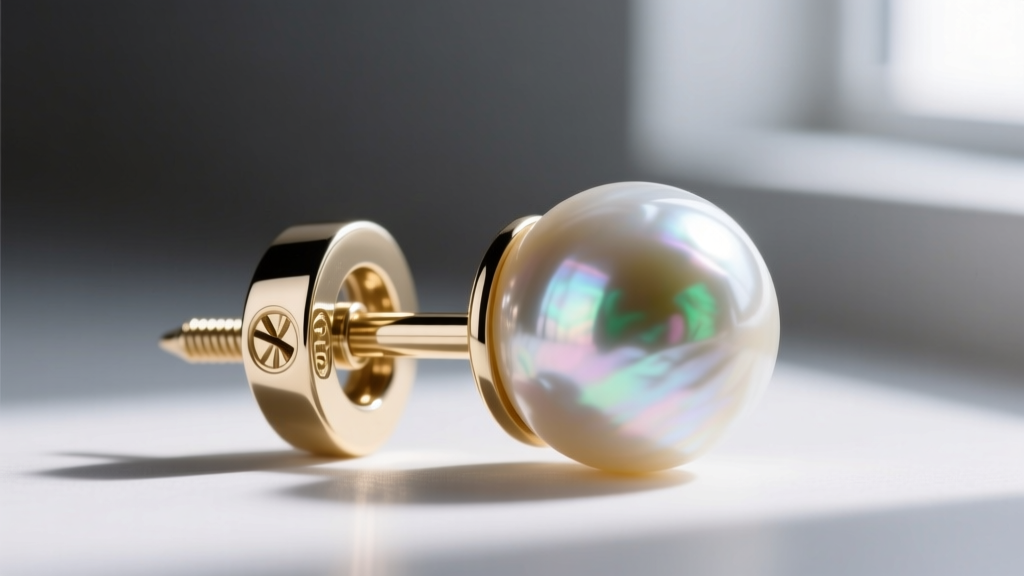
Do not overlook the earring post and backing. Standard pearl earring posts are usually 20-gauge (0.81mm) or 18-gauge (1.02mm). If you are buying heavy South Sea or large Tahitian drop earrings, insist on an 18-gauge post; a 20-gauge post will bend under the weight of a 12mm pearl, causing the earring to droop and eventually snap. Furthermore, upgrading from standard friction butterfly backs to La Pousette backs or threaded screw-backs adds $40 to $85 to the hardware cost but provides essential security for pearls valued over $1,000.
Real-World Pricing Scenarios: What to Expect at the Jeweler
To contextualize how these material properties combine, here are three common purchasing scenarios you will encounter in 2026:
- The Everyday Classic (14K Gold / 7.5mm Akoya): Expect to pay $450 - $750. You are paying for the sharp, mirror-like luster of the Akoya nacre and the durability of 14K gold posts with secure friction backs.
- The Modern Statement (Sterling Silver / 10mm Edison Freshwater): Expect to pay $180 - $300. Edison pearls offer the roundness and metallic luster of saltwater pearls at a freshwater price point, though the silver setting will require occasional polishing to prevent sulfide tarnishing.
- The Heirloom Drop (18K White Gold / 11mm Tahitian): Expect to pay $2,200 - $3,800. The cost here is driven by the rarity of matching two 11mm Tahitian pearls with identical peacock-green overtones, mounted on heavy 18K white gold lever-backs.
Expert Tips for Verifying Pearl Authenticity and Value
The market is flooded with shell-bead imitations coated in synthetic guanine (essence d'orient). The Federal Trade Commission (FTC) strictly regulates jewelry labeling, but online marketplaces remain a risk. Always perform the tooth test: gently rub the pearl against the biting edge of your front tooth. A real pearl will feel distinctly gritty or sandy due to its microscopic crystalline nacre structure, while a fake pearl will feel perfectly smooth like glass.
Pro-Tip: Examine the drill hole under a 10x jeweler's loupe. A genuine pearl will show a sharp, clean boundary between the nacre and the drill hole. If you see a thin layer of coating peeling away or a clear line separating a painted surface from a white glass core, you are looking at an imitation.
Ultimately, understanding how much pearl earrings cost requires looking past the brand name and focusing strictly on the biological and metallurgical materials. By prioritizing nacre thickness, luster grade, and appropriate post gauges, you ensure your investment retains both its structural integrity and its timeless elegance.


