Best Metals for Teardrop Dangle Earrings: A Material Guide
Discover the best metals for teardrop dangle earrings. Compare weight, durability, and hypoallergenic properties of titanium, gold, and silver.

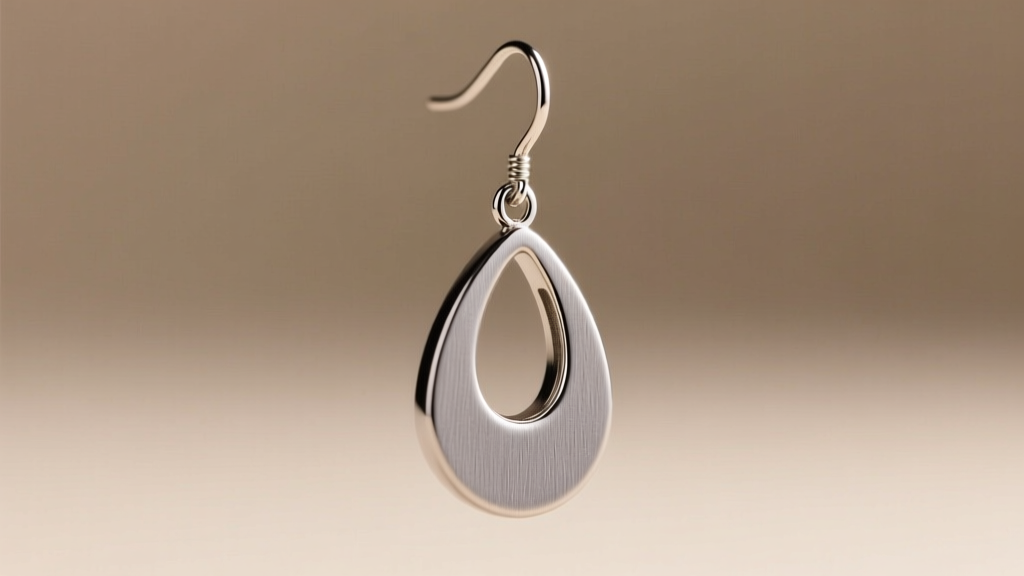
When selecting the perfect pair of teardrop dangle earrings, most shoppers focus entirely on the aesthetic silhouette, the polish of the finish, or the presence of gemstone accents. However, as we navigate the fine jewelry market in 2026, discerning collectors and everyday wearers alike are realizing that the underlying metallurgy dictates not just the longevity of the piece, but the biomechanical comfort of the earlobe. The teardrop shape—characterized by a narrow top that swells into a heavier, rounded bottom—creates a unique pendulum effect. This specific center of gravity places distinct mechanical stress on the ear wire and the fistula (the piercing hole itself).
The Physics of the Teardrop Silhouette
Unlike a balanced hoop or a flush stud, teardrop dangle earrings are inherently bottom-heavy. When in motion, the elongated lower half acts as a lever. If the material is overly dense, this leverage translates into a downward pull that can stretch the earlobe over time, a phenomenon known in the body modification community as the "cheese-cutter effect." Conversely, if the metal is too soft or lightweight, the structural integrity of the ear wire can compromise, leading to warping or accidental unhooking. Therefore, understanding the specific gravity, Vickers hardness, and tensile strength of your chosen metal is not just academic—it is essential for long-term wearability.
Heavyweights vs. Lightweights: Metal Density Comparison
To illustrate how material choice impacts the physical experience of wearing teardrop dangles, we must look at specific gravity (density). The table below estimates the resting weight of a standard 40mm x 15mm solid teardrop charm across various common jewelry metals.
| Metal / Alloy | Density (g/cm³) | Est. Weight per Charm | Lobe Stress Level |
|---|---|---|---|
| Anodized Aluminum | 2.70 | ~2.4 grams | Negligible |
| Implant-Grade Titanium | 4.43 | ~4.1 grams | Very Low |
| 316L Surgical Steel | 8.00 | ~7.4 grams | Moderate |
| Sterling Silver (925) | 10.36 | ~9.6 grams | Moderate-High |
| 14k Solid Gold | 12.90 | ~12.0 grams | High |
| 18k Solid Gold | 15.60 | ~14.5 grams | Very High |
As the data reveals, an 18k gold teardrop is nearly six times heavier than an aluminum equivalent. For elongated dangles exceeding 50mm in length, choosing a high-density metal without accounting for wire gauge and structural support is a recipe for earlobe fatigue.

Deep Dive: Top Materials for Teardrop Dangles
Implant-Grade Titanium (ASTM F136)
Titanium has emerged as the undisputed champion for sensitive ears and oversized silhouettes. Specifically, you should look for Ti6Al4V ELI (Extra Low Interstitial), which is ASTM F136 compliant. According to the Association of Professional Piercers, this specific alloy is entirely nickel-free and biocompatible. For teardrop dangle earrings, titanium offers an unparalleled strength-to-weight ratio. A titanium ear wire can be drawn to a thinner 22-gauge without sacrificing the tensile strength required to hold a heavy stone or glass teardrop component, making it ideal for minimalist, barely-there hooks that won't distract from the main silhouette.
14k vs. 18k Solid Gold
Gold remains the pinnacle of luxury, but its alloy composition drastically alters its performance in dangle formats. Pure 24k gold is far too malleable; an ear wire made of it would bend out of shape under the weight of a teardrop charm. Therefore, gold is alloyed with copper, silver, and zinc. 18k gold (75% pure gold) offers a rich, buttery yellow hue but is relatively soft and very dense. 14k gold (58.5% pure gold) is significantly harder and more resistant to scratching and warping. The Gemological Institute of America (GIA) notes that 14k gold's superior durability makes it the preferred choice for structural jewelry components like clasps and ear wires. If your teardrop dangles are solid gold, 14k is highly recommended to prevent the hook from stretching open over time.
Niobium & Anodized Aluminum
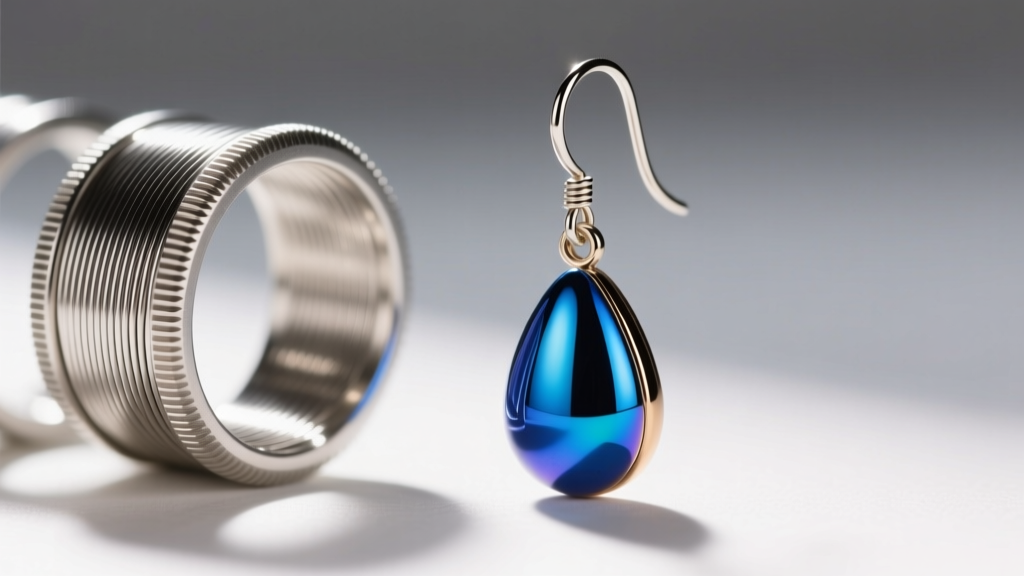
For those who prioritize vibrant coloration and featherlight comfort, Niobium and Aluminum are exceptional alternatives. Niobium is a highly reactive metal that can be anodized using electricity to produce a permanent, hypoallergenic oxide layer in shades of deep violet, electric blue, and iridescent green. While slightly heavier than titanium, it is vastly lighter than silver or gold. Aluminum, while the lightest option, is generally too soft for fine jewelry ear wires and is better suited for the teardrop charm itself, paired with a steel or titanium hook.
Wire Gauge and Structural Integrity
The failure point of most poorly designed teardrop dangle earrings is not the charm, but the French wire or shepherd's hook that passes through the ear. Wire thickness is measured in gauges; the higher the number, the thinner the wire.
- 22-Gauge (0.64mm): Ideal for titanium or aluminum teardrops under 5 grams. It is thin enough to slide effortlessly through the fistula but lacks the sheer strength to support heavy silver or gold drops without warping.
- 20-Gauge (0.81mm): The industry standard for most fine jewelry. A 20-gauge 14k gold wire provides the perfect equilibrium of lobe comfort and structural rigidity for medium-weight teardrop designs.
- 18-Gauge (1.02mm): Necessary for oversized, heavy statement pieces. If you are wearing solid sterling silver or 18k gold teardrops that exceed 10 grams per ear, an 18-gauge wire is mandatory to prevent the "cheese-cutter" stretching effect on the earlobe.
Tarnish, Patina, and Maintenance by Material
Because teardrop dangle earrings swing freely, they are constantly exposed to ambient air, humidity, and the natural oils of the skin and hair. This makes material reactivity a crucial consideration.
Sterling silver (92.5% silver, 7.5% copper) is notorious for reacting with sulfur compounds in the air to form silver sulfide, resulting in a dark tarnish. While some appreciate this as a darkened patina, it requires regular polishing with a jeweler's cloth to maintain a high-shine mirror finish.
In contrast, titanium, niobium, and high-karat gold are virtually inert. They will not oxidize or tarnish under normal atmospheric conditions, making them "wear-and-forget" metals. If you live in a highly humid coastal climate, or if you frequently wear your earrings in environments with high sulfur exposure, opting for ASTM F136 titanium or solid 14k gold will save you hours of maintenance and ensure your teardrops remain brilliant for decades.
Expert Verdict: Matching Metal to Your Lifestyle
Choosing the right material for your teardrop dangle earrings requires balancing three factors: budget, lobe sensitivity, and the physical dimensions of the design. For oversized, dramatic silhouettes that brush the collarbone, implant-grade titanium is the undisputed winner, offering structural security without lobe fatigue. For mid-sized, elegant evening wear where luxury and warmth are paramount, 14k solid gold provides the necessary hardness to maintain the ear wire's shape while delivering a timeless aesthetic. Avoid 18k gold for heavy, elongated dangles unless the design incorporates a reinforced, thick-gauge leverback closure rather than a simple French wire. By prioritizing metallurgical properties alongside visual design, you ensure your earrings remain as comfortable on day one thousand as they were on day one.


